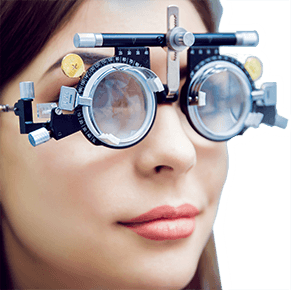
Are contact lenses a good choice for kids?
Are contact lenses safe for children?
Parents frequently ask eye doctors this question when kids first express an interest in wearing contacts. But a child's maturity and ability to handle contact lenses responsibly is more important than age alone.
At What Age Can Children Start Wearing Contacts?
Four million American children under the age of 18 wear contact lenses. Physically, a child's eyes can tolerate contact lenses at a very young age. Even some infants are fitted with contact lenses due to congenital cataracts or other eye conditions present at birth.
And in a recent study that involved fitting nearsighted children of ages 8-11 with one-day disposable daily contact lenses, 90 percent of the kids had no trouble applying or removing the contacts without assistance from their parents.
If you are considering contact lenses for your child, take a look at how your child handles other responsibilities. Does he have good personal grooming habits, keep his bedroom and bathroom clean, and follow through with schoolwork and household chores?
If children need frequent reminders to keep things clean and follow good hygiene practices, they may not be ready for the responsibility of wearing and caring for contact lenses. But if they handle such duties well, they might be excellent candidates for contacts.
Children are naturally great contact lens wearers if they accept the responsibility for them. They typically are highly motivated to wear contacts and usually adapt well to them.
Kids also are less likely to have dry eyes — a condition that can cause contact lens-related problems for adults.
Plus, younger children sometimes follow instructions about contact lens wear better than teenagers and young adults, so they may have fewer problems with over-wearing their contacts or not using the correct contact lens solutions.
Contact Lenses For Sports
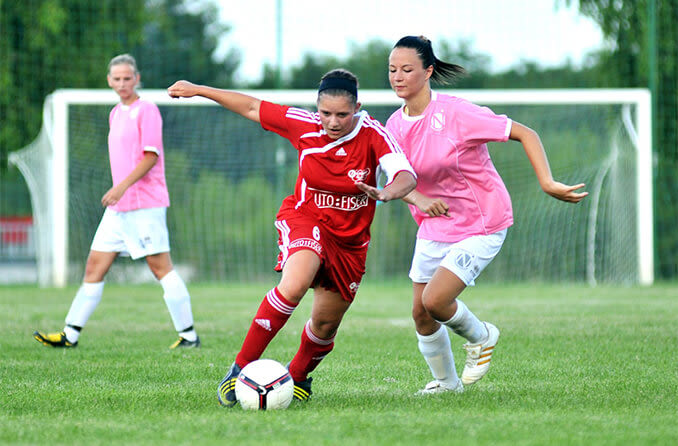
For children who are active in sports, contact lenses offer a number of advantages over glasses.
If your child wears eyeglasses for sports — even if they have impact-resistant polycarbonate lenses — you still must worry about the frames breaking during contact sports, possibly causing an eye injury. And the lenses of sport eyeglasses or safety glasses sometimes can fog up during competition, affecting vision and performance.
Sport contact lenses eliminate these problems and provide other benefits as well, including an unobstructed view of the playing field for better peripheral vision that enables your child to react faster to other players and objects such as a soccer ball or baseball approaching from the side.
Contact lenses also remain stable on your child's eyes when he or she is running, for more accurate and stable vision.
Many contact lenses, especially gas permeable (GP) lenses, offer better optics than eyeglasses. This leads to clearer vision that may improve sports performance. For example, a baseball player might see the ball a few milliseconds sooner with crisp vision from contact lenses.
Building Self-Esteem With Contact Lenses
Many kids feel self-conscious wearing eyeglasses or simply don't like the way they look in glasses. Wearing contact lenses often can improve how children feel about their appearance, elevating their self-confidence.
In a recent study of 169 children who were wearing prescription eyeglasses and then were fitted with contact lenses, researchers found that contact lens wear "significantly improves how children and teenagers feel about their appearance and participation in activities."
Among study participants, 71.2 percent of children ages 8 to 12 and 78.5 percent of teenagers said they preferred wearing contact lenses to wearing eyeglasses.
The researchers also found that children as young as 8 years old were as capable as teenagers at wearing and caring for the silicone hydrogel contact lenses used in the study, which was sponsored by Vistakon.
In another study, 484 children ages 8 to 11 were randomly assigned to wear either eyeglasses or contact lenses for a period of three years. At the end of the study, survey scores of the children's self-perception of their physical appearance, athletic competence and social acceptance were higher for the children who wore contact lenses.
Also, keep in mind that switching your child from glasses to contact lenses need not be a permanent decision. If your child does not adapt well, or is not up to the responsibility of wearing and caring for contact lenses, he or she can simply return to wearing glasses. Contact lenses can always be tried again at a later date.
Controlling Nearsightedness With Contacts
Another reason to consider having your child fitted with contact lenses is that, in some cases, contact lens wear can slow the progression of nearsightedness in children.
In fact, a number of recent studies have found that specially designed gas permeable contact lenses and multifocal soft contacts can provide a significant amount of myopia control in many nearsighted children.
Also, a modified method of fitting rigid gas permeable contact lenses called orthokeratology (or "ortho-k") has been proven successful in reversing existing nearsightedness in myopic children. The technique uses specially designed GP lenses that change the shape of the cornea while the lenses are worn at night during sleep. In the morning, the lenses are removed, and when successful, ortho-k enables a nearsighted person to see clearly without glasses during the day.
The correction of myopia provided by ortho-k, however, is only temporary. The cornea-reshaping lenses must be worn regularly during sleep to maintain good uncorrected vision during the day.
Recently, researchers in New Zealand reported that experimental "dual-focus" soft contact lenses were able to slow the progression of nearsightedness in children ages 11 to 14, compared with regular soft contact lenses.
The dual-focus lenses featured a central optical zone that fully corrects myopia, surrounded by peripheral zones of lesser correction. The design of the lenses was based on previous research that suggests peripheral defocus in the retina might reduce the lengthening of the eyeball during childhood that is associated with myopia progression.
Over the course of 20 months, the dual-focus lenses reduced myopia progression by 30 percent or more in 70 percent of the children participating in the study, while providing visual acuity and contrast sensitivity equal to conventional soft contact lenses.
Though the dual-focus lenses in the study are not yet FDA-approved for use in the United States, researchers are continuing to work on new contact lens designs that soon may be prescribed by eye doctors to reduce the progression of myopia in children.
Gretchyn Bailey also contributed to this article.
Page published on Wednesday, February 27, 2019