Hyperopia: What does it mean to be farsighted?


On this page
What is hyperopia?
Hyperopia symptoms
What causes hyperopia?
Hyperopia in children
How is hyperopia diagnosed?
Hyperopia treatment
Living with farsightedness
When to see an eye doctor
Common questions about hyperopia
On this page
What is hyperopia?
Hyperopia symptoms
What causes hyperopia?
Hyperopia in children
How is hyperopia diagnosed?
Hyperopia treatment
Living with farsightedness
When to see an eye doctor
Common questions about hyperopia
What is hyperopia?
Hyperopia, or farsightedness, is a common eye condition that makes things up close look blurry. It can make it harder to focus on a book, smartphone, or other close-up objects and tasks. For some, hyperopia can also make it hard to focus on distant objects. Prescription glasses or contact lenses can correct farsightedness and help you see better.
Hyperopia is also known as hypermetropia.
Why do close objects look blurry?
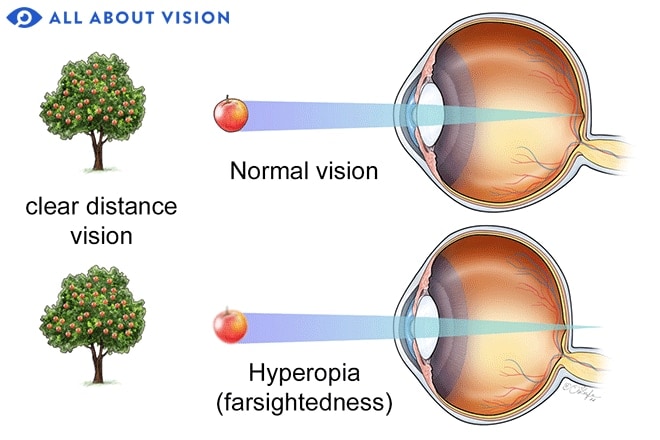
When light enters your eye, it needs to bend and come to a focus on the back layer (the retina) so you can see a sharp picture. Hyperopia is a type of refractive error, which means the light doesn’t refract (bend) correctly.
When someone is farsighted, light focuses behind the retina instead of right on it. This can make near objects look blurry, while distant ones often look clearer.
Hyperopia symptoms
The main symptom of hyperopia is that near objects look more out of focus than distant ones.
This effect on your vision can lead to other symptoms. They might be more noticeable when you’ve been focusing on something close to you for a while. Possible symptoms include:
- Squinting
- Eye strain
- Tired or achy eyes
- Headaches
The symptoms of farsightedness can vary from person to person and can get worse as we age. For example, someone with mild hyperopia may not notice much blurry vision, or any at all. But to someone who is very farsighted, everything might look blurry (even things far away).
How being farsighted can affect your daily life
Without correction, farsightedness can make certain tasks harder, such as:
- Using a smartphone, computer, tablet, or other digital device
- Reading a book or magazine
- Doing close-up work, like cooking, sewing or other hobbies
- Looking at menus in restaurants or price tags in stores
- Writing or note-taking
- Playing cards or board games
- Seeing a car dashboard while driving
For those over age 40, farsightedness can make signs on the highway blurry. Glasses or contacts can sharpen your vision and make activities like these feel more effortless.
What causes hyperopia?
Hyperopia isn’t an eye disease; it’s usually caused by a normal difference in the way your eyes develop.
Your genetics can contribute. If someone in your family is farsighted, you’re more likely to be farsighted, too.
These differences in eye shape can cause farsightedness:
- The eye is shorter than normal from front to back. This is the most common cause.
- The clear front layer of the eye (cornea) or the focusing lens inside is flatter than normal.
Rarely, farsightedness can be caused by an eye condition, injury or complication. You should talk to a medical professional right away if you have sudden blurry vision or other concerning eye symptoms.
Does presbyopia cause farsightedness?
Presbyopia causes similar symptoms, but it doesn’t cause true farsightedness.
Unlike hyperopia, presbyopia isn’t caused by eye shape, and people aren’t born with it. Instead, it happens because the eye’s flexible lens gets stiffer with age, which makes it harder to focus up close and read fine print. While farsightedness can cause both distant and close objects to appear blurry, presbyopia only affects vision close up.
Most people start to notice it sometime after age 40. Reading glasses and other kinds of correction can help.
Hyperopia in children
Many children are born with mild hyperopia, but their eyes can usually adjust to it on their own. It often gets better or goes away completely during early childhood.
However, some kids either don’t outgrow it or are very farsighted. This can make reading, learning and other daily activities harder and may require glasses.
If this isn’t corrected, it can sometimes lead to crossed eyes (strabismus) or lazy eye (amblyopia).
It can be harder for kids to understand when something is wrong with their eyesight, so they won’t always say something. Instead, watch for signs like these:
- Squinting to see clearly
- Rubbing their eyes
- Headaches after reading or near work
- Holding books or screens unusually close or far away
- Avoiding near work altogether
- Turning of one eye when trying to focus on a close or distant object
Pediatric eye exams can help find “hidden” problems like hyperopia early on. Prescription glasses can correct their farsightedness and may help prevent future problems.
How is hyperopia diagnosed?
An optometrist or ophthalmologist can diagnose farsightedness during a comprehensive eye exam. The eye doctor will use quick and painless tests to check your vision, such as:
- Visual acuity test – You read letters on an eye chart to check how clearly you can see at different distances. This measures the overall sharpness of your eyesight (visual acuity).
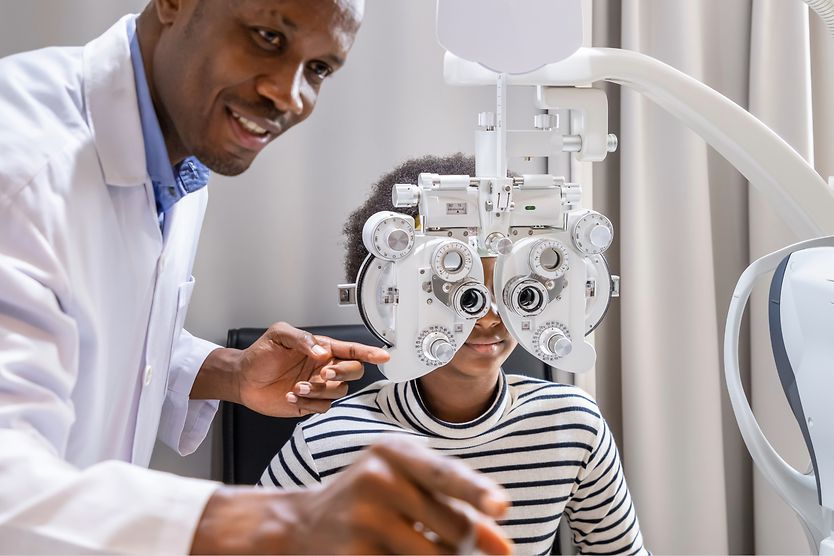
- Refraction test – You look through a testing device while the eye doctor changes lenses and asks you which ones look better. It can also be done with an automatic machine. These tests help the eye doctor decide your prescription for glasses.
- Retinoscopy – The eye doctor shines a light into the eyes to see how it reflects off the retina, which can also help them find a prescription. It’s used more often for children, people who have difficulty communicating or people who are bedridden.
Your eye doctor will also check the health of your eyes. These tests often aren’t needed to diagnose hyperopia, but they can help the doctor make sure nothing else is affecting your vision:
- Slit-lamp test – The eye doctor uses a bright-light microscope to examine the front of your eye.
- Dilated eye exam – Dilating eye drops widen your pupils for a little while, so the eye doctor can examine the inside of your eye.
LEARN MORE about other tests you might have during your eye exam
Hyperopia treatment
Most people with farsightedness use eyeglasses or contact lenses to correct their vision. Some people choose to have refractive surgery so they can use corrective lenses less. It is important to realize that exercising the focusing muscle of the eye cannot treat hyperopia. Focusing exercises can result in vision problems, such as double and blurred vision, by causing the focusing muscle to spasm.
Glasses
Eyeglasses are the simplest and safest way to correct hyperopia. They use prescription lenses to bend light so it focuses right on your retina. This helps you see sharply.
Glasses come in different lens types and coatings that can make them more comfortable or durable for your lifestyle.
Contact lenses
Prescription contacts sit directly on your eyes to focus light properly. They can be a good option for people who don’t want to wear glasses all the time. However, they aren’t always recommended or comfortable for everyone.
Since contact lenses touch your eyes, they need careful care and hygiene to avoid infections and other eye problems. You’ll need a contact lens fitting during your exam so the eye doctor can find your prescription, recommend lenses and show you how to use them.
Refractive surgery
Refractive eye surgeries use lasers to reshape your cornea so light can focus on the retina. Other procedures, called refractive lens exchange, involve replacing your eye’s natural lens with an artificial one.
Refractive surgeries are generally considered safe for the majority of adults, but there are risks. Some people aren’t good candidates, depending on their eyes and health.
Living with farsightedness
People with hyperopia can keep their vision sharp by using prescription glasses or contacts and going to regular eye checkups. Good habits like these can also make your eyes feel more comfortable and reduce eye strain during close-up tasks:
- Wear your up-to-date prescription glasses or contacts regularly.
- Take regular breaks during long periods of focus. Try the 20-20-20 rule: every 20 minutes, look at something 20 feet away for 20 seconds.
- Keep your space well-lit but try to limit any glare. That way, it’s easier to focus on screens or reading material.
- Keep digital screens at a comfortable distance from your eyes.
- Go to routine eye exams to keep your prescription updated and catch any eye problems early.
When to see an eye doctor
You should schedule an eye exam anytime you notice a change in your vision. If your eye doctor thinks you need glasses or contacts, they’ll give you a prescription after the exam.
Comprehensive eye exams also help diagnose conditions like hyperopia early, so you can keep your vision clear and sharp. Experts recommend following this eye exam schedule — even if your vision seems normal:
- Babies – One eye exam between 6 and 12 months old.
- Kids and teenagers – At least one exam between ages 3 and 5, then yearly exams until age 17.
- Adults – At least one exam every two years from ages 18 to 64, then yearly exams after age 65.
Some people need eye exams more often, especially if they have certain eye diseases or a higher risk of developing them.
Common questions about hyperopia
How common is farsightedness?
Farsightedness is common, but nearsightedness (myopia) is more common. Prevalence varies, depending on the level of hyperopia and the age of the group studied (the methods of calculation affect the numbers). You may be more or less likely to have it based on your genetics.
Can children outgrow hyperopia?
Yes, but not always. Most babies are born farsighted, but it usually gets better or goes away during early childhood. This doesn’t always happen, though.
It’s important not to ignore possible vision problems. Untreated hyperopia can affect their daily lives and, in some cases, lead to other vision problems. An eye doctor can help you decide what to do.
Can hyperopia go away on its own?
No. Farsightedness doesn’t go away on its own, and there’s no proven way to prevent it.
Many children outgrow mild hyperopia early in life, but adults who are farsighted usually have hyperopia for their entire lives.
Does farsightedness get worse with age?
Hyperopia itself usually doesn’t get worse, but normal age-related eye changes can make it even harder to focus on things up close. That can make your farsightedness feel more noticeable as you get older, even though it isn’t getting “worse.”
What’s the difference between hyperopia and hypermetropia?
There is no difference; hyperopia and hypermetropia are two words for the same eye condition. “Hyperopia” is more common in the United States. “Hypermetropia” is an older word that’s used more often in some other countries and medical writing.
In some places, people also call farsightedness “long-sightedness.”
READ NEXT: Myopia vs. hyperopia: What’s the difference?
On this page:
What is hyperopia?
Hyperopia symptoms
What causes hyperopia?
Hyperopia in children
How is hyperopia diagnosed?
Hyperopia treatment
Living with farsightedness
When to see an eye doctor
Common questions about hyperopia
On this page:
What is hyperopia?
Hyperopia symptoms
What causes hyperopia?
Hyperopia in children
How is hyperopia diagnosed?
Hyperopia treatment
Living with farsightedness
When to see an eye doctor
Common questions about hyperopia