Cost of LASIK Eye Surgery and
Other Corrective Procedures
How much does LASIK cost?
LASIK eye surgery cost differs widely from one provider to another and depends on many factors. The only universal standard is that LASIK and other refractive surgery prices are quoted per eye (as we do in this article).
Remember that one LASIK procedure equals only one eye, even if both eyes are corrected on the same day. So the price quoted for a procedure doubles if you intend to have both eyes corrected.
LASIK surgeons also might add extra charges for new technologies, including wavefront analysis for extra-precise corrections (custom wavefront LASIK).
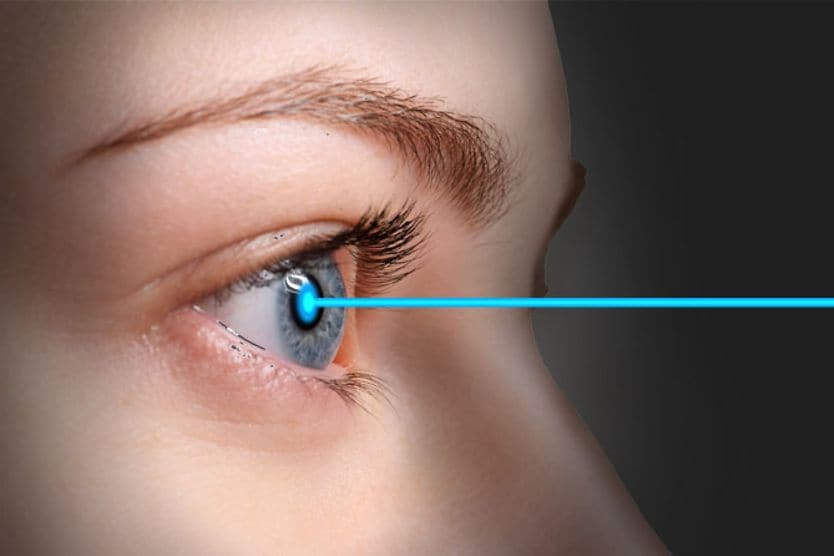
You also might be charged extra for all-laser LASIK, also called bladeless LASIK (IntraLase and other technologies), in which a laser is used instead of a bladed instrument to create the flap on the front of the eye. In LASIK, this thin flap is lifted so that laser energy can be applied to shape the eye, and then replaced to serve as a natural bandage.
Average LASIK Eye Surgery Costs
A price report commissioned by AllAboutVision.com from a leading industry analyst was based on results of a survey of refractive surgeons conducted for full-year 2011. Average LASIK costs were:
- $2,124 for all laser-based vision correction procedures (including LASIK) in which a single price is quoted.
- $1,630 for non-customized LASIK using a bladed instrument (microkeratome) and excimer lasers that are not guided by wavefront analysis.
- $2,151 for wavefront-guided LASIK using a laser-created flap.
Note that wide variation can exist in what an advertised price will include. Beware of advertising that, for example, promises "LASIK from $499 per eye." Look for the fine print. Typically, only a few select people are actually eligible for LASIK at prices that sound unusually low, because most eyes require more extensive correction or more follow-up after the surgery.
Average LASIK prices have not risen substantially in several years. That trend continued in 2011, no doubt because of the generally poor state of the U.S. economy. For now, many potential laser eye surgery candidates seem to be choosing more economical vision correction choices, such as eyeglasses and contact lenses, until the economy heats up again.
The average price for LASIK with a blade-created flap did rise between 2010 and 2011, from $1,580 to $1,630. But the average price for wavefront-guided LASIK using a laser-created flap on the eye dipped, from $2,170 to $2,151.
Many more eye surgeons (55.3 percent) now quote a single price for LASIK or similar vision correction procedures than in 2009 (47.2 percent). And that percentage grows each year.
Charging a single price means new technologies such as customized wavefront procedures and laser-created flaps are not priced separately and charged as "extras," in addition to a basic fee for a laser vision correction procedure.
In previous years, you might have been able to find a few eye surgeons willing to charge less than $1,000 per eye for LASIK and other procedures. The newest figures indicate that most eye surgeons have backed off entirely from charging prices that low. Still, the percentage of surveyed surgeons who offered bladed LASIK at less than $1,000 did grow recently, from 13.8% in 2010 to 19.5% in 2011.
Non-customized procedures are performed with the less expensive options of bladed microkeratomes and excimer lasers that are not guided by wavefront analysis. Most customized wavefront procedures that also use laser-created flaps cost from $1,500 to $2,500 per eye (see chart).
- Learn about iLASIK advanced laser vision correction
- Get relief from dry and irritated eyes with Tears Again Hydrate omega-3 gels
Beware of "Bargain" Prices for LASIK
When you deal with centers and surgeons that advertise LASIK surgery at bargain prices far below what is mentioned above, you would be wise to ask plenty of questions about what a procedure actually costs beyond what is advertised.
Ask for an estimate, in writing, that details exactly what you are getting for that low price.
Make sure you know what the total cost of the procedure will or could be, including surgeon and facility fees and any other extras. One advertised price represented as a "bargain" might include those types of extra costs, while another might not.
LASIK Prices
After rising for several years, LASIK prices seemed to stabilize from 2006 to 2011, as shown by these average LASIK costs-per-eye charged at a single price meaning no extra charges were added on for new technologies:
- 2006: $1,950
- 2007: $2,099
- 2008: $2,105
- 2009: $2,140
- 2010: $2,150
- 2011: $2,124
In comparison, LASIK in 2002 cost $1,550-$1,600, and by October 2003 the price had risen to $1,710. At the end of 2004, the price was a little more than $1,800, and in 2005 it was $1,965. These averages take into account procedures performed at surgeon-owned laser centers, institutions and corporate laser centers.
Also, keep in mind that earlier prices do not reflect new technologies of wavefront analysis and laser-created flaps, which have been in widespread use only in recent years.
Following is a chart of average LASIK prices, per eye, as reported for full-year 2011 by a leading industry analyst.
| Range | One Price for All Laser Based Procedures | LASIK With Bladed Microkeratome | Wavefront LASIK With Laser-Created Flap | Average Price of Laser Based Procedures |
|---|---|---|---|---|
| Average Price | $2,124 | $1,630 | $2,151 | $2,067 |
| Standard Deviation | $398 | $484 | $318 | $431 |
| Percentage of Surgeons Charging in the Following Ranges: | ||||
| $1,000 or less | 0.8% | 19.5% | 0% | 2.8% |
| $1,001 to $1,500 | 7.0% | 24.4% | 0% | 11.3% |
| $1,501 to $2,000 | 36.7% | 39.0% | 42.6% | 44.1% |
| $2,001 to $2,500 | 46.1% | 14.6% | 51.9% | 35.8% |
| $2,501 to $3,000 | 7.8% | 2.4% | 3.7% | 4.8% |
| More than $3,000 | 1.6% | 0% | 1.9% | 1.3% |
| Charging a single price for all laser procedures: 55.3% Charging multiple prices based on technology/refractive error: 44.7% | ||||
| Full-year 2011 LASIK pricing information provided to AllAboutVision.com through special arrangement with a leading industry analyst. Typical charges by the majority of refractive surgeons surveyed are highlighted in yellow. | ||||
Average LASIK prices rose for several years early in the decade, partly because of demand and an increasing number of LASIK procedures. However, industry reports indicate that the number of LASIK procedures performed annually in the United States had stabilized in the past few years at around 1.4 million until a meltdown in the U.S. economy beginning in 2008.
Citing information from a leading industry analyst, company reports from LASIK providers note that 1 million LASIK procedures were performed in 2008, and about 760,000 procedures were performed in 2009.
An upswing may be occurring now: The volume for 2011 is estimated at around 800,000, and the first-quarter 2012 growth for U.S. refractive surgery procedures over the same period in 2011 is 6.8 percent.
New Technology Increases LASIK Eye Surgery Cost
You usually can expect higher LASIK prices when you add these two newer options:
- "Custom" or "wavefront" LASIK, which is often more expensive than traditional LASIK.
- Laser flap technology, which increases procedure cost (see charts).
LASIK with IntraLase and similar laser flap-making technologies, a procedure in which the surgeon creates the LASIK flap with a laser rather than a microkeratome, typically costs more than traditional LASIK. IntraLase reported in early 2007 that the average extra cost per eye added onto a LASIK procedure for use of IntraLase was $394.
Later in 2007, Advanced Medical Optics (now Abbott Medical Optics or AMO) acquired IntraLase and incorporated the technology into the company's wavefront-guided excimer laser platform. The total system now is marketed under one name, iLASIK.
AMO says on the company website that the cost of iLASIK procedures average about $5,000 per person, when both eyes are corrected.
Those surgeons who perform all-laser LASIK cite studies that show patients have fewer flap complications, need fewer retreatments and have a greater likelihood of achieving 20/20 visual acuity or better.
Not all eye surgeons agree that laser-made flaps are superior, and the merits of blade versus bladeless LASIK continue to be debated.
Custom LASIK, which uses wavefront technology to measure and map the aberrations and vision problems that occur when the eye fails to focus light rays correctly, also usually costs more than traditional LASIK.
As noted above, many eye surgeons don't charge a separate fee for new technologies used in LASIK, and instead quote their price as a single fee.
Prices for Other Types of Eye Surgery
Below are typical prices, per eye, for other types of refractive eye surgery. As with LASIK, the prices vary based on many factors, including your individual prescription, where you live and which surgeon you choose.
- CK: $1,500 to $2,900
- PRK, Epi-LASIK and LASEK: about the same as LASIK
- Refractive Lens Exchange (RLE): $2,500 to $4,500 per eye or more, depending on extra costs such as facility fees
What Contributes to LASIK Eye Surgery Cost
One reason fees vary widely is that different providers perform varying levels of preoperative testing. Since proper screening can avoid problems, it's important to determine if appropriate testing is included in a quoted price.
Wide variation exists also in the cost of equipment used for testing and surgery. Technologies for eye tracking, tear film analysis and measurements of corneal thickness, corneal topography and pupil size, as well as the laser itself, are available at various price points and can be reflected in the procedure fee.
Refractive surgery fees cover a variety of costs, including:
- Purchase or lease and maintenance of the laser, microkeratome and/or other devices used in the procedure.
- A $100 to $150 per eye royalty fee to the excimer laser manufacturer, who must recoup the cost to develop the machine.
- A $145 to $250 per eye royalty fee if it is a custom procedure, depending on the laser manufacturer.
- Gowns, masks, gloves and other items for keeping the operation sterile.
- Microkeratome blades, surgical solutions and medications used during the surgery.
- With IntraLase, disposable equipment that includes a metal cone and glass lens connecting the laser to the treated eye.
- Overhead for the surgery center, which includes office and surgical staff salaries and benefits, rent, office equipment and office administration.
- Patient acquisition costs, which include advertising, seminars and fees paid to other eye care practitioners for comanagement.
- Insurance.
- And, especially, "the surgeon," who is the single most important part of any surgical procedure.
Also included in most fees are the pre-op evaluation meeting, comprehensive eye examination (including technician time and equipment costs), follow-up office visits and tests, plus any standard medications.
Many surgeons also offer free enhancement surgery if it is warranted. Often a team of doctors reviews your case to determine this, and their time is included in the fee.
Questions for Your Surgeon
When discussing fees with your surgeon, ask:
- What is included?
- What is not included?
- What will I have to pay for if complications occur or enhancement surgery becomes necessary?
- How much do prescription medications (such as anti-inflammatories or painkillers) cost?
- If I require temporary contact lenses or glasses after the procedure, how much will they cost?
- How many follow-up visits will I need to make, and at what cost?
Defraying Eye Surgery Cost: Insurance and Financing
Most vision insurance plans don't cover refractive surgery because they consider it cosmetic. However, some employers make arrangements with a given LASIK center (or refractive surgery center) for a special price. Also, you may qualify for a tax deduction for refractive surgery, so check with an accountant.
You may be tempted to choose a surgeon based only on the fee charged, but that may be unwise. It's better to choose the best surgeon you can find and then, if you need it, get the most affordable financing you can.
Think of it this way: If you choose Surgeon A who charges $400 less than Surgeon B, but you know that Surgeon B has more experience, you are risking your vision for the sake of $1 per day over the course of 13 months. Is the higher risk really worth the monetary savings?
Financing is available for LASIK and other vision surgeries. Several financing companies specialize in elective procedures and offer plans with fixed rates and long-term payments. Most LASIK surgery centers and private medical practices work with one of these companies to offer a financing plan to their patients.
Note that some large employers offer subsidized health plans that cover at least part of LASIK costs. If you work for a major company, ask about possible benefits that might cover elective corrective eye surgery procedures.
Also, the U.S. military has been making LASIK and other corrective vision surgery options more available to troops. The procedures may be performed free of charge, depending on the nature of a soldier's duties. ![]()
![]()
![]()
[Page updated November 8, 2012]
For more LASIK & Vision Surgery articles, please visit this section's home page or use the search box below. |