LASIK risks and complications
LASIK and other types of laser eye surgery, such as PRK, SMILE and LASEK, generally have both favorable safety profiles and outcomes. They are designed to treat myopia (nearsightedness), hyperopia (farsightedness) and astigmatism, and may allow you to live without glasses or contacts.
Sight-threatening complications such as significant loss of vision from LASIK surgery are rare, and many side effects and laser eye surgery complications may be resolved with additional surgery or medical treatment.
Like any other surgery, however, there are potential risks, side effects and limitations you should be fully aware of before electing to undergo the procedure. Choosing a skilled and experienced LASIK eye surgeon can help reduce these risks and enable you to achieve optimal results from laser eye surgery.
The first step is to determine if you are a good candidate for vision correction surgery. Your eye doctor will perform a thorough diagnostic eye exam to determine your suitability for LASIK surgery. They will evaluate:
- The shape and thickness of your cornea
- Your refractive errors and pupil size
- The moistness of your eyes (to check for dry eye syndrome)
- Your general health and medical history
- Any medications you are taking.
Even if you are not a candidate for LASIK, don't worry — you might still be able to have your vision fixed with other vision correction surgery such as PRK, SMILE, LASEK or implantable lenses.
LASIK Eye Surgery Risk Factors and Limitations
Not everyone is a suitable candidate for LASIK eye surgery. Certain conditions and anatomical factors can increase your risk of an undesirable outcome or limit optimal LASIK results. These include:
- Too thin or irregular corneas
- Large pupils
- High refractive error
- Unstable vision
- Dry eyes
- Your age
- If you are pregnant
- If you have certain degenerative or active autoimmune disorders
For a full checklist on LASIK risk factors and whether or not you are an appropriate candidate, read our LASIK Criteria Checklist.
LASIK Side Effects and Complications
Millions of Americans have had LASIK eye surgery to correct their vision since it was introduced in the United States more than 20 years ago, and experienced LASIK surgeons report that serious complication rates can be held below 1 percent.
Common LASIK complications and side effects are listed below. Most of these can be resolved with medical treatment or additional "enhancement" surgery.
Temporary discomfort and vision disturbances
Discomfort during the first few days following LASIK surgery, such as mild irritation and light sensitivity, is normal and to be expected. During the first few weeks or months you also may experience:
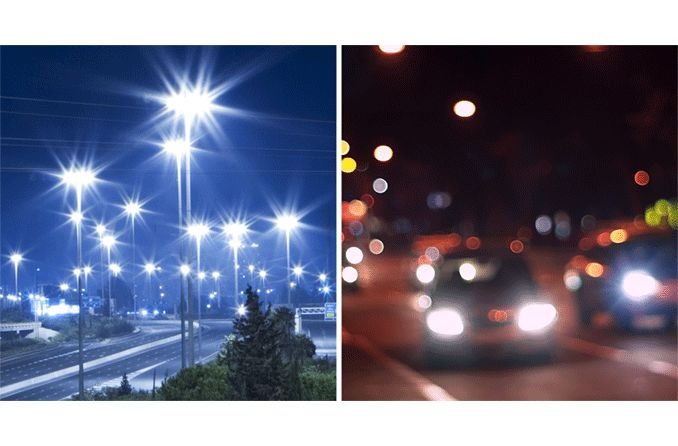
- Halos, glare and starbursts in low-light environments, especially at night
- Dry eye symptoms
- Hazy vision
- Reduced sharpness of vision
In the majority of cases, these problems are temporary and disappear completely within three to six months.
Flap complications
The LASIK procedure involves the creation of a thin hinged flap on the front surface of the cornea. This is lifted during surgery for laser reshaping of the eye. The flap is then replaced to form a natural bandage.
If the LASIK flap is not made correctly, it may fail to adhere properly to the eye's surface or microscopic wrinkles called striae (STRIE-ee) could develop in the flap. These flap complications may cause optical aberrations and distorted vision.
Studies indicate that flap complications occur in from 0.3 to 5.7 percent of LASIK procedures. In a study of 3,009 consecutive LASIK surgeries performed using a femtosecond laser for flap creation, flap complications occurred in fewer than one-half of 1 percent (0.37 percent) of these procedures, and all complications were successfully managed within the same surgical session.
Some problems associated with LASIK flap complications include:
- Irregular astigmatism. This is caused by an unequally curved corneal surface. Irregular astigmatism also can occur from laser correction that is not centered properly on the eye or from irregular healing. Resulting symptoms may include double vision (diplopia) or "ghost images." In these cases, the eye may need re-treatment or enhancement surgery.
- Epithelial ingrowth. This is when cells from the outer layer of the cornea (epithelium) grow under the flap after LASIK surgery. In most cases, epithelial ingrowth is self-limiting and causes no problems. But in some cases (reported to be 1 to 2 percent of LASIK procedures), symptoms of discomfort and/or blurred vision can occur, and additional surgery is needed to lift the flap and remove the epithelial cells.
- Diffuse lamellar keratitis (DLK). Nicknamed "Sands of the Sahara," this is inflammation under the LASIK flap that may have several causes. Some inflammation of the cornea after LASIK surgery is normal. But if it is uncontrolled, as in DLK, it can interfere with healing and cause vision loss. If DLK occurs, it usually responds to therapies such as antibiotics and topical steroids. Also, the flap might need to be lifted and cleaned for removal of inflammatory cells and to prevent tissue damage.
- Keratectasia or keratoconus. This is a very uncommon bulging of the eye's surface that can occur if too much tissue is removed from the cornea during LASIK or if the cornea prior to LASIK is weak as evidenced from corneal topography mapping. Rarely does keratoconus develop after LASIK with no known risk factors. Enhancement laser surgery is usually not suitable, and gas permeable lenses or corneal implants may be prescribed to hold the cornea in place, or a treatment called corneal collagen crosslinking may be performed to strengthen the cornea.
Dry eyes after LASIK. Some people who have LASIK surgery experience a decrease in tear production that can cause eye discomfort and blurred vision. Almost half of all LASIK patients experience some degree of temporary dry eye syndrome.
Dry eye syndrome after LASIK surgery usually is temporary and can be effectively treated with lubricating eye drops or other measures.
Dry eye problems usually disappear when healing of the eye is complete, which can take up to six months. People who already have severe dry eye usually are eliminated as LASIK candidates.
Significant undercorrection, overcorrection or regression. Not everyone will achieve 20/20 vision after LASIK eye surgery, and contact lenses or eyeglasses for some or all activities may still be required in rare cases. If the laser removes too much or too little corneal tissue, or your eye's healing response is not typical, your visual outcome will be less than optimal.
One possible cause of a less-than-perfect outcome is that your eyes did not respond to laser eye surgery in a predictable manner. Another possible cause is that your eyesight may have been optimal shortly after LASIK but regressed over time due to "over-healing."
In most cases, a significant undercorrection or regression can be successfully treated with additional laser vision correction after your surgeon confirms your residual refractive error is stable.
Eye infection. Infections rarely occur after LASIK. Because the corneal flap acts as a natural bandage, eye infections occur less frequently after LASIK than after flap-free corneal refractive procedures like PRK. Still, it is very important to use medicated eye drops as directed after your LASIK procedure to avoid infection and control inflammation as your eyes heal.
| Incomplete corrections (undercorrection, overcorrection, residual astigmatism)or regression of effect | Blurry, less-than-perfect vision | Glasses or contact lenses; eye drops; re-treatment with laser |
| Decentered ablations | Visual aberrations* | Eye drops; re-treatment with laser |
| Oversize pupils | Visual aberrations* | Eye drops; re-treatment with laser |
| Haze | Visual aberrations* | Eye drops; re-treatment with laser |
| Irregular flap (folds, wrinkles, striae) | Visual aberrations* | Surgical correction; second laser procedure |
| Dry eye | Dry, itchy or scratchy eyes, often with redness and sense of foreign object in eye, and sometimes pain | Prescription dry eye medication; artificial tears; punctal occlusion (blockage of tear ducts in order to retain tear film on eye), oral flaxseed oil |
| Diffuse lamellar keratitis (eye inflammation) | Visual aberrations* | Eye drops; surgical rinsing of cells if severe |
| Epithelial ingrowth | Visual aberrations* | Surgical removal of epithelium |
| Infection | Redness, oozing of eyes, sometimes pain | Eye drops; oral medications |
| *Visual aberrations include symptoms such as glare, double vision, ghosting, halos, starbursts, loss of contrast sensitivity, and problems with low-light or night vision. Most patients do not experience these symptoms, and some patients with these complications experience no symptoms and require no treatment. Chart created by Keith Croes and reviewed by Brian Boxer Wachler, MD. |
How Common Are LASIK Complications?
The safety and effectiveness of LASIK surgery continues to improve, thanks to increasingly sophisticated technology, surgical skill and optimal patient selection.
Complications generally were more common in the early years of LASIK, when studies in the late 1990s indicated that up to 5 percent of people undergoing laser vision correction experienced some type of problem. These days, this number is under 1 percent for serious complications.
Public confidence in LASIK has grown in recent years due to consistent, positive LASIK surgery outcomes. The U.S. military also has adopted widespread use of laser eye surgery to decrease reliance of troops on corrective eyewear. Since the procedure first was introduced in the military in 2000, researchers have conducted more than 45 studies regarding safety and effectiveness of LASIK and other procedures.
LASIK outcomes have been overwhelmingly positive. Most military patients see 20/20 or better after the procedure without corrective eyewear, and the rate of complications has been very low. According to one study, only one in 112,500 patients required medical disability retirement due to complications from laser vision correction during this eight-year period.
In another study, 100 percent of pilots and other aircraft personnel from the U.S. Navy and U.S. Marine Corps who underwent custom (wavefront-guided) LASIK attained 20/20 uncorrected visual acuity within two weeks after surgery.
When questioned about their satisfaction one month after surgery, 95 percent of these patients said the procedure was helpful to their effectiveness, and 100 percent said they would recommend it to other aviators.
Laser eye surgery has successfully treated millions of patients and has high patient satisfaction rates. However, as with any surgery, LASIK involves potential complications. It is important for you to weigh the benefits and risks before choosing to go ahead with surgery.
Eyewear After LASIK
Though the goal of LASIK surgery is to eliminate your need for glasses or contact lenses as much as possible, in some cases you may benefit from wearing glasses (part time or full time) after a LASIK procedure.
For example, for persistent dry eye problems after LASIK, wearing eyeglasses with photochromic lenses may help relieve photophobia (sensitivity to light) associated with dry eyes.
For cases of mild residual refractive error that don't warrant additional surgery, wearing corrective eyeglasses for specific visual tasks such as driving at night is a good choice.
If you can benefit from glasses after LASIK, choose lenses with anti-reflective coating for optimal vision and comfort.
Also, if you're over age 40, consider progressive lenses to provide enhanced vision for reading as well as sharper distance vision.
Aimee Rodrigues also contributed to this article.