Solving Eyeglasses Problems
Learn how to protect yourself before you open your wallet at the optical store, and what to do if you're unhappy after the eyeglass purchase.
When you're unhappy with that new pair of eyeglasses you've just purchased, don't be shy about returning to the optical store to discuss what can be done to fix the problem.
When you're selecting new eyeglasses, you often can't actually see what you look like in the frames until your prescription lenses are inserted. So it's not unusual for you to think you've purchased the right glasses, only to have "buyer's remorse" after wearing them a few days.
Before you buy, the best way to avoid headaches resulting from choosing glasses you're unhappy with is to know the details of the optical store's satisfaction guarantees if they have any and policy regarding returns.
No-Hassle Eyeglass Refunds and Replacements
You usually can expect a refund or replacement from an optical store in these cases:
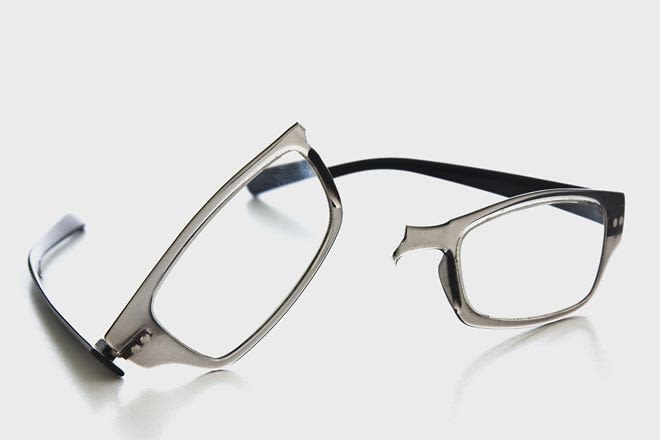
- You purchase an item that has a manufacturer's defect, such as a frame that breaks because of a weak solder joint.
- The prescription clearly is wrong, due to a mistake in how your eyes were measured or the lenses were fabricated.
The Uniform Commercial Code (UCC) states that, if an item is broken when you buy it, you can demand a full cash refund.

If your eyeglasses break because of a defect, you should have no trouble getting your money back.
Also, reputable optical stores usually will have no problem offering you a replacement, because most eyewear manufacturers stand behind their products and provide free replacements to the retailer if there is a manufacturing defect. Both the makers of eyeglass lenses and frames and the optical stores put their reputations first and do not want consumers to think their eyewear is inferior.
However, there is a definite line between defective lenses and frames and ones that have been obviously abused or the victim of an accident. Neither the manufacturer nor the seller has an obligation to provide a replacement in those cases, although some optical stores do offer insurance or warranty plans.
The other clear-cut case in which obtaining a replacement should not pose a problem is if the eyeglass lenses are made incorrectly.
- Trouble using eye drops? Try the Tears Again Liposome Eyelid Spray
- Dry and irritated eyes? The problem may be your eyelids
Two causes are possible: Either the fabricating laboratory erred, or the doctor's prescription is incorrect. The optical shop that makes your eyeglasses is obligated to provide you with lenses that meet the specifications of the prescription exactly, just as a pharmacist must give you the exact medication a doctor orders.
It is a good idea to take any pair of completed glasses back to the prescribing doctor and have the lenses checked for accuracy. If the optical shop has made a mistake, ask the doctor's office for a written explanation of exactly what the errors are, so you can bring it to the store and have the lenses remade at no charge, of course.

You love your new eyeglasses, but they don't love you? Whether you can return them depends on where you bought them.
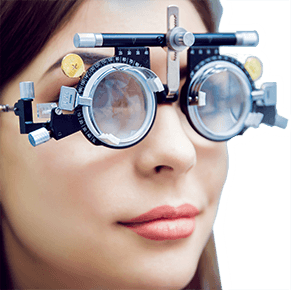
If the prescription has been made correctly, but you are still uncomfortable with your vision through the eyeglasses, your eye doctor can recheck your eyes and modify the prescription if necessary.
Most optical stores will remake the lenses for you at no charge at least once if the doctor adjusts the prescription. In most cases, one change should be sufficient to give you comfortable vision.
If you have a specific problem with your eyes or you have a medical condition that may cause your vision and your eyeglass prescription to change constantly, be sure to discuss this with your optician beforehand so you know how many times they will remake your lenses at no charge and what conditions apply.
Beyond the first courtesy remake at no charge, usually something must be negotiated. You may be able to arrive at an agreeable solution by paying a reduced amount for the remakes until the prescription is satisfactory and then paying to have any coatings or additional lens treatments put only on the final pair.
On the other hand, if you have a special type of eyeglass lens such as a progressive lens that can be difficult for some wearers to get used to the lens manufacturers typically guarantee you a replacement in a lined bifocal or single-vision lens at no additional charge.
Usually, if you need to make that switch, there is no refund between the (generally higher) cost of the progressive lenses and the (generally lower) cost of other types of lenses, but at least you will have lenses you can use comfortably.
What if You Just Don't Like Your New Glasses?
The gray areas come into play if you want to return your glasses simply because you don't like them.

Yikes! If you can't read road signs with your new glasses, either the eyeglass lab made a mistake, or your prescription is not right, and you need to revisit your eye doctor.
If the prescription is satisfactory, then being unhappy with the glasses can mean a number of things such as:
- The eyewear is too heavy, causing your glasses to constantly slip down your nose.
- The frames and possibly the lenses are unflattering.
- You simply made a poor choice in style a mistake we probably all have made.
Depending on what the exact objection is, optical stores have policies that can differ widely. Your success in exchanging the eyeglasses or obtaining a refund will depend on where you bought them.
Some optical stores will take the entire pair of glasses back within a certain time period, no questions asked. Within a specified time frame typically one to four weeks from the date of purchase you can receive a full refund or a store credit so you can find something more to your liking.
Some stores will offer a credit or refund only on the frames, because they can be returned to the manufacturer for credit whereas, the lenses are useless to anyone else.
Other stores won't take back the eyeglasses at all, and have an "all sales are final" policy.
This is why it pays to ask questions about return policies ahead of time. You invest a significant amount of money in new eyewear, so you need to know what to expect "just in case."
Although state laws vary, what you are entitled to depends on the refund policy that the store posts in some form: on a sign by the register, a written policy on the sales slip or other documentation. But what you actually negotiate with the store may be much more satisfying than the written policy.
Just as when shopping for any other kind of merchandise, you're best off using common sense when deciding on which optical stores to patronize. One that comes highly recommended from satisfied friends or relatives often is a good bet.
If you don't have a recommendation, talk to an optical shop's opticians before you buy. If they don't seem knowledgeable, or if they treat you poorly, then chances are that you won't have a good experience should you have a problem down the road.
If staff members treat you courteously when you make the purchase, they often will look for ways to help you overcome any difficulties you have after the sale. If the glasses are too heavy, for example, the optician may be able to suggest a lighter-weight lens and allow you to pay only the difference between the cost of the original lens and the premium lens, rather than charging you full price.
Likewise, if the frames aren't a good fit, the optician may put the existing lenses into another style that fits better asking you to pay only the difference, should the better-fitting frames cost more than the ones you originally bought. If the new frames are larger, however, there also may be a charge to remake new lenses to fit the frames.
Insurance, Warranties and Replacement Plans
Aside from being unable to wear your eyeglasses comfortably or being unhappy with them, another consideration is what happens if your eyewear gets damaged. Here again, the policies of different optical stores will vary, so ask about the store's eyewear damage policy before you buy.
Some shops charge a fee generally in the $25 to $50 range for damage insurance or a warranty on the eyeglass frames and/or lenses.
Consider what the replacement cost would be if a lens became scratched the most common type of damage that can occur. Does the cost of replacing one lens exceed the price of the insurance? If so, it may be worthwhile to purchase the extra peace of mind especially if the glasses are for a child or a rambunctious adult.
While some warranties guarantee unlimited replacements at no additional charge, others limit the number of frames or lenses they will provide. Different policies also may involve a small fee, or "co-payment," to replace the frame or lenses.
Sometimes replacement policy costs are included in the purchase price of the eyeglasses, and sometimes the shop doesn't offer any type of guarantee at all. If damage is a big concern, then factor that into your decision about where to buy.
If You're Still Dissatisfied
If you do your homework up front and purchase your eyeglasses from the optical store that makes the most sense for you, chances are that you will have good results should you have to request a refund or exchange.
But if you try to negotiate with the optical shop in good faith to resolve a problem and you believe that you are being treated unfairly, you are not without recourse.
If you are dealing with a retail chain store, contact the corporate headquarters and explain your difficulties at that level.
If it's an independent store, or if the chain's headquarters is unresponsive, you can file a complaint with the Better Business Bureau, which will work on your behalf to try to resolve the situation. In addition, your state or local consumer protection agency may be able to help.
If you are unable to achieve satisfaction from any of these avenues, you always have the most powerful weapon available to you: You can vote with your wallet. If enough people take their business elsewhere, the uncooperative optical store will find itself with no customers left to offend and will be forced to close its doors. ![]()
[Page updated November 2009]
For more Eyeglass Frames and Lenses articles, please visit this section's home page or use the search box below. |