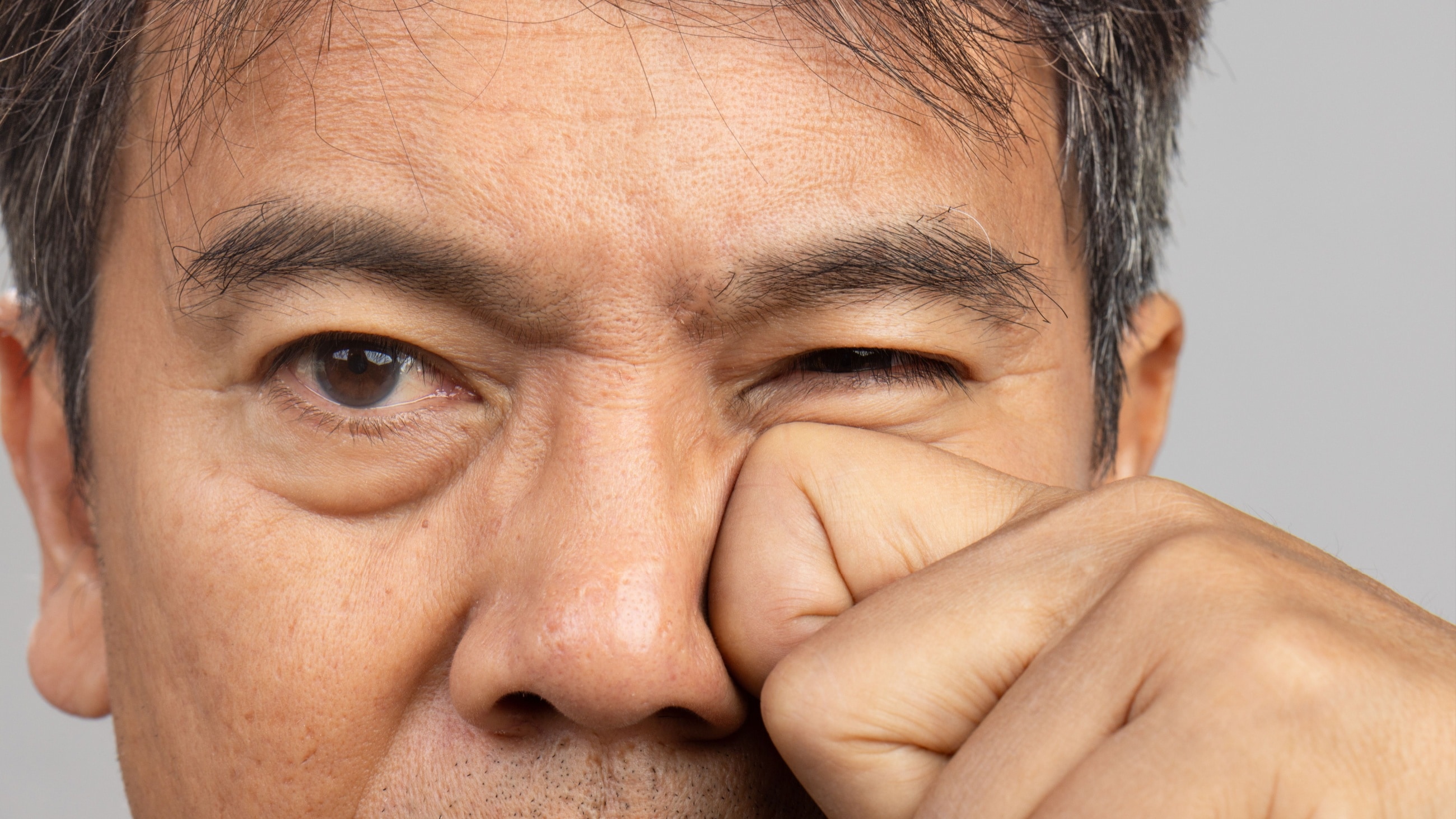
What is an eye twitch?
Eyelid twitching, also called eye twitching, happens when a muscle in your eyelid spasms uncontrollably. The most common eyelid twitch is usually harmless. It tends to come and go for a while until it disappears on its own.
Many people call it an "eye twitch," but the eye itself doesn't actually move — only the eyelid.
In rare cases, the twitches can feel more forceful or involve other parts of your face. This may be caused by a medical condition.
How common are eye twitches?
Eyelid twitches are very common and most people experience them at some point. It's rare for them to be caused by something that needs medical attention.
Types of eyelid twitches
Different kinds of eye twitching can be organized by how strong the twitching is and which parts of the face are affected:
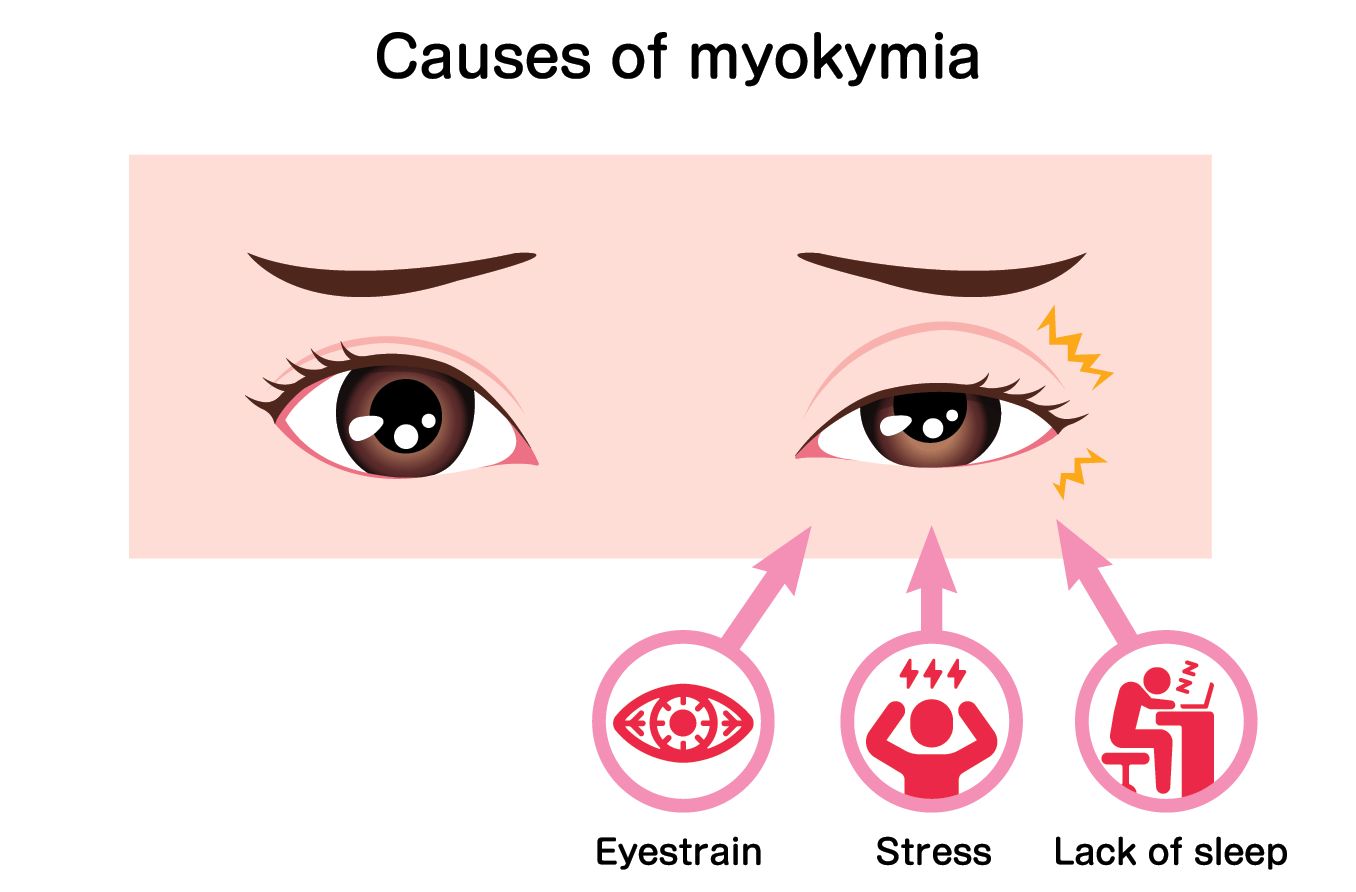
Eyelid myokymia (common)
When you think of an eye twitch, you're probably thinking of eyelid myokymia. This is the medical term for the slight pulsing, flickering or "twitching" of your eyelid.
You can feel the twitching above your eye (upper eyelid), under your eye (lower eyelid), or in both your upper and lower eyelids. It usually only happens on one eye, but sometimes eyelids twitch on both eyes at the same time.
These simple eyelid twitches can last anywhere from one minute to several days before they go away on their own.
The eyelid twitching is usually subtle and not noticeable to others, even though it feels obvious to you. It doesn't affect your vision in any way.
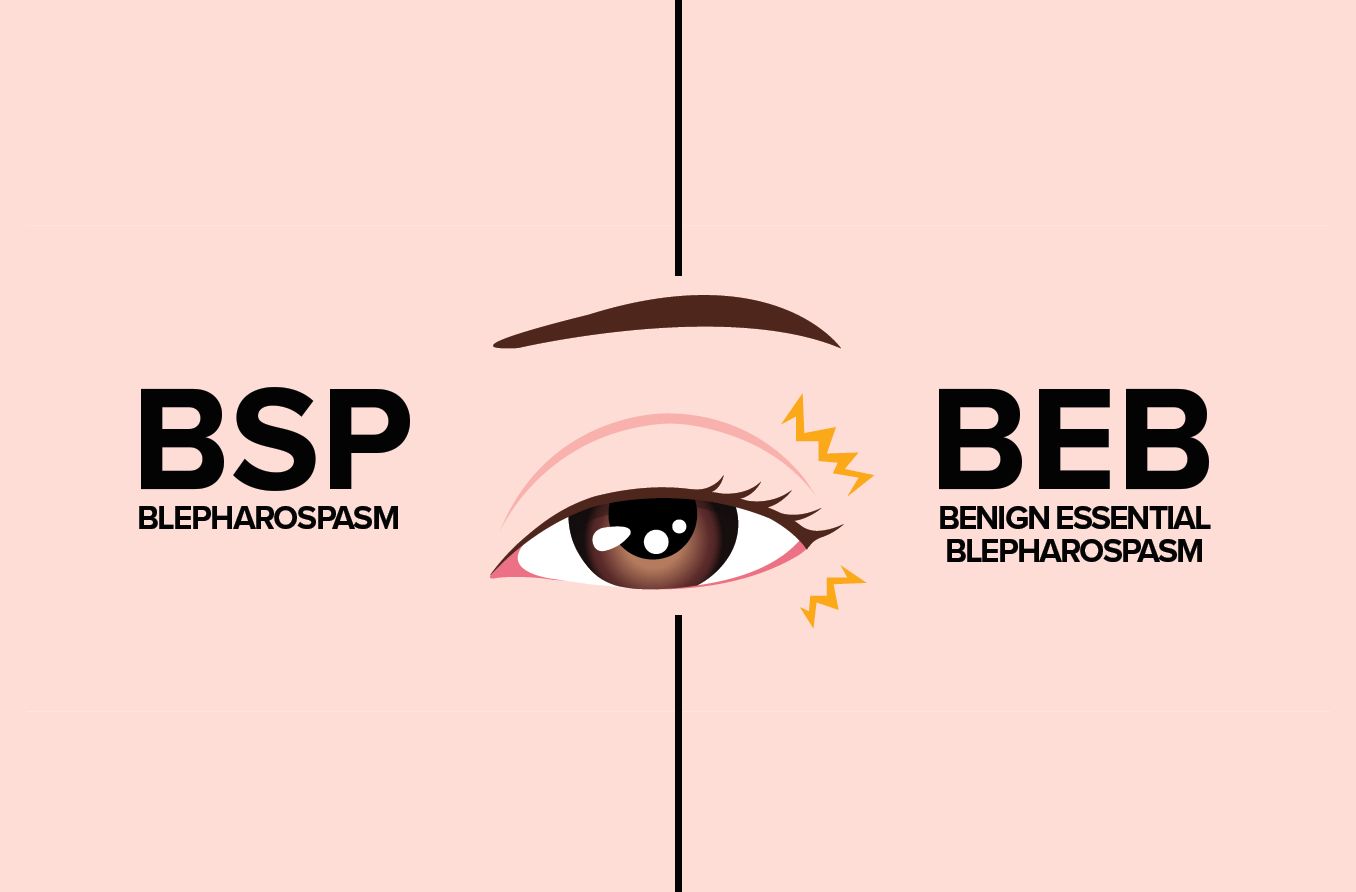
Benign essential blepharospasm (rare)
Benign essential blepharospasm often starts with a twitching eyelid, frequent blinking and eye irritation. It can progress to episodes of tightly squeezing the eyelids shut, which can happen many times throughout the day. It usually affects both eyes.
While most cases can be managed, severe episodes can restrict your vision for long periods and make daily activities more challenging.
This condition develops on its own, likely when signals in the brain that control blinking get mixed up.
A different problem, called apraxia of lid opening (ALO), can also affect your eyelid movement. However, ALO is when the eyelids won't start to open after they close, while blepharospasm is when uncontrollable squeezing keeps the eyelids shut.
These are two separate conditions, but they sometimes happen together.
Hemifacial spasm (rare)
Hemifacial spasm makes the muscles on one side of your face contract (tighten) uncontrollably. This can happen when a blood vessel presses against the facial nerve that controls the muscles on that side of your face.
It usually starts with eyelid twitching on one side, then spreads to the cheek or mouth over time. The twitching may come and go at first, but eventually the muscles on that side of the face can spasm almost continuously.
Why is my eye twitching?
There are many reasons why your eyelid might twitch. Most are caused by common triggers in your daily life.
Causes of simple eyelid twitches
Common eye twitches can be caused by things people experience all the time. These are usually temporary and not related to any medical condition.
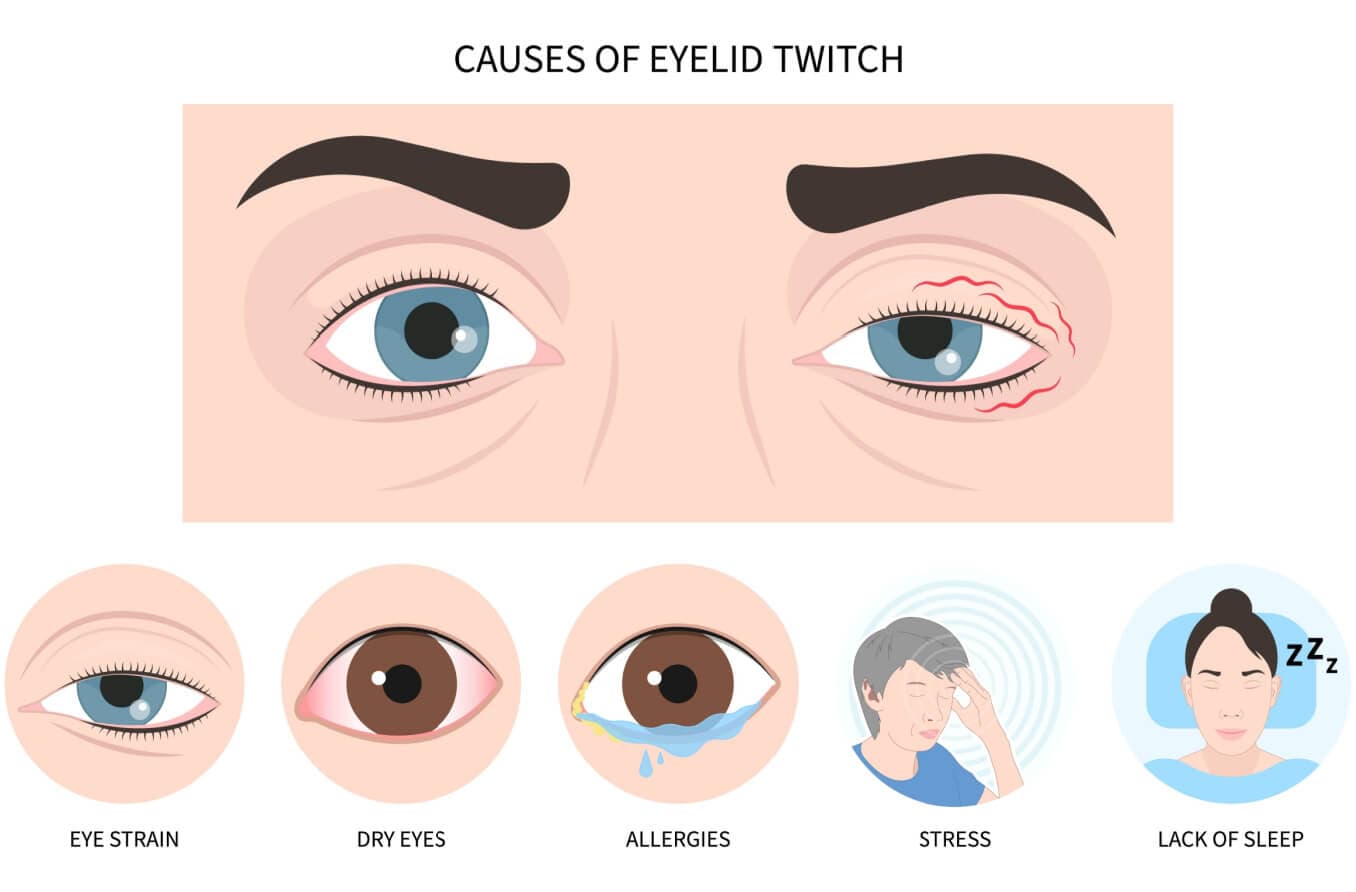
It isn't always easy to figure out what’s making your eye twitch, but some possible causes are:
- Fatigue or lack of sleep
- Stress or anxiety
- Caffeine
- Alcohol
- Smoking
- Dry eyes or other eye or eyelid irritation
- Light sensitivity
- Eye strain
- Exercise
- Certain medications (uncommon)
Causes of benign essential blepharospasm
Doctors don’t know what causes benign essential blepharospasm. Genetics and other health factors could play a part, but more research is needed to know for sure.
Other health problems or triggers can sometimes cause different types of blepharospasm, but the benign form (not caused by another health condition) is more common.
Causes of hemifacial spasm
Most of the time, doctors don't know what causes hemifacial spasm. It simply happens because a blood vessel is pressing against the facial nerve.
Less often, it can be caused by an issue like:
- Trauma to the facial nerve
- Bell's palsy
- Multiple sclerosis
- An unusual blood vessel in the head
- A tumor that presses on the facial nerve
How do you stop an eye twitch?
Most eyelid twitching is caused by temporary factors like fatigue, stress, caffeine intake or eye strain. In these cases, certain lifestyle changes could help stop the twitching. Try to:
- Get enough sleep.
- Reduce stress.
- Limit how much caffeine you have, including often-caffeinated drinks like coffee, tea, soda and energy drinks.
- Limit your alcohol consumption.
- Quit smoking.
- Use artificial tears eye drops if your eyes are dry.
- Take regular breaks during screen use, reading and other tasks that require focusing for long periods.
Talk to an eye doctor or other health care professional if your eye twitching bothers you. They may recommend antihistamine eye drops or other ways to help the twitching stop.
Treatment for other conditions
While most eye twitches are harmless, spasms that get worse or don't go away are sometimes related to benign essential blepharospasm or hemifacial spasm.
In these cases, doctors often use Botox injections or oral medication to relax the eyelid muscles. Surgery may also be recommended if other treatments don't help.
Your doctor can decide whether your eye twitching is just temporary or part of an underlying condition that needs treatment.
Can eye twitches have complications?
Almost everyone feels their eyelid twitching at some point in their life. These twitches are almost always harmless and don't damage your eyes or eyelids. It’s uncommon for them to affect your vision.
In rare cases, near-constant or unusual eye twitching can be an early sign of a neurological condition that can impact your everyday activities. A doctor can help manage your symptoms with injections, medicine or surgery.
When to see a doctor
Most eyelid twitches are harmless and don't need a doctor's visit. While the following symptoms are uncommon, see an eye doctor or physician if:
- Your eyelid is still twitching after a week.
- Your eyelid closes all the way while twitching.
- Your upper eyelid looks like it's drooping.
- Other parts of your face are twitching too.
- You have changes in your vision.
Your doctor can check to see if something else is causing the twitching and recommend treatment if needed.