Caring for your soft contact lenses
Why it’s so important to clean and care for soft contacts
Enter the contact lens care aisle of supermarkets and drugstores, and you’ll probably find an array of products.
It’s essential to understand lens care. Not caring for your contact lenses properly can lead to a variety of eye infections and inflammations, including some that may cause blindness.
Actually, contact lens care can be easy. One-bottle care systems and disposable contact lenses could mean that proper lens care involves less time, expense and trouble than it did years ago.
Before we get started, understand that you should not switch care regimens without asking your eye doctor first. Some products are not compatible with each other or with certain contact lenses. Using incompatible products can ruin your contact lenses or harm your eyes.
To make sense of all the bottles and boxes, it helps to know what steps are required to care for soft contacts.
It’s particularly important to follow guidelines for safe handling of soft contact lenses in light of previous outbreaks of Acanthamoeba and fungal eye infections associated with a popular (now discontinued) brand of contact lens cleaning/disinfecting solution.
Some solutions may be more compatible with certain contact lenses than others.
The basics of soft contact lens care: Clean, rinse and disinfect
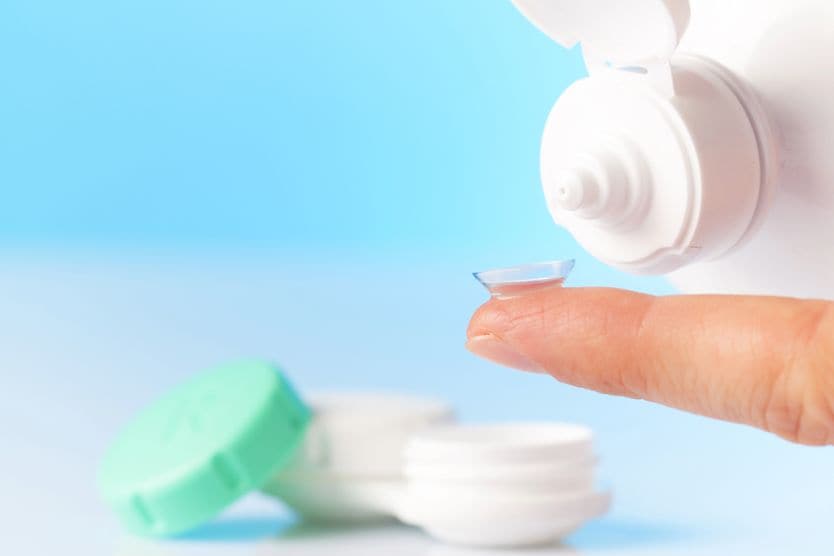
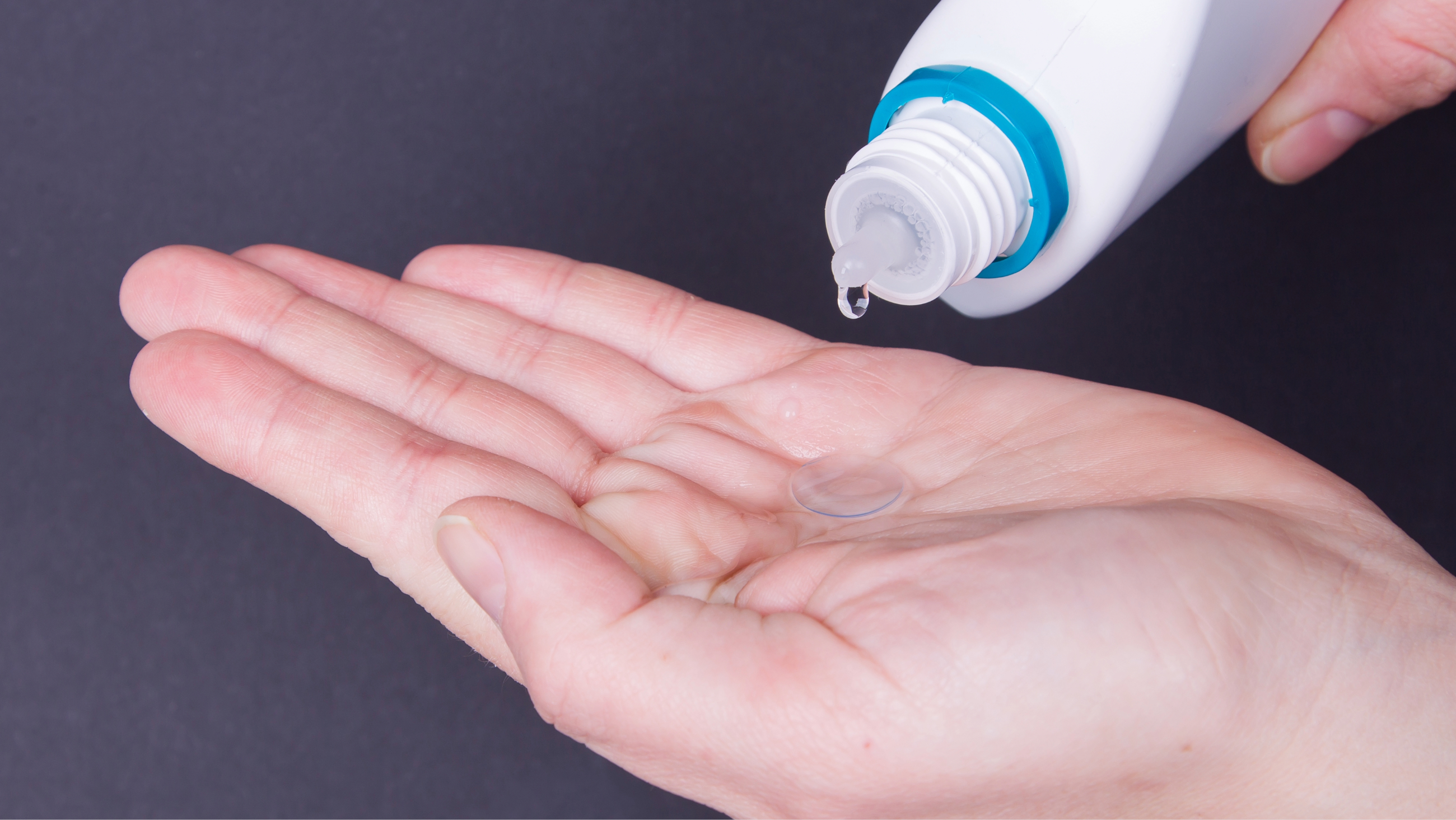
To clean contacts with a multipurpose solution, place the lens in the palm of your hand, apply a generous amount of solution and gently rub the lens against your palm with your pointer finger. Use a back-and-forth (not circular) motion.
- Wash your hands so that you don’t transfer dirt and germs to your eyes. Try to avoid moisturizing soaps, as they are not good for contact lenses. Dry your hands with a lint-free towel.
- Remove one lens and clean it with the recommended solution. Cleaning removes eye-produced buildup, cosmetics and other debris that can impair lens comfort and make it easier for microorganisms to attach. The Food and Drug Administration (FDA) recommends that you rub the lens in the palm of your hand with a few drops of solution, even if you are using a “no-rub” product.
- Rinse the lens again to remove the loosened debris. Make sure to take as long as the package directs: Rinsing is an important step.
- Place the lens in your clean lens case or lens holder and fill with fresh solution; don’t “top off” your old solution. Disinfecting kills microorganisms on the lens. Disinfection time varies from product to product; check the package for details.
- Repeat steps two through four for your other lens.
SEE RELATED: Contact solution as eye drops?
Beyond the basics
Comfort, clarity and eye health usually depend on more than just your daily cleaning. It’s important to know about other factors that can affect your lenses.
Protein removal
Depending on what kind of contact lenses you wear and how much protein your eyes deposit on your contacts, your eye doctor may recommend that you use a product for protein removal.
While cleaning them does remove some protein, it can still build up on your lenses and make them uncomfortable. That’s why the longer you wear lenses before replacing them, the more likely you are to need a protein remover.
For example, if you wear disposables, you probably won’t need one. But if you wear the kind of lenses that are replaced only once or twice a year, you probably will. Products for removing protein may include enzymatic cleaners and daily protein removal liquids.
Eye dryness and irritation
Use contact lens eye drops to lubricate your eyes and rewet your lenses. It’s important to use drops that are labeled for contact lens wear. Some “artificial tears” are approved for use on top of your contact lenses. In addition, the recommended type of “contact lens rewetting” drops are preservative-free (PF) formulas or those with special preservatives.
You should not use water or saliva to clean a contact lens, and you shouldn't put contact solution directly into your eyes. Water, spit and other liquids that are not designed for lens care can introduce bacteria. This can lead to serious eye infections.
Eye sensitivity and allergies
A small percentage of lens wearers develop an eye allergy to the chemicals present in contact lens solutions. If this is the case, you don’t need an additional product. You should switch products to those marked “preservative-free.”
Contacts and warts
Warts on fingers are skin infections caused by viruses of the human papillomavirus (HPV) family. These are different viruses from those that cause pink eye and other common eye infections (which are called adenoviruses, herpes simplex viruses and varicella-zoster viruses).
If your contact lens touches a wart on your finger, it’s a good idea to rinse and rub the lens with multipurpose disinfecting solution before putting it back on your eye.
As an added precaution against introducing the HPV virus into your eye, see a dermatologist to have the wart on your finger treated.
But when using these medications, be sure to wash your hands thoroughly before touching your contact lenses or eyes. Some topical medicines can cause a painful chemical irritation if they get in your eyes.
Products: Cleaning, rinsing and disinfecting solution
There are many different options for keeping your contacts clean. It is important to know the differences when choosing a product for your specific type of contact lenses.
Saline solution
Saline solution is for rinsing and storing contact lenses. You may also need to use it for rinsing after using a different cleaning system, such as hydrogen peroxide. Don't use saline products for cleaning and disinfection.
Daily cleaner
Daily cleaner is for cleaning your contact lenses. Put a few drops in your palm. Then, rub the lens for about 20 seconds. Be sure to clean both sides. Use other products for rinsing and disinfection.
Multipurpose solution
Multipurpose solutions make caring for your lenses fairly simple. But remember to rub your lenses as directed for the best results. They are designed to retain moisture on the contact lens surface, so eyes stay moist throughout the day.
Multipurpose solution is for cleaning, rinsing, disinfecting and storing your contact lenses. Clean your lenses with daily cleaner. Rinse them as directed, then disinfect with the same solution. You may need to rinse the lenses twice. Then, place them in a clean lens case with solution to clean and disinfect. When you are ready to wear the lenses, rinse them again. With multipurpose solutions, no other lens care products are necessary.
Hydrogen peroxide solution
Hydrogen peroxide solution is for cleaning, disinfecting, rinsing and storing your contact lenses. With this product, you place your lenses in the provided basket and rinse them. Then, place the basket in its cup and fill the cup with solution to clean and disinfect your lenses.
Some lens holders for hydrogen peroxide systems have a built-in neutralizer (to convert the hydrogen peroxide to water, so it doesn’t sting your eyes). The built-in neutralizer stops working after a stipulated number of uses. With others, you may need to add a neutralizing tablet.
After the disinfection and neutralizing step is completed, you can remove the lenses from the case and put them on.
Don't rinse your contacts with hydrogen peroxide solution and apply them directly to your eyes without completing the entire disinfecting and neutralizing step. Doing so can cause a painful chemical injury to the eye.
Hydrogen peroxide systems may help wearers who are sensitive or allergic to preservatives used in multipurpose solutions.
Products: Protein removers, eye drops and options for sensitive eyes
You can use different products to manage how your lenses feel all day. These may include cleaning aids and comfort-supporting drops.
Enzymatic cleaner
Enzymatic cleaner is for removing protein from your contact lenses, usually on a weekly basis. You can use the tablets with saline solution or disinfecting solution (multipurpose or hydrogen peroxide), as directed.
Before using an enzymatic cleaner, clean and rinse your contacts using other products. Fill your lens case or vials (as directed) with solution, then drop an enzymatic tablet or drops in each lens well or vial. Wait for them to dissolve, then add your contacts. Leave them in for the required time, usually around four hours.
Afterward, disinfect with another product if necessary. Some enzymatic cleaners let you skip disinfection if you use a disinfecting solution instead of saline. But that’s not always true. Check the cleaner’s packaging to be sure.
Eye drops
Eye drops for contact lenses are for lubricating your eyes and rewetting your contacts. Make sure to choose a brand that is safe for contact lenses. Eye drops that aren’t meant for contact lenses can temporarily alter how a lens fits your eye or discolor the lens.
Products for sensitive eyes
Products for sensitive eyes help people who have allergic reactions to contact lens solutions. These allergies can pop up, even if you’ve been using the same products for years without difficulty. Symptoms may include itching, tearing, foreign body sensation, burning, redness and eye discharge. It’s important to see your eye doctor if you’re experiencing these symptoms, as they can have many causes.
A preservative called thimerosal was found to cause problems in some patients, so some brands do not use it nowadays. Thimerosal-free saline is usually marked “for sensitive eyes.”
However, people can have reactions to other preservatives as well. This may indicate the need to switch to preservative-free care products. Some of these use a “disappearing” preservative. It usually vanishes before the solution touches your eyes.
Be sure to pay close attention to the expiration dates on all contact lens solutions. This is especially important for preservative-free solutions. Preservative-free saline, for example, should be discarded within 24 hours after you open it to reduce the risk of contamination.
What’s most popular?
Many soft contact lens users now choose multipurpose solutions. These solutions are generally simple to use. You can use one product to clean, disinfect, and rinse the lenses.
But hydrogen peroxide care systems (even though they may be a little more cumbersome) sometimes are a better choice. This is especially true if you develop discomfort problems with silicone hydrogel contact lenses.
A recent study found that using a daily hydrogen peroxide lens disinfecting system cut down mucus and lipid deposits. It also improved the surface wettability of silicone hydrogel lenses. This change may lead to better wearing comfort compared to multipurpose solutions.
Store brands
You might have seen that your pharmacy and grocery store offer store-branded contact lens care products. These are also called “private label” products. Often, they are considerably less expensive than name-brand products. Should you use them?
These products are usually safe or they wouldn’t be sold. But there are potential problems. Private label products can be made from older formulas. These often lack the benefits of newer products.
You shouldn’t switch products without consulting your eye doctor to ensure the new solution is compatible with your lenses. Let’s say that you buy a bottle of Store-brand X, bring it to your eye doctor and he gives you the OK. You use the product, and everything is dandy.
Next time you buy Store-brand X, it may not be the same product. That’s because the store doesn’t, of course, make its own solution. They buy it from a supplier. If a better deal comes along, they might switch suppliers — and even formulations — but still sell the revised product under the “Store-brand X” name. And the revised formulation may or may not be right for your eyes or your particular contact lenses.
Soft contact lens care tips
Once you’ve decided which product you’d like to try, discuss your plans with your eye doctor. Don’t switch brands until you know the new one works with your other products and your contact lenses.
Regardless of which care regimen or brands you use, remember:
- Never touch the solution bottle tip to any surface, including your body. This can cause contamination of the solution.
- Avoid getting tap water on your contact lenses and accessories. It can carry a microorganism called Acanthamoeba that causes serious eye infections.
- Remember to clean your contact lens accessories (lens case, cleaning/disinfecting devices, enzymatic cleaner vials and so on) as directed.
- Lens cases should be rinsed with hot tap water and dried when not in use. (Because Acanthamoeba cysts may be present in tap water and can survive for years after drying, some eye doctors recommend using only contact lens disinfecting or multipurpose solution for this step.)
- Some studies suggest that wiping your case with a clean tissue and/or placing it upside-down on another clean tissue may be additional good steps in keeping bacteria biofilms off the case. Ask your eye doctor what they suggest.
- Throw out your contact lens case at least every three months to reduce your risk of infection.
Clean and disinfect your contact lenses once a day. If you wear extended wear contacts, clean and disinfect the lenses as soon as you remove them. But if they’re meant to be tossed right away, you don’t need to worry about it. Not only will your eyes be safer and healthier, but your contact lenses will be more comfortable to wear, too.
Need a tutorial on how to put in contacts or how to take out contacts? Go to our beginner’s guide for first time contact lens users.