What is myopia control?
Myopia control is a group of methods eye doctors can use to slow the progression of childhood myopia. There is no cure for myopia, but there are ways to help control how rapidly it develops or progresses. These include myopia control contact lenses and glasses, atropine eye drops and habit changes.
Why should you be interested in myopia control? Because slowing myopia progression may keep your child from developing high myopia. High myopia can lead to sight-threatening problems later in life, such as:
- Myopic macular degeneration
- Cataracts: both posterior subcapsular cataracts and nuclear cataracts
- Primary open-angle glaucoma
- Retinal detachment
Myopia management includes all the eye-health care a person with myopia might need. It ranges from diagnosing childhood myopia to addressing its complications in adulthood. Myopia control is a vital part of myopia management.
How does myopia control work?
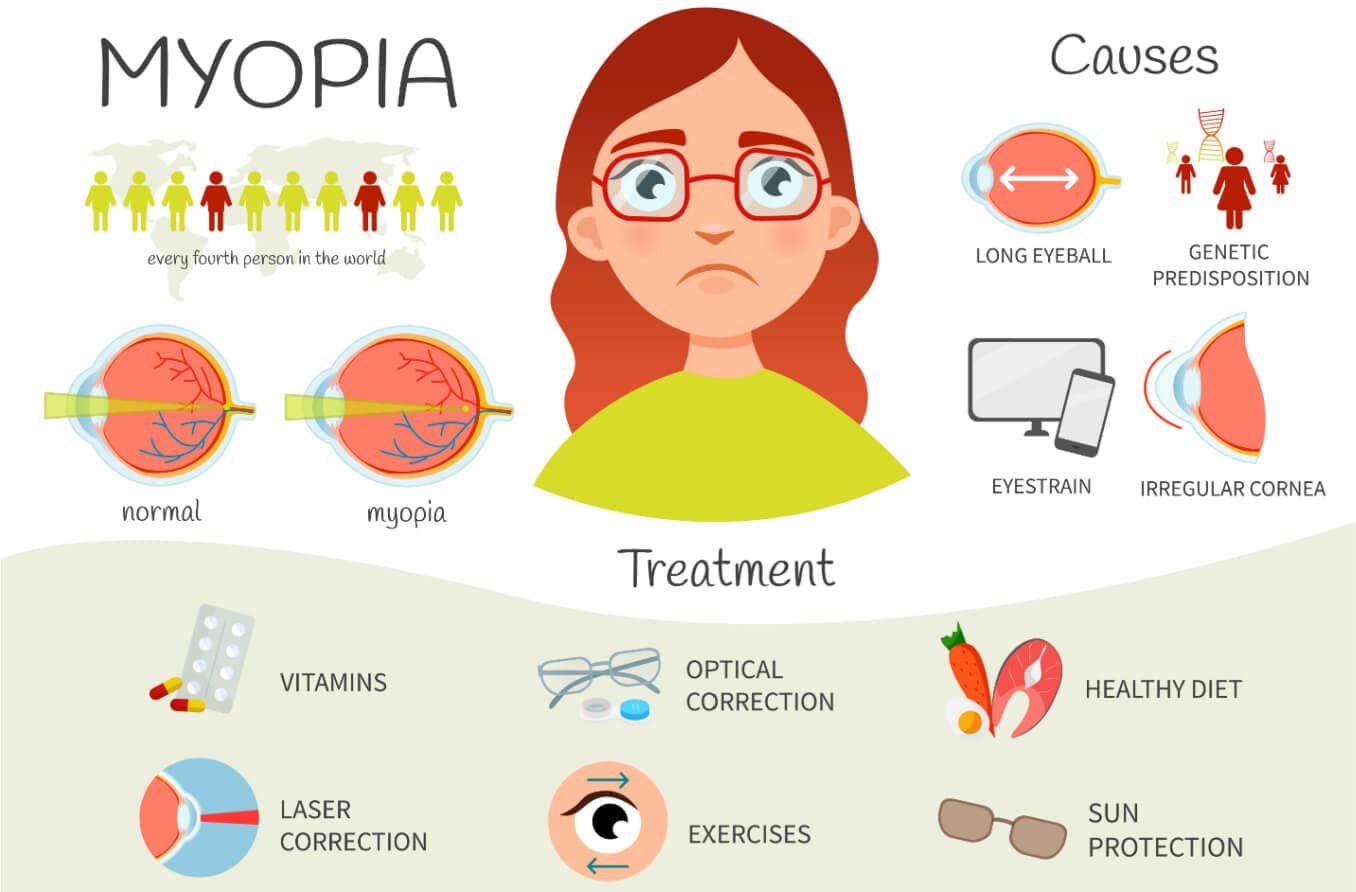
The most common cause of childhood myopia and its progression is axial elongation of the eye. This is when the eyeball grows too long from front to back. In general, myopia control works by slowing this elongation.
There are several types of effective myopia control, and they can be used one at a time or in combination.
Special myopia control lens designs work by changing how light focuses on the retina. They are available in both myopia control contact lenses and eyeglasses.
Myopia control eye drops are one of the most effective ways to slow myopia progression. Eye doctors have prescribed them for more than 100 years with consistent results. However, scientists still don't fully understand why they work so well.
Changes to daily habits can also be effective. Sunlight is an important regulator of eye growth, so outdoor time is key.
Prolonged near work can also lead to myopia development and progression. Reducing prolonged periods of near work can lower the risk for myopia development. Taking regular breaks during near work is also very important.
Myopia control methods
Currently, there are three broad categories of interventions for myopia control. They each work in different ways to counteract myopia development or progression:
- Lenses – Myopia control contact lenses, myopia control eyeglasses and orthokeratology
- Eye drops – Low-dose atropine eye drops
- Habit adjustments – Increasing time outdoors and reducing prolonged near-work activities
Myopia control contact lenses
Myopia control contact lenses are very different from the lenses that correct myopia.
Myopia control contact lenses have different focusing power in different zones. They have full focusing power in the center but less power around the periphery. These lower-power areas ensure that all light entering the eye is focused in front of the retina.
This is called peripheral myopic defocus.
Research shows that focusing light in front of the retina in this way can help stop the eye from growing longer. In fact, myopia control contact lenses can slow myopia progression by up to 59%.
One example of myopia control contact lenses available in the U.S. is the MiSight 1-day lenses by CooperVision.
The multifocal contact lenses used to correct presbyopia can also help slow progression. However, they're not as effective as myopia control contact lenses.
Myopia control glasses
Over the last 8 to 10 years, there has been a lot of research and progress in the design of myopia control eyeglasses. Studies show that these new designs can reduce myopia progression by more than 60%.
Myopia control glasses work much like myopia control contacts. They can slow the elongation of the eye by creating peripheral myopic defocus.
Unfortunately, there are no FDA-approved myopia control glasses in the U.S. yet. But two exciting examples are the Stellest lens by Essilor and the MiYOSMART lens by Hoya. The Stellest lens earned the FDA's Breakthrough Device designation in 2021.
- Stellest uses HALT (Highly Aspherical Lenslet Target) technology to create myopic defocus.
- MiYOSMART uses D.I.M.S. (Defocus Incorporated Multiple Segments) technology to create myopic defocus.
Some doctors also use standard multifocal lenses to help slow myopia progression. They can be effective, but they don't slow progression as much as myopia control glasses.
Orthokeratology
Orthokeratology, also known as ortho-k, is a common type of vision correction. Many doctors also use ortho-k to control myopia progression in children.
Ortho-k uses specialized rigid gas-permeable contact lenses that are only worn overnight. The lenses temporarily change the shape of the cornea during sleep, so vision is clear the next day.
This temporary change also creates peripheral myopic defocus and reduces peripheral hyperopic blur. Research has shown that ortho-k therapy can reduce elongation of the eye.
Atropine eye drops
Atropine eye drops relax the focusing muscles inside the eye. They are commonly used to treat inflammatory eye conditions and in diagnosing strabismus.
But eye doctors also use atropine eye drops to slow myopia progression.
The use of atropine was initially based on the hypothesis that eye fatigue was a factor in myopia. However, later studies pointed to a different answer. They found that atropine likely works due to its effect on receptors in the retina and other parts of the eye.
Research shows that low-dose atropine eye drops (0.05%) can slow progression for over three years. This can have a large impact if children use the drops during the peak years of myopia progression.
Some children may have a rebound effect, even with low-dose atropine. This means their myopia progression may speed up again after stopping use of the eye drops. However, the amount of myopia rebound and the number of children who experience it are very small.
READ MORE: Myopia Awareness Week
Detecting myopia early
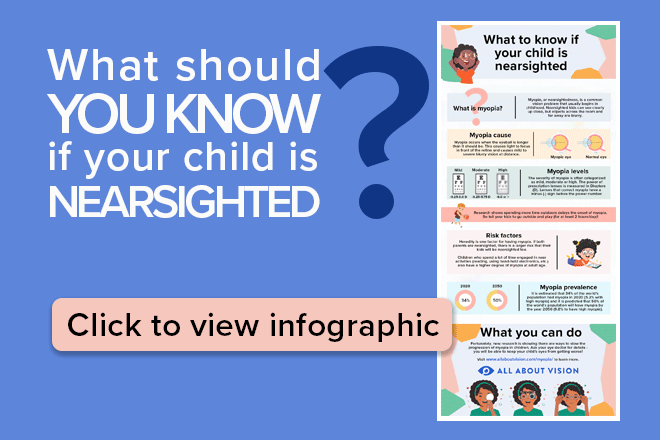
The best way to take advantage of myopia control methods is to detect myopia early. This means ensuring that kids receive early childhood eye exams.
Routine eye exams are important for all kids, even if they don't seem to have vision problems. Nearsighted kids often don't have obvious symptoms or even realize they are nearsighted.
Routine eye exams are especially important for kids with parents or siblings who have myopia.
Babies should have an eye exam at around 6 months, and preschool-aged kids should have one between 3 and 5. Children 5 and over should have eye exams every year, starting before they enter first grade.
Worried about your child's myopia?
Find an eye doctor near you and learn about myopia management options.