What causes red eyes in photos?

Why do eyes look red in photos?
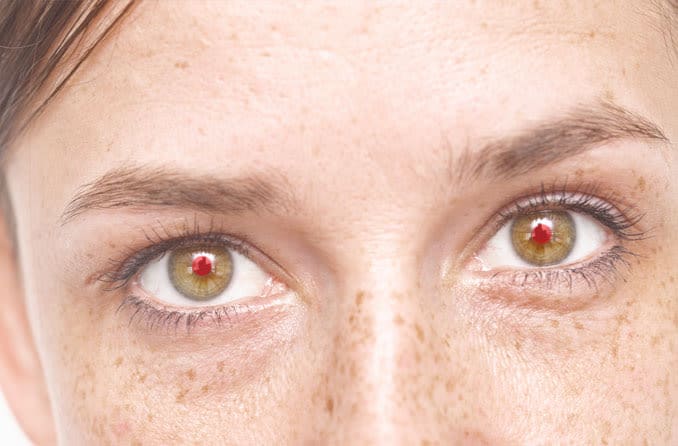
The “red-eye effect” in photos happens when a camera flash used at night or in low light reflects off the subject’s eye.
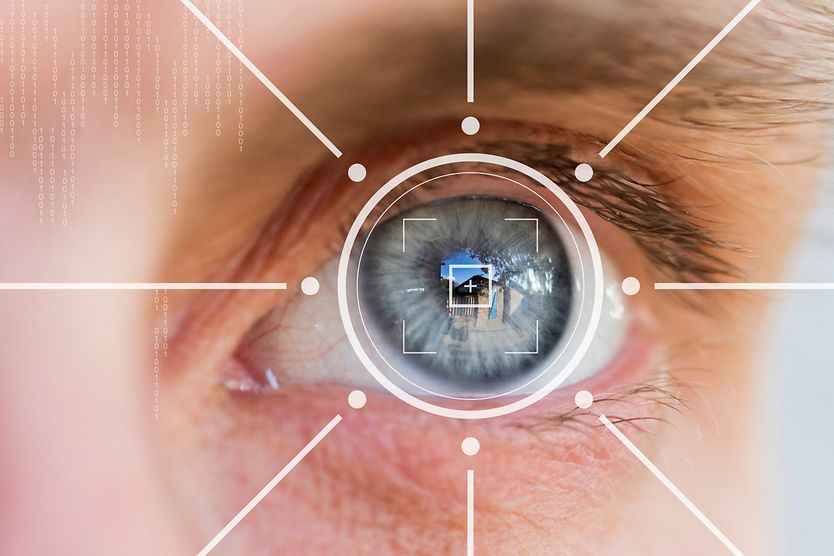
Knowing how eyes work may help you understand this photographic phenomenon. Light rays enter the eye through the cornea, pupil and lens to focus on the retina, a layer of light-detecting cells at the back of the eye. The retina converts the light into electrical signals that travel along the optic nerve to the brain to create visual images.
Pupils get bigger or smaller based on lighting conditions to let the right amount of light into the eye. Pupils are larger in dark settings to let more light reach the retina, whereas they are smaller in bright settings as there is ample light. But when a flash goes off suddenly, the pupils don’t have time to contract quickly enough, so a large burst of light reaches the retinas, reflects back and is seen in the photo as a red-eyed appearance.
The light reflected from the eyes looks red due to the rich blood supply of the choroid. This is a layer of blood vessels at the back of the eye that nourishes the retina and gives it its normal red color. So, as annoying as it is when trying to capture a perfect shot, the red-eye effect in photos is a sign of healthy eyes.
Keep in mind that red eye in photos has nothing to do with eye redness that can be seen in person, such as bloodshot eyes. If that’s what you’re experiencing, it calls for a visit to the eye doctor.
Common questions about the red-eye effect
Why do only some people get red eyes in group photos?
This depends on several factors. It’s likely that the people without red eyes weren’t looking right at the camera. They may have stood at a slight angle or tilted their heads a bit so light from the flash didn’t hit their eyes directly. Also, distance matters. People standing farther away from the camera might be less likely to get red eye in photos.
Is it normal to have red eyes in every picture?
If you have red eye in every photo, you probably stare into the camera lens when you pose for pictures. Try to avert your gaze slightly so you aren’t looking straight at the camera lens. Also, it may help to look at something bright to make your pupils smaller before the photo is taken. The bigger your pupils, the more likely you’ll have red eyes in photos.
Some people naturally have larger pupils than others, regardless of the lighting. If you have large pupils, you’re more likely to have red eyes in pictures due to greater light reflection from your eyes.
Another reason you may have red eyes in every photo is that you have a smaller amount of melanin in your eyes. People with light-colored blue or green eyes have less melanin and tend to have lighter-colored retinas, which is the reason they may get red eyes in photographs more often.
What does it mean if you only have one red eye in a photo?
Having only one red eye in a photo probably means one of your eyes was staring directly at the camera lens. The other was likely positioned at a slightly different angle that didn’t reflect light back to the camera.
If you always have only one eye that appears red in photos or there is a difference in the color of the light reflected in photos, you should visit your eye doctor promptly for a comprehensive eye exam to rule out any eye issues. While this difference may be due to benign causes, it can also be a sign of serious eye issues such as an ocular tumor. If your child has only one red eye in pictures, read about children and red eyes below.
Can red eyes in pictures be caused by your eye color?
No. The iris, the colored part of your eye, has little effect on red eyes in photos. It’s actually the amount of melanin in the tissue behind the retina that controls how much light is reflected. Melanin, located in the retinal pigment epithelium and choroid of your eye, absorbs light. The more melanin you have, the less light you’ll reflect back at the camera. Fair-skinned and blue-eyed people have less melanin, so they typically have red eyes in photographs more often than those with dark skin and brown eyes.
Is it normal for kids to have red eyes in photos?
It’s normal for children to have red eyes in pictures. In fact, it’s a good sign that the blood vessels in a child’s eyes are healthy. What’s more, a child may be more likely than an adult to have red eyes in photographs.
There are a few things to keep in mind when it comes to kids and the red-eye effect. For example, if only one eye is red or there is a difference in color in the light reflected from the eyes in photos, it’s possible your child has misaligned eyes (strabismus).
Red eyes in photos or a difference in color in the light reflex can be caused by several other eye conditions as well. A white or yellowish glow, called leukocoria, in one eye could be a sign of a serious eye condition or disease, such as cataract, Coats’ disease, eye infection or retinal detachment. A white or yellow reflex (eye shine) could also be a warning sign of a rare but serious childhood cancer called retinoblastoma.
If you notice anything unusual about your child’s eyes in photos, especially a difference in the color of the light reflected between the eyes in photos, an urgent evaluation with your child’s eye doctor is necessary to rule out a potentially serious eye or vision problem.
Can you prevent the red-eye effect in photos?
There are tricks for preventing red eyes in photos, from changing the angle or the light source to turning off the flash. Here are five ways to prevent red eye in pictures:
- Don’t look directly at the camera. Tell your subjects to look slightly away from the lens so their eyes won’t catch the flash at a direct angle. This will reduce the likelihood of red eyes in pictures.
- Make the room brighter. The darker the environment, the more pupils open. This increases the likelihood of red-eye effects in photos. Turning on more lights can help eliminate red eyes.
- Turn on the anti-red-eye function. Red-eye reduction emits short flashes of light quickly before the camera takes the picture. This burst of light makes the pupils constrict, reducing the red-eye effect in photos.
- Angle the flash away from your subject. This method doesn’t work for cameras that only have an internal flash, but you can prevent red eye by adding an external flash to your camera. Turn the external flash slightly to prevent light reflecting straight into your subject’s pupils and back at the camera.
- Turn off the flash. If there is enough light in the room to take a picture without using the flash, you’ll avoid red eyes in photos altogether.
How do you remove red eye in photos?
Did you already snap a photo you love except for that one person with red eyes? Don’t worry; red-eye photos can be salvaged. There are a few ways to fix red eyes in photos after the fact, and many modern phones and photo retouch apps now use artificial intelligence (AI) to detect and correct red eye after the photo has been taken.
Digital camera photos
If you have a digital camera, you can upload photos to your computer and use the red eye correction tool in a photo-editing program. Some applications have a feature where you choose the area in the pupil or iris of the eye that you want to correct and manually remove the redness. Other programs automatically correct the red eye for you.
Smartphone photos
Apps are available for most phones that allow you to fix red eyes in photographs. If a face is detected in a photo and there’s a red eye, you can use an auto-enhance tool to remove the redness and make the subject’s eyes appear more natural. Also, most image-editing apps have a tool that allows you to manually fix red-eye problems in smartphone photos.
Printed photos
If you’ve developed your camera film and notice red eyes in pictures, you can still get rid of the red eyes. The easiest way is to use a special red-eye remover pen. You can also scan the photo to your computer using a flatbed scanner, then use a photo-editing program to fix red eyes by changing the pupil to a more natural color.
Red eye in photos is a common and usually harmless effect
Remember, red eye in photos is not unusual and isn’t typically a sign of any eye problem. However, if you note a difference in the color of the light reflected from the eyes, especially in a child, you should make an appointment with your eye doctor as soon as possible to rule out any serious eye problems such as a tumor or retinal detachment.
If you experience any eye or vision changes or have eye redness visible in person — not just as a flash of red in a photo — you should make an appointment with your eye doctor as well. Eye redness has a variety of causes, from allergies to infections, so definitely get it checked out.