Eye anatomy: A closer look at the parts of the eye
Understanding eye anatomy and how vision works
When surveyed about the five senses — sight, hearing, taste, smell and touch — people consistently report that their eyesight is the mode of perception they value (and fear losing) most.
Despite this, many people don’t have a good understanding of the main parts of the human eye, their functions or how vision works.
Read on for a basic description and explanation of the structure (anatomy) of your eyes and how they work (function) to help you see clearly and interact with your world.
How the eye works
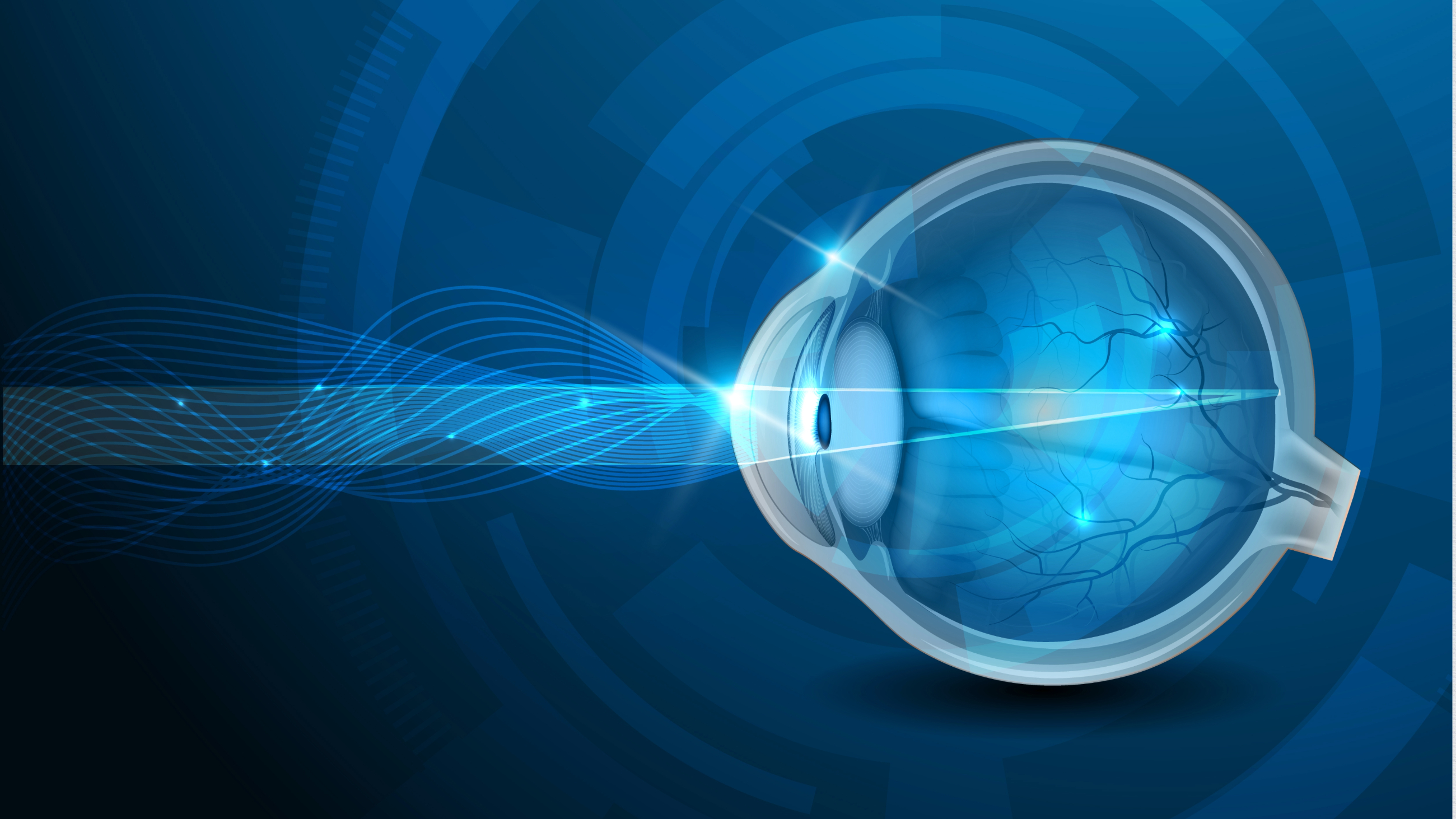
In a number of ways, the human eye works much like a digital camera:
- Light is focused primarily by the cornea – the clear front surface of the eye, which acts like a camera lens.
- The iris (colored part) of the eye functions like the diaphragm of a camera, controlling the amount of light reaching the retina by automatically adjusting the size of the pupil (aperture).
- The eye’s crystalline lens is located directly behind the pupil and further focuses light rays. Through a process called accommodation, this lens automatically helps the eye focus on near and approaching objects, like an autofocus camera lens.
- Light focused by the cornea and crystalline lens then reaches the retina – the light-sensitive inner lining of the back of the eye. The retina contains the eye's photoreceptor cells. It acts like an electronic image sensor of a digital camera, converting optical images into electrical signals.
- The macula is the central area of the retina. It allows us to see fine detail and color.
- The optic nerve transmits signals from the retina to the visual cortex – the part of the brain that controls our sense of sight.
Human eye anatomy (seen from above)
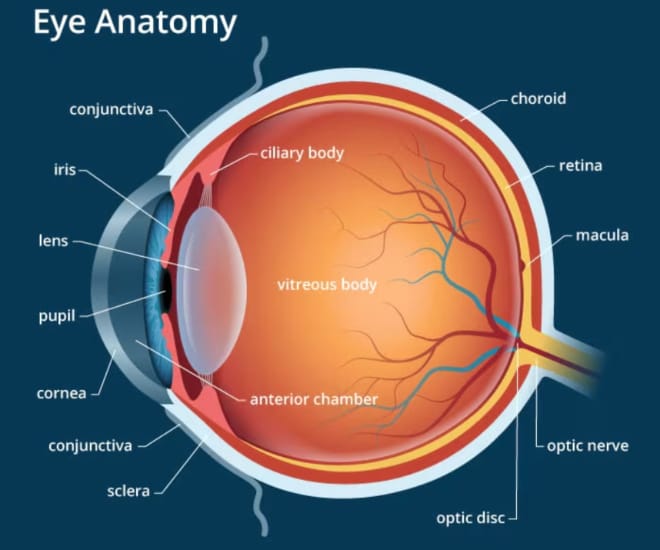
The sclera is the white part of the eye. It's the outermost layer of the eye's wall.
The posterior (back) chamber of the eye is filled with a gel called the vitreous humor. It helps support the eye's wall and is how the eye maintains its shape. The aqueous humor is fluid that flows through the anterior (front) chamber of the eye. Its flow keeps this area clean, nourishes the cornea and regulates eye pressure.
For more details about specific structures of the eye and how they function, visit these pages:
- Conjunctiva
- Sclera: The white of the eye
- Chambers of the eye
- Aqueous humor
- Vitreous humor
- Cornea
- Iris and uvea
- Pupil: Aperture of the eye
- Ciliary body
- Lens of the eye
- The retina: Where vision begins
- Macula lutea
- Fovea centralis
- Choroid
- Optic nerve
- Optic chiasm
- Eye muscles
And for a description of common vision problems, see Refractive errors.