Genomics and vision: The role of genomics in eye health

What is genomics?
Genomics is the study of an organism’s complete set of genetic material, called a genome. In humans and millions of other species, this genetic material is made of DNA, which contains genes that carry instructions for how we grow and function.
The human genome contains around 20,000 genes, which act like the instruction manuals for how to make proteins. Proteins are molecules that the body uses to build and run itself.
Certain changes in someone’s genes can affect proteins and cause diseases. These genetic changes are called variants or mutations.
Researchers use genomics to learn more about:
- Why diseases happen
- How they can be detected
- How to prevent diseases
- New treatment options
How genomics started
Scientists James Watson and Francis Crick first described the structure of DNA in 1953, using important data from physical chemist Rosalind Franklin. This was a major milestone in modern genetics and one of the first steps toward genomics.
Geneticist Tom Roderick first used the term “genomics” in 1986. It combines the word “genome” with the ending “-ics,” which means “the study of.”
In 2003, researchers from the Human Genome Project finished a near-complete sequence (map) of the human genome and made it available for anyone to use.
Today, genetic testing is faster, cheaper and more accessible than ever before. This has helped genomics play a bigger part in health and eye care.
Specific types of genomics
There are different types of genomics that focus on different aspects of genes and genomes. For example:
- Structural genomics – How genomes are built and arranged
- Functional genomics – How genes work together and influence organisms
- Pharmacogenomics – How genes affect the body’s reaction to medicine
- Epigenomics – How genes are controlled without changing the sequence of DNA
Key concepts in genomics
Genomics involves important concepts, like DNA, genes, chromosomes and gene variants. They all work together to determine which genetic traits you have.
What is DNA?
DNA is a molecule that contains the genetic instructions the human body needs to grow and survive. You’ll find the same set of DNA in almost every cell in your body.
DNA stands for deoxyribonucleic acid.
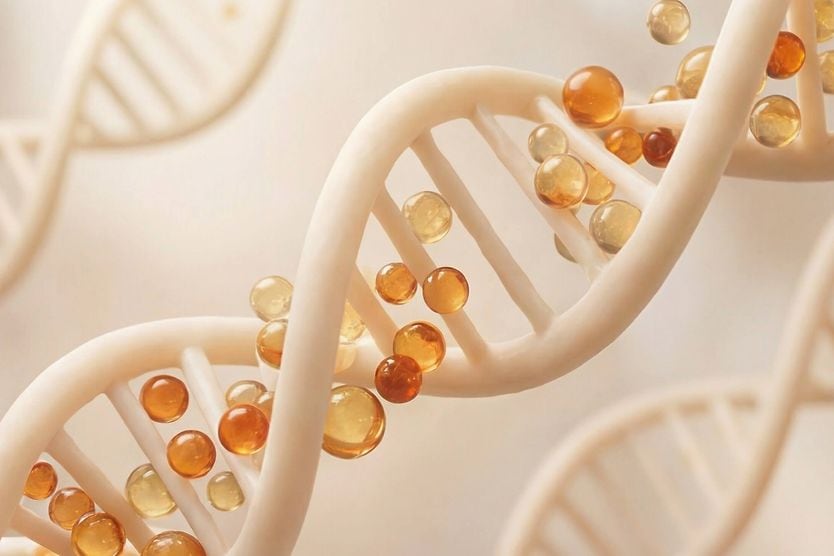
DNA molecules look like a twisting ladder, which is called a double helix. Each “rung” of the ladder has a pair of chemicals called nucleotide bases.
There are four bases that always pair up together like this:
- Adenine (A) and thymine (T)
- Guanine (G) and cytosine (C)
The order of these four chemicals in your DNA helps decide how your genes are expressed.
What is a genome?
A genome includes all genes and other sections of genetic material in an organism. In humans, the genetic material is organized into 23 DNA-packed pairs of chromosomes.
The human genome is important because it contains instructions that help our bodies work. Through genomics research, scientists study the genome to learn how genetic traits and changes might contribute to disease, either on their own or together with other factors.
Genomics and vision
Each person’s eyes are made of cells that contain protein molecules. Genes in their DNA decide how these proteins are built, so DNA changes can directly change how their eyes and vision work.
Genomics helps researchers look for DNA patterns that could affect the risk of inherited eye diseases or other more common vision problems.
Key genetic disorders affecting vision
Some eye conditions can be caused by a variant in a single gene. The mutated gene is either passed down from a parent or caused by a new mutation during development.
How inherited eye conditions are passed down
Inherited eye conditions can be passed down in different ways such as:
• Autosomal dominant – Only one changed copy of a gene is needed. An affected parent has a 50% chance of passing it to each child.
• Autosomal recessive – Two changed copies are needed, one from each parent, who are often unaffected carriers.
• X-linked – The changed gene sits on the X chromosome, so these conditions usually affect males more often than females.
• Mitochondrial – The change is passed down only from the mother. (Leber hereditary optic neuropathy is one example.)
Knowing the inheritance pattern helps eye doctors and genetic counselors understand who else in a family might be affected by eye diseases.
This can affect the eyes and vision in different ways. For example, color vision deficiency (CVD) is often caused by a gene variant. It affects around 1 in 12 males and 1 in 200 females. This difference between males and females happens because the most common types of color vision deficiency are X-linked, meaning the genes involved sit on the X chromosome. Males have only one X chromosome, so a single changed gene can cause it. Females have two X chromosomes, making them significantly less likely to be affected.
CVD is often called “color blindness,” but most people who have it can still see colors. However, people with a much rarer, severe type called achromatopsia see little to no color.
Achromatopsia causes light sensitivity and very blurry vision, often qualifying as legal blindness.
Inherited retinal diseases
Rare conditions called inherited retinal diseases (IRDs) are a major focus of genetics-based treatments in eye care.
They cause problems with the retina, a thin layer of cells in the back of the eye that’s vital to eyesight.
These conditions may worsen over time, while others won’t change very much. Many can lead to impaired vision or vision loss.
Some IRDs are:
- Retinitis pigmentosa (RP) – Cells in the retina break down over time, which causes gradual vision loss. While total blindness is rare, it can cause severe vision impairment.
- Leber congenital amaurosis (LCA) – Retinal cells don’t develop normally, which can cause blindness very early in life.
- Leber hereditary optic neuropathy (LHON) – The optic nerve becomes damaged over time, which can cause blurring or vision loss in the center of a person’s field of view.
- Best disease – Yellow residue that looks like an egg yolk slowly builds up on the macula, a small part of the retina responsible for central vision. This can eventually lead to distorted vision, blurry vision or blind spots.
- Stargardt disease – A fatty pigment called lipofuscin builds up under the macula, which can lead to blurry, distorted or darkened central vision.
- Retinoblastoma – A genetic, cancerous tumor in the retina that usually affects children and can spread to other parts of the body. Early diagnosis and treatment can save a child’s vision and life. Some children can inherit the gene change that causes this condition, while in others it happens by chance and is not passed down.
Other genetic conditions
Genetic disorders, like albinism and Marfan syndrome, can also affect someone’s vision.
These conditions may or may not affect the retina. They can affect other parts of the eye and visual system, such as:
- Cornea (the clear front layer of the eye)
- Lens (helps focus light onto the retina)
- Iris (the colored part of the eye that controls the size of the pupil)
- Optic nerve (carries visual signals to the brain)
- Eye alignment and movement
- Size and structure of the eye itself
- Development of parts of the brain that contribute to vision
Eye diseases with genetic risk factors
Some eye conditions involve multiple genes, but genetics alone doesn’t necessarily “decide” whether someone develops them. Other factors, like age, environment and lifestyle, can also play important roles.
Genetics can contribute to eye conditions, such as:
- Age-related macular degeneration (AMD)
- Glaucoma
- Diabetic retinopathy
- Cataracts
- Myopia (nearsightedness)
Using AMD as an example: Someone with certain gene variants may have a higher risk of developing the disease, but the variants probably won’t cause AMD on their own.
Instead, their genetics, age, lifestyle and other factors can all work together to affect their risk of AMD.
This genetic connection might not be as direct, but genomics can still help researchers discover new ways to find and manage those conditions. They study genomes to better understand which genes could increase someone’s risk and how that information might help improve diagnosis and treatment.
Scientists don’t fully understand all the ways genetic variants can affect someone’s risk, so the typical diagnosis and treatment of AMD is mostly the same for now. But future genomic developments could help people protect their vision.
Congenital eye diseases
There are rarer, congenital forms of glaucoma, cataracts, high myopia and other eye disorders. A congenital condition means a person is born with it.
Many congenital eye conditions are diagnosed at or shortly after birth, but some aren’t found until later on.
For example, genetics can be one of many factors in the average case of primary open-angle glaucoma (the most common type of glaucoma).
However, genetic variants are often a much larger, main factor in congenital glaucoma and other eye conditions present very early in life.
Tools and techniques in genomic research
Scientists use different techniques to study genes and genomes.
Some methods can help find gene variants linked to inherited eye diseases, like RP and LCA. Others can help understand how genes might affect someone’s risk for more complex eye conditions, like AMD or glaucoma.
Tools and techniques used in genomics research may include:
- Molecular diagnostics – A variety of tools used in laboratories to find and analyze genetic material (like DNA) in samples. These techniques can help scientists find genetic variants linked to eye conditions. They can also help them study viruses and microorganisms, like the ones that cause eye infections.
- DNA sequencing – Technology used to read the exact letters of a person’s genetic code (A, T, G and C). It can be used to scan specific genes or read most of someone’s DNA at once through techniques, like whole genome sequencing, or other kinds of genomic testing.
- Bioinformatics – Specialized software that uses powerful computers to sort through genetic data. Researchers use this technology to look for patterns in huge amounts of DNA that would be extremely hard to analyze without it.
- Genome-wide association studies (GWAS) – Large research studies that compare DNA from thousands of people with a disease to thousands of people without that disease. This helps scientists find patterns and genetic variants that can increase the risk for genetic and complex eye conditions.
Applications of genomics in eye care
Genomics can be used to improve the ways eye diseases are diagnosed and treated.
Not only does it allow genetic testing to find certain eye conditions earlier, but it also helps shape new treatments that could be used to protect or restore vision.
Genetic testing for eye diseases
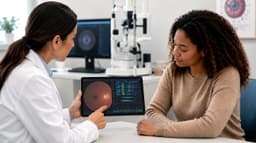
Eye doctors perform different tests to help them decide whether someone has a genetic eye disease.
Molecular genetic testing can be an important step in the process. It can be used to look for specific genetic changes in DNA that could be causing an eye condition or increasing the risk for one.
Getting a genetic test is often straightforward:
- An eye doctor (ophthalmologist or optometrist) or other health care professional (HCP) collects a small sample of the patient’s saliva or blood, which both contain DNA.
- The sample is sent to a genetic testing lab, where technicians use tools to look for variants in specific genes related to eye health. The tools may also examine that person’s full genome, depending on the test.
- The ophthalmologist, optometrist or other health care professional (like a genetic counselor) explains what the results mean for the patient’s eye health.
The eye doctor who ordered the genetic test may not be the one who decides the treatment plan (if one is needed). Instead, they could refer a patient to another specialist, depending on the test results.
Patients with genetic eye diseases will often work with a collaborative team including eye doctors and other health care professionals.
For example, someone who is diagnosed with an inherited retinal disease might be referred to a retinal specialist, genetic counselor or an allied health professional, like a social worker.
Negative or unclear genetic tests
Genetic testing doesn’t always show the gene changes an eye doctor is looking for. The test can come back as:
- Negative – The test didn’t find the disease-causing gene mutations that were being tested. However, this may not completely rule out a condition related to genetics.
- Inconclusive – The test found genetic changes, but it isn’t clear whether they’re related to any eye conditions.
Genetic results without a clear answer can still be helpful. Eye doctors can use the information together with other test results to help guide their diagnosis or treatment decisions.
Gene therapy and emerging treatments
Genomics has given rise to gene therapy, which uses genetic material to help treat or prevent disease.
The eyes have become one of the most important areas of gene therapy research. Genetic researchers often target the eyes because:
- They’re easy to access – The eye is much easier to reach than internal organs, like the liver, heart or brain.
- They’re small, self-contained organs – This can help medicine target parts of the eye without affecting other parts of the body much or at all.
- They have immune privilege – This means the eye is less likely to reject a treatment than other parts of the body. Any immune-related swelling is usually limited and doesn’t harm vision.
- There are two of them – Researchers can treat one eye and compare the effects with the untreated eye. This is especially true for IRDs, which typically affect both eyes.
Genomic and genetic research have contributed to new eye treatments, including:
Gene augmentation
When you hear someone talking about gene therapy, there’s a good chance they’re talking about gene augmentation.
It often uses a harmless virus, called a vector, to carry healthy copies of genes to the cells where gene mutations cause problems.
In the United States, the first FDA-approved gene therapy for any inherited disease was a gene-augmentation treatment for an eye condition. This wasn’t just an important moment for eye care; it was a milestone for modern medicine.
The medication (voretigene neparvovec) is designed to help people with inherited retinal diseases caused by mutations in a gene called RPE65. The treatment delivers working copies of the RPE65 gene underneath the retina.
For many people with these once-untreatable diseases, treatment can noticeably improve their vision after a single procedure. This treatment is not a cure though. It can improve and help preserve vision, however, it does not fully restore normal eyesight. Researchers are still studying how long the benefits may last.
Gene editing
Instead of adding a new copy of a gene like gene augmentation would, gene editing tries to correct, remove or disable parts of someone’s existing DNA.
One well-known example of a gene-editing tool is CRISPR/Cas9, often just called CRISPR, which stands for clustered regularly interspaced short palindromic repeats. It can be programmed to target specific DNA sequences in their genome and make precise changes.
The eyes represented another milestone for this technology; the first time a CRISPR tool was used inside the human body was an attempt to remove a mutation in a gene that causes LCA. Early results showed the approach was safe and improved vision for some patients. It is still investigational and has not yet led to an approved treatment.
RNA therapy
RNA-based therapy involves other genetic molecules called ribonucleic acid (RNA). Unlike true gene therapy, RNA treatments don’t change your DNA.
You might recognize “RNA” from the mRNA vaccines for COVID-19. mRNA (messenger RNA) is a type of RNA that carries the instructions for building proteins.
The mRNA vaccine gives your cells temporary instructions to make a harmless viral protein that resembles one from the virus itself. Your immune system sees the new protein and uses it to learn how to find and destroy the actual virus if it enters your body later on.
In eye care, scientists are testing RNA treatments called ASOs (antisense oligonucleotides) for sight-threatening genetic diseases, like LCA and Usher syndrome.
RNA therapy usually needs ongoing treatments, unlike gene therapy. However, RNA therapies tend to be less invasive and may be used to target different genetic mutations.
Other emerging treatments
Genomics research has directly and indirectly contributed to other treatments, too. Methods like these could one day be widely used to help manage the vision loss caused by genetic eye conditions:
- Optogenetics – This method uses genes to make surviving retinal cells produce light-sensitive proteins, which may help restore some vision in people with advanced retinal diseases. It combines genomics with other fields of research, such as synthetic biology.
- Stem cell therapies – Stem cells are “repair” cells that can turn into other types of cells. Researchers are exploring ways to transplant them into the eye to help restore sight.
- Retinal prostheses – Sometimes called “bionic eyes,” these electronic implants rely on cameras and microchips to override damaged cells in the retina. They send electrical pulses to the working nerves, which can help restore some vision.
Note: Not everyone with a genetic eye condition is a candidate for gene-based treatment. Many people also benefit from low-vision rehabilitation such as magnifiers, specialized lighting and other training tools that help them make the most of their remaining vision
Ethical and societal implications
Genomic research has led to vision-restoring therapies for conditions that used to be thought of as untreatable. But like many other cutting-edge treatments, this can come with limitations.
Some common concerns are:
Limited access
Genomic therapies and related treatments can be extremely expensive.
In some cases, these treatments aren’t just expensive; they’re unattainable for most people. For example, one gene therapy costs about $850,000 for both eyes.
Manufacturers are developing ways to make them more accessible, like new payment models or rebates if the treatment doesn’t work as expected.
But for now, access to drugs like these can feel very limited for most people.
Risks and long-term effects
Many genomic treatments are relatively new or still in development, so researchers are studying their long-term safety and effectiveness.
Some therapies have already shown that they can help a patient’s vision for years, while others need follow-up treatments over time.
There can also be some uncertainty about side effects and complications that might not happen until long after treatment.
These situations aren’t uncommon with newer areas of medicine, like genomic therapy, but they’re important to consider. Future research and long-term studies will help researchers better understand how these treatments work over time.
Privacy and data safety concerns
Many genomic treatments require genetic testing, which can create a very detailed picture of someone’s DNA. This sensitive information is often stored and could be exposed if there’s a data breach.
Unlike many other medical tests, genetic tests can also find unrelated information about the patient or their family.
This can raise questions about privacy and consent, especially since genetic testing is complicated and hard to understand. Genetic counselors specialize in helping patients understand genetic tests and what their results may mean for them and their families.
As genetic testing and medical AI technology become more common, researchers and health care professionals are being encouraged to take steps to protect patients’ information and use it responsibly.
Future of genomics in vision science
Genomics has already made a major impact on eye care. It’s impossible to know exactly what the future holds, but new forms of gene therapy are developing quickly.
While it could be years before certain treatments are widely available, researchers are exploring promising new directions for genomics in eye care:
- Personalized medicine – Treatments may be designed around a patient’s unique genome, which could give the treatment a better chance of working for them. Advanced AI tools and new ways of analyzing genes are helping advance “precision medicine.”
- New gene therapies – Researchers are working on treatments for both inherited eye diseases and more complex conditions, like AMD and glaucoma. They’re also exploring new ways to deliver gene-editing treatments to the affected part of the eye.
- Earlier diagnosis – Genomics will continue to help find more eye conditions and other vision-affecting diseases before symptoms start. This could give more people the chance to monitor and care for their health in new ways.
- Global research collaborations – Research and health organizations around the world are sharing data and working together to speed up genomics discoveries and improve treatments.
The promise of genomics in vision
Genomics is helping scientists understand eye health at the most detailed level: Our DNA.
This has helped improve diagnosis, slow progression and even restore some vision for people with inherited eye conditions that were once thought to be untreatable.
In the future, new genomic research and genetic treatments will help eye doctors provide truly personalized, sight-protecting care for their patients.