The oculomics revolution’s impact on health care

Your eye exams may soon indicate more than whether you need glasses or show signs of glaucoma or diabetes. They could possibly reveal if you’re at risk for Alzheimer’s disease, heart disease, or other neurological and autoimmune diseases — before you start to show any symptoms.
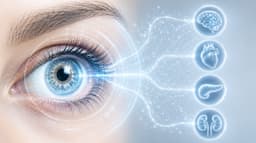
This is thanks to oculomics, which investigates the relationship between changes in the eye and overall body health, a field rapidly advancing due to AI analysis.
While still an emerging field, oculomics is expected to change how doctors could find and prevent serious health problems. It’s why vision researchers, health care leaders and insurance companies are looking at oculomics as a potentially faster, more accurate and less costly way to diagnose disease — by seeing what your body is doing through your eyes.
Eye on advanced patient care
Oculomics matters beyond the potential to help individual patients. As oculomics advances, it can shift how health care systems think about treating chronic diseases.
Conditions including heart disease, dementia and diabetes tend to develop slowly over time. They’re patient, and by the time signs and symptoms appear, serious damage may have already happened. Because damage can be difficult to reverse, early diagnosis is key. It opens the door to start preventive care and treatment earlier.
Traditional screenings for these conditions may require specialist visits and tests that people don’t think to get until symptoms present — which can then come at a higher expense. For example, someone who feels well wouldn’t normally go for a heart stress test.
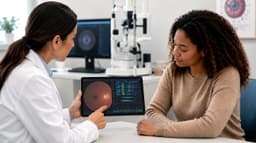
This is why oculomics is shaping up to be a game changer. Eye exams and imaging tests don’t require invasive procedures or surgeries to look inside and on the surface of the eye. They’re already part of comprehensive eye care for millions of people. A majority of American adults (close to 60%) get an eye exam annually. And current eye exam technologies can grab detailed scans of your retina in seconds. Blink and it’s done.
But the real game changer is what happens after the images are taken.
How oculomics can work — fast
Oculomics research paired with deep-learning AI is beginning to power faster and potentially more precise analysis of retinal scans. Findings that used to take weeks or months could happen in minutes, with AI systems learning to quickly and accurately spot patterns that might show disease risk or presence.
These systems could find the earliest signs of health issues like diabetes, heart disease, brain disorders and the risk of having a heart attack — signs that might be too subtle for health care specialists to catch with the naked eye. Without the power of advanced data analysis, these diseases might not otherwise raise a concern.
This speed and ease of access could mean eye care and health care providers would have the ability to check patients more often, to possibly catch diseases at earlier stages when they are generally treatable. For health care systems struggling under the costly burden of chronic disease management, oculomics could offer something they need: a path toward prevention rather than treating problems after they take root.
Diagnostic breakthroughs through the eye
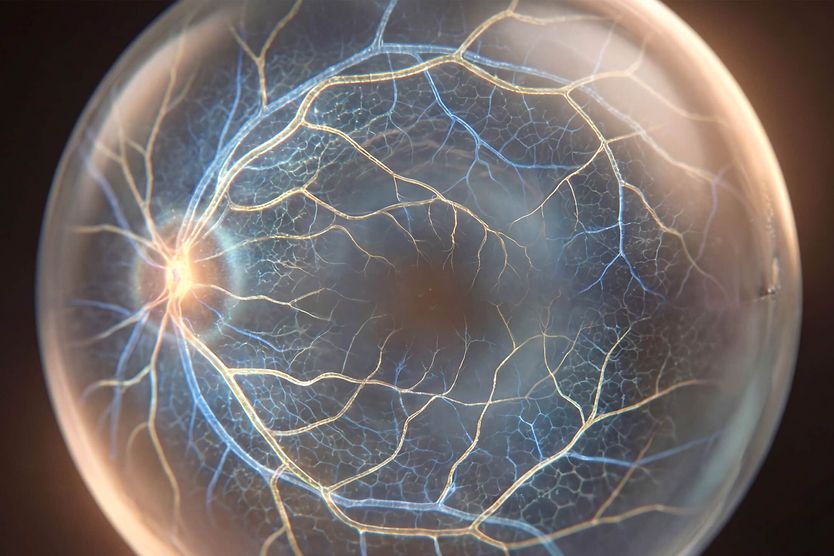
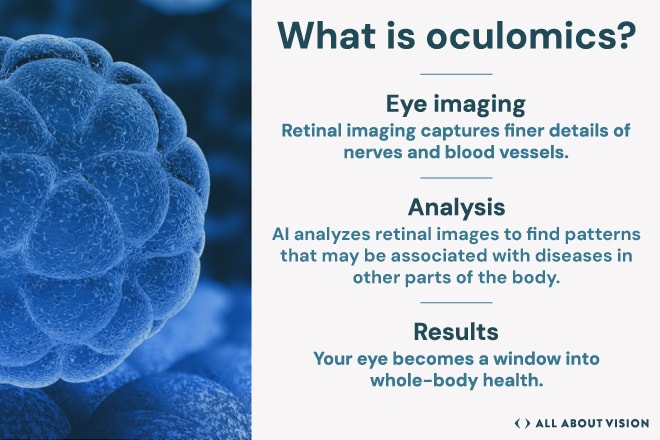
The revolutionary science of oculomics focuses on what retinal imaging can show about the body’s main systems. When an eye doctor does retinal imaging, they’re taking detailed pictures that show the nerves, blood vessels and tissue layers at the back of the eye.
These images can give a direct “window” into the network of tiny blood vessels visible at the back of the eye. They also reveal structures of the central nervous system, including the optic nerve that connects the eye to the brain. Medical technology, known as “medtech,” can enable eye care and health care providers to visualize the body's major systems through the eyes, much like a mechanic taking a peek under the hood without having to take the engine apart.
Medtech combines medical devices, bio-technology, health data and prescription solutions. Several types of medtech eye imaging technologies would add to the oculomics tool kit. For example:
- Digital fundus photography takes color images of the back part of the inside of the eye, called the fundus. It can help doctors detect issues such as diabetic retinopathy.
- Optical coherence tomography (OCT) uses light waves to create cross-section images of retina layers showing minute detail.
- OCT angiography (OCTA) maps blood flow through retinal vessels without the need for dye injections.
- Adaptive optics (AO) provides one of the most detailed views of the retina by correcting the eye's natural optical imperfections. Researchers are using it to develop gene therapies and new drugs.
What oculomics could see
Researchers are learning just how powerful medtech tests and oculomics can be, because these images show health concerns happening or at risk of developing in the body. These include:
Brain and nerve issues
Changes in retinal nerve and optic nerve health can be early warning signs of brain-related issues. These include Parkinson’s disease, Alzheimer's disease and other forms of dementia.
Researchers at the Indiana University School of Medicine found retinal function changes can be early signs of Alzheimer's that may appear before any memory problems occur. A separate study in the science journal Nature found that a single AI model called RETFound can predict Parkinson’s disease and heart failure from retinal scans.
Heart and blood vessel problems
Using a photo of the blood vessels in the eye, AI could accurately predict the risk of heart disease and stroke. Vessel changes have been linked to high blood pressure and hardening arteries.
Metabolic diseases
Retinal imaging can also find early signs of kidney disease and diabetes. Seeing the promise for proactive care, a National Institutes of Health (NIH) project — the Common Fund Oculomics Venture Initiative — funds research using eye imaging to spot signs of kidney disease, high blood pressure, stroke and other chronic conditions.
Bridging the overall vision-health care gap
Oculomics could make high-level health screenings available to more people in more places.
In the past, testing for heart disease risk, for example, might have needed a cardiologist visit, bloodwork, stress tests, and some ultrasound or other imaging studies. This could mean time off work and potentially costly tests that health insurance may not cover. And many screenings don’t happen until signs and symptoms appear.
Some people might also lack access to health specialists, especially in rural or low-income areas, a phenomenon called a health care gap. Eye care is different. Optometrists often exist in communities where other specialists may be scarce, providing much-needed care.
By adding oculomics into comprehensive eye exams, health care systems can use this information to rapidly screen large groups of patients for serious health conditions. When appropriate, this could lead to more precise specialist referrals.
This means oculomics could help bridge the health care gap between primary care and specialist services, catching health conditions that might slip through the cracks before becoming worse.
The NIH’s “All of Us” Eyes on Health research project is funding this approach through its Eyes on Health Study, collecting eye images from more than 5,000 people. The images are being used to create individual “precision medicine” plans. This shows how eye imaging will soon be a routine part of comprehensive health care.
Targeting an integrated health care future
At its core, the oculomics revolution is about personalized health medicine and health care tailored to individuals’ biology — quite the change from treating everyone the same way. A person’s eye structures are as unique as their fingerprint — showing possible health risks specific to them. This means oculomics could soon find existing disease and predict future risk based on nerve and blood vessel patterns, resulting in both enhanced personal prevention and treatment plans.
Taking oculomics a step further, research is linking this approach to longevity medicine and health span (the years a person remains healthy and disease-free).
Health care lines will blur for the better
It’s clear that oculomics is heading to be the future of health care. It could soon change how medicine finds, prevents and treats disease. And the pace of change is speeding up as medtech companies, eye care providers, disease specialists and researchers work together to move the field forward.
For example, Moorfields Eye Hospital and University College of London have developed the world’s largest collection of eye imaging data — more than 50 million images. They are being used for oculomics research and training AI systems to spot patterns across diverse groups and health conditions.
These projects between eye care providers and health care researchers aren’t just theoretical. This collective work could be the key to unlock oculomics’ potential that no single health care specialty could do alone. For patients, this revolution may soon change what health care looks like.
In the future, an eye exam might include a talk about brain wellness or kidney disease — in the same way your eye doctor may already discuss diabetes prevention or heart health. Eye care providers may start to work more closely with primary care doctors and specialists, sharing insights from retinal images to create an enhanced picture of a patient’s health.
The lines between eye care, primary care and specialist medicine will likely continue to blur, creating new connections between what are now separate areas of health care.
Ultimately with oculomics, eye care is firmly focused on a future already taking shape one eye exam at a time, where comprehensive health checks begin with a simple, painless look into the eye.