Beyond fitness, wearables can help track eye health

Your fitness gadget can track more than just steps
They come in everyday formats like rings, watches, wristbands and biosensors — people love to use them to track steps and fitness activities. For many people, these devices also serve as digital wellness partners. With advanced platforms that can detect early signs of health concerns, they offer real-time monitoring tools.
Fitness trackers can measure sleep quality, stress, blood sugar, heart rate and hydration. These factors can impact eye health and be linked to serious conditions like glaucoma, diabetic retinopathy (DR) and dry eye disease (DED).
Here’s why it matters:
- Inadequate sleep can impact the progression of myopia (nearsightedness) and may increase the risk of dry eye and glaucoma. Obstructive sleep apnea (OSA) has been linked to floppy eyelid syndrome (FES), non-arteritic anterior ischemic optic neuropathy (NAION), glaucoma and diabetic retinopathy.
- Chronic stress can lead to central serous chorioretinopathy (CSCR), which is fluid buildup under the retina which could temporarily distort vision. It might also increase eye pressure (a leading risk factor for glaucoma).
- Metabolic health indicators could predict diabetic retinopathy, damage to blood vessels in the retina caused by high and unstable blood sugar. Other metabolic indicators include blood pressure and cholesterol levels.
- Hydration levels could impact the tear film’s quality, which is the protective liquid layer on the eye’s surface. If the tear film is not stable, it can lead to symptoms such as dryness, irritation or blurry vision.
- Obesity has been linked to FES, diabetic retinopathy, age-related macular degeneration (AMD), cataracts, glaucoma and retinal vein occlusion (RVO).
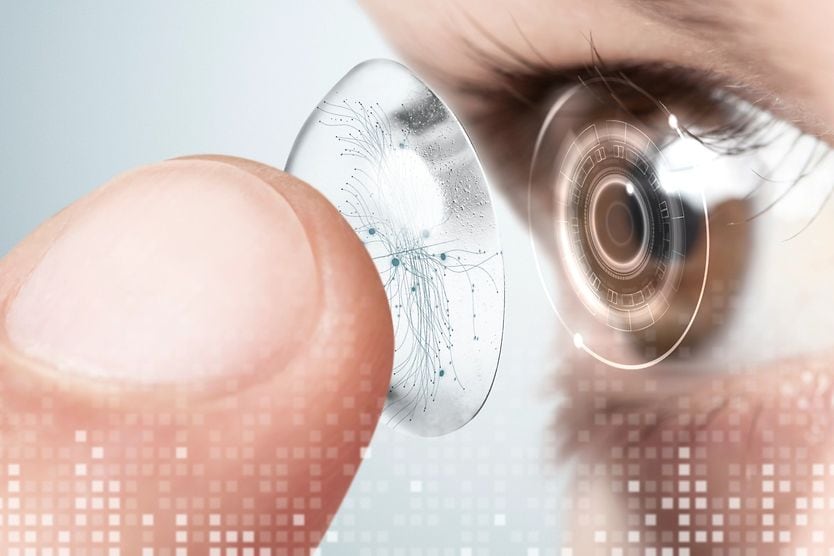
Digital trackers are readily available and can be bought without a prescription. They differ from smart contact lenses, frames and headsets prescribed by an eye doctor to track eye movements and vision. While not a replacement for diagnostic care, these wearables can capture data to help inform lifestyle habits or changes.
Quality sleep is essential for healthy eyes
Wearables track sleep using sensors to check body temperature, heart rate and movement. Worn during sleep, devices like smartwatches, wristbands and rings provide detailed analysis. They can measure both sleep quality and duration.
This matters for your eyes more than you might think.
Research in China shows that irregular sleep can disrupt normal eye development in adolescents. This is especially true during critical growth periods. School-age children with “irregular sleep-wake times” had a myopia rate of about 55%. This is higher than those who had consistent wake times. Students in the study who got less than seven hours of sleep each night had a higher risk of becoming nearsighted.
For adults, the risk shifts toward glaucoma. The disease impacts over 70 million people worldwide and is a leading cause of permanent vision loss. A 10-year study in the United Kingdom of over 400,000 people found that poor sleep patterns can increase glaucoma risk.
Additionally, adults in a separate U.S. study who slept less than three hours or more than 10 hours were three times more likely to have optic nerve damage from glaucoma.
The sleep-vision connection may be more pronounced for people with diabetes. A 2025 study found that getting six to eight hours of sleep can help prevent diabetic retinopathy. This disease can lead to mild to significant vision impairment from swelling in retinal blood vessels and/or the growth of new blood vessels in the retina.
LEARN MORE: The harmful effects of sleep deprivation
The stress-vision connection
Modern wearables can detect stress through physiological signals. These aren’t just wellness metrics. They can also track, analyze and report data that the user may share with their eye doctor or primary care physician.
CSCR is a condition where fluid collects under the retina. It can be linked closely to chronic stress. CSCR usually affects people aged 20 to 50 with high stress levels. Under stress for a long time, the body releases cortisol, a hormone that can lead to inflammation and fluid leakage in the eye.
Chronic stress can also change blood flow to the optic nerve. This could cause increased eye pressure, commonly called intraocular pressure, which is a known risk factor for glaucoma.
It’s no surprise that chronic stress is considered harmful, but the effect can be heightened for people with risk factors for eye diseases. Someone whose wearable shows high stress markers for weeks should make an appointment with their eye doctor and primary care physician.
LEARN MORE: How stress can affect your vision
More than weight: What the scale reveals
Stepping on a scale is no longer simply about weight, though obesity has been linked to numerous eye conditions. Today's scales are platforms with built-in sensors that can track and analyze body composition, hydration levels and heart health.
In fact, proper hydration is crucial for your eyes. Tears consist of three layers: mucus, water and oil. The tear layer is made up of about 98% water, so staying well-hydrated is critical for eye health. Dehydration might drive the body to save water for other important organs. This can lower tear volume and make tears saltier.
A study in Investigative Ophthalmology & Visual Science found that people with dry eye often show more signs of dehydration. Researchers determined through tear tests that their bodies were not getting enough water. A 48-hour rehydration program led to significant improvements in both plasma (blood) and tear osmolarity, or the concentration of salt particles in the tears. In other words, the body's plasma hydration and tear production were better balanced.
Other conditions can affect tear production, leading to dry eyes, redness, discomfort and light sensitivity. Some of these conditions include:
- Hormonal changes
- Allergies
- Screen time
When the scale reveals inconsistent hydration levels, particularly with any discomfort, it’s a good idea to see a doctor.
Blood sugar and eye health
Some at-home health platforms and wearable devices now integrate with continuous glucose monitors.
Capturing a continuous data feed may have significant importance for an individual with diabetes. Diabetic retinopathy is a leading cause of vision impairment worldwide. Recent research indicates that more than measuring average blood sugar, it’s critical to note fluctuating blood sugar levels throughout the day. A wearable device can make that simple and effortless to track.
The impact is notable. A *Scientific Reports* study found that patients with diabetic retinopathy benefited from continuous glucose monitoring. They had fewer serious vision complications than those who didn’t monitor their glucose levels.
From tracking steps to healthier eyes
It can be overwhelming for a person to decide which wearable or device best aligns with their needs and lifestyle, particularly because of the amount of data there is to consider. It’s always a good idea to discuss the options with an informed eye care team. Here are some product types on the market:
Sleep analysis
- Smart rings can track body temperature, heart rate and movement. They analyze sleep by measuring both the duration and quality of a person’s rest.
- Monitors can identify early signs of sleep apnea, linked to several health issues. They also track heart rate variability, blood oxygen and body temperature.
- Some smartwatches have specific FDA clearances. These features include electrocardiogram (ECG) to spot irregular heart rhythms and sleep apnea.
Biosensors for glucose monitoring
- There are biosensor devices available to buy without a prescription. Worn on the upper arm, it lasts for up to 15 days and checks glucose levels every 15 minutes. The biosensor can be synced to work with a smart ring. It helps users see how sleep, stress and activity impact glucose levels all day.
- For people with diabetes or pre-diabetes, a health care provider can suggest prescription options These wearables check glucose every five minutes and can help protect metabolic health and vision.
Tracking hydration
- Certain platforms go beyond tracking weight, offering more features than traditional scales. These smart scales have built-in biosensor systems that can measure body composition, heart health, hydration levels and more.
Smart devices capture and analyze data, then allow the user to share it by connecting to smartphone apps. It’s important to check compatibility before making any purchases.
The bottom line
While useful and informative, none of these devices replace regular eye exams or visits to a health care professional. There are other factors that come into play, so it’s crucial to understand the limitations of what these devices’ insights reveal. For example:
- A fitness tracker showing poor sleep patterns does not diagnose glaucoma.
- Elevated stress markers are not the only sign or symptom of CSCR.
- Low hydration readings are not the only diagnostic factor for dry eye disease.
Digital monitors can provide objective data about daily habits and health patterns. They can prompt earlier conversations with a health care professional. The additional data might provide helpful context about eye health during an annual eye exam.
Think of these innovative devices as a bridge between daily life and the exam room.