Precision medicine and your eyes: How large-scale health data may personalize disease prevention and treatment
The news arrives with the blunt force that accompanies a serious medical diagnosis — coronary artery disease.
The condition is notorious for progressing silently until it triggers a heart attack. But this time, the patient’s reaction is more muted. The greatest danger is likely years away, and the doctor can create a prevention plan customized to the patient’s genetic profile and other health data.
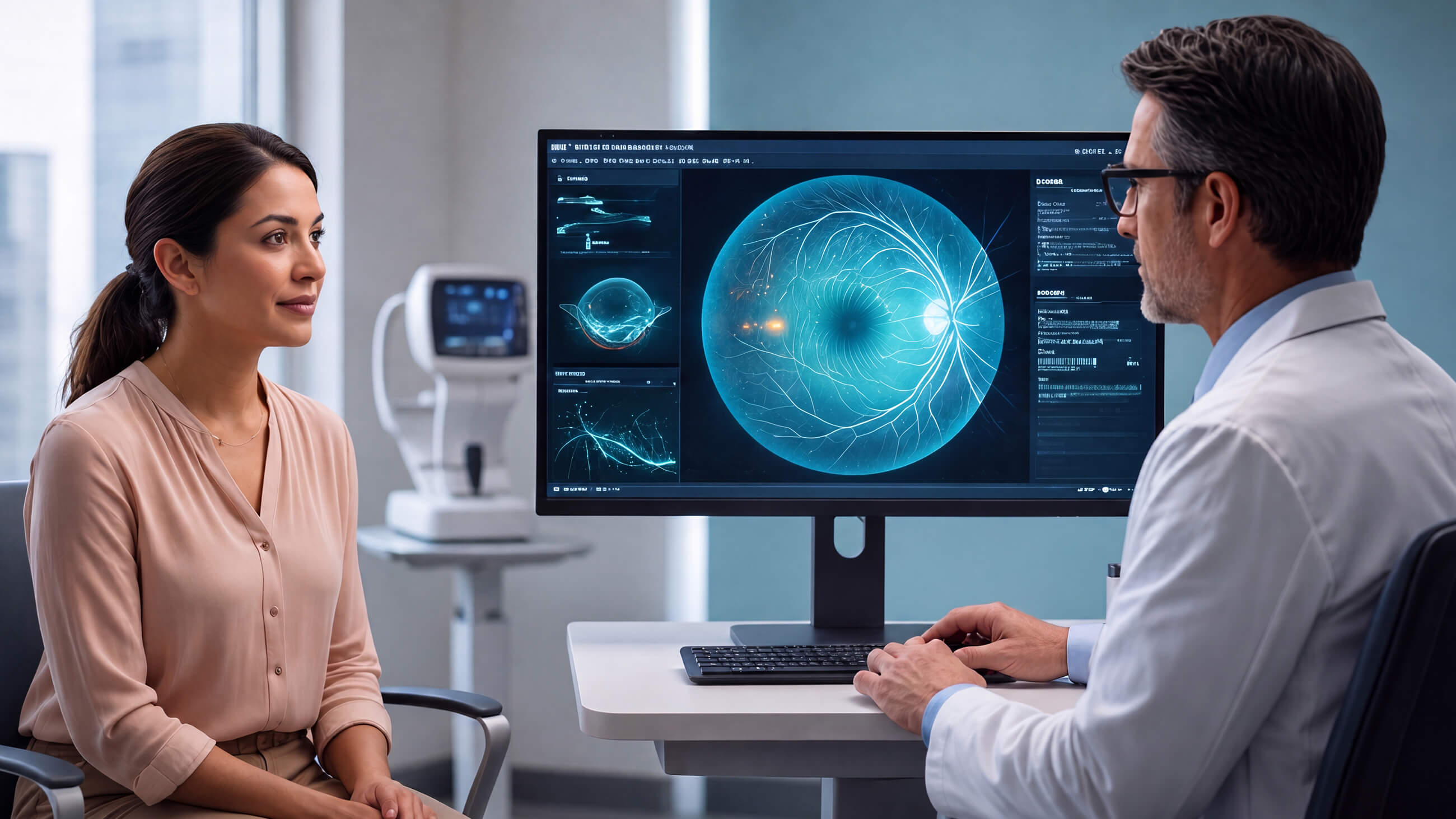
The clue, in this future scenario, comes from an optical coherence tomography, or OCT, scan, in which a doctor identifies the risk by observing changes in the eye that may signal disease elsewhere in the body.
Routine use like this is still on the horizon, but it is less far-fetched than it sounds. Deep-learning systems can already estimate cardiovascular risk factors, age and even the future onset of some systemic diseases from ordinary retinal images. The shift reflects advances in an emerging approach known as precision medicine, in which a diagnosis and treatment can be tailored to factors, such as a patient’s genetics, environment and lifestyle.
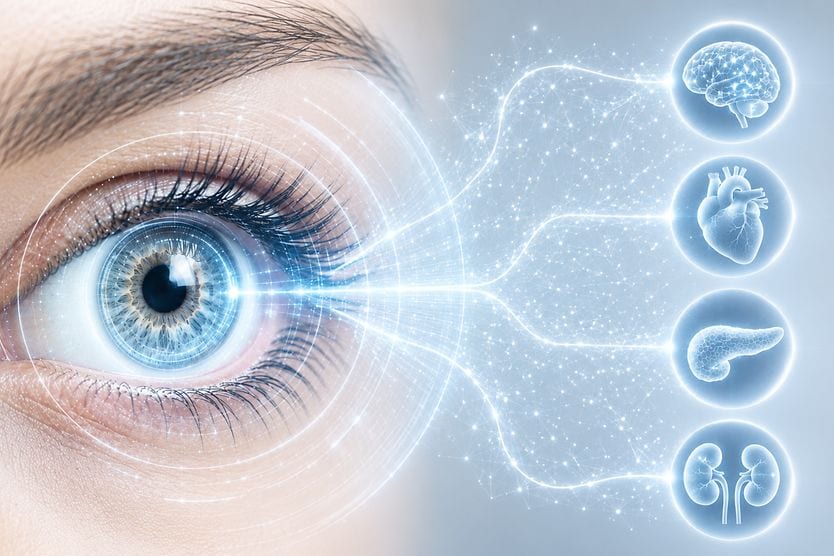
Further research is needed to support oculomics, a growing field that studies how changes in the eye, called biomarkers, may reveal critical information about one’s overall health. The retina is uniquely suited to this: it is the one place in the body where blood vessels and nerve tissue can be viewed directly and non-invasively. Changes visible in the retina can therefore mirror changes taking place elsewhere in the body.
The promise of precision medicine
Moving precision medicine forward requires a significant amount of data from a representative sample of the population. One of the more consequential efforts to collect such data is the All of Us Research Program from the National Institutes of Health (NIH).
Launched in 2018, the program seeks to gather health data and biological samples from one million people. As of June 2026, data from more than 747,000 participants are now available to researchers, spanning whole-genome sequences, electronic health records and survey responses about daily life.
More than 645,000 participants, about 86% of the total, come from communities historically underrepresented in biomedical research. By the program’s count, that group includes women, older adults, individuals with disabilities, residents of rural and non-metropolitan areas, and a wide range of races and ethnicities.
NIH describes it as one of the world’s largest integrated datasets, meaning it combines genetic data, medical records and lifestyle information in a database that allows researchers to explore how conditions are interconnected throughout the body.
Sheri Schully, PhD, deputy chief medical and scientific officer for the All of Us Research Program at the National Institutes of Health, says the program intends to correct a long-standing imbalance in who medical evidence comes from.
“We want clinical care to fit the person across from the clinician, not one size fits all, which to date has been mostly based on evidence from higher-income, European-descent individuals,” she said.
How eye scans foster new medical research
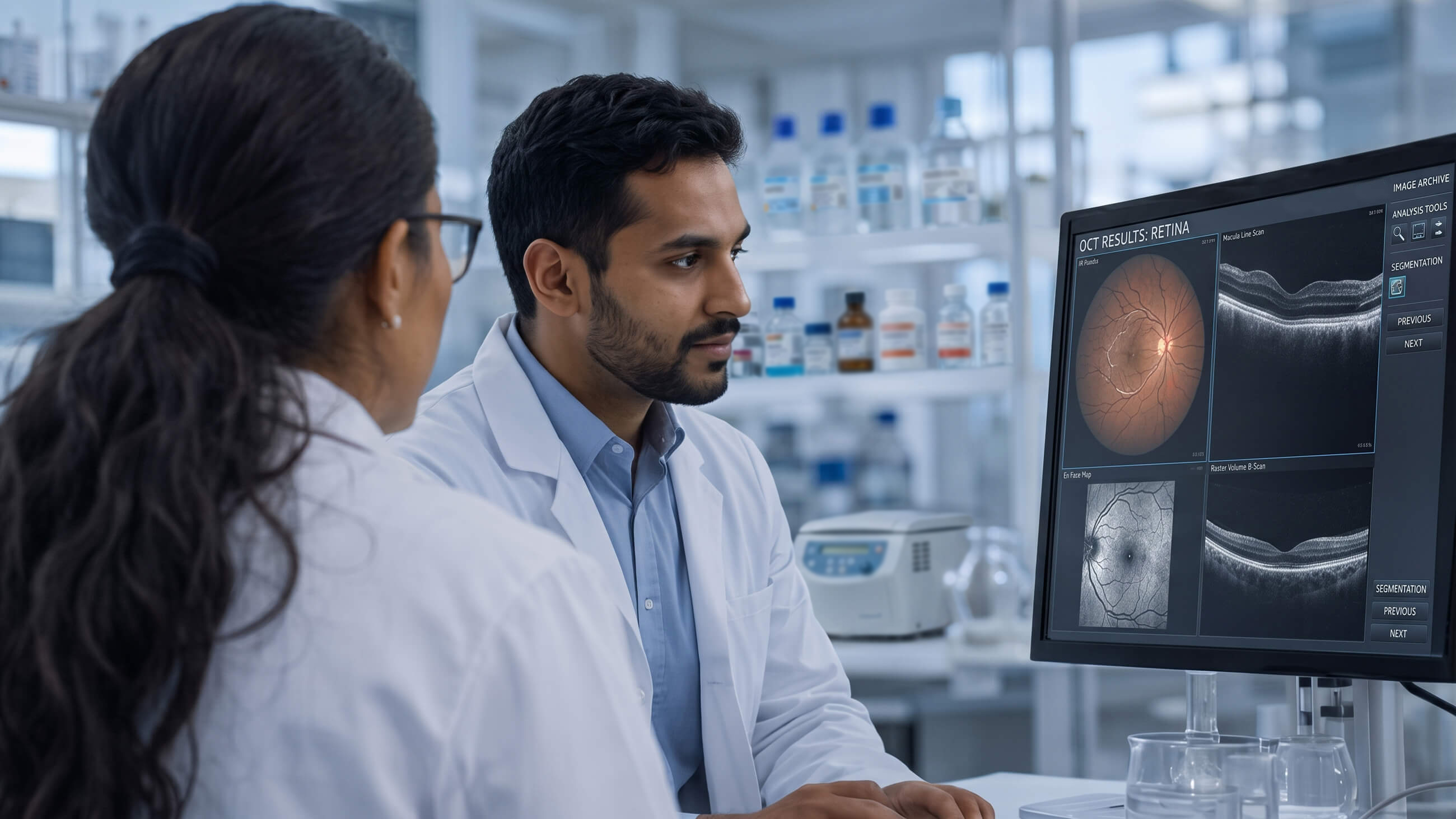
Eye health is another important component of the All of Us Research Program. Eyes on Health, a key component of All of Us, aims to advance oculomics research by collecting eye images from 5,000 or more individuals. The project is a collaboration with the National Eye Institute (NEI) and the National Institute of Biomedical Imaging and Bioengineering (NIBIB), and it captures several kinds of retinal images — color fundus photographs plus optical coherence tomography (OCT) and OCT angiography (OCTA) scans. The goal is to learn what the structure of the eye can reveal about other areas of one’s health. Researchers collect imaging scans that capture detailed pictures of the retina, the light-sensitive tissue at the back of the eye.
Volunteers undergo a retinal scan. The resulting images are then analyzed alongside genetic and health data collected through All of Us. The goal is to find any patterns that may indicate disease elsewhere in the body. It also provides an opportunity for researchers to learn what the eyes can reveal about systemic health.
One of four sites collecting the scans is at the University of California, Irvine, led by Hoda Anton-Culver, PhD, a Donald Bren professor and distinguished professor of medicine at UC Irvine. She points to the Orange County region’s diversity as key to reaching a broad range of people.
“We’re fortunate to have a really diverse population here in California in general, and in Orange County in particular, where we have a large proportion of the population that’s diverse by race and ethnicity, socioeconomic status and educational level, by every measure,” she said.
Along with UC Irvine, three other institutions are enrolling participants in Eyes on Health: Yale University, the University of Chicago and the University of California, San Diego.
Everyone who participates in Eyes on Health also receives a printout of their fundus photo, or snapshot of the back of the eye. Participants can share the photo with their own eye doctor. Dr. Anton-Culver’s team has completed scans for about 1,300 people, with more being enrolled.
The keepsake has proved popular.
“Participants receive a printout of the color fundus image labeled with the different parts of the eye, plus information on eye health in general and what it could mean for their body or their eyes. People really seem to love getting the picture of their eye,” Dr. Schully said. “It’s not hard for us to do, but it’s cool for [volunteers] to say, ‘That’s my eye on my refrigerator.’”
Retinal imaging is already routine in eye care, and it comes in more than one form. The color fundus photograph captures the surface of the retina and its blood vessels, while an OCT scan adds a detailed cross-sectional view of the retina's layers. Both are used to diagnose and monitor eye diseases, such as glaucoma, age-related macular degeneration (AMD) and diabetic retinopathy (DR). Both types of imaging are now being studied as windows onto the rest of the body's health.
“I’m hoping we’ll identify ways that ocular imaging can be used in the health care system routinely,” Dr. Anton-Culver said. “Right now, it’s only done in research. Can it be of value to people once it becomes part of routine medical care?”
Dr. Anton-Culver is describing oculomics for systemic disease, which is still largely investigational. Some eye imaging complemented by artificial intelligence (AI) software, however, is already part of everyday clinical care. Since 2018, the U.S. Food and Drug Administration (FDA) has cleared autonomous systems that can detect diabetic retinopathy from retinal photographs in primary-care and retail-clinic settings.
Managing volunteer patient data privacy
Volunteers contribute personal health data by participating in All of Us. To help ensure privacy, the program removes names and other identifying details from its dataset.
Researchers must agree to a set of rules for working with the data, including not attempting to identify individuals. The program also holds agreements with the federal government, called Certificates of Confidentiality, that allow it to refuse legal demands, such as subpoenas, to hand over information that could identify a participant.
If a data breach were to put their privacy at risk, the program’s privacy and data security rules state that those affected will be notified.
“We try to make it as easy as possible to bring the data together while maintaining privacy and security. This is all de-identified data, and we want participants’ identities protected,” Dr. Schully said.
How clinical trials may lead to precision medicine
New medications require clinical trials before they’re approved for use by the FDA. These trials typically occur in four phases, ranging from initial clinical trials to ongoing studies of a drug after it’s been released.
Nonprofit research and for-profit organizations may conduct phase three trials — the large, late-stage studies a treatment must clear before it can be submitted for FDA approval — during which researchers determine whether a study medicine is effective and safe for treating a specific condition.
Carol Aune, OD, the president and principal investigator for Oculus Research, says that studies are now incorporating biomarkers, measurable biological signs found in blood, tears or genes, so that researchers can look at those markers and determine if the drug is working in patients with those specific biomarkers. This could give researchers insight into why some patients improve with the specified treatment and why others don’t.
“In the past, the question was: Does this drug work? Now the shift is: Who does this drug work best for?” Dr. Aune said.
Patterns can emerge during these phase three trials. Because a treatment rarely works the same for everyone, researchers watch for which patients respond and which don’t.
Dr. Aune described a dry eye study in which one group of patients improved dramatically, while others saw only a small effect.
“So then they had to start looking at what it is about that person that made them respond so well to the drug,” she said.
In some cases, the answer may be a single genetic variant shared by those who responded strongly to the treatment.
Dry eye disease is one area where Dr. Aune sees a potential benefit to this approach. Many eye drop formulations already exist to treat dry eyes. However, none works for everyone, and patients often must try several before finding the ideal option(s). Finding a treatment that provides relief for each patient is the hope of precision medicine.
There’s no one perfect drug, since individual responses vary, Dr. Aune says. “I think that’s a great place where we can say, with high confidence, this drop is going to work for you, instead of having to try five or six different drops on that patient until they get relief.”
The need for this approach varies by condition, and some conditions are more suited to it than others. Presbyopia, the gradual loss of near focus that comes with age, is one Dr. Aune offered as a counterweight. Because it is a natural part of aging that affects nearly everyone in the same way, she suspects a single treatment could work broadly, unlike a condition such as dry eye, which can vary from one patient to the next.
“There are several presbyopia drops on the market. Precision medicine has not shown up in presbyopia clinical trials yet, but that doesn’t mean it isn’t coming,” she said.
The future of precision medicine
Precision medicine has already arrived in one corner of eye care. Voretigene neparvovec, which was approved by the FDA in 2017 as the first gene therapy for an inherited disease of any kind, treats vision loss in people whose retinal disease is caused by mutations in both copies of a single gene, RPE65, and it is prescribed only after genetic testing confirms that genotype. It does not restore normal sight and applies to a small group of patients, but it shows what genotype-directed treatment can look like.
This work is still in the research stage, so there likely won’t be a cheek swab checking for a condition at your next appointment. But as the All of Us Research Program builds larger datasets, researchers may have the opportunity to draw new insights that could make their way into everyday health care.
“We have to meet people where they are if we’re really going to get precision medicine to all,” Dr. Schully said.
For now, a comprehensive eye exam remains the ideal way to catch eye diseases early. It can also help identify early signs of systemic conditions. What a precision medicine initiative could add over time is the ability to detect early signs of systemic disease risk based on changes that occur in the eyes. Precision medicine is just as much about prevention as it is about personalized treatment.
“Precision medicine does exist in some areas, but really broadening it to encompass all areas, including prevention, is one of the big goals of the program,” Dr. Schully said.
The All of Us Research Program is an example of how federal agencies play an integral role in discovery and innovation to improve eye health. According to the Alliance for Vision Research, federal funding is essential to advancing vision science, with benefits extending beyond eye health.
A future of more personalized medicine could transform how a patient receives eye care.
“I think we’re at the beginning of really looking at eye care in a more personalized way,” Dr. Anton-Culver said. “Most eye care right now works for the majority of people, probably, but we don’t know what we don’t know. There’s a large number of people who could benefit more.”