12 hidden signs your child may need glasses
On this page
Childhood refractive errors
Other childhood eye problems
Connecting vision with attention and learning disorders
How often do kids need eye exams or vision screenings?
On this page
Childhood refractive errors
Other childhood eye problems
Connecting vision with attention and learning disorders
How often do kids need eye exams or vision screenings?
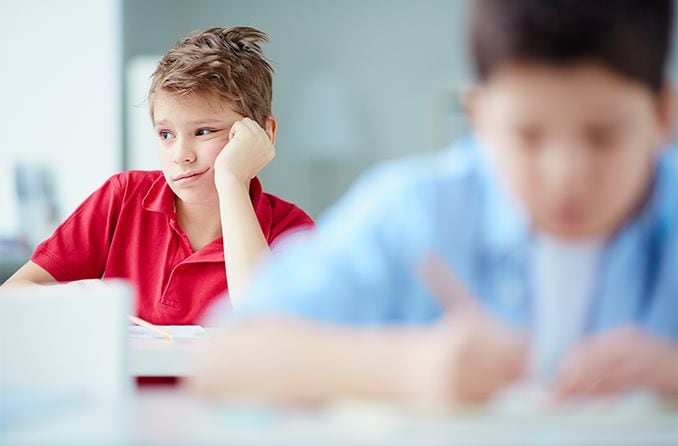
Childhood vision problems can sometimes make their presence known in less-than-obvious ways. The signs aren't always as clear-cut as seeing your child squint or hearing them talk about blurry vision.
Eyesight imperfections are common among school-age kids, and treatment can often be as simple as a pair of prescription glasses. But if vision problems are left undiagnosed or untreated, they can have lasting effects on a child’s eye health, schooling and confidence engaging in normal activities.
These subtle signs may suggest vision problems in children:

- They tend to close one eye during activities like reading or watching TV
- They avoid activities that require near vision (reading, homework, computer use) or distance vision (sports, other recreational activities)
- Their grades are lower than normal
- They tell you that their eyes are tired or they have a headache
- They rub their eyes a lot
- They seem sensitive to light
- Their eyes tear up for no apparent reason
- They hold books unusually close to their face
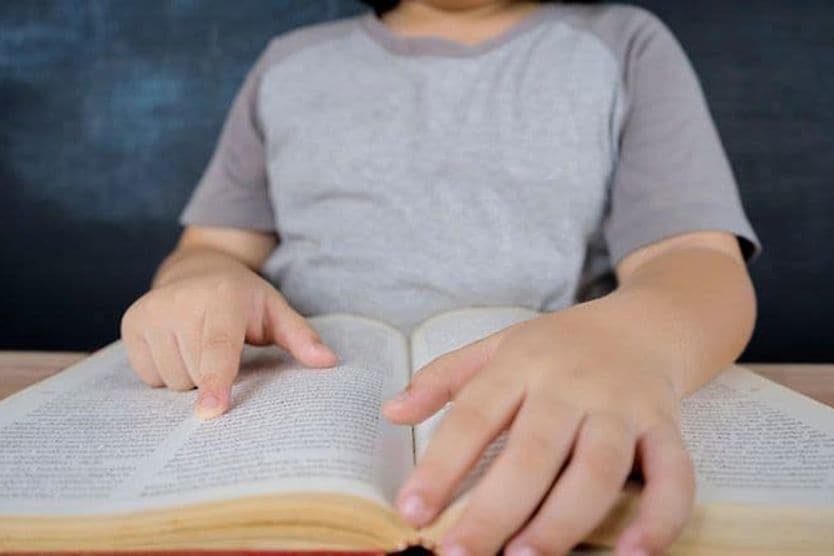
- They lose their place as they read
- They use their finger to guide their eyes along the page
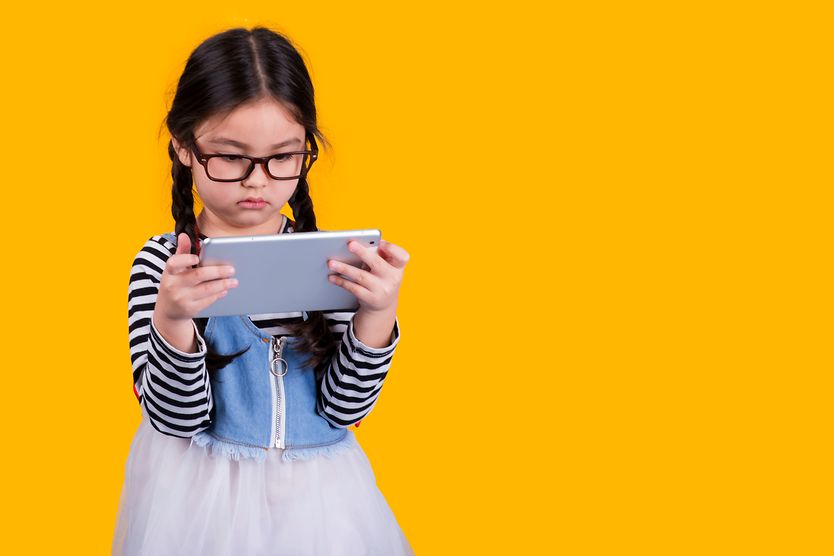
- They sit very close to TVs or computer screens
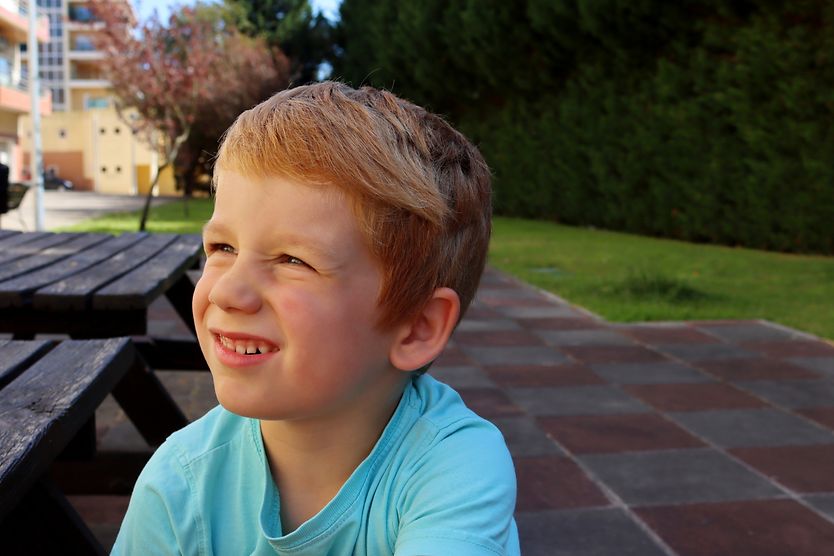
- They squint or tilt their head to see better
If your child shows any of these signs, an eye doctor can help you figure out whether an eye problem is the underlying cause.
Download a printable checklist of myopia signs and symptoms HERE.
Childhood refractive errors
Refractive errors are the most common causes of vision problems among school-age kids. When children have a refractive error, it’s usually one of the following:
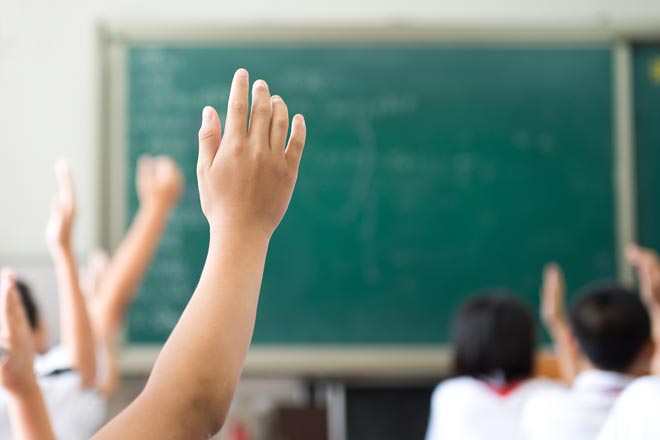
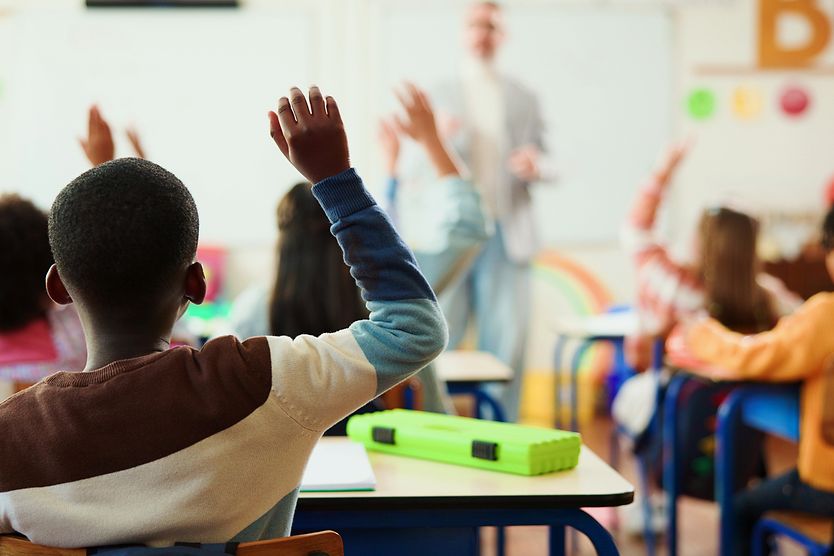
Blurry vision may be interfering with your child's ability to learn in school. Regular eye exams can detect and correct this and other vision problems.
In some cases, a child can have astigmatism and nearsightedness or farsightedness at the same time.
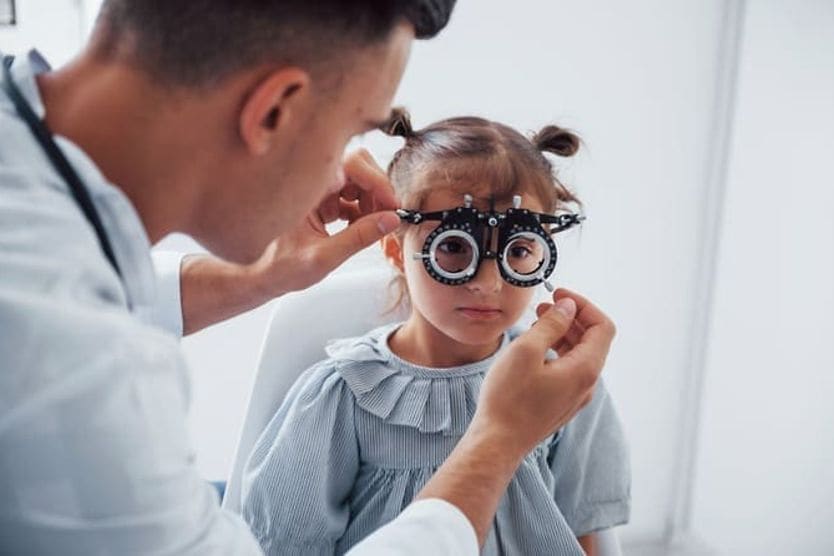
These refractive errors can usually be corrected with a pair of prescription eyeglasses, or you can get a vision prescription after your child’s eye exam (and contact lens fitting, if needed) and you can use it to buy glasses or contacts wherever you’d like.
Myopia — nearsightedness — is a growing problem among children.
It can be natural for myopia to get a little worse throughout childhood and adolescence, but sometimes it progresses quickly. This is known as progressive myopia, and it can lead to a condition called high myopia.
This high level of nearsightedness can increase the risk of developing vision-threatening diseases like retinal detachment, macular degeneration, cataracts and glaucoma later in life.
Fortunately, there are now ways you may be able to reduce these risks by slowing the progression of myopia.
Other childhood eye problems
Refractive errors change the way light registers inside the eye, but other childhood eye conditions can affect the way the eyes move together.
Between 5% and 10% of school-age children are thought to have an eye teaming or focusing problem.
Disclaimer: When clicking the link to the Myopia Simulator, it should be treated as information only and does not represent advice. The images presented are artistic interpretations of nearsightedness as experienced without glasses or contact lenses.
These conditions include:
- Strabismus– a problem with the way the eyes are aligned. Strabismus is often referred to as “crossed eyes,” although that only explains one type of strabismus: esotropia.
- Amblyopia– also called “lazy eye.” Reduced vision in one eye causes the affected eye to “wander” away from the center of vision.
- Convergence insufficiency– a form of intermittent exotropia, which is itself a type of strabismus. The eyes have a hard time working together to focus on near objects. When a child tries to focus on something close, one eye turns slightly outward instead of inward.
Refractive errors and eye teaming or focusing problems aren’t the only conditions that can affect a child’s life.
Other common problems include:
- Color blindness: More accurately known as color vision deficiency, color blindness causes problems seeing some colors. There are several different types of color blindness.
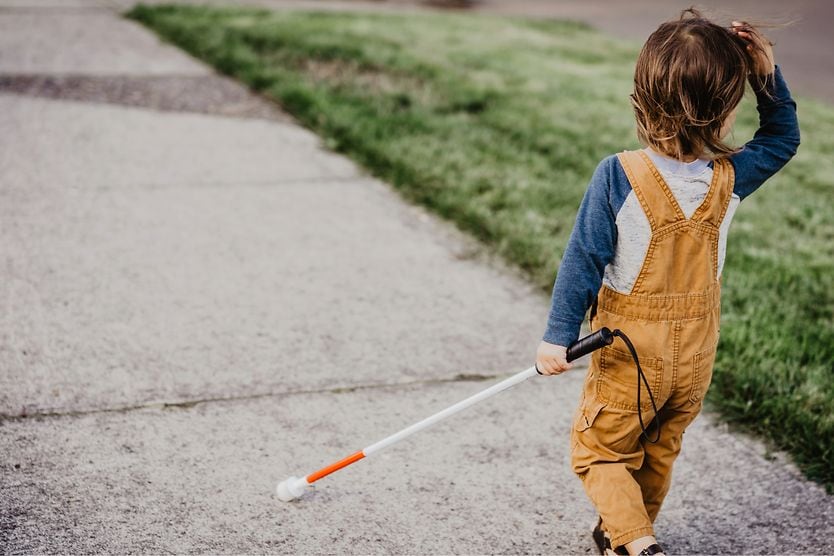
- Vision loss: The most common causes include injuries, congenital conditions and complications that stem from other health problems. About 3% of children under age 18 are either visually impaired or blind.
LEARN MORE: Common causes of vision problems in children, explained
Connecting vision with attention and learning disorders
Between 5% and 15% of school-age children are affected by a learning disorder. About 80% of these are reading disorders, like dyslexia. Nearly 1 in 10 school-age children have attention-deficit/hyperactivity disorder (ADHD).
These conditions are not vision disorders themselves, but they can coexist with certain eye problems.
Convergence insufficiency is one of these problems. It can cause attention problems that are easy to mistake for ADHD, and is three times more common in people with ADHD than those without.
In addition to visual symptoms like blurry or double vision, convergence insufficiency can cause attention problems that include:
- Difficulty holding concentration
- Difficulty keeping place while reading
- Reading slowly
Fortunately, treatment for convergence insufficiency is usually very effective and can help a child regain their attention.
How often do kids need eye exams or vision screenings?
Vision screenings are a way to monitor kids’ eye health as they grow up. While not a replacement for a comprehensive eye exam, these tests can be used to spot the signs of eye problems with less of a time and cost commitment.
Experts recommend the following schedule for vision screenings early in life:
- As a newborn
- Between 6 and 12 months old
- Between 1 and 3 years old
- Between 3 and 5 years old
- After age 5
As children progress through their school-age years, an eye exam is recommended every year, regardless of whether a vision problem is present.
If the person performing a vision screening suspects a problem with your child’s eyes or eyesight, such as a refractive error or eye teaming condition, they may refer your child to an optometrist or ophthalmologist for a complete, pediatric eye exam.
If you prefer to see a doctor who specializes in the diagnosis and treatment of children’s eye conditions, look for a pediatric optometrist or pediatric ophthalmologist.
These doctors are specially trained in the diagnosis, management and treatment of childhood eye problems.
On this page:
Childhood refractive errors
Other childhood eye problems
Connecting vision with attention and learning disorders
How often do kids need eye exams or vision screenings?
On this page:
Childhood refractive errors
Other childhood eye problems
Connecting vision with attention and learning disorders
How often do kids need eye exams or vision screenings?