Amblyopia (lazy eye)


On this page
What is amblyopia (lazy eye)?
Signs and symptoms of amblyopia
What causes lazy eye?
Amblyopia risk factors
How is amblyopia diagnosed?
What are the treatments for lazy eye?
Outlook with amblyopia
When to see an eye doctor
On this page
What is amblyopia (lazy eye)?
Signs and symptoms of amblyopia
What causes lazy eye?
Amblyopia risk factors
How is amblyopia diagnosed?
What are the treatments for lazy eye?
Outlook with amblyopia
When to see an eye doctor
What is amblyopia (lazy eye)?
Amblyopia, commonly called “lazy eye,” is a vision development disorder in which the eye fails to achieve normal visual acuity, sometimes even with corrective lenses. It typically develops during infancy or early childhood. In most cases, only one eye is affected, although both eyes can be involved.
With amblyopia, vision in the weaker eye is blurry, while the stronger eye sees clearly. The brain favors the stronger eye and ignores input from the weaker eye, which can prevent it from developing normal vision. This can also affect the eyes’ ability to work together to perceive depth and see in three dimensions.
Even though the condition is sometimes called “lazy eye,” it is not a reflection of effort and does not mean that the child or the affected eye is lazy.
When amblyopia is detected and addressed early in life, the risk of long-term vision issues can be reduced. The condition does not resolve on its own and, without treatment, can lead to vision loss in the affected eye. Fortunately, treatments are available to address its underlying causes.
Is amblyopia common?
Amblyopia is a fairly common condition. Recent studies suggest that approximately 1% to 2% of the world’s population has some form of amblyopia.
It is the primary cause of vision loss in children.
Signs and symptoms of amblyopia
Lazy eye can be difficult for parents to detect since it affects vision development during childhood. Some children may not show obvious signs or symptoms. Screening for the condition is important because, in most cases, one eye has normal vision while the other does not. In many ways, the child appears to have normal visual function.
Signs and symptoms to watch for include:
- Blurred vision in one eye or both
- Poor depth perception
- Strabismus (eye misalignment or crossed eyes)
- Ptosis (droopy eyelid)
- Clumsiness or bumping into objects
- Favoring one side of the body over the other
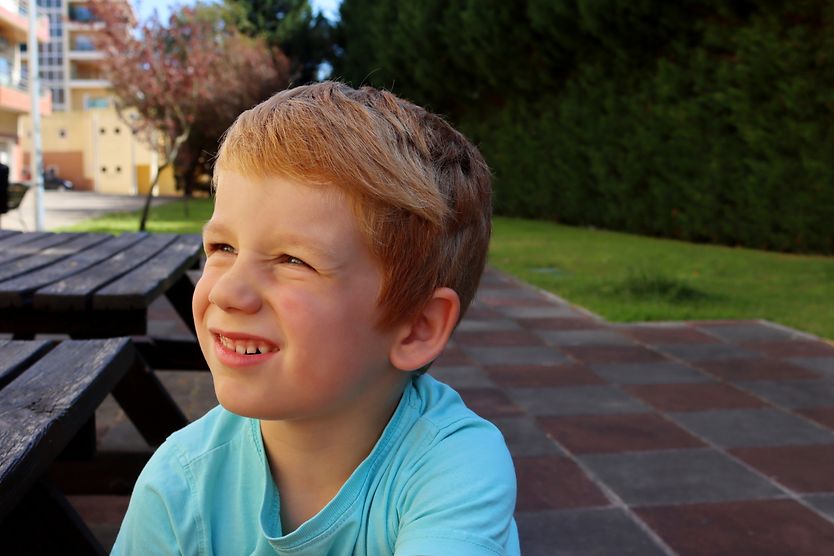
- Squinting or closing one eye to see clearly
- Tilting the head to one side
- Crying or fussing when one eye is briefly covered
- Eyes that don’t move together when focusing on an object
What causes lazy eye?
Amblyopia occurs when a child’s vision doesn’t develop normally. There are three main causes of this condition:
Strabismus
Strabismus is the most common cause of lazy eye, which is when the eyes do not point in the same direction. To avoid diplopia (double vision) caused by poorly aligned eyes, the brain will ignore the visual input from the misaligned eye, leading to amblyopia in that eye (the “lazy eye”). This type is called strabismic amblyopia.
Refractive errors
Sometimes, lazy eye is caused by unequal and uncorrected refractive errors in one or both eyes, such as myopia (nearsightedness), hyperopia (farsightedness) or astigmatism. This is known as refractive amblyopia.
A common form of refractive amblyopia is anisometropic amblyopia, which occurs when one eye has a significantly different refractive error than the other. In such cases, the brain favors the eye with less refractive error and “tunes out” blurred visual input from the other eye, causing amblyopia due to disuse.
SEE RELATED: Are nearsightedness and lazy eye the same thing?
Vision deprivation
Visual deprivation amblyopia occurs when something prevents light from entering and focusing in the eye, disrupting vision. Various eye-related factors can lead to this condition, such as a congenital cataract, droopy eyelid or clouding of the cornea. Early treatment is necessary for normal visual development to occur and to reduce the risk of vision issues caused by lazy eye.
While this is the least common cause of lazy eye, it’s often the most severe.
Amblyopia risk factors
Amblyopia can be congenital (present at birth) or develop during childhood. While it can affect any child, certain factors can increase the risk of developing the condition, such as:
- Premature birth
- Low birth weight
- Developmental delays
- Strabismus
- Ptosis
- Childhood cataracts or glaucoma
- Uveitis (an inflammatory eye condition)
- Family history of amblyopia, strabismus, childhood cataracts or glaucoma
- Prenatal exposure to nicotine, alcohol or drugs
How is amblyopia diagnosed?
The early detection and treatment of amblyopia is key to reducing the risk and severity of long-term vision issues. Your child’s pediatrician may perform simple screening tests for amblyopia during regular checkups, such as observing how well your child follows an object with one eye while the other is covered, and how they respond to having a particular eye covered.
It’s recommended to schedule your child’s first eye exam at or around 6 months of age to ensure their vision is developing normally and the eyes function together properly as a team. Your child’s eye doctor may perform a comprehensive eye exam and diagnostic testing to confirm a diagnosis.
What are the treatments for lazy eye?
The earlier the treatment for amblyopia begins, the better the outcome for your child’s vision. Treatment focuses on improving the weaker eye and may involve one or more of the following options:
Eye patching
Eye patching involves placing a patch or cover over the stronger eye. This forces the child to use the weaker eye, allowing it to strengthen over time (usually several months).
Eye patches come in various forms and are designed to adhere to the skin around the eyes. For children who wear glasses, a patch that covers one of the lenses may be recommended instead. Your child’s eye doctor can help determine if this treatment option is appropriate, the best type of patch for your child’s needs and how often the patch should be worn.
While this is the most commonly used treatment for amblyopia, its success relies on consistent use. If you struggle to get your child to wear their patch consistently, talk to their eye doctor for tips on how to achieve compliance.
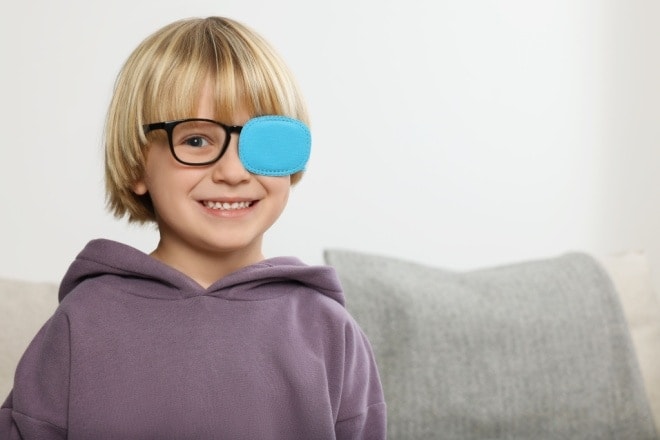
You can help your child accept wearing an eye patch for lazy eye by making it fun.
Prescription glasses
In cases of refractive amblyopia (lazy eye due to high or unequal refractive errors), normal vision can often be achieved by fully correcting the refractive errors in both eyes with prescription glasses. Sometimes, the prism in the glasses can help align the eyes to avoid strabismic amblyopia.
However, at least some patching or occlusion of the “good” eye is usually needed to force the brain to pay attention to the visual input from the “lazy” eye and enable normal vision development.
Contact lenses
Contact lenses may be prescribed for babies and children in certain situations to help treat or prevent the development of amblyopia. They may be used to:
- Treat large differences in refractive errors (refractive amblyopia)
- Reduce the risk of amblyopia in babies and children who have their natural lenses removed during congenital cataract surgery
- Prevent amblyopia in children with irregular corneas due to scarring or other conditions
Medicated eye drops
In some children, atropine eye drops have been successfully used to treat lazy eye called “atropine penalization.” One drop is placed in the stronger eye each day. (Your child’s eye doctor will provide instructions on how to do this.) Atropine temporarily blurs the close-up vision in the good eye, which forces your child to use the eye with amblyopia more, thereby strengthening the weaker eye.
One advantage of using atropine eye drops to treat lazy eye is that it doesn’t require constant vigilance to make sure your child is wearing their eye patch.
However, atropine does have side effects that should be considered, including light sensitivity (since the good eye is constantly dilated) and difficulty seeing near objects clearly during the treatment.
Note: While many studies have looked at and eye doctors have used atropine eye drops over the years, the U.S. Food & Drug Administration (FDA) has not approved it for the indication of amblyopia. It is considered off-label use.
Surgery
In some cases, surgery may be necessary to treat the underlying cause of amblyopia.
Treatment for strabismic amblyopia may involve strabismus surgery, which is performed to align the eyes. Sometimes, more than one surgical procedure is needed to achieve proper alignment.
Surgery may also be necessary to address other underlying causes, such as congenital cataracts, ptosis (droopy eyelid) or other conditions that impair vision.
Once the underlying condition has been corrected, treatment may be followed by eye patching of the dominant eye, prescription glasses, atropine drops or some form of vision therapy (specific eye exercises). Special eyeglasses with prism lenses may also be required after surgery to help the eyes work together as a team.
Prosthetic and blurring lenses
If your child struggles with wearing an eye patch, a specially designed prosthetic contact lens or occlusive eyeglass or contact lens may help. These devices blur or block vision in the stronger eye to encourage use of the weaker eye, while maintaining a normal appearance.
New technologies
Research shows that medications, like donepezil, can boost brain plasticity to treat amblyopia, even in adults. Several new technologies have emerged, offering additional therapeutic options for treating amblyopia and its effects, including:
Dichoptic therapies
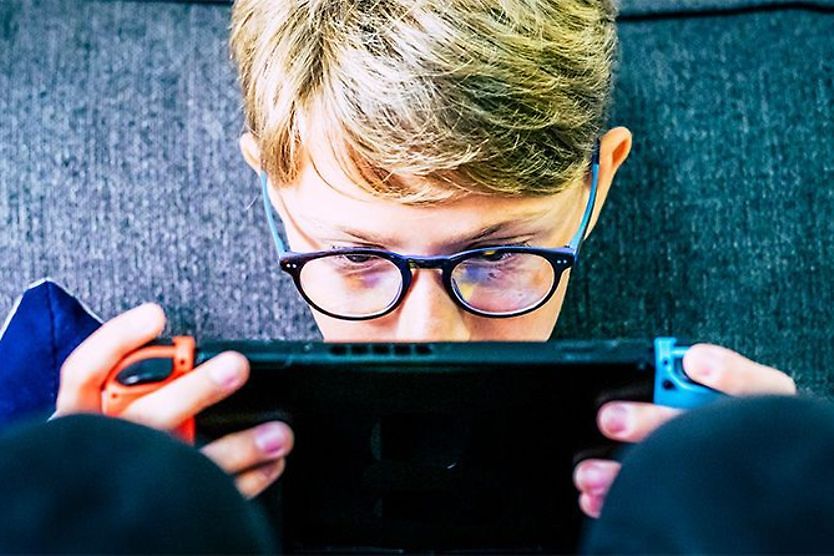
Dichoptic therapies work by showing different images to each eye at the same time. Vision in the stronger eye is often blurred to encourage the brain to use the weaker eye. This can be done with virtual reality (VR) headsets or special glasses while the child watches videos, movies or TV shows. Some examples include:
- One approach uses a VR headset, on which the child watches a movie or TV show. It is FDA-approved for treating children ages 4 to 7 with mild strabismus or anisometropic amblyopia.
- Targeted to children ages 4 to 9, another FDA-cleared therapy uses eye tracking and red-blue glasses to blur vision in the stronger eye while the child watches video content on the device (which is similar to a tablet). Clinical studies have found it to be at least as effective as eye patching.
Perceptual learning therapies
For years, experts believed that if amblyopia treatment was not initiated very early in life, no improvement in visual acuity was possible. But it now appears that older children and even adults with long-standing lazy eye can benefit from computer-based perceptual learning programs that stimulate neural changes, leading to improvements in visual acuity and contrast sensitivity.
One such program has produced improved vision in people with amblyopia who are over age 9. This FDA-cleared program involves 30-minute sessions, three to four times a week for three months, all done on a home computer. An eye care provider monitors treatment progress and results remotely.
Do eye exercises or vision therapy help?
Vision therapy can be beneficial. However, it’s used in addition to standard treatments (such as eye patching, prescription glasses or atropine drops), not as a replacement.
Vision therapy often involves eye exercises that help strengthen the weaker eye and improve how the eyes work together.
Outlook with amblyopia
Amblyopia can often be treated successfully, especially when it’s detected early and vision problems aren’t severe.
Timely intervention is essential for preventing permanent vision problems caused by the condition, and treatment is often most effective in younger children. That said, even older children or adults who undergo treatment can still experience some vision improvement.
When to see an eye doctor
If you notice any signs or symptoms of the condition in your child or have other concerns, schedule an appointment with an optometrist or ophthalmologist who specializes in children's vision.
Routine comprehensive eye exams are the best way to detect amblyopia and other eye or vision conditions as early as possible, even if your child isn’t experiencing any obvious problems.
On this page:
What is amblyopia (lazy eye)?
Signs and symptoms of amblyopia
What causes lazy eye?
Amblyopia risk factors
How is amblyopia diagnosed?
What are the treatments for lazy eye?
Outlook with amblyopia
When to see an eye doctor
On this page:
What is amblyopia (lazy eye)?
Signs and symptoms of amblyopia
What causes lazy eye?
Amblyopia risk factors
How is amblyopia diagnosed?
What are the treatments for lazy eye?
Outlook with amblyopia
When to see an eye doctor