Choosing Sunglasses That
Are Both Cool and Smart
While it can be fun to try on the latest sunglasses, you should remember that they aren't a mere fashion accessory. In fact, you should wear sunglasses every day. Why? When you are young, you spend more time outdoors than the typical adult. This means your eyes are exposed to more ultraviolet (UV) rays from the sun.
We all know that too much exposure to UV rays can cause sunburn. But sun exposure also can contribute to a number of serious eye problems that may not become apparent until you are much older.
The Evils Under the Sun
Many studies suggest that UV rays cause cataracts. In one study of 838 fishermen, researchers concluded that individuals who did not wear sunglasses or brimmed hats had three times as many cataracts as those who did.*

Actress Noomi Rapace wearing "Milano" sunglasses by Michael Kors.
UV radiation from sunlight also can damage the cornea. Even your eyelids are at risk because the delicate tissues around the eyes are more susceptible to UV-related skin cancer than other areas of the body. And some research suggests UV rays may also contribute to the development of pterygia, which are fibrous growths on the eye's conjunctiva that can invade the cornea and distort vision.
Some eye specialists are also concerned about short-wavelength visible light (sometimes called "blue light"), another component of sunlight. Blue light is similar to UV, but with slightly less energy. Long-term exposure to blue light may contribute to macular degeneration, the most common cause of vision loss in people over age 55.
Some situations will subject your eyes to more UV rays than others. Your eyes need extra protection during the summer, particularly at midday when UV rays are most intense. Also, be extra careful if you are vacationing in the Caribbean (and other tropical areas) or if you're skiing or mountain climbing. UV rays are more intense the closer you are to the earth's equator and the higher you go in altitute.
Tanning lamps also subject your body to high doses of UV radiation. Be sure to use the protective eyewear that the salon provides. Regular sunglasses don't provide adequate protection from the intense light and multi-directional UV rays in tanning booths.
Also, be aware that sunlight and UV rays "bounce" off reflective surfaces. Water is particularly reflective, so always wear sunglasses when you're boating or at the beach.
Other surfaces that reflect high amounts of UV rays include snow, sand (making beaches a double whammy), concrete, roadways, and glass.
Finally, many medications can make you extra sensitive to sunlight. Examples include antibiotics, antihistamines, sulfa drugs, some antidepressants, and birth control pills.
Do You Need Sunglasses When It's Cloudy?
Do I need sunglasses if ...it's winter? ...it's cloudy? ...I have prescription glasses? ...I have UV-blocking contact lenses?
Yes, yes, yes, and yes. UV rays are less intense in winter, but they can still be damaging. Same with cloudy days: UV rays can zip right through clouds, so protective sunglasses are important even on overcast and cloudy days.
If you wear regular glasses, get a pair of prescription sunglasses as well (or choose photochromic lenses for your eyeglasses).
If you wear contact lenses, definitely get a pair of non-prescription sunglasses to wear with them. In addition to blocking UV rays, sunglasses shield your eyes from wind that can dry out your contacts, and keep windblown dust and debris from reaching your eyes.
Even if your contacts block UV rays, you need to protect your whole eye, not just the part under the contact lens. You need sunglasses in order to do that.
Sunglass Lenses
For the best protection of your eyes and skin, choose sunglasses that block 100 percent of the sun's UV rays. Fortunately, UV protection is not related to how expensive the sunglasses are. Plenty of inexpensive sunglasses offer excellent UV filters.

New sunglass trends include retro chunky plastics in tortoise. Shown: John Richmond style JR698, modeled by soccer player Samuel Eto'o.
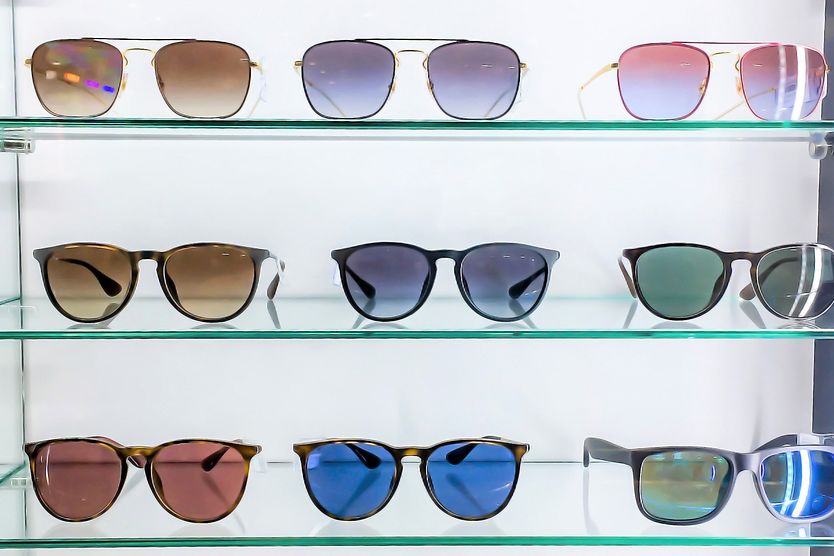
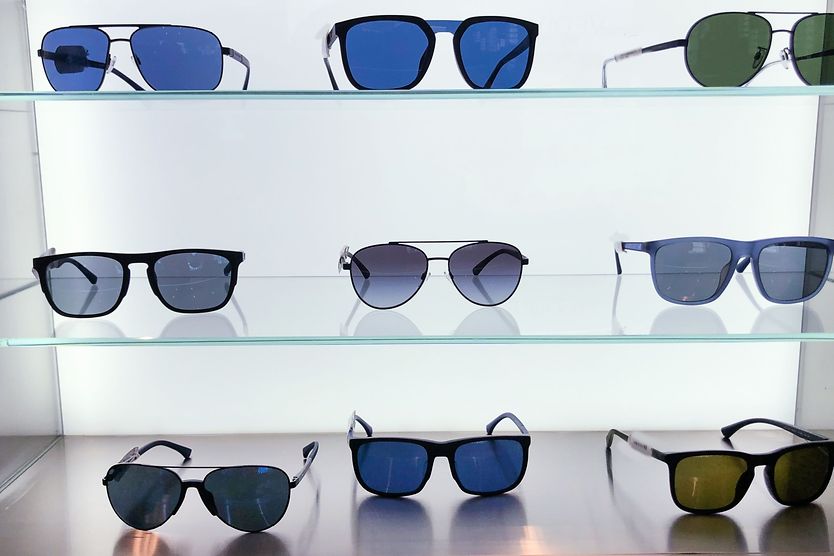
UV protection is also separate from the color of the lens, which is more a matter of what you like. Gray lenses are the most popular. They provide the most natural vision, with little or no distortion of colors. Brown lenses are also a good choice. They may alter colors slightly, but they also enhance contrast, making them an excellent choice for driving or other activities that require acute vision.
In addition to gray and brown, there are many other lens colors you can choose, including green, blue, amber, and rose. But be aware that some of these lens colors can significantly affect your color perception, and may even cause a little trouble at traffic signals (for example, it can be difficult to see when the green light is lit).
Darkness (density) is another factor to consider. For very bright, sunny days on the water, you may want a very dark sun lens. But for driving in changing conditions of sun and clouds, a lighter tint may be better. As with lens color, UV protection is not dependent on the darkness of the lenses. As long as the lenses are labeled "100 percent UV protection," you can select whatever lens color or tint density you like. The lens should be just dark enough that your eye is barely visible through it in bright light.
Lenses: Polarized, Photochromic, Mirrors and Gradients
Besides lens color and tint density, you may want to consider a special type of sun lens. First up are polarized lenses, which excel at reducing glare from light reflecting or "bouncing back" from water, glass, and other surfaces and materials. Don't forget that snow, sand, and water are big-time sources of reflected sunlight. Polarized lenses contain a special filter within the lens material that selectively blocks reflected light.

Old-school looks from the '70s are in style now. Shown are sunglasses from Ed Hardy, Chloe, Lacoste and Converse Heritage.
Photochromic lenses are the ones that get darker when you go outside and change back to a clear lens indoors. These lenses provide 100 percent UV protection and enable you to go outdoors without having to switch to a separate pair of prescription sunglasses or apply clip-on sunglasses to your eyeglasses.
However, photochromic lenses need to be exposed to UV rays for the darkening to occur. Since most automobile and truck windshields block a significant amount of UV, your photochromic lenses may not darken to your satisfaction when you are driving on a bright, sunny day (unless you're driving a convertible, that is!).
If this happens, you may want to consider purchasing a customized pair of clip-on sunglasses that you can attach to your photochromic lenses when driving in bright sunlight.
Gradient lenses are another specialty sun lens option. As their name indicates, these lenses have different degrees of darkness in different areas of the lens. They usually range from fairly dark at the top of the lens to a clear bottom.
But different gradations are also available. Gradient lenses that are clear or have only a very light tint at the bottom make it easier to see the gauges on your dashboard when you are driving. A drawback of gradient lenses, however, is that they don't provide effective protection from glare caused by light reflecting off surfaces below your line of sight (when you're boating or walking on a white, sandy beach, for example).
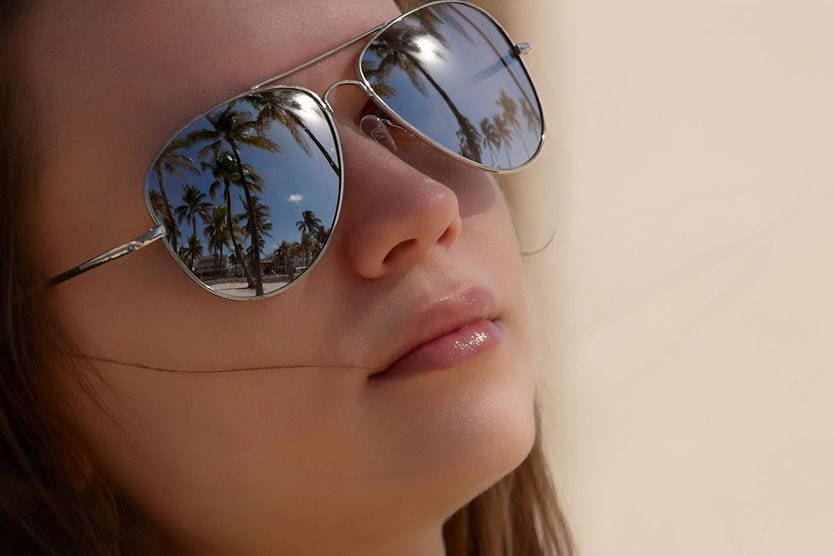
Mirrored lenses reduce the intensity of light to an even greater extent than regular sunglasses, making them a great choice for very bright conditions. Mirrors can be opaque or semi-opaque when viewed from the front, affecting whether or not others can see your eyes
Quality Control: Frames and Lenses
Lens quality is another important factor when selecting sunglasses. You should see no distortion (waviness or bubbles, for example) either through the lenses, or reflected on the lenses. Also, make sure there are no imperfections in the tinting.
For the greatest UV protection for your eyes and face, choose sunglasses that provide effective cover: wraparound styling and large lenses are both good choices.
It goes without saying that proper-fitting sunglasses should stay securely in place. If they are constantly sliding down your nose, see your optician for an adjustment of the nose pads, temples, and/or earpieces.
Finally, inspect the frames of your sunglasses carefully for any kinds of flaws. If something seems amiss, discuss it with your optician as soon as possible.
Read more information about selecting frames. ![]()
About the Author: Gary Heiting, OD, is senior editor of AllAboutVision.com. Dr. Heiting has more than 25 years of experience as an eye care provider, health educator and consultant to the eyewear industry. His special interests include contact lenses, nutrition and preventive vision care. Connect with Dr. Heiting via Google+.
*"Effect of ultraviolet radiation on cataract formation." New England Journal of Medicine. Vol. 319, No. 22 (Dec. 1, 1988); pp. 1429-1433.
Original version of this article was by Gina White.
[Page updated July 2012]
For more Teen Vision articles, please visit this section's home page or use the search box below. |
Sponsored Sections: |