Conjunctivoplasty explained: Procedure, benefits and risks


What is conjunctivoplasty?
Conjunctivoplasty is surgery to repair or treat disorders of the conjunctiva (the thin membrane that lines the inside of your eyelid and covers the white part of the eye). In some settings, this procedure is called conjunctival revision. Conjunctivoplasty is typically done to remove loose or damaged layers of the conjunctiva.
The conjunctiva protects the eye from outside irritants, like particles and germs. It also helps keep the eye lubricated. If the conjunctiva is too loose, it may not be able to adequately hold tears on the surface of the eye and can cause friction during blinking. Conjunctivoplasty can tighten the conjunctiva so it can better hold onto moisture.
When is conjunctivoplasty needed?
Conjunctivoplasty is often used to help treat ocular surface disorders involving the conjunctiva, such as in pterygium removal or conjunctivochalasis (CCH) management. Ocular surface disorders can damage the epithelium, which covers both the conjunctiva and the cornea (the dome-shaped area over the front of the eye).
Damage to the conjunctival epithelium can be caused by many different conditions. In some cases, conjunctivoplasty may help treat the condition.
Conjunctivochalasis
Conjunctivochalasis is a condition where the conjunctiva becomes wrinkled or loose. It is an acquired, age-related change rather than a condition a person is born with. Loose conjunctiva makes it harder for the eye to hold onto tears and moisture and can act as a source of friction during blinking. This can cause the eyes to become irritated, which can lead to inflammation.
Conjunctivochalasis can sometimes be difficult to diagnose. This is because the symptoms resemble many other conditions, particularly dry eye. Sometimes, conjunctivochalasis is even referred to as “mechanical dry eye.”
Symptoms can include:
- Dry eyes
- Discomfort or pain in the eye
- Burning
- The sensation of something in the eye
- Blurred vision
- Epiphora (watery eyes)
- Mucus discharge
Conjunctivochalasis can also be mild without any symptoms. These cases can sometimes be treated with eye drops or other lubricants. However, severe cases or symptoms (epiphora, especially) may not respond to such treatment and need surgery.
Dry eye syndrome
Dry eye syndrome happens because of problems with the tear film (a layer of tears that protects and lubricates the eye). It may occur alongside or even be driven by conjunctivochalasis, which can make dry eye more severe.
Dry eye is usually managed with lubricating agents, such as artificial tears, or prescription medications. However, conjunctivoplasty may be performed in severe cases in which conjunctivochalasis is a driving factor.
READ MORE: What is an ophthalmic solution and who needs it?
Pterygium
A pterygium is a growth that begins on the conjunctiva and then extends onto the cornea. This spread onto the cornea is what defines the condition, and it is why the growth can distort vision and may cause astigmatism as it enlarges. Sometimes, it’s called “surfer’s eye” because it is strongly linked to long-term exposure to ultraviolet (UV) light, along with wind and dust. It’s the reason a pterygium is more common in people who spend long hours outdoors, such as farmers, fishers, construction workers, welders and in sunnier, lower-latitude regions.
Surgery on the conjunctiva is needed to remove a pterygium. Because a pterygium involves the cornea, as well as the conjunctiva, the abnormal tissue is removed from both areas. The bare area is usually covered with a graft to help it heal and to lower the chance of the pterygium growing back. This tissue may come from another part of the conjunctiva, and sometimes amniotic tissue is used to aid in healing.
Eye whitening
The conjunctiva can become discolored, as in conjunctival hyperemia (redness). Conjunctival hyperemia can occur when conjunctival blood vessels become dilated and receive more blood flow than normal, which is typically associated with inflammation.
If redness is caused by conjunctivochalasis, a successful conjunctivoplasty can make the eyes look whiter. A related but separate procedure, cosmetic conjunctivectomy, has been used for cosmetic purposes and involves removal of discolored parts of the conjunctiva, followed by the use of a medication to limit regrowth of the abnormal blood vessels and scar tissue. However, this procedure carries significant risks and has a high complication rate, so it is not widely recommended or performed routinely.
How is conjunctivoplasty performed?
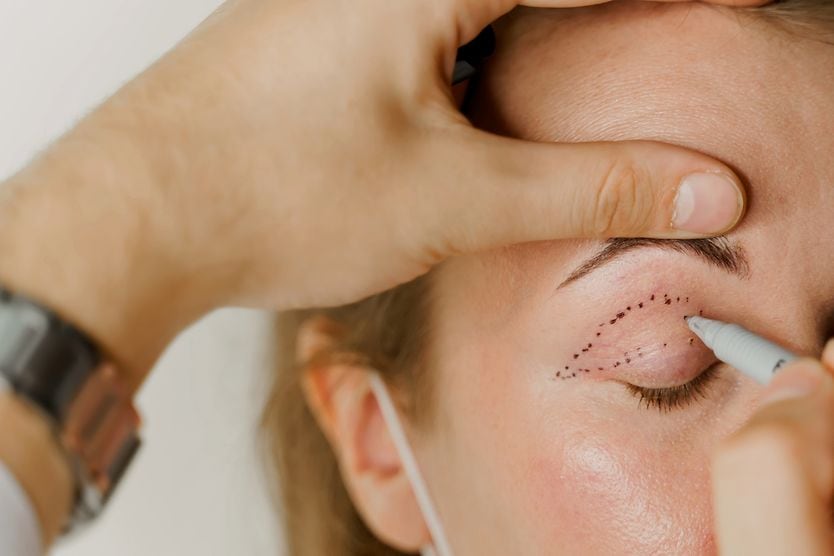
Conjunctivoplasty typically involves reshaping the conjunctiva by contracting it to help tighten it, often through cauterization, though in some cases tissue removal is necessary. This can help the conjunctiva better hold onto tears and moisture and reduce mechanical friction during blinking.
Pre-operative preparation
In many cases, symptoms of ocular surface diseases, like conjunctivochalasis or pterygium, can be treated with other methods. Diagnosing the right condition is important to determine if surgery is needed.
There are several ways your eye doctor may test for such a condition. These may include:
- Slit lamp examination – A special instrument called a slit lamp is commonly used by eye doctors during eye exams. A slit lamp is essentially a microscope with an adjustable light that can let the doctor see into different layers of your eye. The eye doctor can use this to look for any visible extra conjunctival folds as seen in conjunctivochalasis.
- Schirmer test – This test is used to assess tear production. It involves placing a thin strip of special paper under the lower eyelids, then measuring how wet the paper is to measure tear production. This is one of several tests normally used to diagnose dry eye syndrome, but the doctor may perform it to rule out dry eye.
- Optical coherence tomography (OCT) – OCT is an imaging technique that uses a special machine to scan your eye. OCT is helpful for viewing certain parts of the eye, including the tear meniscus (a pool of tears where the eyelid and eyeball connect).
If there are still symptoms following diagnosis and conservative treatment of conjunctival disorders, then surgery, like conjunctivoplasty, may be recommended.
READ MORE: Tests in an eye exam
Surgical techniques
There are several different surgical techniques for conjunctivoplasty, including whether the doctor uses a tissue-sparing or excisional approach. For conjunctivochalasis treatment, conjunctivoplasty usually involves contracting or removing the extra conjunctiva. It may be cut out or tightened using heat through cauterization. Sutures or fibrin glue are then used to close the incision if needed; however, conjunctivoplasty is moving toward more tissue-sparing techniques rather than traditional excisional procedures that require the removal of conjunctiva. A newer technique involves the use of plasma, which allows for minimally invasive reshaping and tightening of the conjunctiva with less potential tissue damage.
Conjunctivoplasty may also involve grafting. This is typically used in more severe cases where a lot of tissue is removed or for surgery to remove a pterygium. Placing a graft can fill in areas of missing tissue and help the wound heal. A graft made of the patient’s own conjunctival tissue or amniotic membrane are common graft materials.
Conjunctivoplasty is generally an outpatient procedure, so patients are usually able to go home the same day.
Post-operative care
Healing will vary from person to person and depending on how much tissue was removed. Complete healing can take two to six weeks, and some patients may have to wear an eye patch while they recover. You may be given medications, like antibiotics or steroid eye drops, for post-operative care.
In the days after the surgery, you may experience:
- Dry or watery eyes
- A scratching sensation
- Light sensitivity
- Eye redness
Many patients can resume their normal activities within three to five days. However, some activities (like swimming or strenuous exercise) may have to be avoided for several more weeks.
Benefits and risks of conjunctivoplasty
In cases of eye dryness or irritation due to conjunctivochalasis, conjunctivoplasty can help your eyes maintain moisture and reduce friction with blinking, in many cases, improving symptoms.
Conjunctivoplasty may cause scarring or issues with the eye’s surface. Other complications may include:
- Cicatricial entropion – When scar tissue makes your eyelid turn in toward your eye
- Infectious scleritis – Infection of the sclera, the white part of your eye
Note: Conjunctivoplasty treatment does not guarantee that the condition will not return. A pterygium in particular can grow back after surgery. It is recommended to keep your follow-up appointments with your eye doctor to monitor your condition.
SEE RELATED: What is corneal scarring?
Alternatives to conjunctivoplasty
Surgery is typically done only if other treatments don’t help symptoms. Eye drops, lubricants or steroids can often help, especially for symptoms related to dry eye. Some other treatments that may help are:
- Topical antihistamines or corticosteroids (often in the form of drops)
- Blinking exercises
- Hot compresses or gently cleaning the eyelid
- Prescription dry eye medications
SEE RELATED: Dry eye treatment: How to soothe irritated eyes
Frequently asked questions about conjunctivoplasty
Conjunctivoplasty is an overall safe procedure that can help restore proper function of the conjunctiva and ocular surface. But there are some things to consider before getting the procedure done.
Can conjunctivoplasty improve vision or just eye dryness and irritation?
A tear film that isn’t stable can make vision worse. Since blurred vision can be a symptom of ocular surface disease, conjunctivoplasty may potentially help improve vision if tear film instability due to conjunctivochalasis is a contributing factor. However, it is important to rule out other causes of blurry vision, such as a change in glasses prescription, cataracts, or retinal or optic nerve problems, to determine if blurred vision is due to tear film instability. Blur that fluctuates with blinking is often caused by an unstable tear film, whereas blur that remains constant with blinking is typically due to a separate cause.
Can conjunctivoplasty be used to improve cosmetic appearance?
Conjunctivoplasty is primarily aimed at improving the function of the conjunctival tissue, not necessarily improving the cosmetic appearance of the eyes. Cosmetic conjunctivectomy is a separate but related procedure that involves removal of conjunctival tissue to improve the cosmetic appearance of the eyes. However, this procedure has a high complication rate and is therefore not commonly recommended due to safety concerns.
Are there any risks or complications associated with conjunctivoplasty?
As with any surgical procedure, conjunctivoplasty may result in risks or complications. There may be bleeding, swelling or symptoms similar to dry eye. Scarring or infection may also occur.
How long is the recovery period after conjunctivoplasty?
A majority of patients can return to work or resume their regular activities about three to five days following surgery. Complete healing can take anywhere from two to six weeks.
What should I expect during conjunctivoplasty surgery?
Local anesthesia is typically used during conjunctivoplasty to manage any pain. The procedure can be as short as 20 minutes, and patients can usually go home the same day.
Is conjunctivoplasty covered by insurance?
In some cases where conjunctivoplasty is deemed medically necessary (like in many cases of pterygium), conjunctivoplasty may be covered by insurance. It’s recommended to verify coverage and costs with your insurance provider.
SEE RELATED: Vision insurance: A guide to plans, costs and benefits
Is conjunctivoplasty right for you?
Conjunctivoplasty is an overall safe and effective surgery often used to improve symptoms associated with disorders of the conjunctiva, such as dryness or irritation caused by conjunctivochalasis.
It’s important to get a complete diagnosis before you decide whether conjunctivoplasty will help your condition. Your ophthalmologist or optometrist can help you determine whether it’s the right option for you.
READ NEXT: Types of eye surgery and the conditions they treat