How smart eyewear technology helps low vision patients navigate daily life

Poor night vision. Blurry eyesight and dizziness. Headaches and light sensitivity. Loss of peripheral sight. These are just some symptoms that can affect people living with low vision, a condition where visual impairment persists despite corrective eyewear, medicine or surgery. They struggle with independence and the ability to complete everyday tasks that were once simple to do.
Technology however, is changing all that. From low-vision glasses and purpose-built wearables that use optical character recognition(OCR converts print or written text into digital) to services that connect users with a trained human on the other end, these options can give people with visual impairment new ways to navigate their surroundings and engage in more activities.
Navigating the range of devices can be a challenge. Some are built specifically for people with low vision, using sophisticated cameras and software to help them better manage their daily tasks. While promising, these options tend to be expensive.
Still, the potential is exciting. Some smart glasses paired with artificial intelligence (AI) are quickly changing the experience for those with low or no vision. Experts are optimistic about how AI can give real-time feedback and free people from some of the constraints of fiddling with device hardware. Often less expensive than other devices, these smart glasses are packed with features, though users must contend with AI-generated hallucinations that have yet to be eliminated.
The scale of low vision challenges
According to the American Foundation for the Blind (AFB), approximately 8.7 million Americans have vision difficulty, defined as "serious difficulty seeing, even while wearing glasses or contact lenses.” These numbers highlight how common serious vision challenges are in the U.S.
To better understand the scope of vision loss, it helps to clarify some often-used terms. Low vision is defined by the AFB as "vision loss that cannot be fully corrected and interferes with daily activities." Legal blindness, on the other hand, is a specific clinical designation based on precise measurements of visual acuity and visual field.
Total blindness means a person cannot see any light at all, which eye doctors call “no light perception.” The majority of people with visual disabilities associated with significant eye disease are not totally blind and might have at least some usable vision.
Overall, vision loss is a broad challenge, given how many people may experience it over time. An estimated 93 million adults in the U.S. are at high risk of serious vision loss.
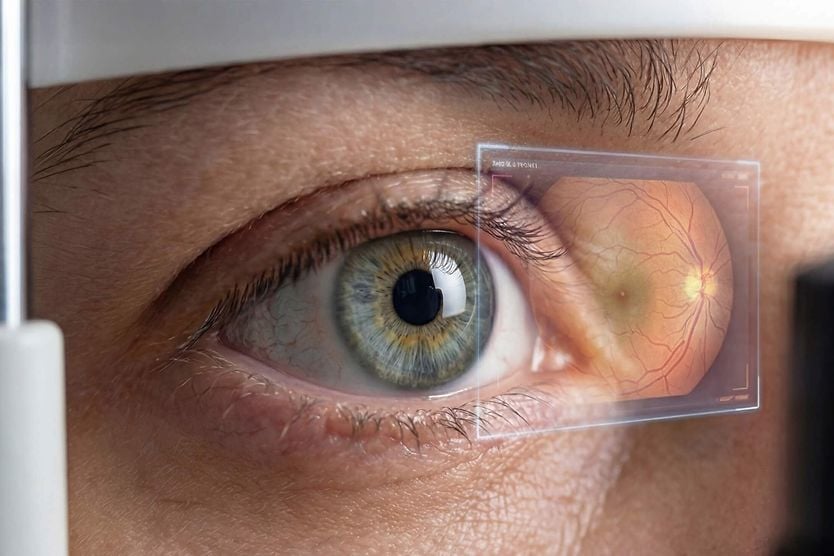
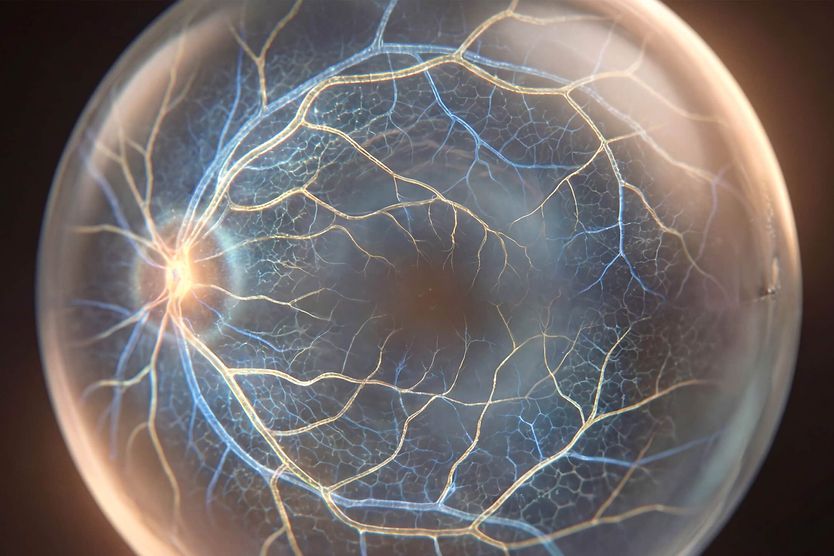
Age-related macular degeneration (AMD) is the leading cause of vision loss. It damages the macula — the central part of the retina — resulting in loss of central vision while peripheral vision remains intact.
Another leading cause of vision loss is glaucoma, a group of eye diseases that damage the optic nerve. In severe or untreated cases, it can result in blindness. Diabetic retinopathy can cause progressive vision loss as blood vessels in the retina bleed, creating dark spots and visual field impairment. In addition, advanced cataracts, a clouding of the clear natural lenses of the eyes, are a major risk for Americans age 75 and older.
Those who lose their vision must contend with new challenges, from independent mobility and travel to finding new ways to do everyday tasks. The promise of smart eyewear is in how it may help users tackle these obstacles with greater freedom. While the technology is in its early stages, some features show promise.
On the frontlines of this emerging technology is David Simpson, OD, an optometrist specializing in low vision and an assistant professor of ophthalmology at the University of Colorado Anschutz. Dr. Simpson specializes in helping those with low vision and related conditions.
His clinical practice focuses on interventions for individuals whose vision cannot be corrected with glasses, contacts or surgery. Central to his care is developing individualized treatment to meet each patient’s unique needs.
“As soon as the patient starts to experience difficulty with day-to-day activities, that’s when we want to see them in a low vision clinic,” he said.
According to Dr. Simpson, many challenges can be managed with traditional optical devices, such as stronger glasses or magnifiers, along with optimized lighting and other resources. But as vision worsens, many patients then benefit from a more sophisticated solution.
Navigating device offerings
There are many styles of eyewear for those with low vision. Some devices use a high-definition (HD) camera and an organic light-emitting diode (OLED) screen to magnify and enhance images. Other units have sophisticated cameras and software that provide text magnification and tools such as OCR and text-to-speech.
However, cost is often a barrier for many purpose-built devices. Some can go for $4,950 while other head-worn systems can run into the several-thousand-dollar range depending on the model and how it’s purchased.
The high price points of assistive devices are often referred to as the “disability squeeze,” according to Tony Stephens, the Assistant Vice President of Communications for the American Foundation for the Blind. The term comes from a research project that examined how living with a disability can cost more. This also impacts those with low vision or blindness.
Additionally, the number of available devices can be challenging to sort through. This is why it’s critical to work closely with a low vision specialist to decide whether a device is the appropriate choice for you.
A smarter era for glasses
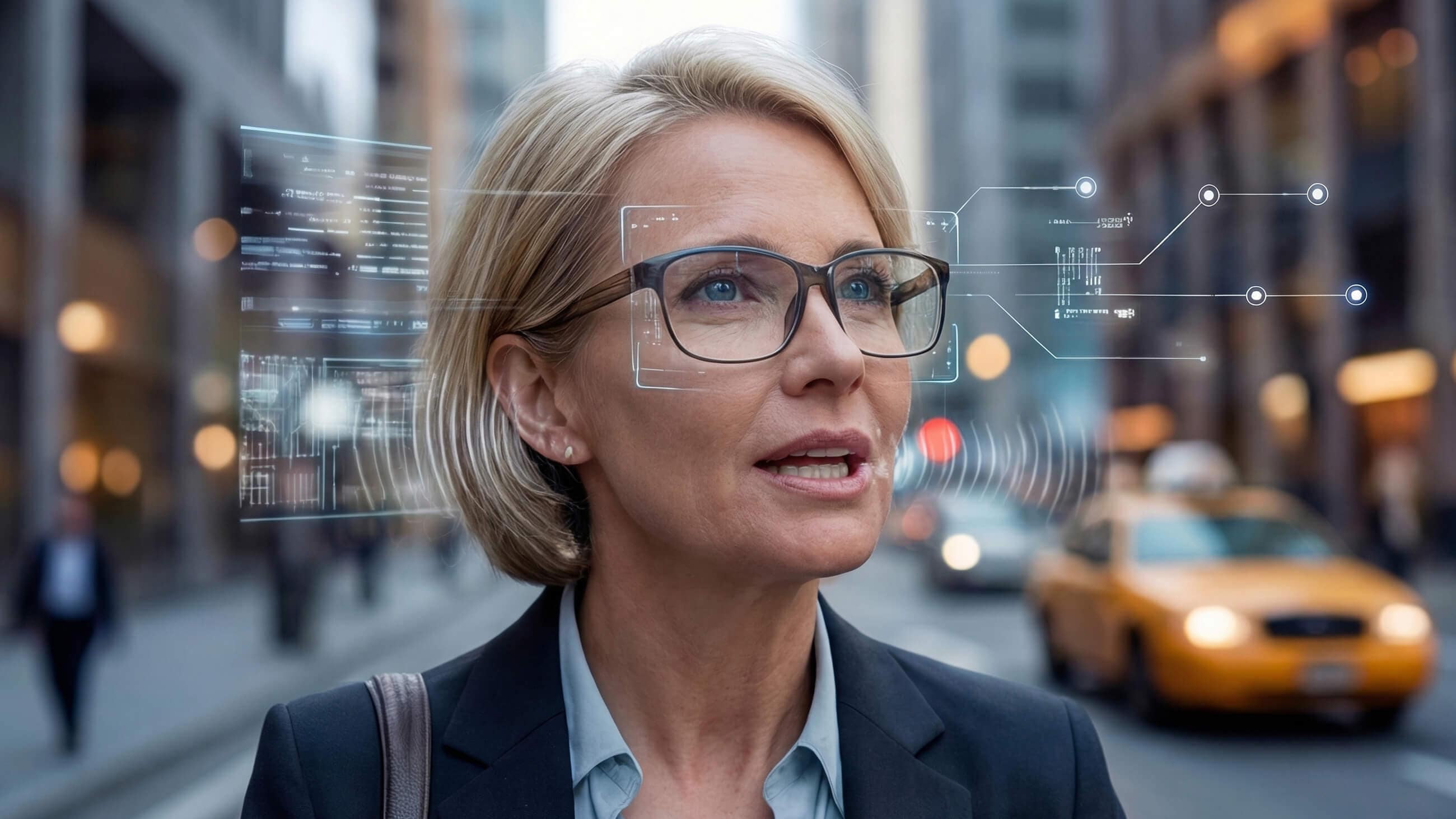
Smart glasses may offer some hope in terms of affordability, as they usually cost less than specialized devices and look more like regular glasses. Another key differentiator is that a user can issue voice commands to an AI assistant, which can improve daily functioning.
One smart glasses option is meant to be a simpler, more affordable entry point for quick, voice-first help like reading text and describing what’s in view. Another choice is a premium product built with a deeper assistive toolkit, including text-reading modes and hands-free calls.
People can get direct help from a trusted person through a professional visual interpretation service that connects blind or severely sight-impaired users to a remote assistant for object and scene description or directions.
There’s also growing use of standard consumer smart glasses to assist individuals with low vision. While they aren’t technically ��smart glasses for the visually impaired,” they offer several useful features.
Navigating daily life with smart eyewear
Aaron Preece, who is visually impaired, uses and reviews hardware in his role as editor-in-chief of AccessWorld, a publication of the American Foundation for the Blind, and has tested several assistive devices.
While he notes that device use is a highly individual decision, he’s optimistic about how smart glasses that incorporate AI often outperform OCR in providing better information for low-vision users.
“Smart glasses can give you a detailed description of a picture. Before AI, most object recognition didn’t really tell you anything you didn’t already know, and it would often tell you the wrong thing,” said Preece. “With AI recognition being so detailed, it actually becomes useful.”
Dr. Simpson sees practical benefits to how smart glasses can help someone advance the skills they’d traditionally learn in occupational therapy. The glasses complement many of the methods that people with visual impairment use to partake in daily activities.
“Cooking is one example,” he said. “Occupational therapy looks at adaptive equipment: two-sided cutting boards with a dark side and a light side for contrast, and similar tools for measuring. So you look at lighting, tools and adaptations to help the patient physically perform the task.”
Dr. Simpson continued, “People want a way to read recipes while cooking. Traditionally, if someone’s using a magnifier, they have to stop, put everything down, wash their hands, grab the magnifier and read the recipe. With smart glasses, they can more seamlessly integrate the reading task into their other activities.”
However, just like large language models (LLMs) on a computer or smartphone, AI systems are prone to hallucination on smart glasses as well. Preece noted that the challenges of hallucination, which is when an LLM confidently asserts something that isn’t true, can plague users of smart glasses.
“Because it’s AI, it can be very confident even when it’s wrong. It’s not going to say, ‘I’m wrong,’” he said. “If it doesn’t know what it’s seeing, it might guess. For example, I was trying to read the door numbers, but one was scratched out. I asked, ‘Can you read the door number?’ Sometimes it would say, ‘There’s no door number,’ but sometimes it would just make up a number.”
The technology is emerging and rapidly changing and Dr. Simpson is monitoring what devices may offer as new models and features are released. Many devices on the market are still in their infancy and do not address all the issues encountered by those with vision loss or low vision.
“A lot of augmented reality-type devices have been bulky. As technology becomes smaller and more comfortable, that will help,” he said. “One big thing about smart glasses is they don’t look that different from regular glasses. That matters for people with visual impairment: Many don’t want something that makes them stand out. If we integrate more technology into glasses that look like what everyone else wears, we’ll see more uptake among the populations that can benefit,” he said.
READ MORE: Low vision aids for reading and daily activities
The future of smart vision glasses
There’s a desire among experts for consumer devices to add more features so they can function as true smart glasses for people with significant visual challenges.
There have been recent announcements about new smart glasses, confirming that additional technologies are headed to market. Offerings focused on gaming and artificial intelligence use cases, with others demonstrating proof of concept for future models.
At least a dozen new device options are expected to enter the market over the next 12 to 18 months. While the average consumer was the target, such innovations in wearable technology can lead to vision accessibility features as well.
“Technology has drastically changed my life for the better,” Preece said. “Having access to AI image description and live video — it has been shocking how helpful it’s been.”
Software integration is key to comprehensively supporting people using AI. For example, there are services that connect individual users with a volunteer who “sees” through the device’s camera and provides feedback about their surroundings via the device's speakers.
Dr. Simpson and other experts note that comprehensive low-vision exams with a specialist are essential for patients seeking to improve their daily functioning.
When they ask if smart glasses are an ideal choice for them, Dr. Simpson cautions his patients that the answer is “maybe.” One’s comfort with new forms of technology, along with their specific needs and goals are all part of assessing whether smart glasses are right for them.
“I’d like to see a low-vision mode, where out of the box, the device knows it’s being used by someone with vision impairment and is set up for that person’s needs and has more understanding of their challenges,” Dr. Simpson said.
“With smartphones, a lot of accessibility features are designed with good intentions, but aren’t always practical for the people who need to use them. My hope is that companies recognize these devices can be used as an aid for people with vision impairment, and develop them in a way that makes them truly accessible.”
READ NEXT: Resources for the visually impaired