The future of wearables: What are smart glasses?

What are smart glasses?
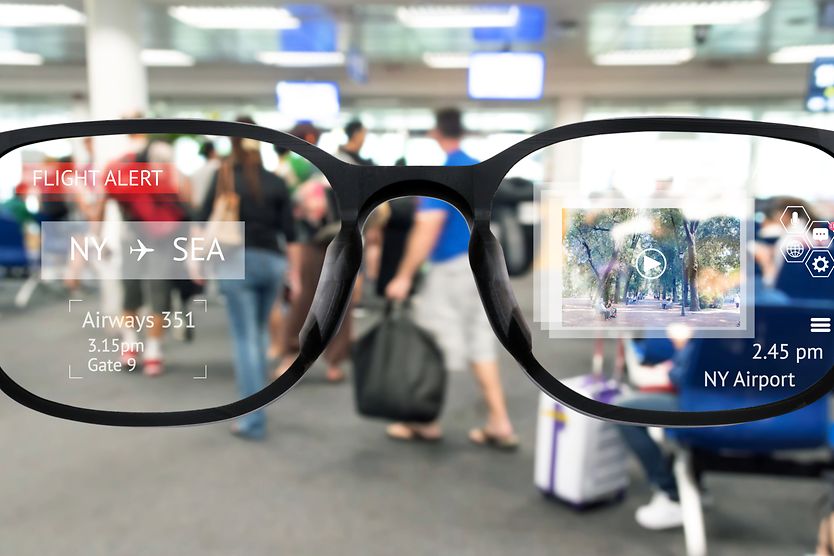
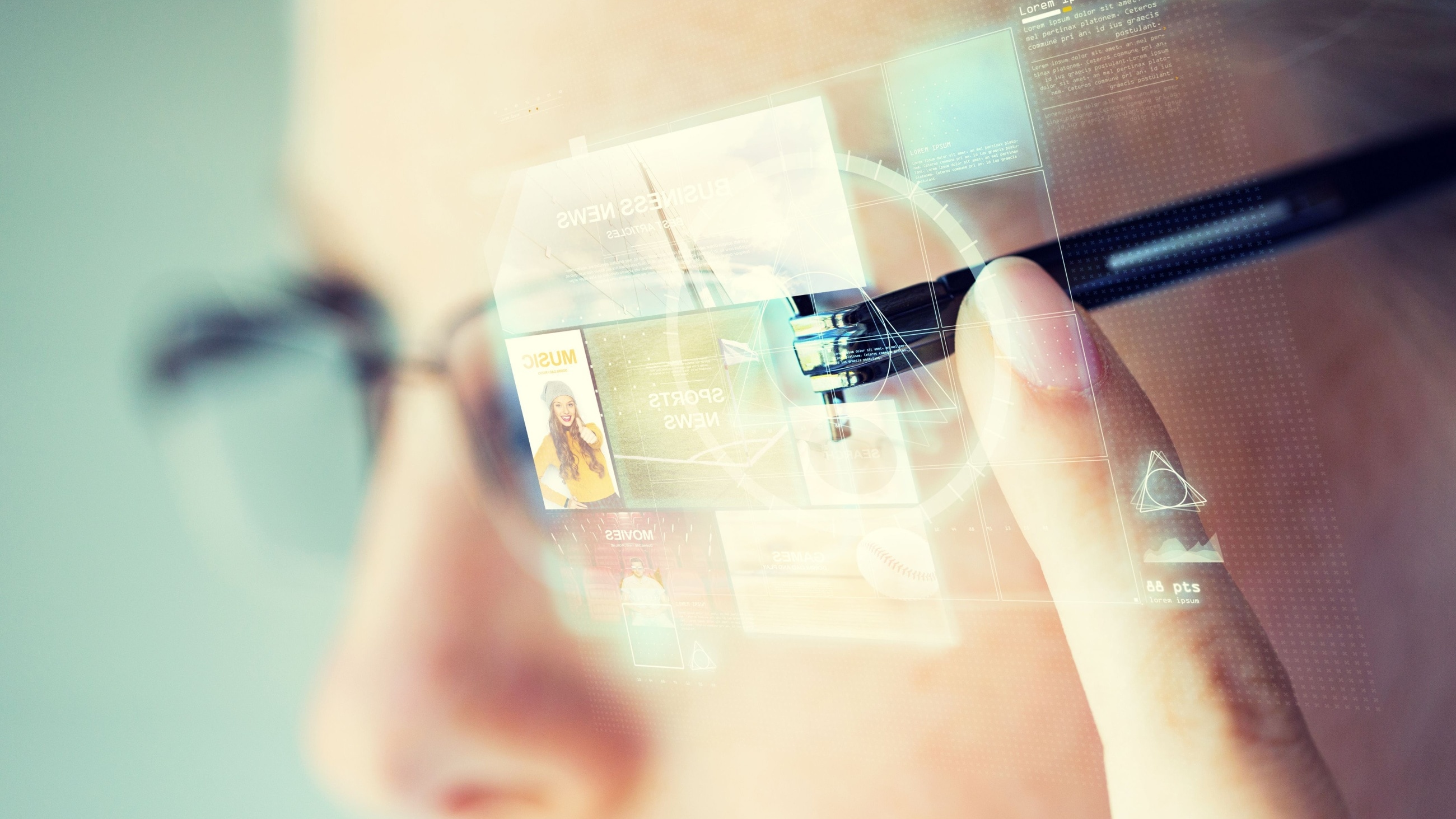
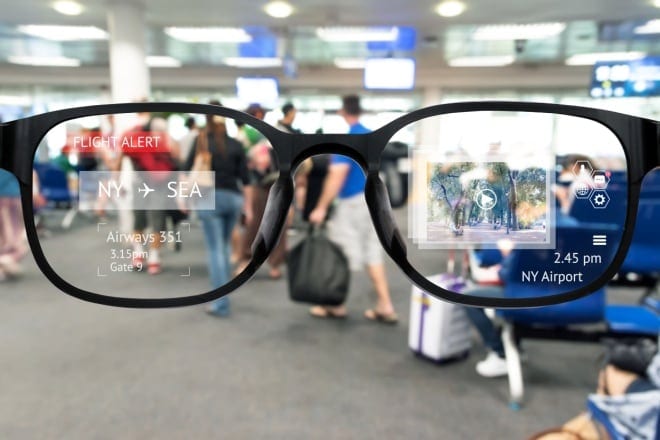
Smart glasses are wearable tech that merge the physical world with digital information. They resemble traditional eyewear but include audio and a transparent screen to display data to the wearer. This allows them to interact with both real and virtual environments simultaneously.
Evolution of smart glasses
While smart glasses were first introduced in the early 2010s, this wearable technology can be traced back to a pioneering researcher named Professor Steve Mann, often called the “Father of Wearable Computing.” Dr. Mann's device captured what the wearer was viewing while at the same time processing and superimposing digital information. However, these early versions were bulky and still experimental, so they were limited to academic settings.

In recent years, artificial intelligence (AI) has advanced to the point that it’s now possible to create comfortable, wearable devices. Smart glasses have become practical eyewear that people can use in everyday life, not just in research labs. These modern versions are smaller, more refined and built for real-world use.
How smart glasses work
Modern smart glasses contain several components that combine hardware with an information-processing system. These include:
- Cameras to see what you’re looking at
- Processors to handle information quickly
- Sensors to collect data
- Connectivity features to share information
Cameras in smart glasses
Cameras are an essential component of smart glasses. They provide much of the data needed to deliver interactive information to the wearer.
Cameras on the frame
Smart glasses typically contain multiple miniature high-resolution cameras:
- Two cameras — one in front of each eye — track your eye movements as you look around.
- A camera in the center of the frame captures what’s happening in your surroundings and what you’re looking at.
Awareness capabilities
The glasses combine information about your eye movements with what the scene camera captures. Doing this allows the glasses to understand what you’re looking at. Together, these cameras make up what’s called the “awareness” system. It allows the smart glasses to perform several important tasks:
- Recognize faces
- Track moving objects
- Detect hand gestures
- Analyze the visual scene
Processors in smart glasses
Smart devices need to process a large amount of information. Smart glasses need to process data in real time while you wear them. To do this, they have highly sophisticated processing abilities.
Handling units
Smart glasses have a processor — often called the “handling unit.” This processor uses specialized AI chips to control everything the glasses do. These chips are designed to quickly process massive amounts of information, such as:
- Visual data from cameras
- Audio from microphones
- Sensor readings
Additionally, the processor needs to:
- Display augmented reality (AR) images on your lenses
- Understand your voice commands
- Run complex AI programs to provide personalized recommendations and insights
Neural processor units
Managing all these activities requires a lot of computing power, which would normally drain the battery quickly. To solve this problem, smart glasses use specialized components. These are called neural processor units (NPUs). These processors are designed to run AI calculations. NPUs can deliver powerful artificial intelligence capabilities while using little battery power.
Instead of sending your data to a distant server for analysis, the AI calculations happen directly on the glasses themselves. By running AI calculations directly on the device, processing is made much faster and more responsive.
Sensors in smart glasses
Smart glasses contain numerous sensors. These are tiny devices that collect information about your body and the world around you.
Body sensors
These sensors work together as a coordinated system to gather continuous data while you go about your daily life.
- Inertial measurement units and accelerometers – These track how the glasses move as you turn your head, walk or change positions. This information helps the glasses understand your movements and adjust their display accordingly.
- Health sensors – Smart glasses for health monitoring can be equipped with specialized sensors. They track important wellness metrics in real time. These biosensors measure:Heart rate
- Blood pressure
- Body temperature
This means that smart glasses can continuously monitor your vital signs without requiring you to stop and use separate devices.
Location sensors
The sensor system typically also includes location technology, such as:
- GPS modules – For pinpointing your location
- LIDAR (Light Detection and Ranging)** – To create detailed maps of your surroundings
Together, these sensors help the glasses to create accurate 3D maps of your environment and understand exactly where you are and what’s around you.
Connectivity in smart glasses
Connectivity is essential for smart glasses to function effectively. These devices need to:
- Connect to the internet
- Link with other devices (like your smartphone)
- Communicate with online services and platforms
Bluetooth and Wi-Fi
Smart glasses typically use Bluetooth and Wi-Fi to stay connected. This keeps the battery from draining too quickly. The glasses communicate with smartphones via a wireless connection. This lets the glasses offload some processing tasks to the smartphone.
Wireless networks
For activities such as telemedicine appointments, the glasses can connect to a faster 5G network. This includes when you need to share video and health data with a doctor. These networks provide the speed and security needed for real-time video consultations.
Cloud-based platform
Throughout the day, smart glasses collect data about your activities and health. Once the data is gathered, the glasses use cloud computing to transmit it via a wireless network to a cloud-based platform for storage and analysis. Your health information is stored safely there. It can be analyzed by health care providers or software. Personalized insights and recommendations can then be generated.
Key features of smart glasses
Smart glasses provide a wide array of support features. This includes:
- Real-time data
- Assistance with everyday tasks
- Health monitoring
To accomplish this, certain key features are incorporated into the technology.
Augmented reality
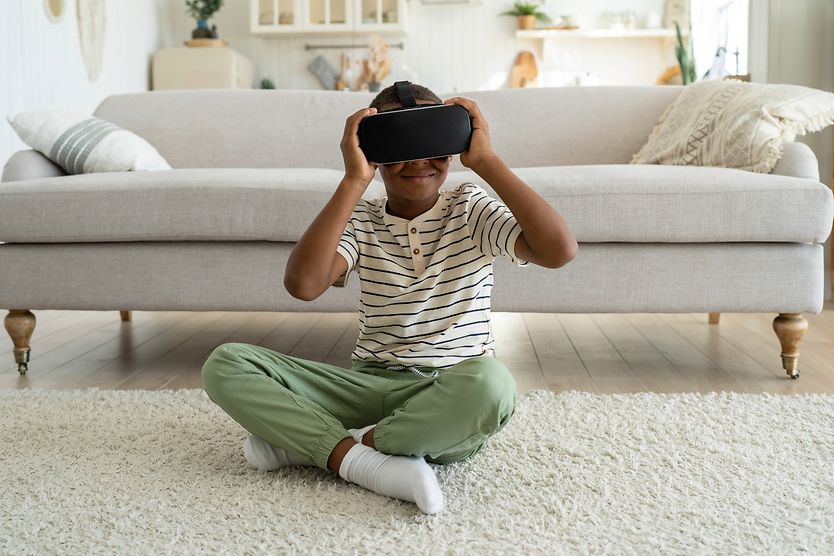
Augmented reality is the main technology that powers smart glasses. AR lets smart glasses add digital information — like words, pictures, 3D objects and sounds — to what you see in the real world. AR enhances what you already see by layering digital content over it. It is not virtual reality because it does not replace reality with something completely virtual.
AR in smart glasses uses a screen or projection system. This system displays computer-generated information directly in front of the eyes. Advanced AI technology called “neural holography” allows you to see virtual objects with real depth perception, so they look like they’re truly present. This makes digital objects blend naturally with your surroundings. This blending capability has many applications, such as:
- Providing directions
- Language translation
- Entertainment
- Taking photos
Newer models are becoming smaller and can use holographic imaging and AI. This allows them to show full-color, three-dimensional images that move and look realistic.
Voice control
Many smart glasses include voice control so you can interact with virtual assistants. Some models also have a built-in touchpad that lets you control features. This allows you to:
- Adjust volume
- Pause or play content
- Listen to music
- Take phone calls without needing separate headphones
Eye tracking
Advanced smart glasses include eye tracking technology. This is a built-in system that monitors where you’re looking. This is important because it helps the glasses combine what you want to do in real time. By combining eye tracking information with mixed-reality displays, the glasses can show you relevant information when you need it. Modern smart glasses also use multiple input methods:
- Tracking your body movements
- Recognizing facial expressions
- Listening to your voice
Camera and recording capabilities
Some smart glasses include a camera with audio recording capabilities. These cameras can capture both still photos and videos. Recording is activated using a button or voice commands. Captured media is stored temporarily on the glasses. It can be transferred to a smartphone via mobile app for storage, viewing and sharing. The newest models support live streaming to social media platforms.
AI-powered learning and assistance
Artificial intelligence is quickly becoming a standard feature in newer smart glasses models. It has applications for anyone seeking easily accessible AI assistance.
For students
AI assistants built into the frames can help wearers learn. The glasses can provide definitions, summaries and explanations of new topics or concepts. For example, biology students can examine 3D models of cells or organs for detailed study. The ability to capture photos and videos may also help students save notes and information.
For the visually impaired or blind
For people who are blind or have low vision, specialized smart glasses use AI technology to function like a virtual guide dog. These glasses use vibration feedback, which can be felt on the skin, and audio cues to guide people safely. They can detect hazards, like stairs or puddles. They can also guide people around obstacles, helping them navigate their environment.
Applications of smart glasses
Smart glasses are being adapted for a wide range of applications across health care, education and accessibility.
Smart glasses in health care
Smart glasses are emerging as valuable tools across many medical applications. These include:
Surgery assistance
In medical settings, smart glasses can assist surgeons during procedures. Augmented reality technology plays a key role in how these smart glasses work. Displaying health information and guidance in the field of vision can be a valuable medical tool.
Health monitoring
Smart glasses can provide reliable, comprehensive health monitoring. They can collect continuous health and environmental data in a natural, everyday setting. Real-time monitoring capability may help patients monitor and manage long-term health conditions. Smart glasses use advanced sensors and artificial intelligence to continuously track the body’s functions. This can include heart rate, activity level and other health markers.
Coordinated patient care
Doctors and patients can use the continuous health data these glasses collect to:
- Track disease progression
- Detect changes early
- Make more-informed treatment decisions
Once the glasses gather this information, built-in processors and sensors quickly analyze the data and provide you with real-time feedback and health recommendations. This coordinated system allows the glasses to respond immediately to what you’re doing and suggest helpful actions based on your current situation and health needs.
Smart glasses in education
In educational environments, smart glasses can enhance learning through interactive visual content.
Language translation
One example is real-time language translation assistance. The glasses can instantly translate spoken conversations and written text between multiple languages, which can make it easier for students to communicate and learn.
Math and science
Beyond language support, smart glasses can help with other academic tasks. With their built-in cameras, these glasses can measure heights and dimensions. This is useful for math and science applications. The AI can also assist with study problems by analyzing equations and helping students work through the steps.
Computer code
For students learning to write computer code, the glasses offer practical debugging assistance. For example, if a student is working on code and something isn’t working right, they can show it to the glasses. The AI can read code, recognize the programming language, spot errors and provide general guidance. This can help students learn problem-solving skills along the way.
Smart glasses in entertainment and fitness
Smart glasses can offer immersive, interactive entertainment that goes beyond screens. These glasses work well for gaming and other forms of entertainment or exercise where realistic visual experiences enhance the experience. Additionally, built-in Bluetooth speakers embedded in the glasses’ frames elevate the experience. They also allow users to listen to music, podcasts or audio content discreetly without separate headphones.
Challenges and limitations
Smart glasses offer many benefits. They also pose challenges and limitations related to technology, user comfort, privacy, social concerns and health considerations. These include:
- Privacy concerns – These devices capture video, images and audio. There is a risk of accidentally recording sensitive information, such as PIN codes or confidential documents.
- Industry standards – Clinical validation is necessary for smart glasses to be used reliably in medical and academic settings.
- Battery life – Current smart glasses models drain their batteries relatively quickly. This limits how long users can wear them throughout the day.
- Social limitations – Wearing smart glasses may interfere with natural interpersonal interactions.
- Eye strain and vision changes – Using smart glasses for extended periods may cause digital eye strain.
- Motion sickness and accessibility issues – Prolonged use of smart glasses can trigger cybersickness. This causes disorientation or nausea similar to motion sickness.
The future of smart glasses
The next generation of smart glasses will likely continue to combine advanced artificial intelligence with wearable technology. Future advancements may include:
- Advanced health monitoring – Smart glasses continuously learn about an individual’s health patterns and daily habits. This could allow the glasses to become smarter and more personalized over time.
- Activity recommendations – The glasses could combine data on your heart rate and body temperature with weather and other environmental factors. This could allow them to suggest the best times for activities, such as exercise.
- Improved voice commands – More sensitive voice commands could let you give complex instructions, even in noisy environments.
- Sophisticated gesture controls – Smart glasses could begin to recognize a wider range of hand movements. This means you could use simple hand motions to control the glasses instead of touching them.
- New touch feedback technology – Technology, such as a gentle vibration, for feedback could provide enhanced controls.
- Enhanced assistance capabilities – Improved camera, audio and GPS systems could improve accessibility for those with visual and other disabilities.
Embracing the future with smart glasses
Smart glasses are becoming increasingly user-friendly with more sophisticated capabilities.
The technologies that intersect the real world and digital content are continually advancing. Smart glasses are expected to become more affordable and accessible. Applications in health care, education and the workplace will likely continue to benefit from enhanced cameras, audio quality, sensors and controls.