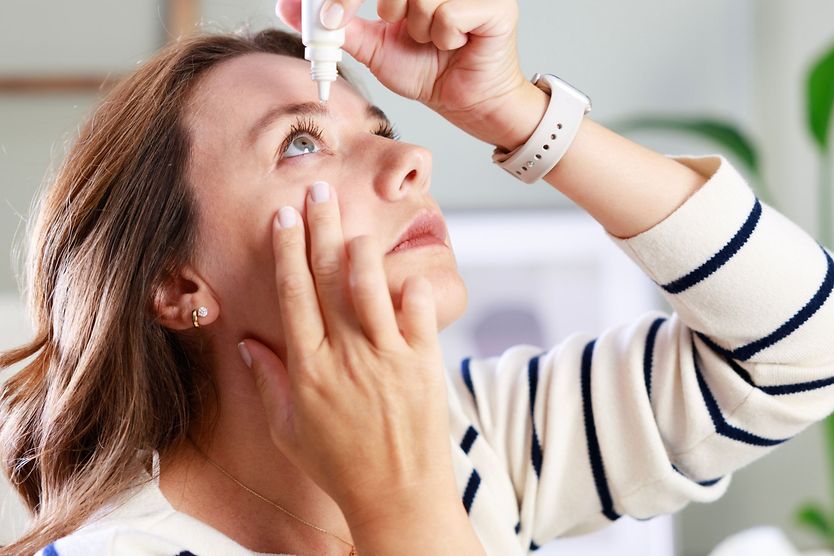
Are you using eye drops too frequently?


Eye drops are designed for fast relief, not a permanent solution
More than 16 million people in the U.S. have been diagnosed with dry eye disease (DED) and up to 40% of Americans are affected by ocular allergies. These issues can lead to dry, red, itchy and irritated eyes. For many, the first stop is the eye drop aisle at a local pharmacy.
Over-the-counter: The ingredients and what they do
The distinct categories of over-the-counter (OTC) drops are based on what they intend to treat. But each type of eye drop works differently, carries different risks and serves a different purpose. Choosing the right one starts with understanding what's causing the symptoms.
Vasoconstrictors
Vasoconstrictors are a type of eye drop that reduces redness or swelling. They work by narrowing small blood vessels in the eye, which decreases blood flow. This may provide temporary relief.
- Traditional options contain ingredients such as tetrahydrozoline, naphazoline or oxymetazoline, which are decongestants and anti-redness drugs. The effect of these can wear off over time, requiring more frequent use. When stopped, the redness can return worse than before. This is called “rebound redness.”
- The latest eye drops contain a low dose of brimonidine tartrate. They specifically target the venules, which are small veins feeding into larger ones. This helps maintain normal blood flow and oxygen delivery to the eye. Clinical trials have shown brimonidine tartrate 0.025% effectively reduces redness for up to eight hours without the drawbacks of traditional vasoconstrictors.
Artificial tears
Artificial tears are used to relieve dry, burning and irritated eyes. They aim to supplement, stabilize or restore the tear film to lubricate and hydrate the eyes.
Key active ingredients like carboxymethylcellulose, propylene glycol and glycerin lubricate the eye. Oil-based formulas, typically containing mineral oil or castor oil, help reinforce the tear film's outer layer to slow evaporation. They are intended to help stabilize the tear film, so long-term use may not address the underlying cause of dry eyes. What they don’t do is act on the disease process.
Allergy drops
Allergy drops target symptoms that come with exposure to pollen, grass, pet dander and other allergens. When an allergen lands on the eye's surface, the body's immune system reacts by releasing chemicals that trigger itching, watering and swelling.
The key ingredients widely used in OTC allergy eye drops are dual acting agents which include olopatadine and ketotifen. They work by either blocking that reaction after it starts, preventing it from happening in the first place or both.
Preservative vs. preservative-free
Many companies offer over-the-counter eye drops in both preservative and preservative-free formulations. Roughly 70% of eye drop formulations contain the most common preservative, benzalkonium chloride (BAK). For occasional, short-term use, preserved drops are generally not a concern for most people.
It’s important to note that frequent or prolonged exposure to BAK has been associated with ocular surface changes, including effects on the corneal epithelium and tear film. Recent studies show that preservative-free drops are ideal for regular use, especially if used more than a few times each day.
None of these products are medically addictive, but certain ingredients can trigger a cycle of increasing use. People should consult their eye doctor to understand what’s appropriate for their situation.
When to see an eye doctor
If you've found yourself reaching for drops more often or wondering whether your go-to product is still the appropriate one, it’s probably time to see your eye doctor. A comprehensive eye exam can uncover conditions that eye drops alone may not fix.
To help break it down, All About Vision (AAV) spoke with Joseph Shovlin, OD, FAAO, the senior optometrist at Northeastern Eye Institute in Scranton, Pennsylvania.
Q&A
AAV: How would you describe the current OTC eye drop landscape?
Dr. Shovlin: If you look at it, all a consumer has to do is walk into a pharmacy or grocery store seeking a remedy for dry eye or redness — there are just so many different options. A lot of folks will try self-treatment first before they contact us and we encourage them not to do that.
The eye has a limited vocabulary. Dryness can mean a lot of different things, but it's just a symptom. It could be aqueous-deficient dry eye, where there's a lack of tear production, or evaporative dry eye from meibomian gland dysfunction. Or something that masquerades as dry eye disease.
We want to make sure we direct them to the right product, and that might be an OTC product we're comfortable with. Some of these products will mask symptoms of more serious conditions and patients may not be getting the right treatment for their particular situation.
AAV: What are some of the underlying conditions that OTC drops could mask?
Dr. Shovlin: When somebody presents with a red eye, our job is to look at the full spectrum of symptoms and presentations. Clinically, our first job is to rule out infection.
Patients can have very serious inflammatory responses, such as uveitis, both anterior and posterior. They can have a corneal infection that could potentially cause blindness, especially contact lens wearers, who may present with pain and generalized redness but have a large infiltrate in their cornea because they've overworn or misused their contact lenses. For contact lens wearers, there's always some risk of infection.
AAV: What is rebound redness and how do newer options compare?
Dr. Shovlin: When patients go to the pharmacy looking for relief from a red eye, they'll grab something off the shelf. But several OTC products carry clinically relevant risks, from preservative toxicity to rebound redness.
Typically with tetrahydrozoline-based products, patients tend to experience tachyphylaxis — meaning the drops become less effective over time. They start with one drop a day and it seems to work, but eventually they need two, then three, then four or five to get the same effect. Patients end up in worse shape than when they first started using the drops.
Low-dose brimonidine tartrate has been helpful because it uses a different mechanism than the older vasoconstrictors. You don't get the same side effects. It’s approved for adults and children 5 years of age and older. Patients not only say, "My eyes are less red," but they feel better, too — especially when their eyes are dry.
AAV: Where do allergy treatment options fit into the eye-drop landscape?
Dr. Shovlin: Treatment for allergies can include decongestants, mast cell stabilizers and combination drops. Olopatadine is one of the antihistamine/mast cell stabilizers that are now available over the counter. Until a few years ago, they were prescription-only.
Patients can also use simple artificial tears. If the eye itches, putting artificial tears in the refrigerator may help. Chilled tears can ease the sensation of itching and also dilute allergens on the eye's surface.
AAV: What should consumers pay attention to on the over-the-counter label? How often and how long should they use a particular product?
Dr. Shovlin: The label information is there, but patients often don't pay attention to it. You have to be aware that certain medications have systemic side effects, too.
The FDA is careful with OTC product designations — they have to be relatively safe and effective. But patients with hypertension, for example, should probably avoid some of these medications because systemic absorption is certainly possible.
AAV: If someone has been overusing redness-relief eye drops, what should they do?
Dr. Shovlin: The most important step is to see an eye care provider. We work with patients to transition them off the product safely and provide supportive therapy, including preservative-free artificial tears. We educate them on prevention and why these products need to be avoided long-term.
AAV: What else can contribute to eye symptoms — including medications?
Dr. Shovlin: Some medications prescribed by eye doctors and other specialists can cause significant dryness.
There are also medications that can cause retinal toxicity. Hydroxychloroquine, amiodarone and tamoxifen are examples. These complications aren't common, but they're out there, and we have to make sure patients are aware that certain medications can cause toxicity to the back of the eye (the retina) as well as the front. We look at what we can do to stabilize the tear film and keep the patients comfortable while they're on those medications.
That's why it's important for people who aren't responding to seemingly appropriate OTC therapy to seek care from an eye care provider.
AAV: What are the signs that someone has crossed the line from self-care and needs to see an eye doctor?
Dr. Shovlin: If your eyes are dry and you're using artificial tears, you should see improvement within a few days. If you're not improving in a few days, you need to seek care. If anything worsens — even the next day — the patient should at least call and discuss it with an eye care provider so they can be directed on how to proceed.
If you're using a drop and getting relief, it's probably working for you. But that doesn't mean you stop there. If you're using something chronically because you need it, then we need to look for any underlying issues. There can be more to the story than just dryness or redness.