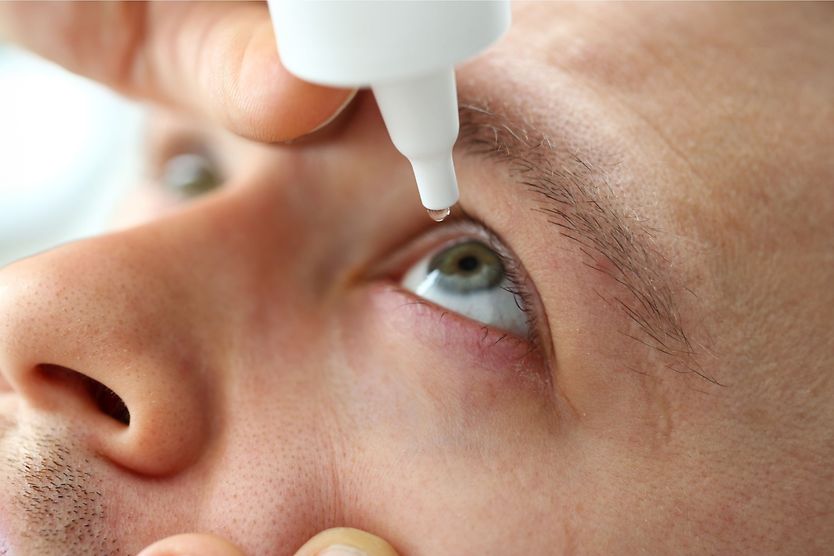
Antihistamine eye drops for allergies: What to know

Antihistamine eye drops for allergy relief
Allergy sufferers are familiar with the effects of pollen, dander, ragweed and other common allergens. In addition to sneezing and nasal congestion, one of the more noticeable impacts of allergies is on the eyes. They can cause uncomfortable itching, redness and tearing in both eyes.
Antihistamine or allergy eye drops can provide targeted relief for these symptoms. Several effective options are now available over-the-counter (OTC) or with a prescription, making it easier for people with eye allergies to find relief.
What are antihistamine allergy eye drops?
Allergy eye drops are topical medications formulated to temporarily relieve eye allergy symptoms such as itching, redness and tearing. Symptoms that are commonly triggered by allergens include:
- Pollen
- Ragweed
- Grasses
- Leaf mold
- Pet dander
Many allergy eye drops are classified as dual-action medications, meaning they combine two mechanisms in a single drop. They block histamine receptors on the surface of the eye (providing immediate symptom relief) and stabilize mast cells (helping prevent the release of histamines that trigger the allergic response in the first place). This dual-action approach allows the drops to both treat active symptoms and help prevent future flare-ups.
Antihistamine eye drops may be used to relieve both indoor and outdoor allergies. The majority of OTC options are approved for use in children as young as 2 or 3 years old, depending on the specific formulation. Parents and caregivers are recommended to consult with an eye doctor before using allergy eye drops in children.
How do antihistamine eye drops work?
Antihistamine eye drops use a dual-action approach. They help prevent the release of histamine by stabilizing mast cells and block histamine receptors on the eye's surface to reduce itching, redness, and tearing.
Because the drops are applied directly to the eyes, they can begin providing relief within minutes. This targeted delivery also means that the amount of medication absorbed into the rest of the body is minimal compared to oral antihistamines.
Common active ingredients in allergy eye drops
The majority of antihistamine active ingredients are available in OTC allergy eye drops. Each works through a similar dual-action mechanism but differs in dosing frequency, duration of relief and availability.
Olopatadine
Olopatadine works by blocking H1 histamine receptors and stabilizing mast cells to prevent the release of inflammatory mediators.
Olopatadine is one of the most widely used active ingredients in allergy eye drops. It is available in multiple concentrations, including formulations designed for once-daily and twice-daily dosing. Depending on the concentration, olopatadine can provide 16 to 24 hours of symptom relief. It is approved for adults and children ages 2 and older.
It is generally well-tolerated, with a low incidence of stinging when the drops are placed in your eyes.
Ketotifen
Ketotifen is another dual-action antihistamine and mast cell stabilizer commonly found in OTC allergy eye drops. It is typically dosed twice daily and provides up to 12 hours of relief per dose. Ketotifen is approved for ages 3 and older.
Ketotifen is available in both branded and generic formulations. Some people may experience mild stinging when used in the eyes.
Alcaftadine
Alcaftadine is a once-daily allergy eye drop that blocks multiple histamine receptors, which may provide a broader anti-inflammatory effect compared to agents that block H1 receptors alone.
It is approved for adults and children ages 2 and older. Alcaftadine was previously available by prescription only but has since become available OTC.
Bepotastine
Bepotastine is a prescription-only antihistamine eye drop dosed twice daily. It is approved for ages 2 and older. Bepotastine is generally well-tolerated, though some users report a mild taste disturbance after using the drops.
Because bepotastine requires a prescription, it is typically considered when OTC options have not provided enough relief.
Ectoine
Not all allergy eye drops work the same way. Some don't block histamine at all. Instead, they coat the surface of the eye with a thin, water-holding layer that acts like a shield. Drops made with ectoine, a natural molecule that holds onto water, work this way. They help keep tears from evaporating and can make it harder for pollen and other allergens to settle on your eye. In the U.S., they are sold over the counter as lubricating drops, not as antihistamines. These lubricants can be an option to use alongside an antihistamine eye drop, but not usually a replacement for one if itching is your main problem.
How to use allergy eye drops
Allergy eye drops are applied in the same way as other eye drops. It is important to follow the dosage instructions provided on the product label, as the recommended frequency varies by formulation — some are designed for once-daily use, while others may be used twice daily.
Contact lens wearers should remove their lenses before applying allergy eye drops. Lenses can typically be reinserted 10 to 15 minutes after application. For those who wear contact lenses regularly, once-daily formulations may offer added convenience since the drop can be applied before lens insertion in the morning or after removal at night.
The following steps can help ensure proper application:
- Wash your hands thoroughly with soap and water. Dry them with a clean towel.
- Remove contact lenses, if applicable.
- Inspect the bottle tip and cap to make sure they are clean. Do not use a bottle that appears to have been opened or tampered with.
- Tilt your head back or lie down. Look toward the ceiling while keeping your eyes open.
- Place your index finger approximately one inch below your eye. Gently pull down to create a small pocket between the eye and lower lid.
- Use your opposite hand to squeeze one drop into the eye. Avoid touching the bottle tip to the eye or any other surface, as this can cause contamination.
- Close your eye gently for a few moments to allow the drop to spread evenly across the eye surface.
- Replace the cap securely. Do not touch or wipe the dropper tip.
- Wipe away any excess from the skin around your eye with a clean tissue.
- Wash your hands again to remove any residual medication.
If you use more than one type of eye drop, wait at least five minutes between putting them in your eyes.
Dosing frequency
Dosing frequency depends on the active ingredient and concentration of the formulation you are using:
- Once-daily formulations (such as certain olopatadine and alcaftadine products) are used once per day, with one drop per eye.
- Twice-daily formulations (such as ketotifen and lower-concentration olopatadine products) are typically used twice per day, with one drop used in each eye.
If you continue to experience significant eye allergy symptoms despite consistent use of OTC allergy eye drops, contact your eye doctor for an evaluation. A prescription-strength option or alternative treatment approach may be appropriate.
Possible side effects
As with any medication, allergy eye drops can cause side effects in some people. Commonly reported side effects across the available formulations include:
- Headache
- Blurred vision
- Mild eye irritation or stinging upon instillation
- An unusual taste in the mouth
- Swollen eyelids
- A sensation of something in the eye
- General fatigue or weakness
If you experience more serious side effects or signs of an allergic reaction, immediately contact your eye doctor or visit an urgent care facility. These may include:
- Rash or hives
- Dizziness
- Difficulty breathing
- Swelling of the face, tongue, or throat
Let your eye doctor and healthcare providers know if you are using allergy eye drops before undergoing any procedures or starting additional medications. If a side effect affects your vision, avoid driving or performing activities that require clear eyesight until the effect resolves.
Choosing the appropriate allergy eye drop
When selecting an allergy eye drop, these are some factors to consider:
- Dosing convenience – Once-daily formulations may be preferable for people looking for convenience. Twice-daily formulations may provide flexibility for managing eye allergy symptoms throughout the day.
- Duration of relief – Available options provide anywhere from 12 to 24 hours of symptom relief, depending on the active ingredient and/or concentration.
- Cost – Prices may vary across formulations. Generic versions are readily available in many brick-and-mortar or online stores. They can be less expensive than branded products.
- Contact lens use – Contact lens wearers should remove their lenses before using any allergy eye drops, waiting at least 10 to 15 minutes before reinsertion. Once-daily formulations may be more convenient for lens wearers.
- Age of the user – Many OTC allergy eye drops are approved for children ages 2 or 3 and older. Check the product information label for appropriate pediatric use.
- Severity of symptoms – For mild to moderate seasonal symptoms, OTC options are usually effective in many cases. For more persistent symptoms, a prescription formulation — or a different treatment approach — may be warranted.
Your eye doctor can help determine which options are appropriate based on your symptoms, medical history, and findings from your eye examination.
What to know before trying new ophthalmic products
It is recommended to follow the directions provided by your eye doctor and pharmacist along with the instructions listed on any new medication, whether prescription or OTC. If you have a history of medical conditions, or if you are pregnant or breastfeeding, consult your eye doctor or healthcare provider before using allergy eye drops.
Regular comprehensive eye exams are an effective way to monitor your overall eye health and identify any conditions that may require treatment, including eye allergies.