Tired eyes and redness: What you need to know

What causes red eyes when you’re tired?
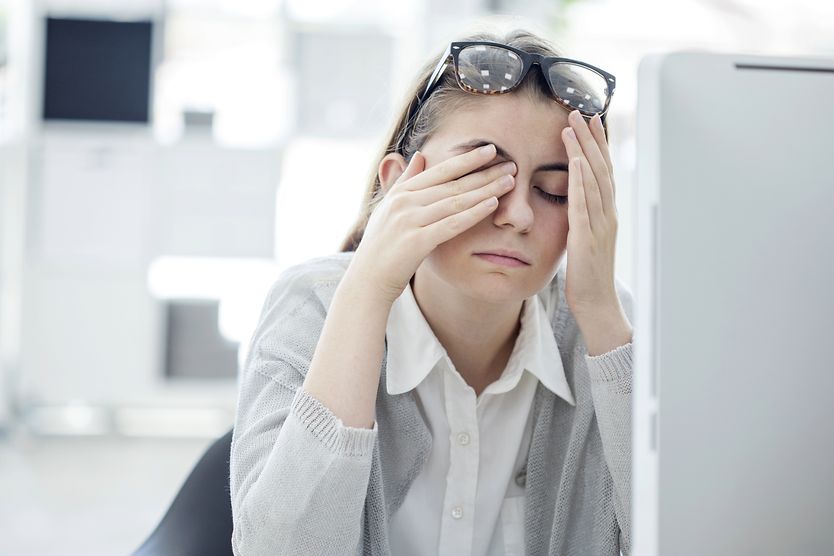
Your eyes become red or bloodshot when the blood vessels there dilate (get wider). Blood vessels dilate when more blood is sent to them, which is often the result of a need for oxygen or inflammation in response to irritation. Red or bloodshot eyes are a common response to being tired.
When you’re tired, your eyes may be red from:
- Not getting enough sleep
- Being too dry (such as when you’re not blinking enough)
- Allergies or an eye infection (like pink eye)
- Eye fatigue or eye strain
Common triggers for red eyes
Your eyes can be red or bloodshot for several reasons, including sleep deprivation, allergies or too much screen time.
The role of sleep deprivation
Normally, your eyes heal themselves while you sleep. If you aren’t getting enough sleep, they may not be able to rest properly. Lack of sleep also means your eyes may not be producing enough tears. This can leave your eyes dry and inflamed, leading to redness.
Dilated blood vessels in your eyes may also be due to increased blood flow. Increased blood flow to the eyes is a common response to lack of sleep.
READ MORE: The harmful effects of sleep deprivation
Eye strain
Blinking is important because it refreshes the tears that keep our eyes hydrated. But we typically blink less when we’re focusing, especially when looking at screens. Less blinking and more intense focus can leave your eyes dry and red.
Environmental factors
An allergic reaction may also cause red eyes. Reactions can be caused by allergens, like dust, pollen or pet dander. You may be more exposed to some of these allergens in the winter when you’re likely spending more time inside.
The cold air outside can dry and irritate your eyes, but indoor heating can make the air inside dry, too. Dry air can then make your eyes dry, leaving them red as well.
Low humidity and windy conditions aren’t the only parts of the environment that can affect your eyes. Air pollution may also cause irritation or redness. Polluted air contains tiny particles and possibly harmful gases that are in contact with your eyes all day long. These pollutants may affect the tears in your eyes, which normally keep them moist and protected from the outside environment. These effects could leave your eyes dry and irritated.
SEE RELATED: Eye allergies: How to recognize the symptoms and get relief
Stress
The nervous system and the eye share a close connection. When you’re stressed, your body releases hormones, like cortisol and adrenaline. Raised levels of these hormones can cause eye effects, like blurry vision or light sensitivity. Cortisol, in particular, may also exacerbate dry eye symptoms.
Stress and anxiety can also cause an inflammatory response in the nervous system, which can lead to dry eyes or eye redness. It may also exacerbate existing symptoms, keeping the inflammatory cycle going.
READ MORE: How stress can affect your vision
How to prevent red eyes from fatigue
Red eyes are a normal symptom of being tired, but good practices for general and eye health can help keep any irritation to a minimum.
Eye drops and hydration
Staying hydrated is important to eye health. It keeps the tear film healthy and combats dry eye symptoms. Dehydration may cause you to produce fewer tears. This makes it harder for the eye to stay moist and protected, leading to dry, irritated eyes.
You can stay hydrated by making sure to drink water throughout the day (if you’re thirsty, that’s a sign you’re dehydrated). It may help to avoid alcohol or drinks with caffeine or sugar.
To keep your eyes hydrated, consider using lubricated eye drops, like artificial tears. They can also help clear up any redness.
Adjusting your sleep environment
Indoor heating or air conditioning can create a low-humidity environment that dries out your eyes. Air from a fan or vent can also cause more tears to evaporate overnight. To keep your eyes from getting dry and irritated, it may help to make sure you aren’t sleeping in the direct path of airflow. A humidifier can also combat low-humidity conditions.
If you sleep face down, it may also be worth switching up your sleeping position. Sleeping face down causes your eyelids to rub against the pillow, which may cause further irritation (especially if you have more elastic eyelids, as in floppy eye syndrome).
SEE RELATED: Obstructive sleep apnea and how it can affect your eyes
Screen time and stress
In many cases, stress and screen time go hand in hand — people tend to reach for screens when they’re stressed. To combat eye strain caused by stress and screen time, consider taking these steps:
- Take screen breaks (follow the 20-20-20 rule: Every 20 minutes, look at an object 20 feet away for 20 seconds)
- Breathing techniques
- Mindfulness or meditation practices
SEE ALSO: How our increasingly online lives can affect our eyes, brains and moods
When to see a doctor
Eye redness from being tired will usually clear up on its own. However, in some cases, it may be a sign of a larger problem. If your symptoms are persistent or not clearing up with normal treatment, it’s a good idea to see an eye doctor.
Generally, you should see a doctor if you are experiencing symptoms, like:
- Changes in vision
- Pain that is sudden, severe or long-lasting
- Vomiting or nausea
- Fever
- Headache
- Facial rash
- A sore on the cornea (the front of the eye shaped like a dome)
- Discharge or mucus around the eyes
This is especially true if you are experiencing multiple symptoms. For instance, vomiting and changes in vision (like halos appearing around lights) could be a sign of acute closed-angle glaucoma. This type of glaucoma happens when the drainage system in your eye gets blocked suddenly. If the fluid can’t drain, pressure builds up inside the eye. Treatment should be sought immediately because vision damage can come on quickly.
Symptoms like discharge or a rash can also indicate an infection like herpes zoster virus (shingles) or herpes zoster ophthalmicus (eye shingles). Getting an examination from a doctor will be important for determining if there is a serious cause of redness.
SEE RELATED: Eye infections: Different types and when to get help
Home remedies for red eyes
In many cases, rest and eye drops can help alleviate redness from tiredness. If your eye redness is caused by allergies, an antihistamine eye drop or an antihistamine and mast cell stabilizer combination eye drop may be needed.
A cold or warm compress over the eyelid can help dryness or irritation.
In general, it is optimal to avoid allergens or anything that could be irritating. If your eyes do contact an allergen, washing your face after might help prevent inflammation (especially if it’s before bed).
Some other hygienic steps could be helpful, like:
- Washing your hands often and avoiding touching your eyes unless you’ve just washed them
- Using fresh towels and bedding
Keeping your eyes healthy and comfortable
Red or bloodshot eyes can be symptoms associated with being tired. They may also be a symptom of inflammation from allergies, stress or dry eyes. You could minimize your chances of getting red eyes by making sure you’re getting enough rest and taking care of yourself and your eyes.
READ NEXT: Why your eyes feel so tired and how to get relief