What are the effects of too much screen time?

Digital screens aren’t going anywhere. What does that mean for your child’s vision?
Parenting can be a grueling job. It’s exhausting to deny the constant pleas for more video games, streaming, phone time... Is it worth the drama just to shave an hour off of your kids’ daily screen time? Experts say yes. Too much screen may be harmful to vision as well as overall development.
How does screen time affect your child’s vision development?
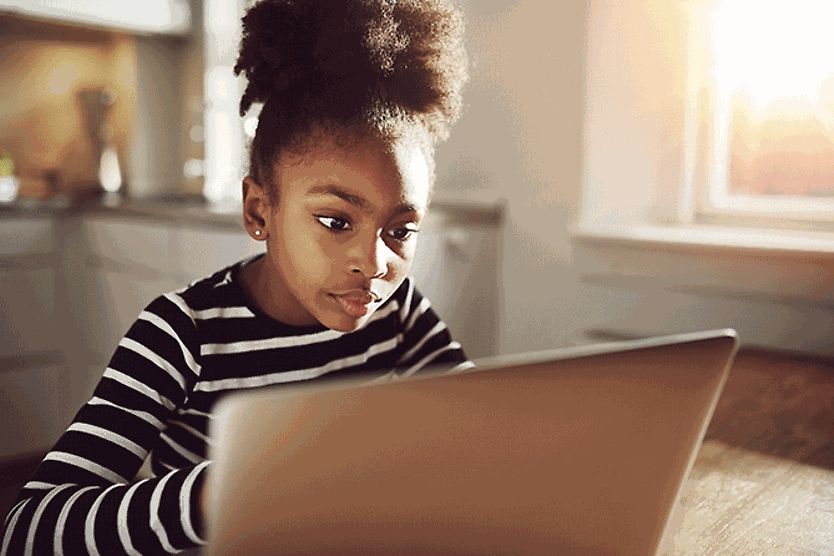
As a parent, the term “screen time” may bring to mind the (fairly accurate) image of your kids mindlessly staring for hours at a screen. They may forget to blink, eat or use the bathroom.
As many parents know, peeling kids away from their screens is not in the typical list of enjoyable ways to spend family time. But it appears that the cumulative effects of too much screen time may have more negative consequences than previously known.
Extended screen time, such as playing a video game or working on a laptop, can cause eye strain. Spending many consecutive hours focused on near work may also be associated with myopia development, according to vision studies. And on average, American children ages 8-12 years are clocking in four to six hours of screen time a day, and teens up to nine hours a day.
Does too much screen time cause nearsightedness?
There is an epidemic of nearsightedness that has swept through most developed countries in the past few decades. The rates of myopia have increased significantly, scientists expect that in 30 years about half of the world’s population will be nearsighted. This means that nearly five billion people may have myopia by 2050.
What’s driving this wave of nearsightedness? Scientists point to several possibilities. One of these is the significant increase in near work, including screen time.
Scientists are still investigating the link between near work, screen time and myopia progression. They have found evidence that increased screen time may play a role in the rising rates of myopia around the world.
One study looked at 33 research articles investigating the link between myopia development and smart devices. This review concluded that exposure to smart devices (smart phones and tablets), combined with computer screens, might be associated with an increased risk of myopia development.
A 2020 study conducted by Spanish vision researchers found that nearsighted children spent more time looking at screens. And they spent less time outside per day than their peers who did not have myopia. More work needs to be done to examine this relationship. Still, it is an important reminder to encourage kids to spend less time looking at their phones and devices.
The good news is that recent studies indicate that spending time outside during the day can actually protect against myopia. The activity does not have to be anything more complicated than taking a walk, playing a sport or running around with friends.
The effects of too much screen time and not enough time in outdoor daylight may compound. A 2017 study showed that children who spent little time outdoors during the day were found to have a five times higher risk of myopia.
Those who spent little time outdoors and also spent a lot of time focusing up close were found to have an astounding sixteen times risk of myopia development.
A majority of pediatric ophthalmologists, pediatric optometrists and pediatricians have already begun to advise against too much screen time as a way to decrease myopia risk. An even greater majority recommend more time outdoors for children as a myopia control strategy.
SEE RELATED : How to help children avoid computer vision syndrome
Does too much screen time cause eye strain?
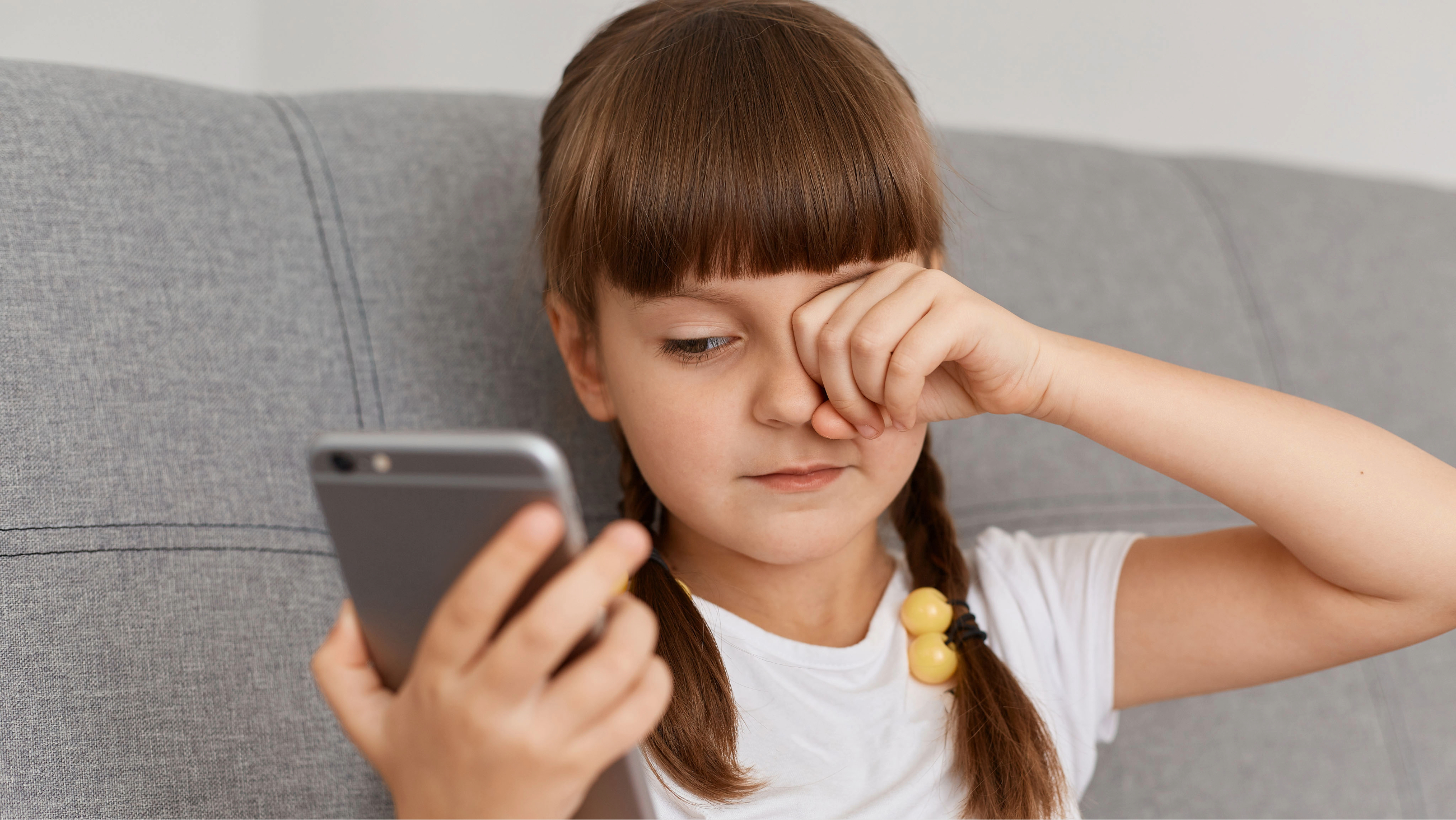
Our eyes are not optimized for long periods of near focus. When we become engrossed with what is happening on the screen, several hours can pass before we realize that we haven’t looked away. When this happens repeatedly over a period of time, eye strain can result.
Computers and tablets are becoming increasingly common at work and school. As a result, more adults and children are experiencing eye fatigue and eye strain. Computer vision syndrome (also called digital eye strain) and extended use of digital devices are leading causes of eye strain.
Symptoms of eye strain may begin during screen time but can continue even afterward. If your eyes experience daily strain and do not have a chance to rest, symptoms begin sooner and last longer.
Symptoms of eye strain caused by too much screen time may include:
- Eye pain and soreness
- Dry, burning irritated eyes
- Blurry or double vision
- Headaches and tiredness
- Inability to focus
It’s common for symptoms to be worse later in the day than in the morning when your eyes are fully rested.
How can I decrease eye strain and the risk of myopia?
One of the best strategies to relieve eye strain and decrease your risk of myopia according to researchers is to lessen screen time. And spend time outside in the daylight every day.
In addition, some simple technology and lifestyle changes can be quite helpful in relieving symptoms of eye strain.
Technology recommendations
- Adjust font and background color to increase comfort and readability.
- Place glare-reducing filters on computer screens.
- Wear designated computer glasses with a prescription for intermediate vision.
- Use blue-violet light filtering glasses.
SEE RELATED: Computer ergonomics and healthy vision
Lifestyle and environmental recommendations
- Blink – when looking at a screen, the rate at which we blink can be reduced by half.
- Apply artificial tears or warm compresses when eyes feel irritated and dry.
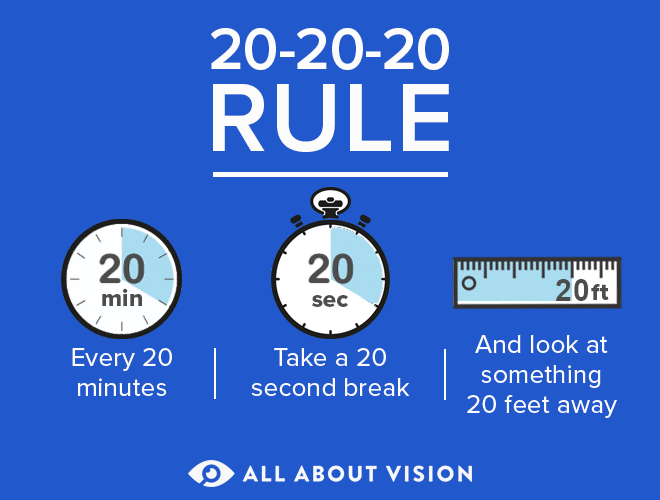
- Take visual breaks – an easy way to remember this is the 20-20-20 rule (every 20 minutes, for 20 seconds, look at something at least 20 feet away).
- Optimize the height of the desk, chair and screen to maintain comfortable posture.
- Ensure that lighting is bright but not too harsh and directed away from the eyes.
- Maintain regular sleep hours
- Stay hydrated
If your child is experiencing eye strain or blurry vision, it is recommended to schedule a visit with an eye doctor and to stay current on comprehensive eye exams. This can allow your doctor to monitor any eye strain and myopia symptoms your child may be experiencing.
It is recommended to encourage your child to take a break from devices and spend some time outside. Fresh air and outdoor recreation may have many benefits — decreasing the risk of eye strain and myopia can now be added to the list. And parents, this advice applies to adults too!
Does too much screen time affect healthy child development?
Selling screen time to kids is big business. You can find videos and entertainment marketed as “educational” to babies only a few months old. Exhausted parents, desperate for a break or a shower, may find themselves permitting levels of screen time that might have shocked them pre-parenthood.
As children grow older, screen time may expand to take up larger portions of the day. Parents may begin to feel helpless, not knowing how to turn the ship around.
But, the truth is, too much screen time may cause not only vision problems but may also be associated with developmental and emotional problems as well.
A 2019 study of nearly 2,500 children found that children 2 to 3 years old who were exposed to higher levels of screen time performed worse on tests for behavioral, social and cognitive development.
Another recent study examined the relationship between the amount of screen time at age 16 and the onset of depression at age 18. The study found that there was an increased risk of anxiety and depression in kids who logged in more screen time.
This may be rather concerning if you consider that 95% of teens either own a smartphone or have access to one. Nearly half of these teens say that they are online nearly constantly.
Children with increased screen time, regardless of age, were also found to have worse sleep quality. They also had more behavioral problems than their peers.
While there may be other factors at play, these studies highlight the fact that parents may benefit from being mindful of the developmental effects of too much screen time.
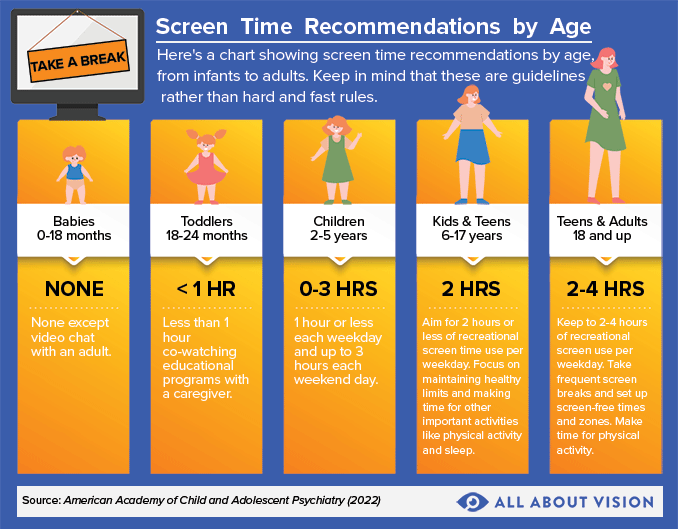
Here are some general suggested guidelines for healthy restrictions to daily screen time:
- Ages 18 to 24 months – Limit to watching educational programs with caregiver.
- Ages 2 to 5 years – Allow one hour or less on weekdays and up to three hours on weekend days.
- Ages 6+ – Implement healthy habits and routines that limit screen time.
How can I decrease screen time in my household?
Healthier eyes, decreased long-term myopia risk and improved well-being are only a few of the possible benefits of decreased screen time in a child’s daily routine.
It can feel overwhelming to implement changes. Especially when a child may fight tooth and nail clinging to every extra minute of screen time. It's recommended to start slow and to make small changes. Decreasing screen time may open up the day for more healthy and productive activities. Spending that time outside may even have lifelong benefits for vision.
Here are some simple ways to decrease screen time in your household:
- No screens during family meals
- No screens during outings
- Use of parental controls
- No use of screens as alternative babysitters
- No screens in bedrooms for ½ hour to 1 hour before bedtime
Whether you have little ones or teenagers, it is recommended to have discussions about how to make healthy decisions about screen time. You may want to let them know that healthy screen time choices are as important as healthy food choices.
Social media, video games, apps... kids may have an endless stream of screen time entertainment to occupy them.
So it may be up to us to pull the plug after a few hours and push their squinting and pouting outside into the sunshine. While it can be a painful process for both parents and kids, less screen time and more outside time may lead to healthier bodies, minds and eyes.