Screen time recommendations by age


How much screen time is right for your child?
Do you check your phone every few minutes, scroll through social media and spend evenings binge-watching new series? Given your own screen time habits, you may find it hard to say no when your kids want to play a game, watch TV or videos, or text their friends for hours.
But too much screen time for kids may be linked to nearsightedness (myopia), which is becoming more common, and may also lead to eye strain, neck and shoulder pain, headaches, and a more sedentary lifestyle.
To find a healthy balance between teaching digital literacy and limiting screen time, you may benefit from making a family media plan. Here’s a guide to daily recommended screen times by age to get you started setting healthy limits for you and your kids.
Average screen time by age
So how much time do kids spend looking at a screen? It varies by age, and it’s increased since the pandemic started. Listed below are average daily screen times by age group:
- Average screen time for kids ages 0 to 2 – Just over one hour a day
- Average screen time for kids ages 2 to 4 – Just over two hours a day
- Average screen time for kids ages 5 to 8 – Almost three and a half hours a day
- Average screen time for tweens ages 8 to 12 – Five and a half hours a day
- Average screen time for teens – Eight and a half hours a day
These estimates include time spent on entertainment, like apps, video games, TV and movies, but do not include screen time spent doing homework or other educational activities. As these are averages, many children in today’s world exceed these estimates.
A study found that a group of 12- to 13-year-old children is spending 7.7 hours a day on non-school screen time. That’s about twice as much as the 3.8 hours of screen time they were getting each day before the pandemic.
The reality is, many kids and adults spend a lot of time in front of screens. Now let’s take a look at average screen time recommendations by age for babies, toddlers, teens, tweens and adults.
Screen time recommendations for babies up to 18 months old
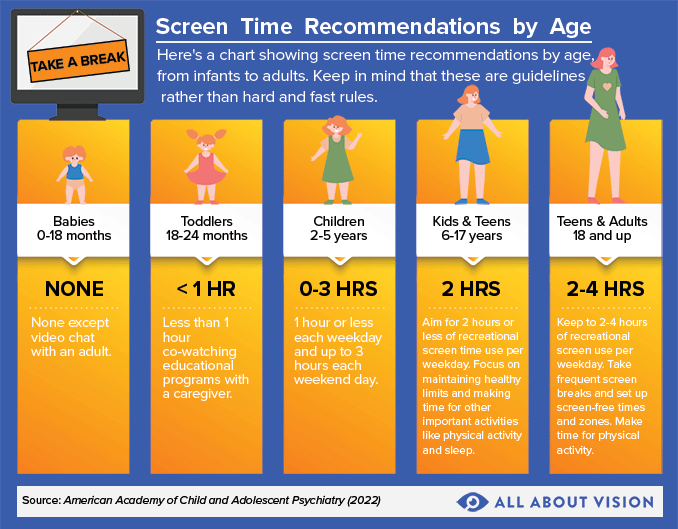
- Zero screen time except for video chats with family
Babies under 18 months old should have no access to smartphones, tablets or TVs. In other words, try for zero screen time.
There’s one exception to this guideline: Facilitating a video chat between your baby and a family member or friend. For example, if a parent is away or a grandparent lives out of state, it’s fine to set up a video chat between them and your baby.
Never before has there been a generation of infants and toddlers who have experienced the amount of near visual demands as those presented by modern digital devices. The excess stress on their visual systems and the high level of sensory stimulation from screens is daunting.
Screen time recommendations for toddlers 18 months to 2 years old
- Less than one hour per day
- Limit media to quality educational programs that you watch together
As your baby becomes a toddler, continue limiting their screen time. It’s best if tots ages 18 to 24 months do not have access to phones or tablets to use on their own. The World Health Organization (WHO) guidelines are slightly different. They recommend zero hours of sedentary screen time for babies 12 to 24 months.
When you introduce digital media to your child, it’s important to consider both the amount of time they may spend in front of a screen and also the type of content. Toddler screen time should be limited to watching educational content with a parent or other caregiver.
Try to avoid the temptation to hand your phone to your toddler if they start to fuss. This inhibits their ability to interact with their environment and to engage in social interactions with the people around them.
Screen time recommendations for children ages 2 to 5 years
- Less than one hour per weekday and less than three hours per weekend day
- Limit media to educational, interactive programs you can watch or play together
Kids ages 2 to 5 years should still have less than an hour of screen time each day. If you’re ready to let them watch a TV show or play a game on their own, a larger device (like a tablet or computer) will cause less visual stress than a phone.
Screen time recommendations for children and teens ages 6 and over
- Aim for less than two hours of recreational screen time use per weekday
- Maintain healthy limits on screen time and content
- Focus on making time for other important activities: One to two hours of physical activity, a full night’s sleep, meals as a family and screen-free relaxation time
As a general rule, limit recreational screen time for kids ages 6 to 10 to less than two hours per day. For screen-free time, plan healthy family activities, like walks, bike rides and game nights. When kids do use screens, talk about the benefits of mixing in some educational content.
Parents can start talking to kids ages 6 and up about the effects of screen time and why it’s important to set limits. Communicate the rules directly to your child, in addition to the consequences if the rules are not followed.
What is the AAP recommendation for screen time for tweens?
The American Academy of Pediatrics (AAP) does not recommend a specific daily screen time limit for tweens. Instead, parents are encouraged to look at how digital devices fit into their child's overall lifestyle.
Tweens and teens may spend a fair amount of time on screens doing homework and other educational activities. Rather than limit overall screen time, it is encouraged to pay attention to the type of content your children engage with and how screen use affects their daily lives. Some recommendations suggest trying to keep recreational (or entertainment) screen time for kids ages 11 to 17 under two hours each weekday.
Limiting screen time in this way will allow time for physical activity and non-screen activities with family and friends. Help your kids become good digital citizens. Talk to them about maintaining online privacy and the consequences of cyberbullying. You may want to put limits on the content they can watch and “friend” them on social media.
Encourage your kids to get at least one hour of physical activity each day and the recommended amount of sleep for their age. It’s critical at this stage that devices are removed from the bedroom. Tweens’ and teens’ sleep quality is vital and is tremendously disrupted when devices are present.
Screen time recommendations for adults
- Limit recreational screen time to two to four hours a day
- Keep work-related screen time around eight hours a day if you can
- Take frequent screen breaks and set up screen-free times and zones
- Make time for physical activity
Many adults spend hours in front of a screen each day at work. For a healthy balance, try to limit your screen time outside of work. Adults should try to limit total screen time to eight hours a day for work, plus two to four hours for entertainment.
Plan your screen time rather than reaching for your phone or tablet without thinking. If you’re in the habit of checking your phone every few minutes or scrolling endlessly through social media, try putting your device in another room so you have to get up to check it.
Screen time recommendations by age chart
Why should parents limit screen time?
Parents may want to set limits on screen use because digital media can have a strong influence on children as they grow and learn. While some online content, apps and programs can support learning, not everything children see on screens is designed with their well-being in mind.
Excessive screen use may:
- Expose children to content they are not mature enough to understand, such as violence, substance use or sexual themes
- Reduce time spent on important developmental activities, such as reading, homework, creative play, physical activity and in-person social interactions
- Impact physical and mental health, as excessive screen use has been linked to sleep problems, obesity, anxiety and depression
- Interfere with social and emotional growth, making it more difficult for children to understand emotions, develop social skills and build healthy relationships
How to limit screen time: Tips and tricks
Do you and your kids spend more time than you’d like in front of a screen? Consider setting screen time limits based on the recommendations above. Here are a few guidelines on how to limit screen time in your family:
- Make a family media plan. Interactive tools are available with a screen time calculator and media plan builder. It uses the ages of your kids to provide personalized recommendations.
- Swap in educational content. Encourage your kids to use some of their screen time for high-quality programming, such as educational content.
- Strive for balance. When trying to limit screen time in your family, go for balance. Choose non-screen activities to do as a family, and schedule time for physical activity and sleep.
- Set a “screen time curfew.” Make it a family rule to put away devices during meals and family activities. Have your kids put their devices up for the night at the family charging station an hour before bedtime.
- Use parental controls and set clear boundaries. Screen time limits, content filters and age-appropriate restrictions can help children develop healthier media habits. Parents can also model balanced screen use and encourage offline activities.
As a parent, it’s important to help your kids build healthy habits around digital screen use in your home. Using these screen time guidelines and creating a family media plan are great ways to start. Keep up the good work with annual comprehensive eye exams for the whole family.