How our increasingly online lives can affect our eyes, brains and moods
It sometimes seems like smart devices have evolved into an extension of our arms. They’re always in reach to check the news, text a friend or find directions. Our smartphones, laptops, tablets and other screen-based devices often help increase productivity and access to information. But that may come at a cost.
New research suggests that when adults spend too much time on screens, it can have negative effects on the eyes and brain. The American Optometric Association (AOA) suggests people who spend more than two continuous hours a day on digital devices may experience the effects of digital eye strain and related symptoms. Long-term, this may impact people’s broader health and well-being.
“In some ways, your smartphone can seem almost like a smart, knowledgeable pal that’s always available when you need it,” said Drew Ramsey, MD, a board-certified psychiatrist and author of Healing the Modern Brain: Nine Tenets to Build Mental Fitness and Revitalize Your Mind.
“But because it’s so convenient and accessible, we spend a lot more time staring at screens than we think we do and that has consequences to both our physical and mental health.”
How screen use affects the eyes
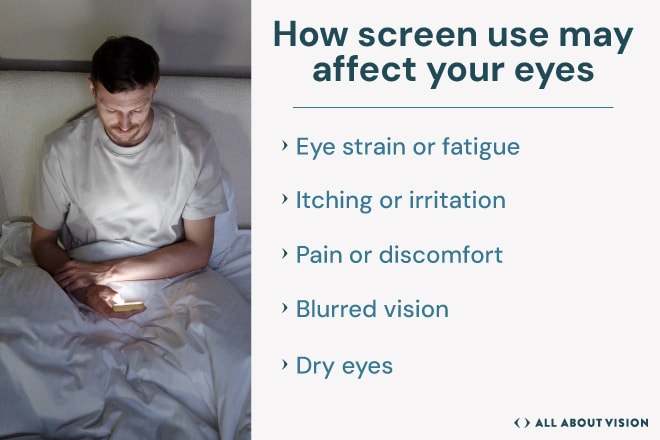
Christopher Lievens, OD, MS, PhD, FNAP, FAAO, professor and director of clinical research at Southern College of Optometry, said too much time on screens has increased the risk of digital eye strain (DES). This is a condition characterized by dry or itchy eyes, blurred vision or headache.
For decades, Dr. Lievens said, eye health experts have known that reading a newspaper or book for hours at a time could lead to eye strain. Reading on a screen, however, substantially increases that risk.
“When you are focused and engaged on a page, you don’t blink as often and that can lead to issues,” he said. “But screens, we’ve learned, are even worse. And now that everyone has a personal computer in their pocket, they stare at the screen, they don’t blink and it can lead to ocular surface disease (OSD).”
OSD is an umbrella term for conditions that can damage the cornea, conjunctiva and tear film that result in inflammation and discomfort. Although rare, OSD can, over time, also lead to some level of impaired vision, said Dr. Lievens. Most eye discomfort attributed to prolonged screen time is treatable and not likely to cause long-term damage. Simple conscious choices, such as blinking, stepping away from the screen and even taking a walk, can make a world of difference.
“People don’t realize how important blinking is to eye health,” he said. “The functional portion of the tear film, the protective oily lipid layer that coats the eye, depends on the eyelids coming together when you blink to secrete those lipids. Thanks to digital devices, people don’t fully blink anymore and that means that the necessary lipids aren’t released and eyes can get very dry.”
Lighting, glare, distance from screens and seat position can impact the effects of screen time on your eyes. Generally, eye care providers recommend the 20-20-20 rule: Look up from screens every 20 minutes to focus on something at least 20 feet away for at least 20 seconds. But Dr. Lievens said recent studies suggest the 20-20-20 rule is not as effective as advertised.

“To protect the eyes, what we need is for people to get away from their screens for extended periods of time and focus on the world around them,” he said. “I also recommend purposeful blinking. It may seem exaggerated, but the act of closing the eyes all the way will keep the glands in the eyes stimulated so they can release the lipids needed for the ocular surface to remain healthy.”
If you are currently experiencing any symptoms of DES, Dr. Lievens recommends making an appointment with an eye doctor. He said that the eye health community understands that many people need to spend time on devices for work. There are a variety of treatments available that can help keep the eyes hydrated and healthy. It’s just a matter of finding the right one for your eyes.
Screens and the brain
There is growing data to support that too much screen time affects more than your eyes. Multiple studies in children and young adults have shown that two or more hours of daily use are linked to distinct future changes in the brain.
Researchers at Canada’s Wilfrid Laurier University suggest extensive screen time might affect certain areas of the cerebral cortex responsible for cognitive function and language skills. The researchers hypothesize it could lead to “digital dementia,” or a higher risk for neurodegenerative disease later in life for Millennials and members of Gen Z.
Note: “Digital dementia” is a popular term, not a recognized medical diagnosis. The strongest evidence in adults comes from large, long-term cohort studies, which suggest the type of screen use matters. Cognitively passive activities, such as watching television, have been linked to a higher risk of dementia, whereas cognitively active computer use has not — and in some analyses was associated with lower risk.
Other studies, said Mark Williams, PhD, professor of cognitive neuroscience at Macquarie University in Australia and author of Screen Smart Children: A Guide to Helping Kids Thrive in a World That Never Switches Off, show abnormal development of white matter tracts. These tracts transmit signals across the brain to help us perceive, feel, think and move.
“A lot of these changes are in specific areas of the cortex — the orbitofrontal cortex and prefrontal regions — that are not only critical for vision and perception but also in controlling our attention,” he explained.
Dr. Williams cautioned that neuroimaging studies cannot say that device use causes brain changes in adults. But he said the evidence in children and teens paints an alarming picture for anyone who spends hours and hours on screens each day.
“People who are on devices all the time are missing out on what they need to not just develop the brain properly but keep it healthy and thriving,” he said. “The brain is the same as it was 35,000 years ago. It’s evolved to need certain types of inputs that come from being out in the world and experiencing it firsthand, not filtered through a screen. And spending so much time looking at a screen can have a lot of negative repercussions.”
Even if screens aren’t directly causing brain changes, the time spent on screens takes people away from brain-healthy activities, like exercise, going outside and time with friends. These are all things that studies indicate keep the brain in good shape.
“I think both devices and lack of experience are probably having an impact,” said Dr. Williams. “And, sadly, you can’t really separate them because, if someone is spending six hours a day online, they aren’t getting the external inputs the brain needs to work its best.”
Effects of excessive screen time on mental health
Too much screen time can also affect the brain’s emotional centers. One way is through an indirect mechanism: sleep deprivation. Phone and tablet screens emit blue light, a high-energy, short-wavelength light that can interfere with your ability to fall and stay asleep. That can dampen your mood.
“The brain is incredibly sensitive to sleep. Looking at your phone before bed or watching your tablet in the middle of the night decreases the body’s production of melatonin, a hormone that helps regulate your circadian rhythm or sleep-wake cycle,” Dr. Ramsey said. Blue light can suppress melatonin, but the effect of a phone or tablet depends on screen brightness, how close it’s held to the user and the total light exposure. For many people, the type of the content and simply staying up later may matter as much as the light itself.
“This doesn’t just affect your ability to rest. Sleep supports your brain’s natural filtration and waste disposal processes. When those don’t happen, inflammation increases. You feel more anxious. You feel more depressed. And you feel like you are living in a fog.”
Many adults who have been diagnosed with depression or anxiety can reduce or even eliminate symptoms by improving the quality of their sleep. Dr. Ramsey recommends putting away all screens at least 30 minutes before bedtime to help achieve that.
“Making sure your phone is off and away so you don’t continue to scroll while you are in bed can make a huge difference,” he said. “You’ll fall asleep more easily, you’ll stay asleep longer and you will feel rested the next day. That’s going to have a huge impact on your mood.”
Sleep disruption is not the only way that excessive technology use can affect mental health. Dr. Williams said many social media sites are designed to capture and keep your attention. Often, the manner in which they do so can be harmful to your psychological health.
“Technology is amazing, but we need to start using it for what makes our lives better rather than what makes them worse,” he said. “And when the algorithm is keeping you online by feeding you content that makes you feel bad about yourself, it’s not a surprise that it can affect your mental health.”
Reducing screen use for general health and well-being
Scientists are only beginning to understand the impact of screen use on vision and brain health. But current studies suggest that adults will benefit by unplugging.
There’s no need for a full digital detox, Dr. Ramsey said. It’s understood that, in today’s world, most adults need to be on screens for their jobs. But when you can put guardrails in place to reduce screen time, he said you could quickly feel a difference.
Dr. Lievens suggests placing all devices outside the bedroom to charge at night. It’s a simple thing but an effective one, he argued. You can’t be tempted by a text notification or video reel when your screen is out of reach.
Dr. Williams added that making sure devices don’t follow you to the dinner table or to social gatherings is also beneficial. Without your phone in hand, you can fully engage with friends and family and strengthen social connections.
Interacting with the world means intentionally finding ways to put the screens away, said Dr. Ramsey
“Go outside and hike with friends with your phone in your backpack. Try a water sport or winter sport that is impossible to do with a phone in your hand. Do some theater or join a choir,” he said. “Mental fitness, or optimized mental health, is about being present, being active, being compassionate, being connected and being creative. The screen pulls us away from that.”
“Whenever possible, we need to make sure we are actively connecting with the activities we know will make our brains and mental health as strong as possible — and that means not just being willing but actively seeking out opportunities to look away from the screen,” said Dr. Ramsey.
As for your eyes, rest assured that there is no current evidence to support permanent damage to your vision from prolonged screen time. Your eyes may ache, itch or feel tired, but with the right attention — longer breaks, proper eyewear, blinking, reduced glare, and appropriate lighting and screen position — they’ll be back to normal in no time.
If eye discomfort lingers, keeps coming back or starts to interfere with daily life or work, have a talk with your eye doctor. A comprehensive eye examination can be helpful to understand any underlying causes, update your eye prescription and find appropriate strategies to reduce symptoms caused by prolonged screen time.