How often should you get your eyes checked?
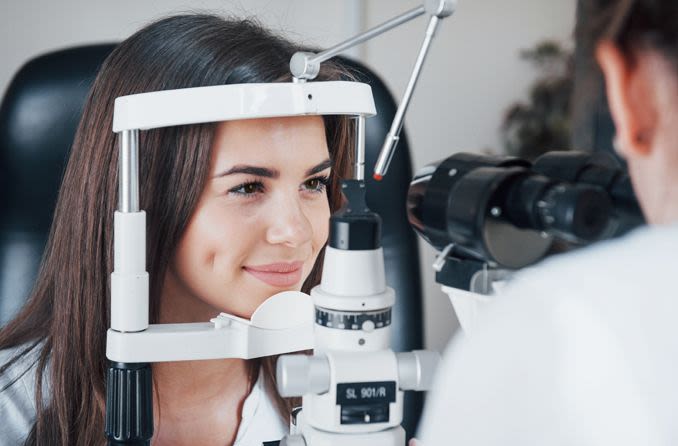
Eye care professionals recommend that you have an eye exam every one to two years. This may vary depending on your age, risk factors and whether you wear eyeglasses or contacts. Though vision screenings are sometimes done for kids at school, eye exams are still important.
Vision screenings may find a vision issue in your child, but they aren’t a substitute for a comprehensive eye exam. An exam is more in-depth, can catch problems a screening may miss, and can find the underlying cause behind issues a screening does identify.
How often children should get an eye exam
Experts say approximately 80% of all learning comes from visual pathways. Yet one in four children with a correctable refractive error does not have it corrected properly. A University of Bristol study also discovered that brain-related visual problems likely affect one in 30 school-aged children.
Because of this, it’s recommended that children have their first eye exam at 6 months of age. Another exam should be done at age three and again before the start of first grade. If a child is not at risk, they can continue having their eyes examined every year until age 18.
Children with risk factors for vision problems may need their first eye exam earlier than 6 months of age and may need eye exams more frequently throughout childhood.
Examples of risk factors include:

Children need regular eye exams to detect vision problems that may interfere with learning.
Family history of vision problems, such as myopia, strabismus, amblyopia, retinoblastoma or a genetic disease that affects the eyes
Prematurity or low birth weight
Difficult labor associated with fetal distress
Extended use of supplemental oxygen at birth
Infection of mother during pregnancy (examples: rubella, venereal disease, herpes, AIDS)
Developmental delays
Functional vision in only one eye
Maternal smoking, drinking or drug use during pregnancy
Physical illness or diseases
Eye disorders such as high refractive error, strabismus and anisometropia
Health conditions associated with ocular conditions
Taking a medication with ocular side effects
Children who currently wear eyeglasses or contact lenses should also have annual eye exams.
| Age range | Low-risk children | At-risk children |
|---|---|---|
| Birth to age 2 | One exam between 6 and 12 months old | Between 6 and 12 months old, or as advised by your doctor |
| Age 3 to 5 years old | At least one exam between age 3 and 5 | At least one exam between age 3 and 5, or as advised by your doctor |
| Age 6 to 17 years old | Before first grade and every year thereafter | Before first grade and every year thereafter, or as advised by your doctor |
| Reprinted with permission from the American Optometric Association | ||
SEE RELATED: Questions to ask your child's eye doctor
How often adults should get an eye exam
To maintain a lifetime of healthy vision, adults ages 18 to 60 should have a comprehensive eye exam at least once every two years. Older adults (ages 65 and older) should have annual eye exams. "At risk" adults should have an exam at least once every year, or as recommended by their doctor.
Risk factors for adults include:

Family history of eye disease, such as glaucoma and macular degeneration
Diabetes or high blood pressure
Wearing eyeglasses or contact lenses
Belonging to a high-risk racial or ethnic group (such as Latino or African American)
Taking prescription or over-the-counter medications that may have eye-related side effects
Previous eye injuries or eye surgery (including cataract surgery)
A visually demanding occupation or one that may pose hazards to the eyes (e.g., firefighter, mechanic, welder, etc.)
Adults who have had refractive surgery, such as LASIK, PRK or SMILE, still need to have an eye exam every 1-2 years. Eye exams don’t just measure good vision, they assess overall eye health.
If you have any doubts about how often you (or your children or parents) should have an eye exam, ask your eye doctor.
| Age range | Low-risk adults | At-risk adults |
|---|---|---|
| 18 to 39 years old | At least every two years | At least annually, or as recommended |
| 40 to 64 years old | At least every two years | At least annually, or as recommended |
| 65 and older | Every year | At least annually, or as recommended |
| Reprinted with permission from the American Optometric Association | ||
Vision screening vs. eye exam
A vision screening is a short assessment done through a child’s school for free. Screenings do not offer a diagnosis, but can reveal signs that your child needs to see an eye doctor, such as an optometrist or ophthalmologist.
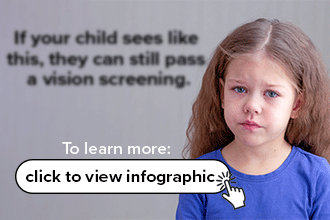
During a vision screening, the school nurse will check your child’s distance vision, near vision and color vision. Their depth perception and convergence ability may also be tested. As kids get older, school screenings may only assess near and distant vision.
Though the vision screening process varies from state to state, it is usually done when a child enters a new school district. For returning students, screenings are usually done in kindergarten and first grade, then every other year afterward.
Experts agree that vision screenings are not reliable in ruling out problems with vision, and that an eye exam is the best way to monitor and maintain a child’s eye health and visual acuity.
During a pediatric eye exam, an eye doctor will ask about your child’s medical history and any trouble they may be having with their eyes. They will take a look at the outer parts of their eyes, including the:
To look inside the eye, where the retina and optic nerve are located, the doctor may need to dilate your child’s pupils.
Before checking any patient’s ocular health, an eye doctor will measure their visual acuity and test their visual field. These measurements let the doctor know how clear their patient’s central vision is before the eyes may be affected by dilation or other parts of the exam.
By gathering information in an eye exam, your eye doctor will be able to detect and diagnose any vision or eye problems you may be experiencing and treat them accordingly.
READ MORE: Binocular indirect ophthalmoscope (BIO)
Eye exam cost
The cost of an annual eye exam is normally covered by vision insurance. Without insurance, the price varies depending on the type of eye care practice, location and other factors. There are also several organizations that provide free eye exams and glasses for those who are eligible.
READ MORE: How to choose an eye doctor
Vision and learning difficulties. Optometrists Network. April 2020.
Access to care. Prevent Blindness. Accessed October 2021.
Brain-related visual problems may affect one in 30 primary school children. University of Bristol. February 2021.
Comprehensive eye exams. American Optometric Association. Accessed October 2021.
The difference between a vision screening and a comprehensive eye examination. American Printing House for the Blind. Accessed October 2021.
Vision screening requirements. Texas Department of State Health Services. February 2021.
A guide for vision screening in California public schools. California Department of Education. April 2019.
Guidelines for school vision screening programs: Kindergarten through grade12. Colorado Department of Education. January 2006.
Are school vision screenings reliable? Optometrists Network. April 2020.
Page published on Wednesday, February 27, 2019
Medically reviewed on Monday, October 11, 2021