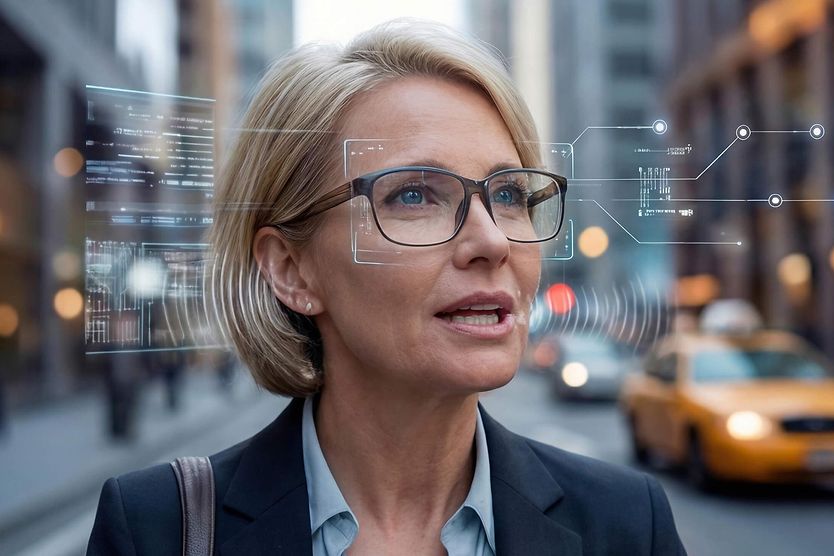
Remote eye care explained: How clinician-guided care can (and can’t) help with eye health


You live in a small town, or maybe a farming community. You know you should be getting your eyes checked annually as part of your health care routine, but the nearest clinic is hours away. Taking a half-day off work for an eye exam isn’t always an option. What can you do?
For more and more people, remote eye care is becoming a possibility. But not all services are right for everyone. Knowing what remote eye care can (and cannot) do will help you make better choices about your eye health.
What is remote eye care?
Remote eye care includes several different services that take place outside the traditional eye care setting.
For example, a search for “online vision test,” will bring up vision assessment tools that you can complete on your smartphone or computer. These tests may be able to give you some basic information about your vision and visual acuity. Even when these tools are FDA-cleared to measure visual acuity, they are not a substitute for a comprehensive eye exam and cannot detect eye disease.
Online vision tests are designed for adults and aren't appropriate for children. Kids still need to have in-person comprehensive eye exams as many childhood vision problems — like amblyopia ("lazy eye") and strabismus (eye misalignment) — must be caught and treated early.
On the other hand, clinician-guided remote eye care offers more detailed information about your vision and eye health. This type of remote care is often described as telemedicine. You may be familiar with telemedicine if you ever had a video appointment with a primary care provider, mental health provider or specialist.
In the world of eye care, these services may involve optometrists (teleoptometry) or ophthalmologists (teleophthalmology). Both may use digital tools to support exams, vision testing, diagnosis and follow-up care.
Clinician-guided remote care may help extend access in certain situations, such as in areas with a limited number of health care providers, says Giselle Ricur, MD, co-chair of the Ocular Telehealth Special Interest Group at the American Telemedicine Association (ATA).
“Teleophthalmology is not for everything and it’s not for everybody,” she said. “There’s so much we can do remotely, but many patients will still need to get in-person care. That’s because ophthalmology is still very much based on having specialized equipment to take detailed images of the eyes. It’s not always possible to get that equipment into all of the places where there are high needs.”
Clinician-guided remote care is often ideal for people who otherwise don’t have access to eye care, Dr. Ricur continued.
“It becomes the bridge between the patient and the health care system, so that patients can get referred to more advanced care if they need it,” she said.
Access to remote care isn't automatic though. The same communities that would benefit most, such as rural areas and older adults, are also more likely to face barriers such as limited broadband internet, older devices or having less comfort with digital tools.
What happens during a clinician-guided remote eye care appointment?
Sometimes, clinician-guided remote eye care takes place in your home. You may sign into a telemedicine platform and talk with a clinician live through a video or texting interface (synchronous care). Or you might leave a message for your clinician, and they will respond at a later date (asynchronous care).
You could also visit a clinic, pharmacy or vision center where a trained technician runs tests using specialized equipment. An eye doctor will review the test results and may speak to you over video, or send you a message later, to discuss the next steps. This type of visit could be appropriate for different situations, including:
- Identifying emergencies and deciding on the need for in-person care
- Monitoring previously diagnosed chronic conditions, such as diabetic retinopathy
- Following up with patients after a recent surgery or other treatment
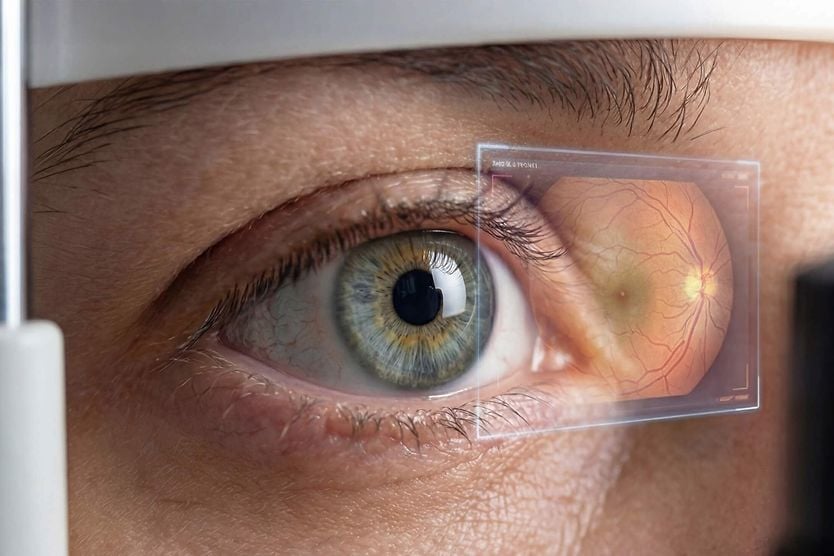
Some primary care doctors may use FDA-cleared artificial intelligence (AI) systems that take a photograph of the retina to screen for diabetic eye disease on the spot. If signs of disease are detected, the system will provide a recommendation to refer the patient to an eye doctor. These programs have been shown to increase screening rates in people with diabetes.
Certain supermarkets and pharmacies now have automated kiosks that use ophthalmic equipment to quickly measure parts of your vision. These kiosks aren’t the same as clinician-guided remote care. The results may be delivered to a licensed clinician who can prescribe lenses. But the level of oversight and clinical involvement varies.
The American Optometric Association (AOA) has raised concerns about patient safety risks associated with these kiosk technologies. In a November 2025 statement, the AOA has encouraged regulators to take a closer look at the safety of these tools and stresses that direct-to-patient technology should not be used as a replacement for a comprehensive eye exam.
Can remote tools monitor eye disease at home?
For some eye conditions, FDA-cleared home monitoring devices might extend care between office visits. People with dry age-related macular degeneration (AMD) may be prescribed a home monitoring device that checks for early signs of conversion to the "wet" form, when prompt treatment matters the most.
A home OCT system, which takes detailed images of the retina (the thin, light-sensitive layer of tissue that lines the back of the eye), is also available by prescription for certain patients.
These tools don't replace office visits. An eye doctor will supervise and review the results to decide when a person needs to be seen.
What remote care won’t replace
There’s a lot that clinician-guided remote eye care can do, but it also has limitations. The bottom line is that remote care can’t replace a comprehensive eye exam.
Some remote tests, especially those that are self-administered, may not be as accurate as in-person exams. One study found that web-based vision tests can pinpoint with relative prescription accuracy for myopia (nearsightedness) while significantly underestimating for hyperopia (farsightedness). Another study indicated that patients who start with telemedicine are more likely to need an in-person follow-up visit anyway.
Comprehensive eye exams, which often include dilating the pupils with medicated drops, are an important part of preventing eye conditions and maintaining your eye health. The National Eye Institute recommends that certain adults get a dilated eye exam every one to two years, depending on their risk of eye disease. An in-person dilated eye exam is appropriate particularly for adults over 60, African Americans over 40 and Hispanic/Latino adults with a family history of glaucoma.
If you have diabetes, high blood pressure or other chronic conditions, a yearly dilated eye exam is recommended because these conditions can raise your risk of eye disease. Routine comprehensive eye exams are recommended for all adults.
Some symptoms require immediate in-person or emergency evaluation. Contact your eye doctor the same day or go to an emergency room if you experience sudden vision loss, a significant increase in floaters, flashes of light, a shadow or curtain moving across your vision, eye pain, or sudden double vision.
Eye pressure testing (tonometry) is another important service that requires access to the right equipment. It typically needs to be completed in person with a qualified and certified technician. Eye pressure tests help monitor pressure changes in your eye’s fluid. High pressure inside the eye is the main treatable risk factor for glaucoma, a disease that damages the optic nerve.
Certain conditions will always require a full clinical evaluation with hands-on care from an eye doctor. That’s why it’s important for you to have a relationship with an eye care professional you can visit in person.
How do the rules for remote eye care vary by state?
There are many different regulations that determine when, where and how clinicians can provide telemedicine services. These regulations vary by state and by practice type, so the remote care landscape can get complicated very quickly.
The important thing to know is that “telemedicine” has specific definitions for how clinicians practice and how they get paid for the services they provide. Not all remote care models will qualify.
Before scheduling a remote eye care visit, check with your Medicare, Medicaid or private insurance plan to confirm whether the service is covered.
In addition, every state has its own regulations around how clinicians are licensed to participate in telemedicine. These laws can differ for optometrists and ophthalmologists.
“Telehealth licensure is still one of the biggest barriers in the US, especially when patients move across state lines or split time between different states,” said Dr. Ricur.
For example, there may be different rules for clinicians who work with patients across state lines.
“Today, the law says that the provider has to be licensed where the patient is physically located at the time of the telehealth encounter,” she explained. “Sometimes, those rules can make it difficult for patients to form and keep relationships with remote eye care providers.”
Many states are working together to create licensing agreements that simplify the delivery of care in different regions. It’s still a work in progress, said Dr. Ricur.
“The Interstate Medical Licensure Compact has helped expand telehealth access for physicians,” she said. “But there are still licensing hurdles, because those systems are not fully aligned for different types of eye care professionals. Check with your provider to see if there are any issues that could impact your care.”
What should you know before choosing remote eye care?
Remote eye care can be a helpful way to access certain types of vision services. It can make it easier to get a screening, initial evaluation or follow-up care without always needing to visit an eye doctor’s office in person.
However, these services have limits, and they aren’t a substitute for a comprehensive in-person eye exam.
Understanding what remote eye care can do and where its limitations are, can help you make more informed decisions about your eye health so you can get the right care in the right setting for your needs.