Left out no more: Accessible museums for blind and low-vision visitors
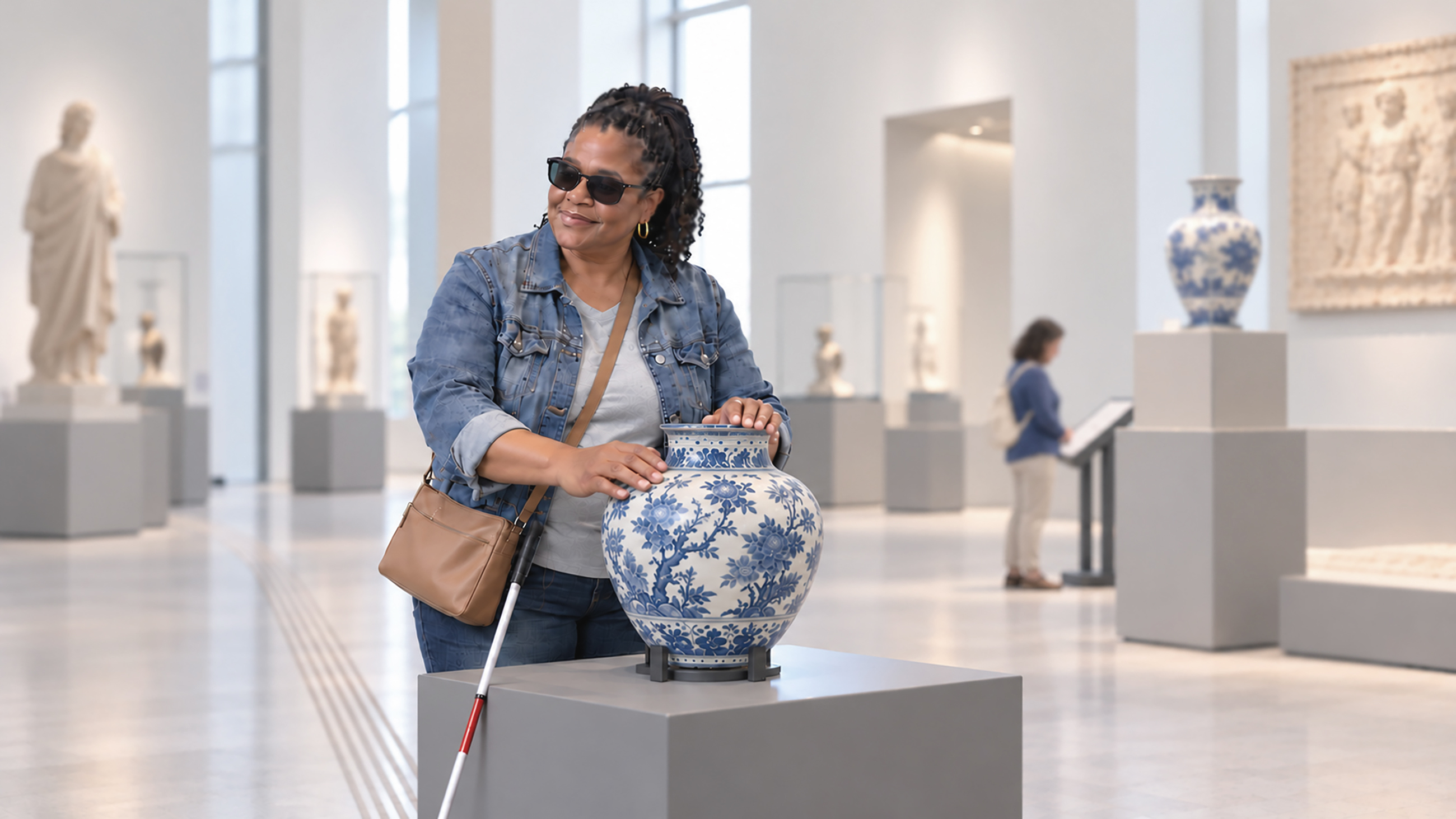

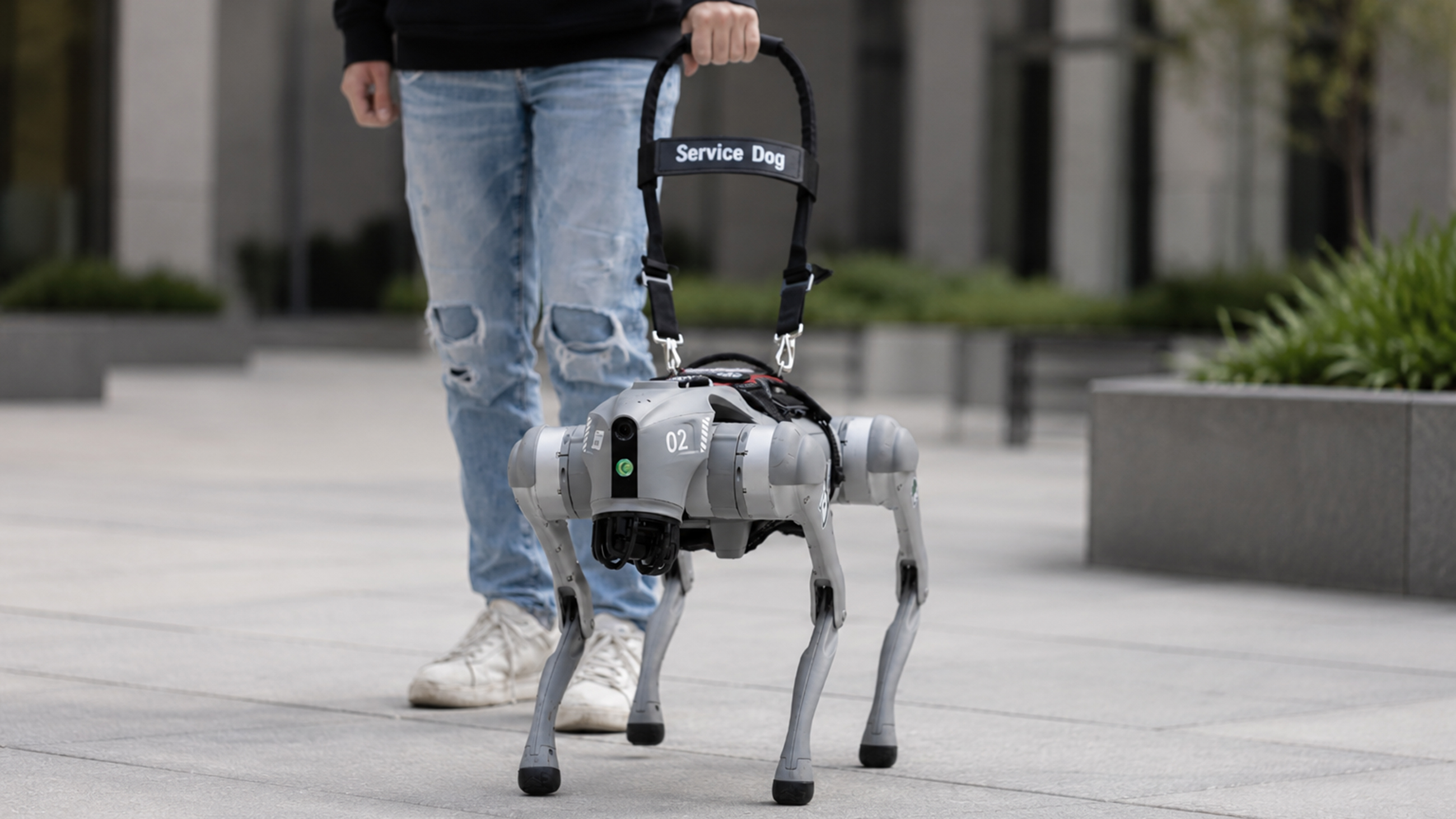
Danielle Burton experiences museums through the gentle tap of her white cane and by what she can touch and hear. Burton is DeafBlind — she wears hearing aids and uses a guide dog to help her navigate the world. Sensory exhibits that provide tactile engagement are essential to how she experiences a museum.
Too often, when visiting a museum, she’s found very little in the way of accommodations. Exhibits can’t be touched, or audio tours aren’t available or require advance booking. She now has the opportunity to help shape a museum that offers an alternative vision for how people with blindness or low vision can have a full experience.
Burton is part of the team behind The Dot Experience, a new museum from American Printing House for the Blind in Louisville, Kentucky. It’s billed as the first attraction in the world to make “every exhibit, image, and artifact accessible to everyone — including people who may not be able to see them.”
As communications accessibility editor, Burton is part of the team designing and prototyping the museum’s exhibits to ensure they can be touched, felt and experienced, so that anyone who is blind or has low vision enjoys the same level of participation as a sighted visitor.
Throughout the museum, which opens in October 2026, exhibits incorporate touch. Objects that must remain behind glass have tactile replicas. The layout is designed to accommodate those using a white cane or guide dog to navigate the space. Signage, audio and staff training all reflect a distinct approach to welcoming visitors, no matter their level of vision.
“Very few things are behind glass,” said Jo Haas, chief operating officer of American Printing House for the Blind and vice president of advancement for The Dot Experience. “Whenever something is behind glass, there is a touchable replica.”
Access remains a challenge
The Dot Experience stands in contrast to museums where accessibility is challenging or where a blind or low-vision visitor has an inferior experience to a sighted visitor.
Burton recounted a trip to Washington, D.C., where she and her colleagues, all blind, wanted to use their downtime to visit a museum. She called to find out whether the facility offered an audio tour and whether any exhibits could be touched. She was told the museum offered an accessible audio tour, but it required booking two weeks in advance. While it may be a practical choice for museums’ staffing, it can create a roadblock for people who need these services for a museum visit.
“Not only do you have to request the special tour, but you might have to schedule it well in advance. If you’re traveling for business, you don’t know whether you’ll have free time or when you’ll be free, so you can’t necessarily schedule it in advance,” Burton said.
Haas said advance-booked programs can also limit visitors’ choices once they arrive. A touch tour offered at a specific time may include only a handful of objects selected by museum staff rather than the exhibits a visitor is most interested in experiencing.
“You may come to an art or history museum wanting to experience A, B and C, but the touch tour only involves X, Y and Z. Your choices are being made for you,” Haas said.
Burton said it’s very common to be told, when contacting a museum, that it doesn’t even offer an accessible tour. She said museums can do a lot, at little cost, to make the experience friendlier for those with vision challenges.
“Some accommodations are expensive, but more of them are simple and less expensive than people realize,” Burton said.
How museums can become more accessible
Heather Pressman is a museum accessibility consultant, co-founder of Achieving Access and a lecturer in the museum studies program at Johns Hopkins University. She works with museums that want to make their institutions more accessible.
Usually, they just need some guidance and a place to start. Pressman said that no matter the size or budget, even small changes can make a difference. The simple act of posting a note on the website acknowledging that the museum isn’t accessible yet and that the team is working on it can signal that accessibility is a priority, Pressman said.
When it comes to exhibits, simple and innovative solutions can bring blind and low-vision visitors closer to a comprehensive museum experience.
“One of the museums I first worked at had 30 mortars and pestles that people had found in their fields. We didn't need to keep 30 of those in our collection gathering dust. We could put some out and let people actually touch them,” said Pressman.
Pressman said museums can create tactile reproductions of artwork for visitors to experience at low cost. She recalled a student who used fabric to represent the textures in a piece of art. She said simple craft supplies are all that’s needed to build a hands-on experience for visitors.
Technology solutions also don’t have to be expensive. Pressman advocates for museums to use Bloomberg Connects, a free digital app which helps museums create accessibility options. The Bloomberg Connects app has content from over 1,400 cultural institutions, including audio that low-vision visitors can access to create a more connected experience for museums they visit.
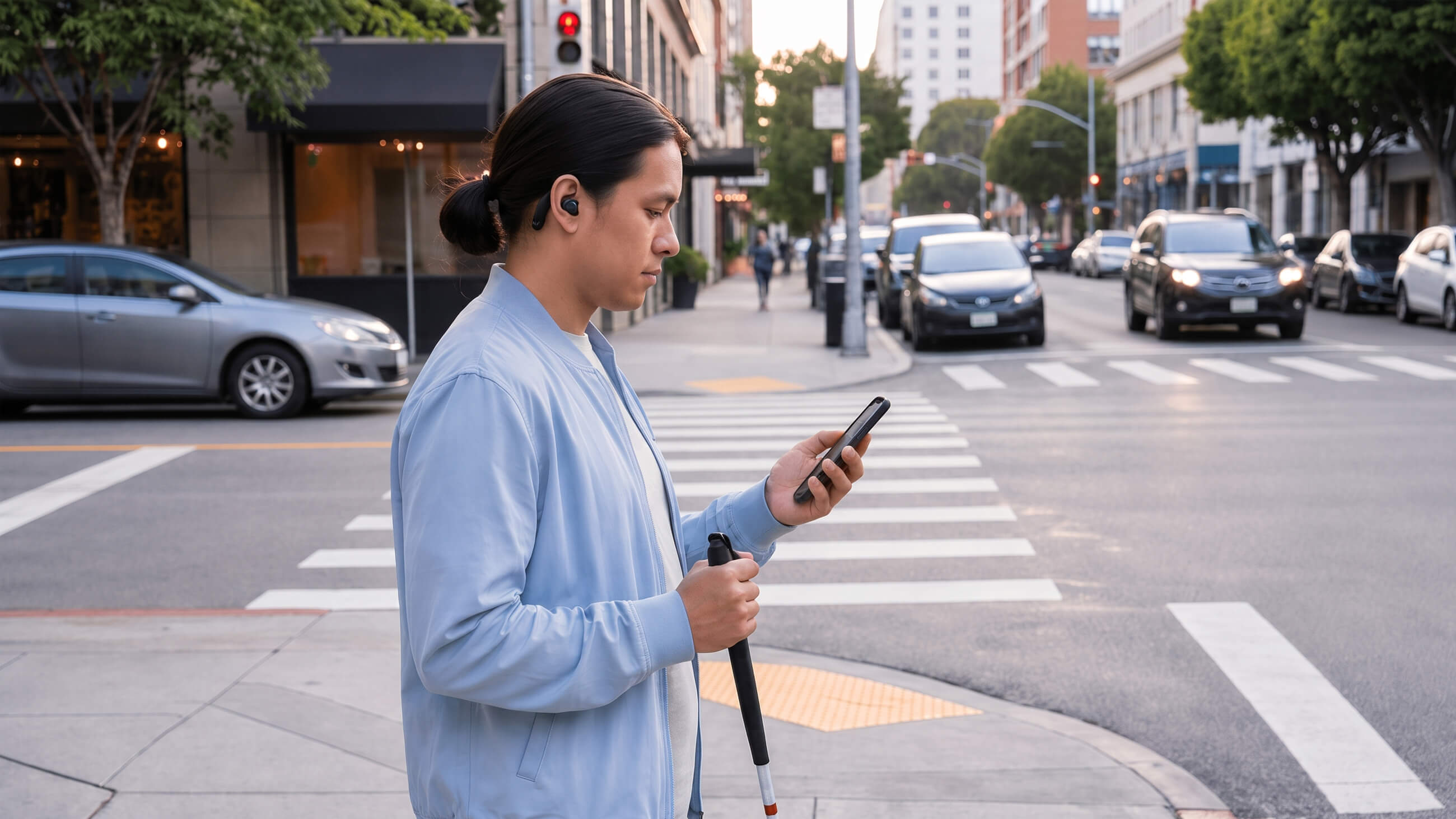
Many visitors also bring their own tools. Smartphone apps can magnify labels, read text aloud, recognize objects or connect a user with a remote sighted assistant. Low vision rehabilitation professionals, including optometrists and orientation and mobility experts, as well as occupational therapists, can help people choose the tools that fit their needs.
Another key element is ensuring staff are trained to help visitors access accessibility options.
“You can have all the accessibility features and programs, you can have the most accessible museum in the world, but if your staff are not prepared to interact with somebody when they walk in the door, that person is not going to feel welcome from the outset,” Pressman said.
Details matter
The Dot Experience focuses on first-person stories about blindness and the human experience. It covers several contemporary and historical figures, including Louis Braille, who invented the braille system, and Helen Keller, the disability rights advocate who lost her hearing and sight at 19 months old.
Keller gets a particular focus, with an entire gallery devoted to her life and work. With extensive access to her personal archive of writings, speeches and letters, visitors will get ‘a fully dimensional Helen Keller,’” Haas said.
The Dot Experience introduces visitors to people with a wide variety of backgrounds who are blind or have low vision, including how they work, live, play and navigate daily life.
One example is a replica of the first Seeing Eye dog, Buddy. The guide dog was trained by Dorothy Harrison Eustis, who later co-founded The Seeing Eye with Buddy’s handler, Morris Frank, in 1929.
Visitors can touch and explore a life-size replica of the German shepherd and her harness. In keeping with the museum’s theme, the statue and harness make up a tactile exhibit so visitors can sense Buddy’s dimensions and what her harness would have been like.
Braille also features prominently throughout the museum, telling the history of the medium and using braille for communication, with each written word represented in braille.
What to look for
Blind and low-vision visitors can contact a museum directly or visit its website for information about available accommodations. Pressman said museums should make this information clear and provide a representative for those who have questions or want more information.
The information should detail what types of accommodations are offered, including audio tours, tactile exhibits, replicas or other resources. It’s important that the website and museum staff offer details if any parts of the museum are inaccessible to low-vision visitors.
“On your website you should have a page that’s easy to find, or at least a section that says, ‘Here’s what we offer, here’s who you can contact if you have questions,’” said Pressman.
Even small shifts toward accessibility can give blind and low-vision visitors more independence when choosing to visit a museum. The larger goal, according to Haas, is for museums to think about accessibility as an integral feature of the museum experience.
“We want to shift that perspective,” she said. “It’s about the human experience, the visitor journey and how every individual interacts with your institution. There are always things you can do to make your institution more welcoming. Open those conversations and start down that path. Not everything is complicated, and not everything is expensive.”