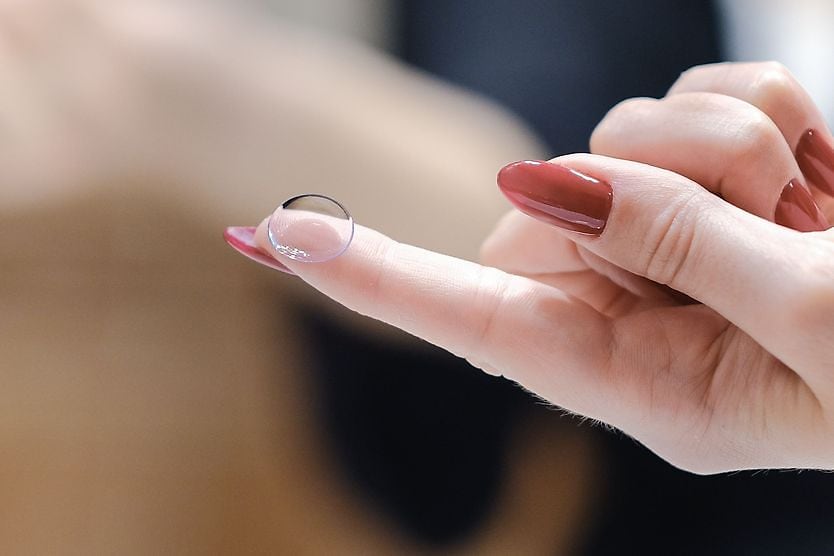
Understanding your contact lens prescription

Your contact lens prescription contains specific information to ensure your contact lenses can provide proper vision.
If you’re in the U.S., your contact lens prescription is yours to keep. In fact, by law, your eye doctor must give you a copy of your prescription at the conclusion of your contact lens exam and fitting — even if you don't ask for it.
Eye doctors use standard terms, abbreviations and measurements to write contact lens prescriptions.
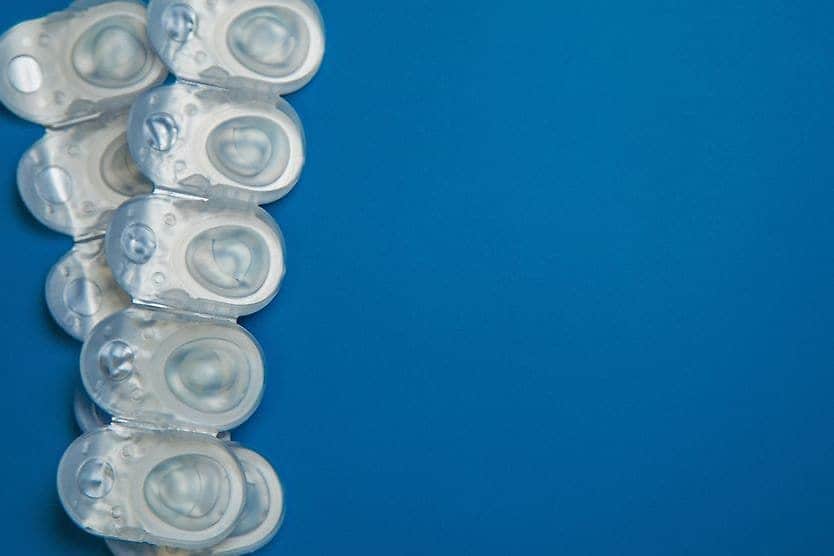
If you wear disposable contact lenses, your prescription may include how often your contact lenses should be replaced (once a month, every two weeks, once a week, daily, etc).
Sometimes the lens brand includes information about the recommended replacement schedule, but the real judge is your eye care practitioner, who knows what’s ideal for your eyes and lifestyle.
It’s also important to note that contacts and eyeglass prescriptions are not the same. So even if you already have an eyeglass prescription, you will need a separate contact lens prescription before you can purchase contacts.
Can you buy contact lenses without a prescription?
No. Under U.S. law, the purchase of all contact lenses requires a valid contact lens prescription written by a qualified eye care practitioner.
This includes plano, or “non-prescription,” colored contact lenses or special-effect lenses that are worn for cosmetic purposes only.
Your eye care practitioner can only write your contact lens prescription after a thorough contact lens exam and fitting.
Throughout the U.S., you can be fitted for contact lenses by an optometrist or ophthalmologist. In some states, opticians can also be certified to fit contact lenses.
Why do you need a contact lens prescription?
It is illegal to sell contact lenses without a prescription in the United States.
A contact lens is a medical device, and a poorly fitted lens — or one made from a material not well-suited to your eyes — can cause distorted vision, discomfort, infection, inflammation, swelling and abrasion. In some cases, permanent eye tissue damage could result.
And it goes without saying that you should never share your contact lenses, including colored contacts and theatrical contacts. Sharing contact lenses can cause potentially sight-threatening eye conditions.
When does your contact lens prescription expire?
By law, contact lens prescriptions are valid for a minimum of one year, or the minimum required by state law, whichever is greater.
When your prescription expires, you won’t be able to buy more lenses until your eye care practitioner gives you an updated prescription. This will involve an eye exam to check your general eye health and to be certain that contact lenses aren't adversely affecting your eyes.
If you are diagnosed with a contact lens-related problem, it’s usually unlikely that you’ll have to discontinue wearing contacts. In many cases, a change to a different type of lens or different contact lens solution — or a modification of how often you replace your contacts — could solve the problem.
Where can you use your contact lens prescription?
Once the fit of your contacts has been approved by your eye doctor and you receive your contact lens prescription, you have the option of buying contact lenses online, from your eye care provider, from optical chains or from retail stores that sell eyewear.
Wherever you choose to purchase your contact lenses, always make sure you buy your contacts from a legitimate source. Vendors selling contact lenses without a prescription, such as you might find in a flea market, gas station or novelty shop, are breaking the law in the United States.