Optometrist vs. ophthalmologist: How to choose an eye doctor


On this page
Optometrist vs. ophthalmologist
Pediatric eye doctor
Which eye doctor to choose
Which is the preferred eye doctor for specific needs?
Getting the eye care you need
On this page
Optometrist vs. ophthalmologist
Pediatric eye doctor
Which eye doctor to choose
Which is the preferred eye doctor for specific needs?
Getting the eye care you need
Choosing an eye doctor is an important health care decision. Your eye doctor can help you see as clearly as possible and protect your vision — the sense many people say they fear losing more than any other.
Optometrist vs. ophthalmologist
The first step in your decision is to understand there are two types of eye doctors — optometrists and ophthalmologists — and to know the differences between the two.
What is an optometrist?
An optometrist is an eye doctor who has earned the Doctor of Optometry (OD) degree and specializes in eye and vision care.
Most optometrists provide the following services:
- Perform comprehensive eye exams
- Prescribe eyeglasses and contact lenses
- Perform contact lens fittings
- Diagnose eye health problems
- Medically manage many eye diseases, infections and injuries that could be associated with systemic conditions
In addition, some optometrists:
- Perform eye exams before and after procedures, like cataract surgery and corneal refractive procedures such as laser-assisted in situ keratomileusis (LASIK)
- Provide low vision exams and services
- Prescribe and supervise vision therapy
- Perform certain eye laser procedures and eyelid lesion injections/removals (this varies by state)
READ MORE about optometrists
Eye Doctors: Optometrist vs. Ophthalmologist
There are two kinds of eye doctors: optometrists and ophthalmologists. Here’s how they compare:
Services provided by ODs, MDs and DOs are typically covered by vision and/or medical insurance. Check your plan for participating providers.
Training and certification of optometrists
It usually takes seven to eight years to become an optometrist in the United States. Candidates typically need to:
- Complete three to four years of undergraduate college work (including accelerated dual-degree programs)
- Attend an accredited school or college of optometry for four years and obtain an OD doctorate
- Meet all other requirements to receive an optometry license in their state, including passing all licensing exams
Some optometrists also choose to add one year of training to focus on a specific area of care.
When to see an optometrist
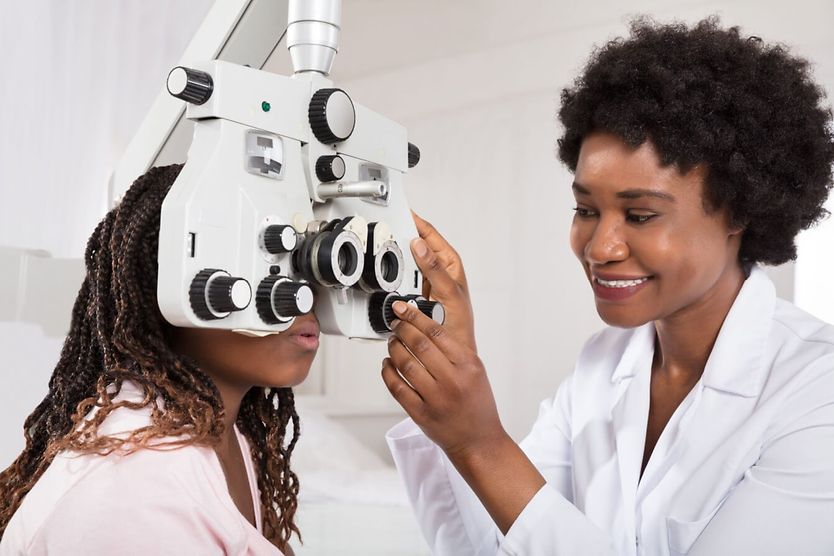
Many people see optometrists for routine eye exams. You can schedule these checkups to monitor your eye health and update your glasses or contact lens prescription, if needed.
You can also see an optometrist for many concerns about your eye health and vision. They are trained to know which signs and symptoms to look for and can treat some problems in their office. Optometrists can prescribe certain eye medications, including drops and ointments along with oral medicines, but what they can prescribe varies by state.
If you need more specialized care, they can refer you to the appropriate ophthalmologist or other healthcare professional for your condition.
What is an ophthalmologist?
An ophthalmologist is a medical doctor (MD) or a Doctor of Osteopathic Medicine (DO) who specializes in eye and vision care, including providing medical care and surgery for management of eye and vision problems.

You can think of an ophthalmologist as a medical eye specialist. Ophthalmologists are physicians (MDs or DOs) who specialize in comprehensive medical and surgical eye care. Their extensive medical education and residency training prepare them to diagnose and manage complex eye diseases, perform eye surgery and address eye conditions associated with systemic illnesses. They can provide all the services an optometrist provides, and they:
- Have more comprehensive medical training in the care and management of eye health problems
- Are trained and licensed to perform eye and vision surgery
- May specialize in the medical and surgical treatment of a specific eye disease or part of the eye
Training and certification of ophthalmologists
To become an ophthalmologist in the United States, a candidate typically:
- Earns a four-year college degree (or an accelerated dual degree)
- Attends medical school and earns a four-year doctorate to become a physician (MD or DO)
- Completes a one-year internship
- Completes a three-year residency in the medical and surgical care of the eye
- Completes a one- to two-year fellowship
- Passes all licensing exams required by their state
Once an ophthalmologist gets their medical license, they can legally practice ophthalmology, including surgical eye care, in their state.
When to see an ophthalmologist
Ophthalmologists can perform comprehensive eye exams and help with eye problems that may go beyond an optometrist’s scope. They have extensive training to diagnose and treat eye conditions and perform surgery if needed.
Some ophthalmologists specialize in a particular area. An eye doctor might refer you to a specialized ophthalmologist for eye problems that involve:
- The cornea (corneal specialist)
- The retina (retinal specialist)
- Glaucoma (glaucoma specialist)
- The brain, nerves and muscles (neuro-ophthalmologist)
- The eyelids, tear ducts or orbit (oculoplastic surgeon)
- Childhood strabismus, congenital cataracts or other significant pediatric eye disorders (pediatric ophthalmologist)
- Cataract and refractive surgery
- Uveitis (uveitis specialist)
- Ocular oncology (ocular oncologist)
- Sudden vision loss, significant eye pain or other potentially serious symptoms requiring urgent evaluation
- Eye conditions that may require surgery
- Complex or progressive eye diseases
- Eye manifestations of systemic or neurological diseases
Doctors can focus on different things, even within their specialty. For example, some corneal specialists — but not all — also perform refractive surgeries, like LASIK or PRK.
Pediatric eye doctor
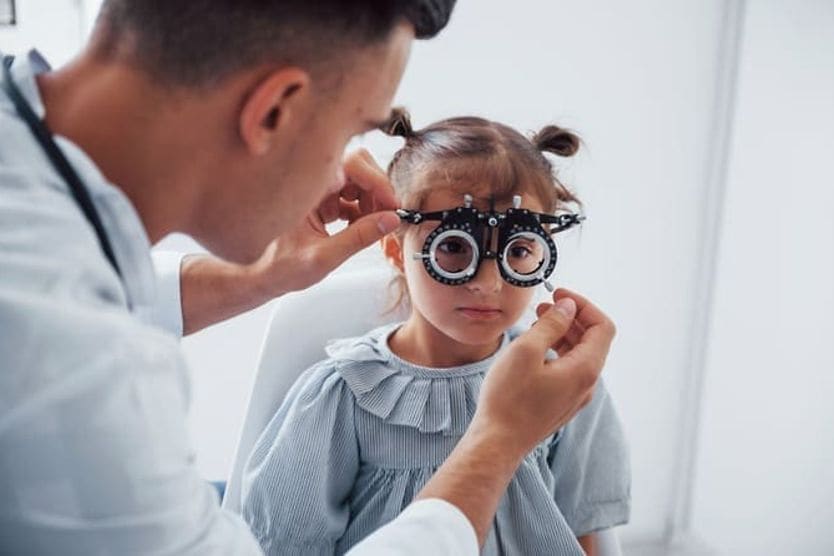
A pediatric eye doctor, also called a children’s eye doctor or a kids’ eye doctor, can be an optometrist or an ophthalmologist. Both optometrists and ophthalmologists provide eye care for children.
Pediatric ophthalmologists are medical doctors who have completed ophthalmology residency training and typically additional fellowship training in pediatric ophthalmology and strabismus. They specialize in diagnosing and treating complex childhood eye conditions, including strabismus, amblyopia, congenital cataracts and pediatric eye diseases requiring medical or surgical intervention. Pediatric ophthalmologists may also manage and treat adults who have strabismus and amblyopia.
Services can vary from practice to practice, but most optometrists are trained to provide eye exams and vision services for children.
READ MORE about pediatric ophthalmologists
A pediatric optometrist may have extra training or experience caring for children with eye and vision problems. Some parents may choose a pediatric optometrist or be referred to one for their child’s eye care.
READ MORE about pediatric optometrists
Which eye doctor to choose
For comprehensive eye exams and contact lens fittings, many people choose an optometrist. Therefore, prescriptions for eyeglasses and contact lenses are often written by ODs. This is in part because:
- ODs are primary eye care providers. Optometrists are trained to provide comprehensive eye care and maintain everyday vision health. They can diagnose and manage many eye conditions. They can also refer patients to ophthalmologists or other doctors if needed.
- Greater number of ODs. There are more optometrists than ophthalmologists, so it may be easier to find an optometrist's office and schedule an appointment.
- Cost. Comprehensive eye exams are often covered by medical and vision insurance, which can lower out-of-pocket expenses. Without insurance, an eye exam with an optometrist may cost less than an eye exam with an ophthalmologist.
An optometrist can refer you to an ophthalmologist if they can’t fully diagnose, manage or treat your concern on their own. Some people may choose to see an ophthalmologist directly.
Services provided
While ophthalmologists also offer these services, optometrists can often help with common to complex vision and eye health concerns, such as:
- Correcting nearsightedness, farsightedness, astigmatism and presbyopia with prescription glasses or contact lenses
- Diagnosing, monitoring or managing common vision and eye conditions
- Checking for changes caused by health conditions that can affect the eyes
- Prescribing and overseeing vision therapy or low vision rehabilitation
People may be more likely to see an ophthalmologist (or be referred to one) if:
- They need a more specialized evaluation or treatment
- They need or may need eye surgery
- They have urgent symptoms or a condition that needs to be checked right away
Some serious eye problems may need to be checked and treated in a hospital emergency room.
Note that this is not a complete list. Whether you should see an optometrist or ophthalmologist can vary, depending on your symptoms, condition and personal health factors.
If you are unsure who to see, or if your symptoms are worsening, contact a doctor's office or go to your local emergency room right away.
Training and education
Ophthalmologists typically need four to five more years of training than optometrists. This is because ophthalmologists are medical doctors who can practice medicine and perform surgery.
Optometrists aren’t medical doctors, but they’re still doctors with extensive training. They’re highly qualified to diagnose and treat many eye problems and make appropriate referrals whenever they need to.
Which is the preferred eye doctor for specific needs?
If you have needs beyond a comprehensive eye exam or contact lens fitting, the following table lists which type of eye doctor is likely the ideal choice for your specific needs.
NOTE: This table is intended as a general guide only to help you with your search for specialized eye care and is not all-inclusive. The eye doctor for your needs depends on several factors and may not be predicted with 100% accuracy by the following suggestions. Also, the scope of specialized eye care provided by optometrists may vary, depending on where you live. Please contact a doctor's office to best determine who to see based on your individual needs.
Specific Problem or Need | Most Appropriate Eye Doctor |
Comprehensive eye exams for kids | Optometrist or ophthalmologist |
Congenital eye problems | Pediatric ophthalmologist |
Crossed eyes | Pediatric ophthalmologist |
Learning-related vision problems | Pediatric optometrist |
Eye surgery (all kinds) | Ophthalmologist |
Corneal refractive surgery such as LASIK, PRK, KLEx | Ophthalmologist (refractive surgeon), optometrist (comanagement of surgery) |
Glaucoma | Optometrist or ophthalmologist |
Macular degeneration (mild) | Optometrist or ophthalmologist |
Macular degeneration (advanced) | Ophthalmologist (retina specialist) |
Eye problems caused by diabetes (mild) | Optometrist or ophthalmologist |
Eye problems caused by diabetes (advanced) | Ophthalmologist (retina specialist) |
Optical aids for visual disabilities | Optometrist (low vision specialist) |
Factors to consider
Consider looking for factors like these while you choose between an optometrist and an ophthalmologist:
- How severe or complicated your concern is – Optometrists can diagnose many eye problems, including potentially serious ones. For example, optometrists may diagnose and medically manage certain forms of glaucoma, depending on their training and state scope-of-practice regulations. Patients with advanced, progressive or surgically complex glaucoma may require evaluation and treatment by an ophthalmologist, often a glaucoma specialist.
- Specialty and expertise – If you’ve already been diagnosed with an eye condition, it could help to look for eye doctors who have extensive training or experience managing it. This is especially true for ophthalmologists, who can officially specialize in certain areas of eye care.
- Insurance coverage and cost – Before you schedule, it is recommended to verify the optometrist or ophthalmologist accepts your medical and/or vision insurance. If you don’t have insurance, certain offices may offer lower “cash prices” or payment plan options.
- Location and convenience – For comprehensive eye exams, you might prefer an eye doctor near home, work or somewhere you visit often. This can make it easier to keep up with regular exams.
When in doubt, contact the eye doctor’s office directly. They can help answer any questions or concerns.
Collaborative care between optometrists and ophthalmologists
Optometrists and ophthalmologists play complementary roles in delivering high-quality eye care. Collaboration, timely referrals and clear communication help ensure that patients receive the appropriate level of care based on the complexity of their condition.
- Referrals – Optometrists can refer patients to an ophthalmologist for specialized diagnosis, treatment or surgery.
- Follow-up care – An ophthalmologist may refer a patient to an optometrist for care before or after certain treatments. For example, cataract surgery is performed by an ophthalmologist, but some people will see an optometrist before or after the procedure.
- Sharing health information – When it’s needed for a patient’s care, they may share test results, diagnoses, treatment plans or other relevant medical information.
Getting the eye care you need
Choosing between an optometrist and an ophthalmologist isn’t always straightforward, and there may not be one right answer. Sometimes, the most important thing is that you’re getting your eyes checked by an eye doctor.
Both eye doctors provide important eye care, and either one can refer you to another type of doctor whenever they need to.
If you aren’t sure which one to see, talk to either eye doctor or someone at their office. They can help you decide where to start based on your needs.
READ MORE: What is an optician?
On this page:
Optometrist vs. ophthalmologist
Pediatric eye doctor
Which eye doctor to choose
Which is the preferred eye doctor for specific needs?
Getting the eye care you need
On this page:
Optometrist vs. ophthalmologist
Pediatric eye doctor
Which eye doctor to choose
Which is the preferred eye doctor for specific needs?
Getting the eye care you need