8 things your eyes can reveal about your health

Your eye exam can tell you a lot about your overall health. For example, your eye doctor could spot early signs of diabetes, whether you may be at higher risk of heart disease and even indications that you may have cancer.
Eye exams can check far more than your vision.
Regular comprehensive eye exams can make possible early detection and treatment of a number of serious health conditions (thyroid disease and multiple sclerosis are just two examples).
Here are eight things your eye exam can tell you about your overall health:
1. Diabetes
If your eye doctor notices specks of blood in the back of your eye, you could have a condition called diabetic retinopathy, which affects the capillaries in the retina. Diabetic retinopathy is the leading cause of blindness among working-age adults in the United States, according to the CDC.
Symptoms of the condition — such as eye pain, floaters, and blurry or fluctuating vision — may not be noticeable until the condition is advanced, making it even more important to get your routine eye exam.
In some cases, your eye doctor will spot the signs of diabetic retinopathy before you’ve been diagnosed with diabetes, giving you a head start on lifestyle changes and treatment.
*Disclaimer: These tests have no diagnostic value. If they indicate potential vision difficulties, we recommend you follow up with a comprehensive eye health exam with a vision care professional. *
2. High cholesterol
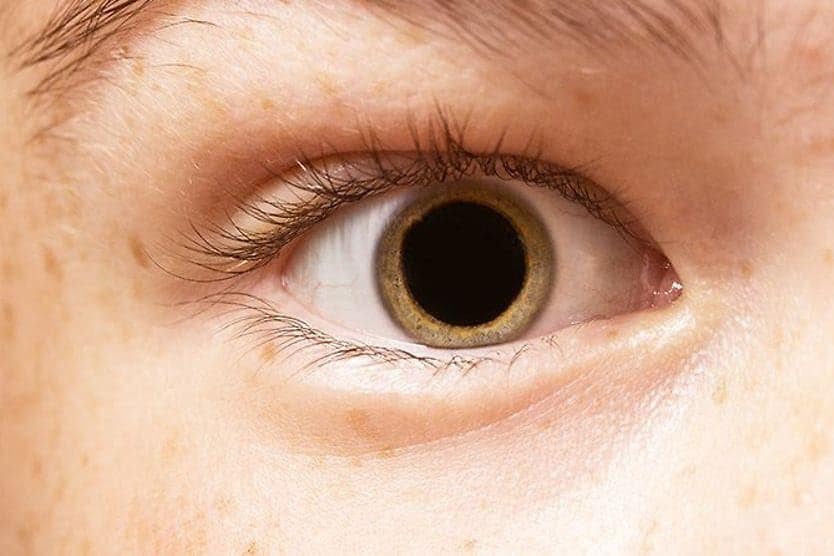
When cholesterol builds up in your eyes, a white, gray or blue ring can form around your iris. While it’s a common sign of aging, this condition — called arcus senilis — can indicate high cholesterol and triglycerides, and a greater risk for heart disease and stroke.
If you’re under age 60 (and especially if you’re under 40), it’s important to get your blood tested for hyperlipidemia, an abnormally high concentration of fats in the blood.
3. High blood pressure
During an eye exam, the most telling sign of high blood pressure is blood vessel damage such as leaking, narrowing, nicking, hardening and swelling.
In addition to being a risk factor for stroke, heart attack and heart failure, high blood pressure also can take a toll on your vision.
If not treated, the resulting blood vessel damage can lead to blurred or distorted vision and even loss of sight.
4. Stroke
If your eye doctor finds microscopic blood clots in the back of your eye or blood vessel damage due to high blood pressure, you could be at high risk for stroke.
If that’s the case, they may refer you to an emergency facility. There are a number of tests your doctor can perform to get a better handle on your situation.
5. Arthritis
The most common vision condition associated with rheumatoid arthritis is dry eye syndrome. Symptoms can range from merely annoying to very serious since dry eyes are more prone to infection.
People with inflammatory forms of arthritis may also experience redness, eye pain, blurred or reduced vision, light sensitivity, glaucoma and/or cataracts.
6. Thyroid disease
Hyperthyroidism is associated with an autoimmune disorder called Graves’ disease, which can make your eyes feel red and itchy, and, in more serious cases, could cause your ocular muscles to swell and your eyes to bulge.
If your primary care doctor notices ocular protrusion or other evidence of a thyroid issue, you likely will be referred to an eye doctor and endocrinologist for further testing.
READ MORE: Celebrate Healthy Vision Month
7. Multiple sclerosis
Multiple sclerosis (MS) is a degenerative disease that affects your entire nervous system. As the disease attacks your eyes, your optic nerves swell and your vision begins to blur, a condition called optic neuritis.
Optic neuritis is not necessarily a sign that you may develop MS, but the two are often linked. Around 75% of people with MS have optic neuritis, and it’s frequently the first symptom that arises.
If MS is caught during an eye exam, it can put you on the path to an early diagnosis and treatment.
READ MORE: How MS impacts eyes and vision
8. Cancer
When cancer strikes, your eyes may be one of the first places in your body to show signs, no matter where that cancer occurs.
Your eye doctor may find indications of everything from brain cancer to skin cancer during your routine eye exam.
Tumors can cause your optic nerves to swell and your eyes to change shape (which can affect your field of vision), while bloody retinas can signal leukemia.
If the color of your eyes has changed, it could be ocular melanoma.
Your eye doctor will do a thorough check of the skin around your eyes for freckles, dark spots and other potential issues. If any questionable or problem areas are found, you will be referred to an ocular oncologist or oncology specialist.