Eye discharge in newborns, babies and toddlers: Causes and treatment

Eye discharge in toddlers and babies is common and usually harmless. Eye discharge often occurs due to a blocked tear duct, allergies or a viral infection — which can usually be treated at home. However, some cases may lead to infection or be a sign of a more significant underlying condition.
If your baby or toddler experiences constant eye discharge, if eye discharge gets worse or if additional symptoms occur, contact an eye doctor for advice.
What causes eye discharge in toddlers and babies?
Many cases of eye discharge in young children have common underlying causes, including allergies, infection, blocked tear ducts and more. Treatment for eye discharge in babies and toddlers varies depending on the cause.
Normal eye discharge
It is normal for infants and toddlers to experience a small amount of discharge in the corner of their eyes, whether it appears wet or crusty. These “eye boogers” are often due to mucus secreted during sleep (sleep in the eye) but can also be caused by a child wiping their eye with dirty hands.
Conjunctivitis
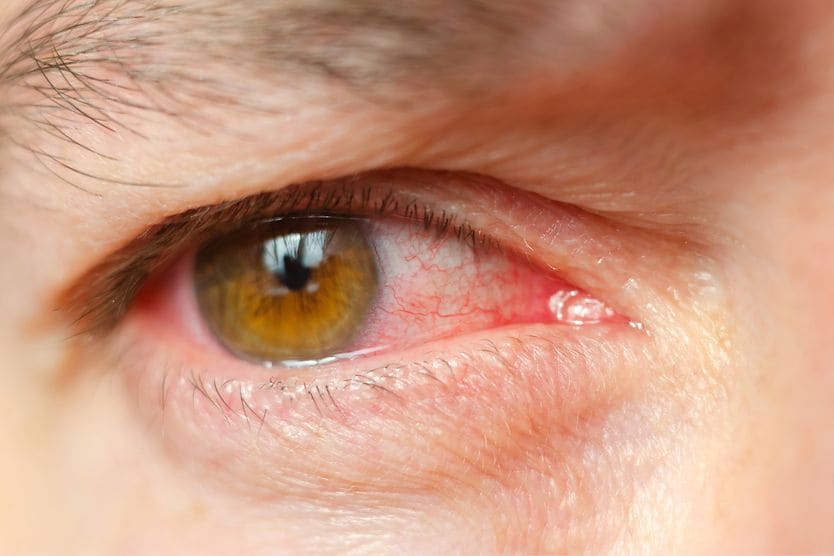
Eye discharge is a common symptom of eye infections such as viral and bacterial conjunctivitis, which are both highly contagious. Bacterial conjunctivitis usually requires an antibiotic to clear up, but viral conjunctivitis (pink eye) simply has to clear up on its own.
Viral conjunctivitis (pink eye)
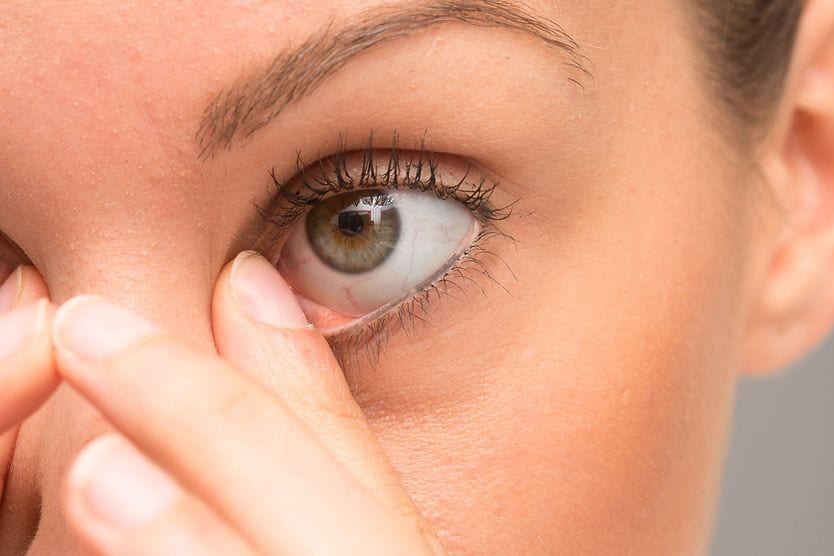
Viral pink eye is caused by a virus, such as the common cold, and typically occurs in both eyes. Discharge associated with viral pink eye is usually watery and clear, but a white or light yellow-colored mucus may occur.
It is recommended to consult with your eye doctor and the pediatrician if you notice eye discharge in babies with a cold. They will be able to share what can be used for appropriate treatment.
SEE RELATED: Eye colds: Are they “pink eye” or something else?
Bacterial conjunctivitis
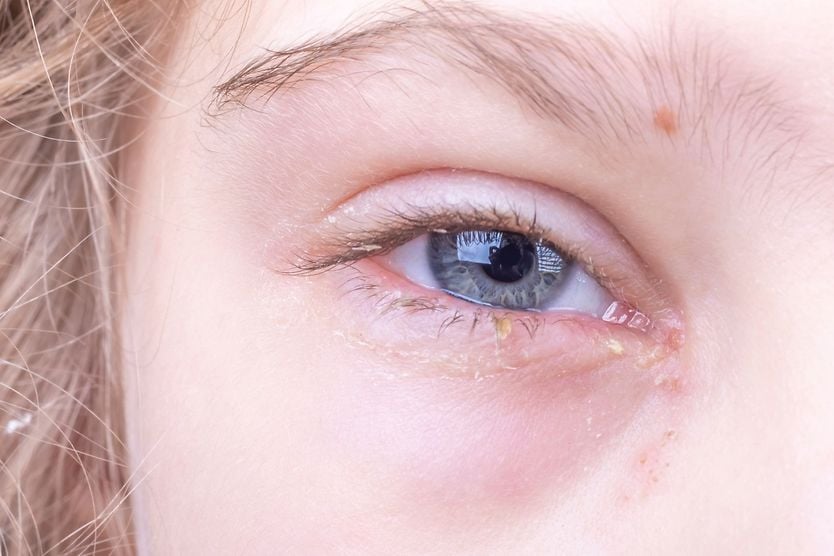
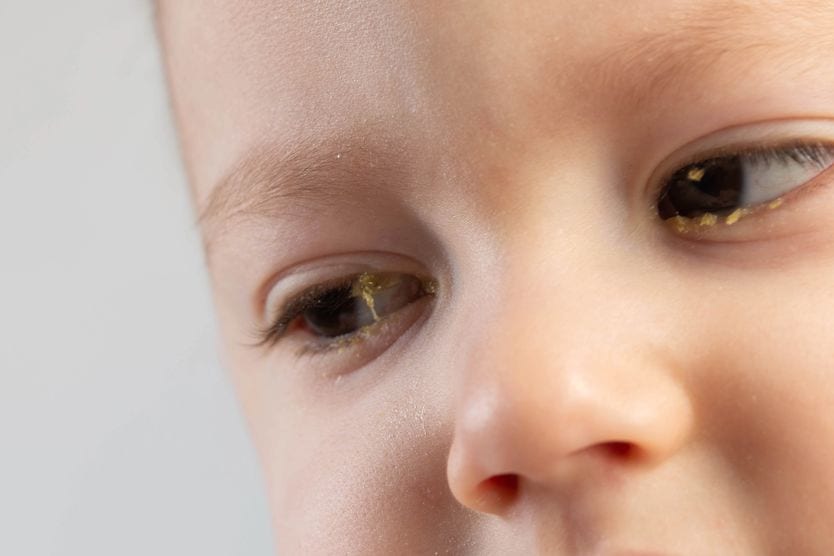
Bacterial conjunctivitis occurs when harmful bacteria enter the eye, and it is usually only present in one eye. Discharge that occurs with bacterial conjunctivitis is more pus-like than the discharge that occurs with viral pink eye. The thickness of bacterial discharge can cause the eyes to have trouble opening and closing and can appear yellow, green or even gray in color.
It can be difficult to tell the difference between viral and bacterial conjunctivitis, so consult with your child's pediatrician or eye doctor if you suspect conjunctivitis.
Neonatal conjunctivitis
Neonatal conjunctivitis is any type of conjunctivitis that happens in a baby's first 30 days. It may cause newborn eye discharge, swollen eyelids or other symptoms.
Neonatal conjunctivitis may need to be treated and monitored for a little while. A doctor will help you find an effective treatment depending on the cause and which type your newborn has.
For example, if it's caused by bacteria, the doctor may prescribe antibiotics in an eye ointment, liquid, or other form. They may also suggest regularly rinsing your baby's eyes with sterile saline solution to help clear any drainage.
Allergies
Seasonal eye allergies or sensitivities to environmental factors, including smoke, pollen, dust, pet dander, etc., can cause inflammation of the conjunctiva (allergic conjunctivitis). The inflammation can cause the eyes to produce a watery discharge, and if the reaction is severe enough, an infection may also develop.
Stye
A stye is a painful, pimple-like bump that occurs when an eyelash follicle or eyelid oil gland becomes infected. A stye typically causes redness, discomfort and some swelling in the affected eye. Yellow pus may also be present with a stye, as well as discharge if the stye pops.
SEE RELATED: Sticky eyes: Causes and treatment
Eye injury/object in eye
If the eye is injured or if a foreign object (such as a child’s toy, dirt or debris) enters the eye, a watery discharge may be secreted as part of the eye’s natural protective response. Eye injuries should be evaluated by an eye doctor as soon as possible for proper care, especially if eye discharge or blood in the eye (subconjunctival hemorrhage) is present.
Blocked tear ducts in infants
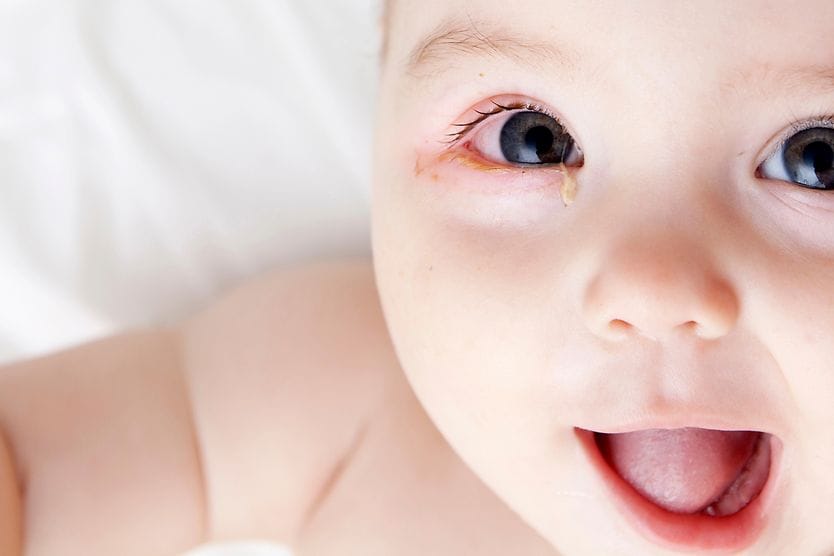
Many babies are born with obstructed nasolacrimal ducts (tear ducts), which can cause tears to drain improperly and lead to watery eyes and/or mild discharge. One of the key symptoms of obstructed tear ducts in babies is significant pooling of tears, which can occur with or without crying.
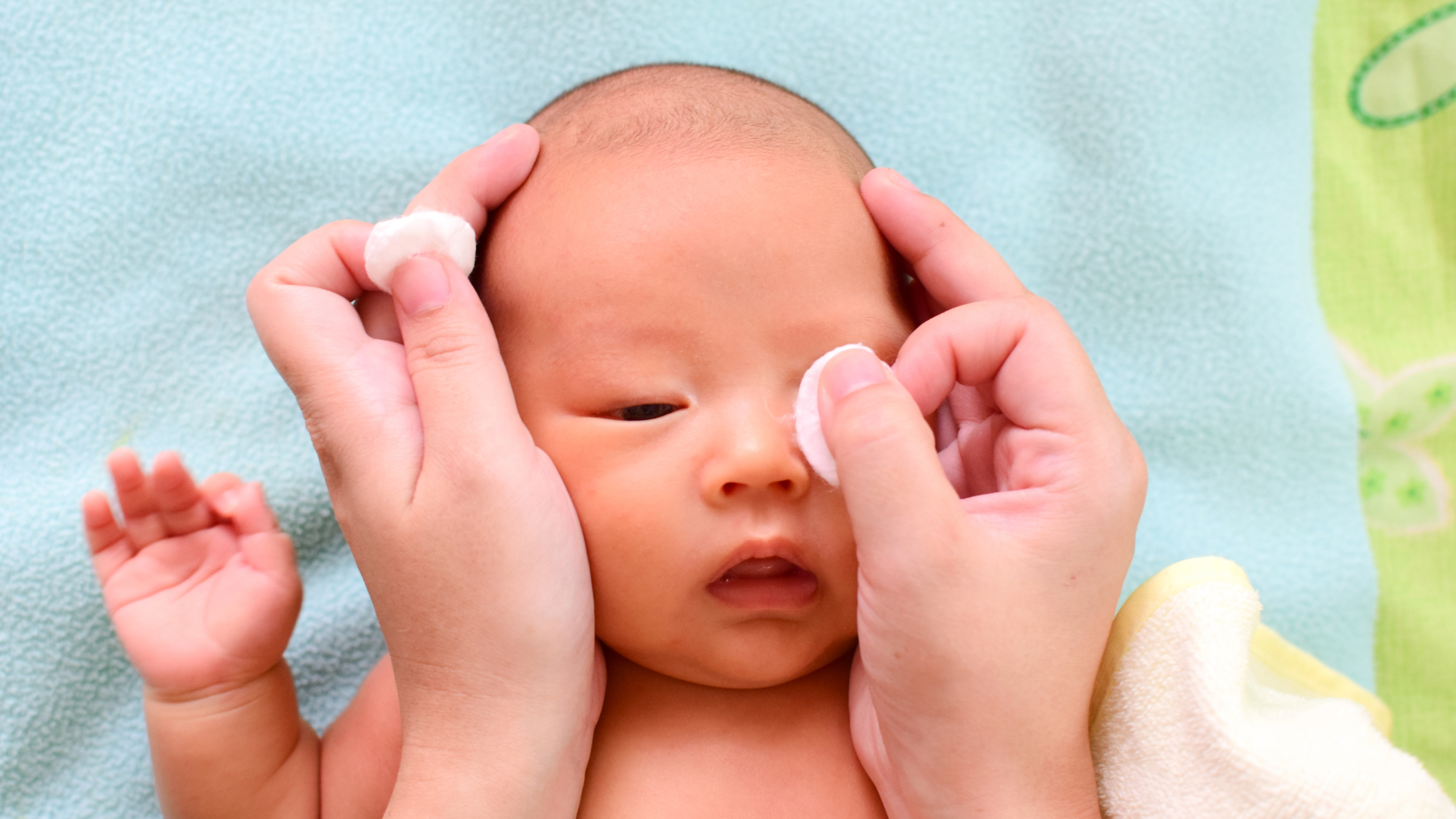
If you notice your baby is experiencing eye discharge or goopy eyes, keep the eye area clean and wipe it when needed with a clean, damp washcloth. A gentle massage of the area can help unblock the tear duct.
Some blockages can lead to a tear duct infection and cause eye redness, eyelid swelling and yellow or green discharge. Your child's eye doctor may prescribe antibiotic eye ointment to treat this.
How to manage eye discharge in toddlers and babies
Managing eye discharge in toddlers and babies depends on the cause and severity of the case. Keeping the area clean and wiped free of discharge is a priority. Mild eye discharge could be taken care of at home by:
- Avoiding irritants that may have caused an allergic reaction
- Safely cleaning your child's eyes by wiping away discharge with a clean washcloth or cotton swab as needed
- Applying a warm compress for discharge caused by infection, stye or blocked tear duct
- Gently massaging the eye area for discharge caused by a blocked tear duct or stye
- Applying a child-safe lubricating eye ointment or natural tears found over the counter at a pharmacy or retail store if dryness is present
Help your toddler to wash his or her hands frequently if an eye infection occurs or if their eyes become irritated or produce frequent discharge. While home treatments can help relieve eye discharge in your child, infections may require antibiotics prescribed by an eye doctor.
When to see a doctor for eye discharge in babies and toddlers
Because of their age and stage of development, very young children are not always able to verbally express symptoms of an eye condition, regardless of whether it is mild or severe. Many different things can cause eye discharge in newborns, babies and toddlers. Without a doctor’s help, it can be hard to know how long the discharge will last or whether it needs treatment.
It is important to take note of the following symptoms that may accompany eye discharge in your child:
- Redness
- Swelling
- Pain
- Constant rubbing or touching of the eye
- Trouble opening or closing the eye
- Yellow or green discharge
- Discharge that is especially thick in texture
- Discharge that lasts longer than a few days
It may be necessary to contact an eye doctor if your child experiences eye discharge for more than a few days, whether or not additional symptoms are present, in order to address the issue completely. Although eye discharge can often be remedied at home, some cases may require evaluation and treatment from an eye doctor to prevent further problems.
READ NEXT: Treating swollen eyes in toddlers