Esotropia: Causes, treatments and management
What is esotropia?
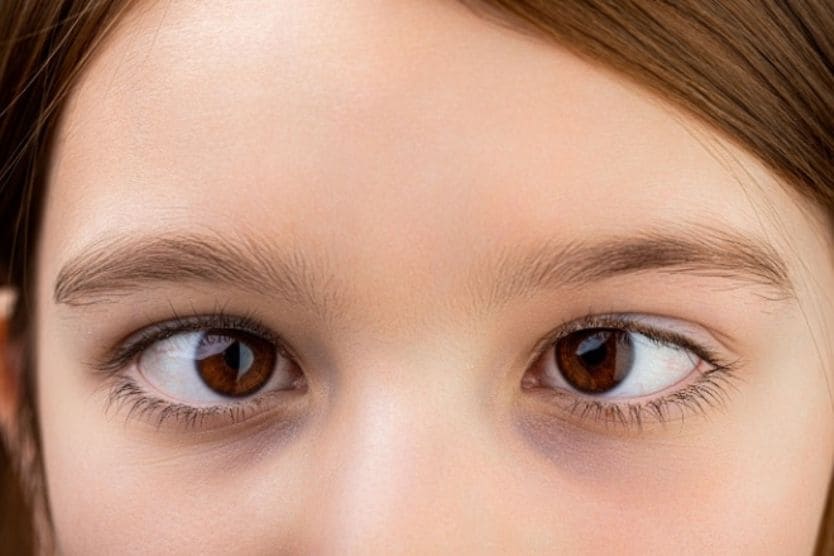
Esotropia is a type of strabismus (when your eyes are not in alignment or there’s a problem with your eye movement). In esotropia, one or both eyes turn in toward your nose. Sometimes, this is also referred to as being cross-eyed. It can be inherited or caused by an underlying condition.
Esotropia is a fairly common eye condition, especially in children. However, it can appear at any age and may even recur or decompensate in adulthood if it isn’t treated.
Normally, your eyes work together to create a single image (binocular vision). This also helps with depth perception. Esotropia can interfere with binocularity, leading to symptoms such as blurry or double vision. However, vision restoration and the prevention of vision loss are possible, especially with early diagnosis and treatment.
SEE RELATED: Eye muscles and their function
Types of esotropia
There are several different types of esotropia, depending on when the condition appears and what causes it.
Congenital esotropia
Congenital esotropia is when the condition is present at birth. It’s common for infants to have brief, intermittent eye misalignment in the first few months of life, sometimes called ocular instability of infancy. This typically resolves on its own by around 3 months of age.
True congenital, or infantile, esotropia is different. This condition is a constant, usually large-angle inward turn that begins before 6 months of age and rarely goes away without treatment. Early alignment gives infants the best chance of developing binocular (3D) vision. If there is any constant eye crossing, or intermittent crossing that continues past 3 to 4 months of age, it is recommended to see a pediatric ophthalmologist or pediatric optometrist for further evaluation.
Accommodative esotropia
Accommodative esotropia is when the eyes turn inward with accommodation (when the lens of the eye adjusts so the eye can focus on a near object). It can develop most commonly between ages 2 and 4, with an average onset around the middle of the second year of life. Onset before age 1 is uncommon but possible, since the eyes’ ability to focus (accommodation) isn’t fully developed until about 3 to 4 months of age.
Sometimes, esotropia can indicate hyperopia (farsightedness), when things that are farther away appear clearer than closer objects. Being more farsighted can make it more likely your eyes will cross as they try to focus on an object or image. Accommodative esotropia can be treated with glasses or contact lenses to help the eyes focus, which then helps them straighten out.
Acquired esotropia
When esotropia manifests later in life (anywhere from late childhood to adulthood), it is called acquired esotropia. This kind of esotropia could indicate a problem with the brain or nerves, so testing to rule out any dangerous causes is necessary.
These conditions could include:
- Trauma, eye or head injury
- An underlying disease, like diabetes or myasthenia gravis
- Brain tumor
- Muscle or nerve damage (such as a sixth cranial nerve palsy)
This kind of esotropia is also typically non-accommodative, meaning it can’t be fixed with glasses.
Note: It is recommended to seek emergency care if you experience sudden-onset esotropia with double vision since some of these conditions require urgent treatment.
Symptoms and causes of esotropia
Esotropia can have a variety of causes and symptoms, depending on the specific type.
What causes esotropia?
Esotropia can be inherited or caused by a genetic mutation (changes that occur in DNA, leaving it incomplete or damaged). It can also be caused by another condition. Esotropia could be eye-related, as in cataracts or an eye injury. This is known as sensory esotropia, when vision in one eye is significantly reduced early in life. It can be caused by a congenital cataract, corneal scarring or trauma that can blur or block the image. If this happens, it could lead the brain to lose the drive to keep that eye aligned, and drift inward. It could also be related to another part of the body, like a brain or neurological condition.
Some causes could include:
- Stroke
- Increased pressure in the brain (sometimes called intracranial hypertension)
- Brain tumor
- Diabetic neuropathy (nerve damage caused by diabetes)
There are certain things that can also increase your chances of having esotropia. These could include:
- A family history of esotropia or strabismus
- Premature birth, or alcohol and substance use during pregnancy
- Being farsighted, especially to a high degree
SEE RELATED: How DNA health testing can detect eye diseases
What are common symptoms?
The most notable symptom of esotropia is that your eyes turn inward. They may not move in tandem, and you may need to squint or turn your head to see better.
Other symptoms could include:
- Issues with depth perception
- Double vision
- Amblyopia (when the brain favors one eye during visual development, leaving the other eye’s best-corrected vision reduced)
SEE ALSO: Gradual or sudden vision changes: Is this normal?
How is esotropia diagnosed and treated?
Esotropia is usually diagnosed or assessed through an eye examination. If a neurological cause is suspected, additional imaging tests may be performed.
Diagnosing esotropia
Anyone with esotropia will need to be examined by an optometrist or an ophthalmologist (both are eye specialists, but you may be referred to an ophthalmologist because they have additional training and specializations).
During the examination, the eye doctor may dilate your pupils to see the internal eye structures more easily and test your eyes’ alignment and focus. They may also perform measurements of your gaze from different positions.
SEE RELATED: Tests in an eye exam
Cover testing
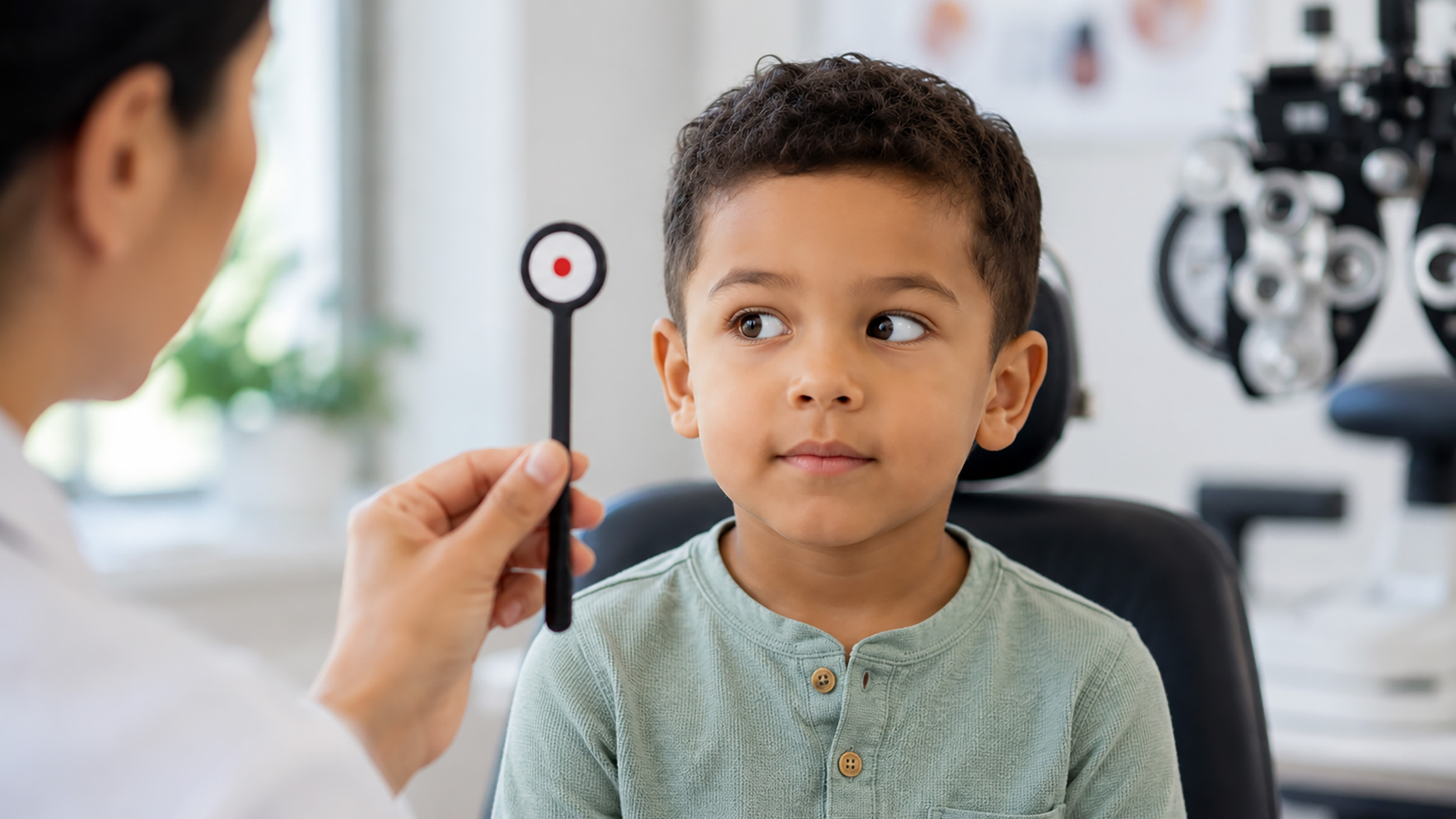
Cover testing is typically used to diagnose the extent of strabismus. To identify a condition like esotropia, the examiner will cover one eye and observe the uncovered eye while directing your gaze at a fixed target. If the uncovered eye moves outward to focus on the target, it’s a sign of esotropia.
The alternate cover test may be performed after. In this test, the examiner will switch which eye is covered. This measures the deviation of the gaze, and how fast it takes the eye to focus may indicate how much control the eyes have over the deviation.
SEE ALSO: Check your vision
Treatment options for esotropia
There are several options for treating esotropia. Treatment typically focuses on improving weak or double vision, making the eyes straighter, and improving how they work together. This can be done with nonsurgical or surgical treatments.
Getting treatment for a condition that’s causing esotropia can help, too.
Nonsurgical treatments
For accommodative esotropia, glasses or contact lenses can help the eyes focus and correct for any farsightedness. In some cases, prismatic glasses may be used. Eyeglasses with prisms redirect light to land in your eye a certain way to correct double vision.
Vision therapy helps the brain and eyes communicate more effectively and work together as a team. It is used when vision develops unequally between the eyes (amblyopia) or when the eyes are misaligned. It involves eye exercises, combined with glasses, prisms, and blocking or blurring vision in one eye with a patch or eye drops.
Botulinum toxin injection is another treatment that may help esotropia. Its effects on certain muscles may help the eyes recover alignment. It works by temporarily weakening the muscle pulling the eye inward, which can allow the eyes to realign. While the effect lasts typically a few months as a standalone treatment, it is also sometimes used alongside surgery.
READ MORE: What is vision therapy for children?
Surgical treatments
Surgery may be needed for severe strabismus. Surgery typically involves detaching and reattaching, or tightening or loosening, certain eye muscles. This corrects misalignment and straightens the eyes.
Although it depends on the surgical approach, the success rates for strabismus surgery are generally high, ranging from 50% to 81%. However, multiple surgeries may be needed over time. Some surgeons use an adjustable suture technique, which allows the position of the eye muscle to be fine-tuned in the hours or days after surgery. Studies associated with this approach tend to see a lower rate of needing a repeat operation.
Strabismus surgery will help your eyes work better together, but you may still need glasses for any refractive errors (a vision problem where light doesn’t hit your eye correctly, like hyperopia).
READ MORE: Strabismus surgery
Esotropia vs. other eye conditions
There are several conditions, like esotropia, that describe changes in eye movement or alignment.
Esotropia vs. strabismus
Strabismus describes any eye condition where one eye turns in a different direction than the other. Esotropia is a specific kind of strabismus, where one or both eyes turn inward.
Amblyopia vs. esotropia
Amblyopia (also called lazy eye) is when one eye has blurry or worse vision than the other. It can be caused by anything that interferes with developing vision, causing the brain to rely on sight from one eye more than the other. This includes strabismus, like esotropia, which may cause the development of vision in one eye to be worse.
Exotropia vs. esotropia
While esotropia means one or both eyes turn inward, exotropia means one or both eyes turn outward (in the direction of your ears).
Living with esotropia
If a child is born with esotropia, you should carefully monitor them over time. In many cases, it may resolve without any intervention. But if it persists past the age of four months, or if your child’s eyes are constantly crossed, you should consult a pediatrician.
Esotropia can affect factors other than vision. In some cases, it can cause social difficulties or low self-esteem. Identifying and treating this condition early can help these aspects, in addition to helping vision develop normally.
Getting the proper care can help restore good vision and prevent any vision loss, so regular follow-ups with an eye doctor are important for the most effective treatment. Multiple treatments and examinations may be needed over time.
Surgery straightens the eyes, but restoring full binocular teamwork (stereopsis) isn’t guaranteed. Outcomes can vary and are generally best when alignment is achieved early. Some people still need glasses, vision therapy, botulinum toxin injections or an additional surgery afterward.
Taking control of esotropia
Esotropia, when one or both of your eyes turn inward, may cause vision side effects or a problem with vision development. It’s important to intervene and treat this condition early to prevent permanent problems. But with treatment, good vision is possible. It’s important to consult with an eye doctor to determine the most effective treatment for you or your child.
READ NEXT: Your baby’s vision: How it develops and what to expect