Can rheumatoid arthritis affect your eyes?


On this page
Rheumatoid arthritis causes inflammation in the joints and eyes
How does rheumatoid arthritis affect the eyes?
Rheumatoid arthritis eye problems
Retinal vasculitis
Long-term eye problems
Managing rheumatoid arthritis eye symptoms
When to see an eye doctor
On this page
Rheumatoid arthritis causes inflammation in the joints and eyes
How does rheumatoid arthritis affect the eyes?
Rheumatoid arthritis eye problems
Retinal vasculitis
Long-term eye problems
Managing rheumatoid arthritis eye symptoms
When to see an eye doctor
Rheumatoid arthritis causes inflammation in the joints and eyes
Rheumatoid arthritis (RA) is an autoimmune disease that can cause inflammation in the body. It primarily affects the joints by attacking the synovium, the connective tissue lining the joints. It can also impact connective tissues in the eyes, potentially leading to eye and vision complications.
The immune system normally helps protect the body from infection and heal after injury or damage. Autoimmune disorders, including rheumatoid arthritis, occur when the body’s immune system targets healthy tissues by mistake. This can lead to inflammation and discomfort in the areas being “attacked” by the immune system.
How does rheumatoid arthritis affect the eyes?
Rheumatoid arthritis targets the lining of the joints, which is made up largely of a protein called collagen. Collagen is also a primary component of the cornea (the clear, dome-shaped layer at the front of the eye) and the sclera (the white of the eye). The presence of collagen in tissues in and around the eyes can make them vulnerable to inflammation caused by rheumatoid arthritis.
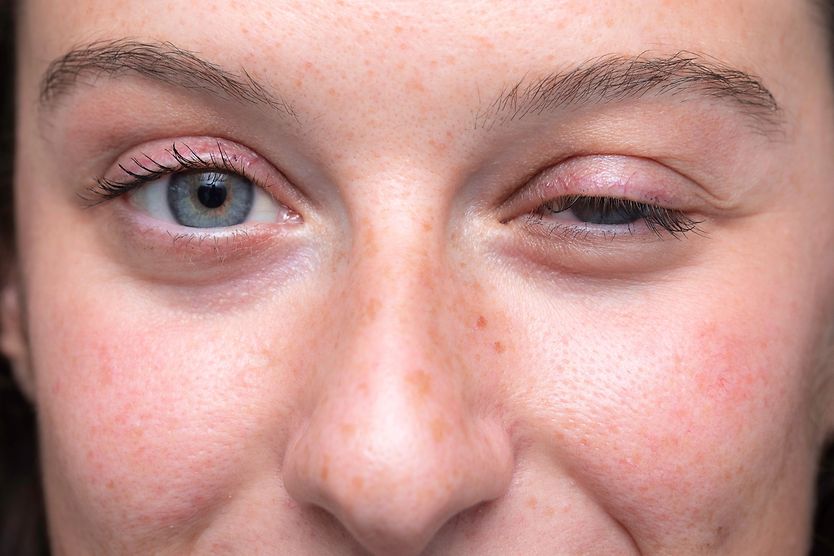
Eye dryness is a common symptom experienced by people with rheumatoid arthritis. The condition can affect the eye’s surface along with the glands responsible for keeping the eye moist, including the lacrimal glands and meibomian glands. This can interfere with tear production and lead to dry eye disease.
Eye inflammation is another common ocular symptom of rheumatoid arthritis. When the immune system attacks collagen-rich tissues within the eye, certain eye tissues may become irritated and inflamed.
Rheumatoid arthritis can also affect the eyes in other ways, potentially leading to additional signs and symptoms. Over time, other serious eye diseases, such as cataracts and glaucoma, can also sometimes develop.
Rheumatoid arthritis eye problems
Rheumatoid arthritis may cause several eye-related issues. Though they might vary in severity, they can often be managed or prevented with timely treatment. Eye conditions associated with rheumatoid arthritis can include:
Dry eyes
Dry eye syndrome, also called dry eye disease (DED) and keratoconjunctivitis sicca (KCS), is a condition in which the eye’s surface and tear film layer is destabilized. Inflammation caused by rheumatoid arthritis can damage the glands that help lubricate the eyes, leading to eye dryness.
When dry eye occurs alongside rheumatoid arthritis, it can be due to associated Sjögren’s disease, a related autoimmune condition that affects moisture-producing glands. Sjögren’s disease can also occur alone (primary Sjögren’s disease), without an underlying condition.
Dry eye disease is also associated with other autoimmune diseases, such as systemic lupus erythematosus (SLE), scleroderma and systemic sclerosis (SSc).
People with dry eye disease often experience the following symptoms:
- A stinging or burning sensation
- Blurry vision
- Eye redness
- Itchiness
- Photophobia (light sensitivity)
- Foreign body sensation (a feeling of having something in your eye)
- Epiphora (excessive tearing)
- Eye discharge
- Difficulty or discomfort wearing contact lenses
Uveitis
Uveitis develops when the uvea, the middle portion of the eye, becomes inflamed. The uvea is comprised of the iris (the colored part of the eye), the ciliary body (a muscular structure that helps the eye to focus and produces aqueous fluid) and the choroid (a thin layer made mostly of blood vessels). Each of these parts plays a critical role in the eye’s ability to see.
While uveitis may be associated with certain types of arthritis, it does not typically result from rheumatoid arthritis. However, people with rheumatoid arthritis may develop secondary uveitis in association with other arthritis eye conditions such as psoriatic arthritis, juvenile idiopathic arthritis (JIA), ankylosing spondylitis, reactive arthritis and enteropathic arthritis.
Uveitis is often categorized according to the part of the uvea affected:
- Anterior uveitis – Involves the iris and/or the ciliary body.
- Intermediate uveitis – Affects the pars plana (a part of the ciliary body), the vitreous humor (a gel-like substance in the center of the eye) and the peripheral retina.
- Posterior uveitis – Impacts the choroid and the retina (the light-sensitive membrane at the back of the eye). It can also affect the optic nerve (the structure that sends visual information from the eye to the brain).
- Diffuse uveitis or panuveitis – Involves all parts of the uvea.
Symptoms associated with uveitis may include:
Uveitis can go through periods of flare-up and remission. But any symptoms should be evaluated by an eye doctor as soon as possible. Without treatment, the condition can potentially lead to vision complications.
Scleritis
The sclera functions as the outer wall of the eye. It helps give the eye its shape and protect the structures within it. Rheumatoid arthritis can target the woven, web-like collagen fibers that make up the sclera. Inflammation of these tissues is called scleritis.
Scleritis can occur in the front part of the sclera (anterior scleritis) or in the back portion (posterior scleritis). In some cases, it can involve both the front and back of the sclera at the same time.
Rheumatoid arthritis may affect the sclera in various ways. Inflammation across the scleral surface is a common type of scleritis. Though less common, raised nodules can form in areas of the sclera (nodular scleritis). More rarely, the scleral tissue can erode (necrotizing scleritis).
People with scleritis may experience:
- Sharp, severe eye pain that develops over several days
- Eye tenderness
- Eye redness
- Swelling of the sclera
- Excessive tearing
- Light sensitivity
- Blurry vision
Scleritis can affect vision in some cases, especially without treatment. Symptoms of the condition warrant prompt evaluation by an eye doctor.
Episcleritis
Episcleritis is the inflammation of the episclera, the thin layer of tissue covering the sclera. It is a common eye-related effect of rheumatoid arthritis. Similar to scleritis, episcleritis can appear in simple or nodular forms.
Symptoms of episcleritis may include:
- Eye redness
- Mild eye pain or discomfort
- Tenderness to touch
- Light sensitivity
- Excessive tearing
Episcleritis may resolve on its own in some cases, and may require treatment in others. However, it’s not uncommon for the condition to recur.
Keratitis
Keratitis is a condition in which the cornea becomes inflamed. There are many different types and causes of keratitis. Peripheral ulcerative keratitis (PUK) is the type commonly associated with rheumatoid arthritis.
Peripheral ulcerative keratitis is a condition in which inflammation deteriorates the cornea. Inflammatory damage usually appears as a crescent shape in the limbus area, which borders the cornea and the sclera.
Symptoms of peripheral ulcerative keratitis may include:
- Foreign body sensation
- Light sensitivity
- Blurry vision
- Eye pain
- Excessive tearing
Any symptoms of PUK should be evaluated by an eye doctor as soon as possible. The condition can potentially affect vision and lead to other complications without timely treatment. PUK can lead to perforation of the cornea, which is an ocular emergency.
Retinal vasculitis
Retinal vasculitis is a condition in which the blood vessels in the retina become inflamed. In some cases, it can be associated with inflammation in the body related to rheumatoid arthritis.
Rheumatoid vasculitis is a rare condition associated with rheumatoid arthritis. It occurs in approximately 1% to 5% of people with rheumatoid arthritis. Among those with rheumatoid vasculitis, around 9% experience retinal vasculitis.
Symptoms of retinal vasculitis may include:
- Blurry vision
- Floaters
- Photopsia (flashes of light)
- Scotomas (blind spots in vision)
- Changes in color vision
- Metamorphopsia (distorted vision)
- Eye pain
Without proper management, retinal blood vessel inflammation can significantly impact vision. Timely treatment is key to reducing the risk of vision loss.
Long-term eye problems
Rheumatoid arthritis can also lead to other potentially serious, long-term eye conditions, some of which may include:
Cataracts
Cataracts occur when the clear, natural crystalline lens of the eye becomes cloudy and opaque. It is very common for people to develop cataracts as they get older. However, those with rheumatoid arthritis may be more susceptible to getting cataracts, although this is considered more of an indirect effect associated with the disease.
Prolonged steroid use in patients with rheumatoid arthritis may contribute to early cataract development and is thought to be a primary factor in the increased risk.
Symptoms associated with cataracts may include:
- Blurring or hazy vision
- Seeing glare and/or halos around lights
- Light sensitivity
- Difficulty seeing in low light conditions
- Dull, diminished color vision
- Diplopia (double vision)
- Vision prescription changes (especially worsening near vision)
Cataracts are commonly treated with cataract surgery. However, left untreated, cataracts can lead to vision loss.
Glaucoma
Glaucoma is a group of eye diseases that damage the optic nerve, which is a critical part of vision. While it can be caused by various factors, glaucoma is often associated with elevated intraocular pressure (IOP), the pressure within the eye. Over time, high eye pressure may compress the optic nerve, causing damage that can be sight-threatening.
Rheumatoid arthritis can contribute to an increased risk of developing glaucoma. However, it is considered more of an indirect effect.
Long-term corticosteroid use, which may be prescribed to treat rheumatoid arthritis, is thought to contribute to this risk. Potential side effects and how they might affect any underlying conditions should be discussed with your healthcare team.
The early stages of glaucoma do not usually present symptoms. When symptoms occur, they may include:
- Headaches
- Eye pain
- Blurry vision
- Nausea and vomiting
- Blind spots in vision
- Seeing halos around lights
Glaucoma can lead to vision loss, especially without treatment. Since symptoms aren’t typically present in the initial stages, having annual comprehensive eye exams is critical for detecting the condition early.
Age-related macular degeneration (AMD)
Age-related macular degeneration is a condition that damages the macula, the portion of the retina responsible for providing sharp vision. AMD affects central vision, which is what you see in your direct line of sight. Research suggests that people with rheumatoid arthritis may have a 40% higher risk of developing AMD.
There are two primary types of age-related macular degeneration: wet AMD and dry AMD. The early stages of the disease typically do not produce any symptoms. As it progresses, one or more of the following symptoms may develop:
- Blurry vision
- Distorted vision (such as straight lines that appear wavy)
- Difficulty seeing in dim conditions
- Blank spots in vision
- Changes in color vision
Vision changes caused by AMD can eventually affect everyday life. Annual comprehensive eye exams can allow for early detection of the condition.
Managing rheumatoid arthritis eye symptoms
Each eye condition related to rheumatoid arthritis has its own treatment. Depending on the condition, this may involve lubricating eye drops, topical or oral prescription medications, or other treatments to reduce inflammation or address its effects.
Your optometrist or ophthalmologist may also collaborate with your rheumatologist to determine the appropriate course of care for your eye health.
Managing rheumatoid arthritis and the inflammation it causes may also help reduce the risk or severity of some eye-related complications. Treatments commonly include medications, such as:
- Disease-modifying anti-rheumatic drugs (DMARDs)
- Analgesics (such as non-steroidal anti-inflammatory agents (NSAIDs) and acetaminophen)
- Biologic agents
- Janus kinase (JAK) inhibitors
- Corticosteroid (steroid) treatments
Some medications used to treat rheumatoid arthritis can have eye-related effects, especially with prolonged use. For example, certain medications have been associated with eye diseases, such as cataracts, glaucoma and macular edema (fluid buildup in the macula that leads to swelling). Hydroxychloroquine, a medication commonly used to treat rheumatoid arthritis, can cause retinal toxicity with long-term use. This can lead to retinal damage, including damage to the center of the retina (the macula) called "bull's eye maculopathy.”
If you take medications for rheumatoid arthritis, it is important to let your eye doctor know about any new or changing eye or vision symptoms, as they could potentially be related to your treatment.
Additional strategies may also be suggested to help manage rheumatoid arthritis and its eye-related effects, such as:
- Resting during flare-ups
- Eating foods that may help to avoid or reduce inflammation
- Taking certain nutritional supplements that may help avoid or reduce inflammation
- Getting regular exercise that increases range of motion, strength and endurance
- Attending eye exam appointments as recommended by your eye doctor
- Attending medical appointments as recommended by your healthcare team
It is recommended that you talk with your medical provider before beginning any new at-home therapies or supplements.
When to see an eye doctor
If rheumatoid arthritis is causing dry eye, inflammation or other eye-related signs or symptoms, schedule a comprehensive eye exam with your eye doctor as soon as possible. It’s also important to notify your eye doctor promptly if you notice any vision changes. During the visit, your eye doctor may be able to further explain the relationship between rheumatoid arthritis and the eyes and how to protect your vision.
If you're starting a new rheumatoid arthritis medication, make sure to get an eye exam to screen for ocular side effects.
On this page:
Rheumatoid arthritis causes inflammation in the joints and eyes
How does rheumatoid arthritis affect the eyes?
Rheumatoid arthritis eye problems
Retinal vasculitis
Long-term eye problems
Managing rheumatoid arthritis eye symptoms
When to see an eye doctor
On this page:
Rheumatoid arthritis causes inflammation in the joints and eyes
How does rheumatoid arthritis affect the eyes?
Rheumatoid arthritis eye problems
Retinal vasculitis
Long-term eye problems
Managing rheumatoid arthritis eye symptoms
When to see an eye doctor