Molluscum contagiosum in the eye: Causes, symptoms and treatment


What is molluscum contagiosum?
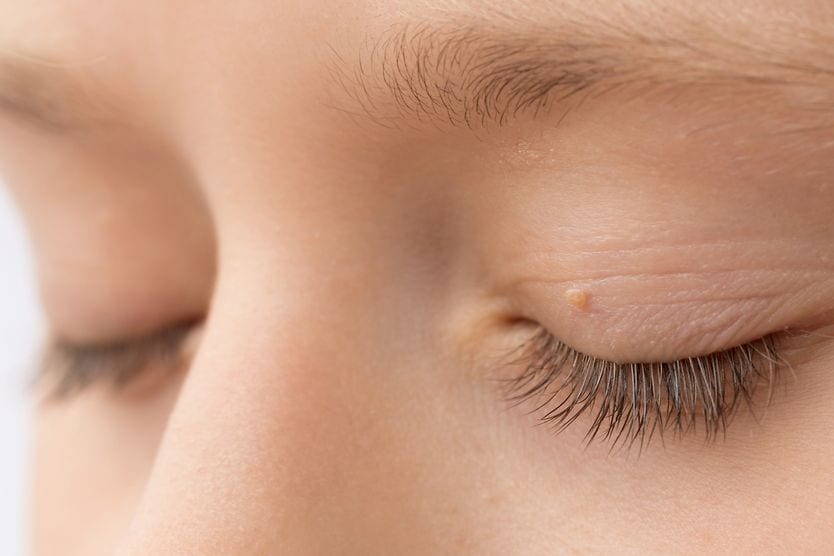
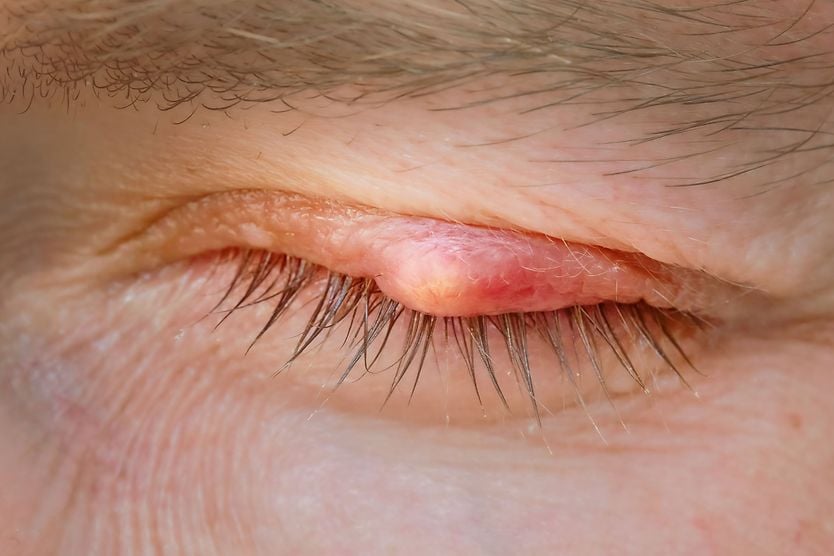
Molluscum contagiosum is a viral skin disease. It causes small bumps to grow on your skin. They may be pink or skin colored and are usually umbilicated (indented in the center). When these bumps grow on the eyelid or near the eye, it’s called ocular or periocular molluscum.
Molluscum contagiosum infection is almost always limited to the skin. In rare cases, mostly in people with weakened immune systems, bumps can form on the surface of the eye itself. Usually, the spots that grow on the skin are the only symptom. However, if the bumps are around the eye, they may cause itching, irritation or eye redness.
Causes and risk factors of molluscum contagiosum in the eye
Molluscum contagiosum is caused by the molluscum contagiosum virus (MCV), a type of poxvirus. It can get in through breaks in the skin and cause infection. The incubation period (time between infection and when you start to show symptoms) can be as short as a couple of weeks or as long as six months. If you are infected, you may not show symptoms right away.
The virus can spread through touch. Touching another person who has the virus, or touching something they have touched, may cause it to spread from person to person. Someone with molluscum contagiosum can also spread the infection from one part of their body to another. This can happen if they touch the infected area, then touch a different part of their body. When this happens, it’s called autoinoculation. For instance, molluscum contagiosum of the eyelids may occur because someone touches bumps elsewhere on their body and then rubs their eyes.
Molluscum contagiosum isn’t an inherited condition. It’s always acquired. In children, it usually spreads through everyday skin contact. In adults though, molluscum contagiosum most often spreads through sexual contact and tends to appear in the genital area, so bumps on an adult’s face or eyelids are less typical.
Because of how it spreads, one of the main risk factors for molluscum contagiosum is close contact with someone who is infected. Other risk factors can include:
- Crowded living spaces, especially in warmer or more humid climates
- Sharing items that are likely to pass on infection (like towels, clothes, toys or sports/gym equipment)
- Preexisting skin conditions (like eczema) or breaks in the skin barrier
- Age (it’s most common in children ages 1 to 14)
- Immunocompromised status (a weakened immune system that has a harder time fighting infections)
SEE ALSO: Eye infections: Different types and when to get help
Recognizing the symptoms of molluscum contagiosum in the eye
The virus that causes molluscum contagiosum causes small lesions to grow on the skin. These lesions can grow in most places on the body, including the eyelid or surrounding skin.
Molluscum contagiosum lesions are usually:
- Raised with an indented center (umbilicated)
- Pink, white or skin colored
- Firm (though they may become softer)
These lesions may look like a pimple or a wart, especially in the early stages. Over time, they become larger, rounder and umbilicated.
When molluscum contagiosum spots grow near the eye, it’s called ocular or periocular molluscum. The lesions may cause itching or irritation in this area. If they’re close enough to the eye, they may also lead to a type of eye inflammation called follicular conjunctivitis (eye redness, or pink eye).
Follicular conjunctivitis is when inflammation causes follicles (small nodules) to grow on the conjunctiva, the membrane (or lining) that covers the inside of the eyelids and the eye’s surface. The symptoms may include:
- Red eyes
- Itching
- Burning or watery eyes
- Feeling like something is stuck in the eye
Other symptoms that may happen with ocular molluscum are photophobia (sensitivity to light) and blurry vision. These can be signs that the cornea (the clear front surface of the eye) has become inflamed. However, in many cases, the spots themselves are the only symptom of molluscum contagiosum. But it is possible for the spots to become painful or inflamed, especially if you scratch them.
SEE ALSO: Eyelid papilloma types, symptoms and treatments
How to differentiate molluscum contagiosum from other eye conditions
Molluscum contagiosum may resemble other eyelid growths or viral skin diseases. These may include:
- Basal cell carcinoma – A type of slow-growing skin cancer with a pearly appearance. It is more likely to bleed, and, unlike molluscum, it does not go away on its own. It also tends to occur in older adults.
- Warts – Often have a rough surface and sometimes black dots.
- Chickenpox – Often causes small blisters filled with fluid.
- Stye – Bumps on the eyelid that generally present with inflammation and swelling or tenderness. They tend to be larger than molluscum bumps.
If conjunctivitis is a symptom of molluscum contagiosum, it is often chronic (long-lasting). It’s thought to be a reaction to viral particles that repeatedly are shedding off the eyelid and into the eye.
The easiest way to distinguish spots caused by molluscum contagiosum is the umbilication. However, some of the appearances and symptoms may still overlap, so it is recommended that a doctor diagnose a growth or lesion, especially if it’s around the eye.
SEE ALSO: Eyelid cancer: Types, symptoms and treatments
Diagnosing molluscum contagiosum in the eye
Molluscum contagiosum is usually a straightforward diagnosis. In many cases, your doctor will only need to look at the spots to identify them. If the spots are near the eye, they may examine both the skin and the conjunctiva. Small bumps on the eyelid margin can hide among the lashes. An eye doctor may use a slit lamp (a microscope with a bright light) to check the lid margins closely, especially if you have inflammation that won’t go away.
However, molluscum contagiosum may resemble other skin lesions, especially if they’re irritated or inflamed. If the diagnosis isn’t definite, your doctor may want to take a biopsy for lab testing.
Treatment options for molluscum contagiosum in the eye
In many cases, the only treatment recommended for molluscum contagiosum is to let it heal on its own. Bumps typically go away within six months to a year, though some take longer. However, treatment for ocular molluscum may be recommended if:
- There are several bumps near the eye or on the edge of the eyelid
- There are symptoms, like conjunctivitis or bothersome itching and/or irritation
- There are cosmetic concerns related to the bumps
There are several dermatological treatments for molluscum contagiosum. Some can be performed in the dermatologist’s office. Treatments that can be used to remove molluscum contagiosum include:
- Curettage – The use of a special instrument called a curette to remove the bumps.
- Pulsed dye laser therapy – The use of a special laser that delivers energy to red blood cells near the bumps’ surface. The cells absorb the energy, eventually causing the bumps to shrink and go away.
- Cryotherapy – The use of extreme cold (like liquid nitrogen) to freeze tissue, eventually destroying it.
- Electrodesiccation – The use of an electrical current to dry out skin tissue.
Your doctor may also use a scalpel to open up the bump and then use forceps to push the waxy contents inside the bump (which contains the virus) out. However, this should only be performed by a doctor and should not be attempted at home.
Some treatments, including topical treatments (like creams or liquids), can be applied by your dermatologist in their office, while others may be used at home. However, topical treatments can’t always be safely used close to the eye because it’s a sensitive area. This can also make physical removal, like curettage, difficult. You may be referred to an ophthalmologist or other specialist for treatment.
SEE RELATED: How to treat an eyelid infection
Home remedies and precautions
In some cases, the only symptom of molluscum contagiosum is the spots themselves. Molluscum contagiosum will also typically go away on its own. But there are some ways you can help ease symptoms if needed.
The evidence for most home remedies is anecdotal, so it is best to consult your doctor before using any nonprescribed treatment. The eye is a sensitive area, so you should be mindful of anything you put on it. If your skin is dry or itchy, using a damp washcloth on it might be helpful.
It is not recommended to try removing the lesions yourself, and squeezing, picking and scratching at the bumps should be avoided. This potentially risks spreading molluscum contagiosum to other parts of your body or causing an infection.
Preventing molluscum contagiosum around the eye
For the most part, carrying on with your normal day-to-day activities has a low chance of spreading the infection. But there are still ways you can keep the spread to a minimum:
- If you can, cover the affected area with a bandage or clothes.
- Avoid sharing items, like towels or bedding.
- Try not to pick or scratch at the bumps.
- Wash your hands frequently.
When to see a doctor
If you aren’t sure if skin lesions are caused by molluscum contagiosum, it’s a good idea to see a doctor to confirm a diagnosis. This is especially true if you have a weakened immune system, or the spots are near your eyes. It is recommended for adults who have large (bigger than about 1 centimeter), numerous or long-lasting bumps on the face or eyelids to be checked, because this can be a sign of an immune system problem that hasn’t been diagnosed yet, including human immunodeficiency virus (HIV).
It’s also true if you have persistent symptoms, like conjunctivitis. This conjunctivitis can be chronic if caused by molluscum contagiosum, and may originally be missed as a diagnosis in favor of other more common causes.
See an eye doctor promptly if you have eye pain, sensitivity to light or blurry vision. Get care the same day if your eyelid becomes red, swollen and painful, especially with a fever, because this can signal a spreading infection around the eye.
SEE RELATED: What is similar to pink eye?
Final thoughts on managing molluscum contagiosum in the eye
Molluscum contagiosum is a viral skin disease that can cause small, umbilicated spots to grow on the skin. These spots can grow around the eye or eyelid. They do not generally cause symptoms, but an eyelid infection may cause chronic conjunctivitis.
Clinical management guidelines typically recommend letting molluscum contagiosum heal on its own. Treatment is rarely needed unless there are bothersome symptoms or the condition causes chronic conjunctivitis. A doctor will be able to diagnose and decide if further referral to a specialist is needed.
READ NEXT: What causes eyelid bumps, and are they a health risk?