Seborrheic keratosis around the eyes: Causes, symptoms and treatment


What is seborrheic keratosis around the eyes?
Seborrheic keratosis is one of several growths that eye doctors describe as an eyelid papilloma, which is a common type of eyelid tumor. Seborrheic keratoses are benign skin lesions (meaning they aren’t cancerous). They are common and often appear as a person ages. They don’t typically cause symptoms but can be removed if needed.
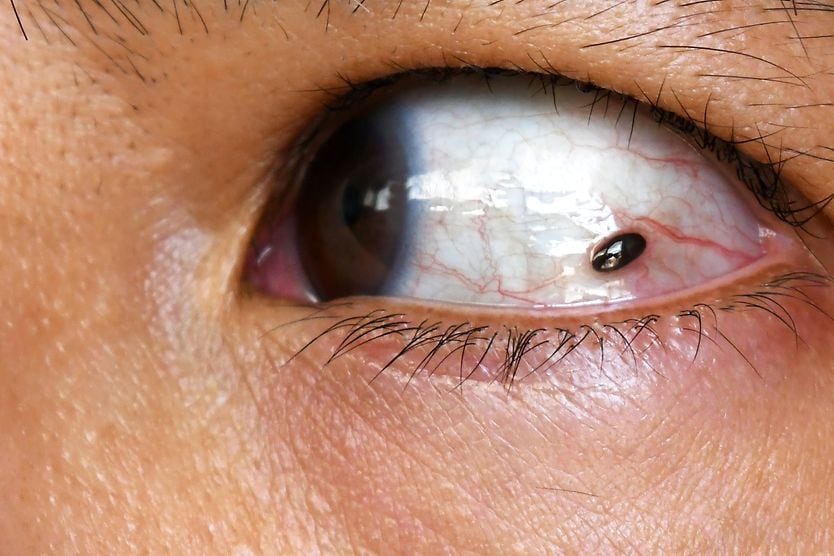
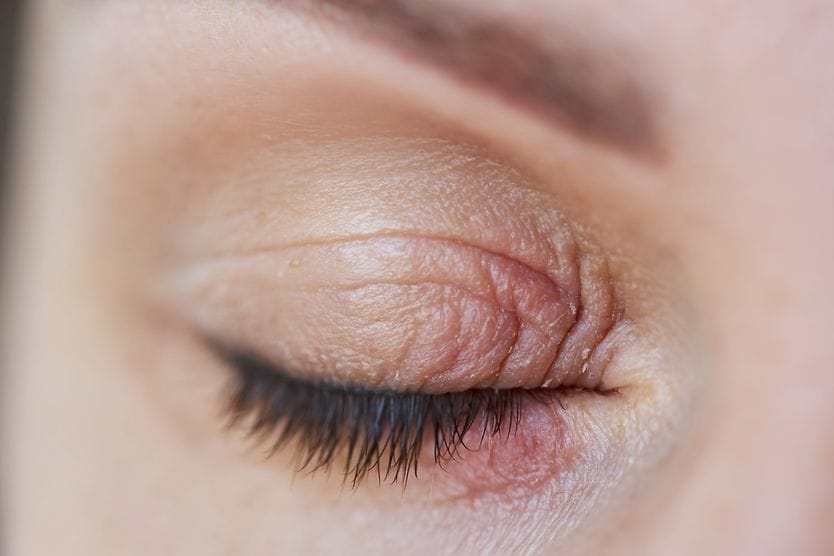
Seborrheic keratoses can form right at the eyelid edge near the lashes. A growth on the surface of the eye itself is usually something else and should be checked promptly.
Seborrheic keratoses are not contagious and are not considered precancerous. It’s normal to develop more of them over time.
Seborrheic keratoses can also look like other lesions that are cancerous. Growths should be examined by a dermatologist or health care provider to confirm the diagnosis.
Causes and risk factors of seborrheic keratosis
Seborrheic keratoses frequently happen with age. They appear most often in people aged 50 and older.
They are usually more common in people with lighter skin. However, there is a variant (dermatosis papulosa nigra) that tends to show up more often in people with darker skin.
The likelihood of developing a seborrheic keratosis may also run in families. Having family members with seborrheic keratoses may indicate you are more likely to develop one.
Seborrheic keratosis is acquired, not congenital. Researchers have found gene changes inside the growths themselves, including in FGFR3, a gene that helps control skin cell growth.
Other risk factors include:
- Sun exposure – Ultraviolet (UV) light exposure over time may play a role in seborrheic keratosis. Some growths appear on skin that rarely sees the sun too.
- Hormones – Seborrheic keratosis may be triggered or aggravated by hormonal changes, such as during pregnancy.
SEE RELATED: Can UV rays cause cancer?
Symptoms and appearance of seborrheic keratosis near the eyes
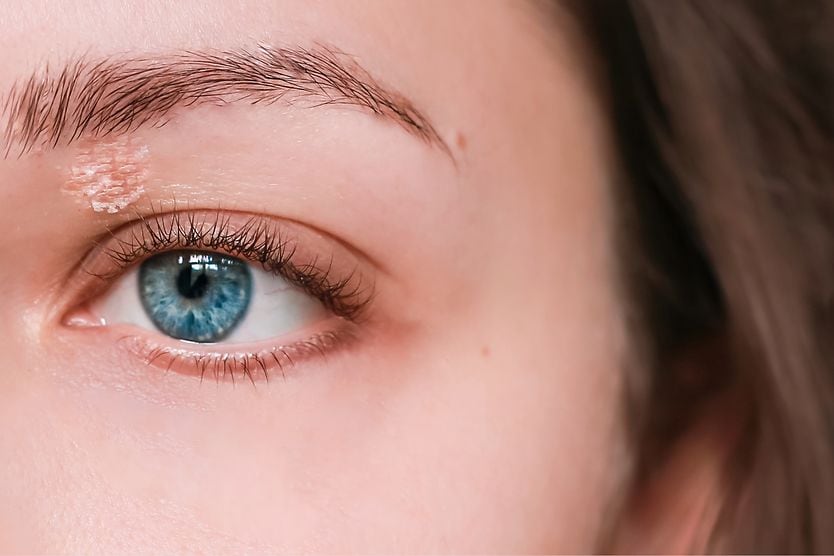
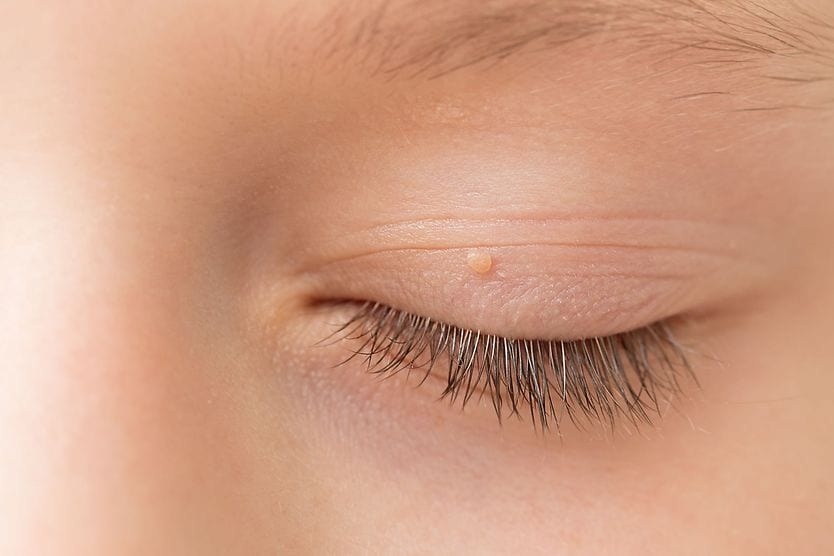
Seborrheic keratosis can look like a wart or a mole. It usually looks:
- Beige, tan, brown or black, sometimes yellow, gray or pink
- Roughly 3 to 20 millimeters in diameter
- Raised, like it’s been “stuck on” the face
- Round or oval in shape
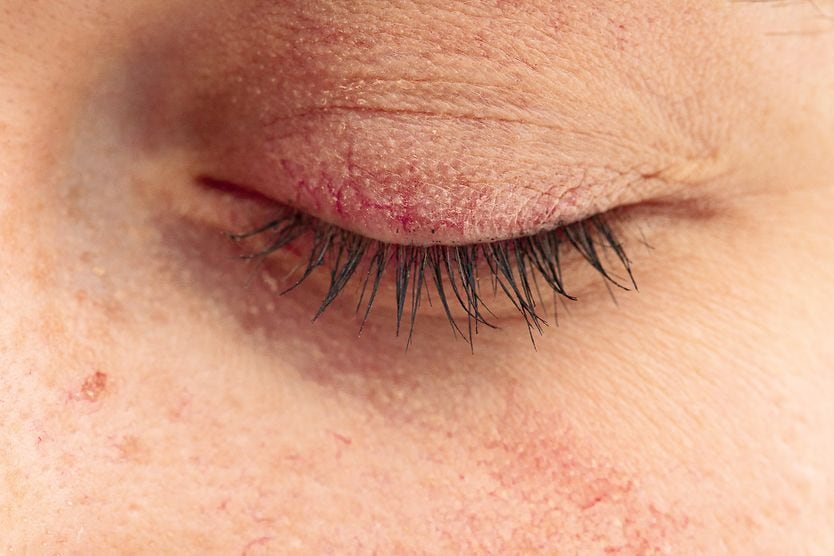
They may also look or feel scaly or waxy. Seborrheic keratoses have keratin on their surface, which is a protein that forms hair, nails and skin. This can make the keratosis look textured or like a scab.
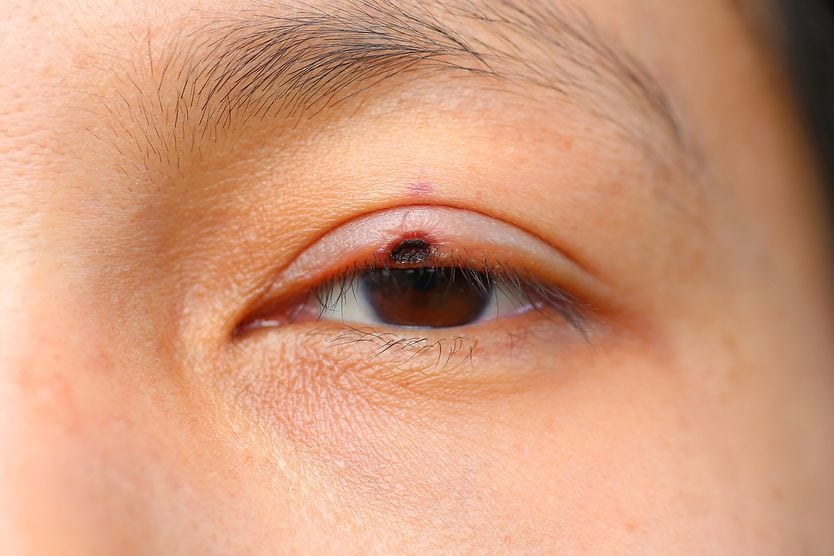
One thing to note: If the seborrheic keratosis sits at the edge of the eyelid, it could rub against and irritate the surface of the eye.
How to differentiate seborrheic keratosis from other eye lesions
Seborrheic keratosis can resemble many other skin conditions. Some of these are cancerous, so it’s important to tell the difference:
- Actinic keratosis – Actinic keratosis can appear very similar to seborrheic keratosis, especially because it may also be scaly or rough. However, they’re important to tell apart because actinic keratoses have a slight risk of becoming skin cancer. Actinic keratoses tend to have less pigment in them and to appear in groups.
- Basal cell carcinoma – Basal cell carcinoma is the most common malignancy on the eyelid, often on the lower lid. The growth itself may be a sore that bleeds or oozes and does not heal over time (or comes back after it seems to heal). It can be shiny and sometimes appears with a white area around it, like a scar. It does not appear “stuck on” like a seborrheic keratosis.
- Squamous cell carcinoma – Squamous cell carcinoma is the second most common eyelid malignancy. It can develop where there is already an injury or scar. Typically, the surrounding skin will also show signs of damage, like wrinkling or pigmentation. Like seborrheic keratoses, these lesions can be rough or scaly. They may also bleed. Sometimes the lesion is raised, with the area that’s bleeding in a lower area in the center. It does not appear “stuck on” like a seborrheic keratosis.
- Sebaceous carcinoma – Sebaceous carcinoma is a rare but aggressive cancer and the third most common eyelid malignancy. In the majority of cases, it is found on the upper eyelid, usually as a painless lump or a thickening of the lid that grows slowly enough to be overlooked. Because it can spread, early identification from an eye or dermatology evaluation is an important step in diagnosis.
- Melanoma – Melanoma is often smooth with a ragged border. In contrast, seborrheic keratosis is often textured, with well-defined borders. While seborrheic keratosis is uniform in shape and color, melanoma is often not symmetrical or different colors.
Seborrheic keratosis may look and feel similar to malignant lesions. It’s also possible for them to show symptoms, like bleeding. However, benign papillomas, like seborrheic keratoses, are most likely to show these symptoms if they are inflamed. This can happen if the lesion is irritated or infected, but severe inflammation is uncommon in benign lesions.
If your seborrheic keratosis is showing any uncommon symptoms, like inflammation or bleeding, your doctor will likely want to perform a biopsy to confirm a diagnosis.
LEARN MORE: Ocular melanoma
Diagnosis of seborrheic keratosis around the eyes
A seborrheic keratosis can often be diagnosed visually by a doctor. If necessary, they may need a closer examination using a dermatoscope, a handheld lighted magnifier that shows patterns beneath the skin’s surface.
If you have several keratoses at once, your doctor may need to examine you extra carefully to make sure none of them are malignant. A skin biopsy may also be needed.
Since these growths can sit next to the eye, an optometrist or ophthalmologist may examine them under a slit lamp, the magnifying microscope used in eye exams. Growths at the lid margin are often managed by an ophthalmologist (sometimes an oculoplastic surgeon who specializes in eyelid surgery).
Treatment options for seborrheic keratosis near the eyes
Some cases of seborrheic keratosis may cause irritation and need to be removed. Even if there are no symptoms, many people will opt to remove a seborrheic keratosis for cosmetic reasons.
There are several options for removal:
- Cryotherapy – Using liquid nitrogen to freeze the growth, which will cause it to fall off on its own (within a few days or up to a few weeks).
- Electrodessication – Using a targeted electrical current to burn away the keratosis. This is sometimes used with curettage, the use of an instrument called a curette to scrape the growth away.
- Laser therapy – Using a laser to burn away the keratosis, which also immediately seals and sterilizes the wound.
If the keratosis needs to be intact for further testing, shave excision may be used. This is usually done for keratoses that are primarily located in the outermost layer of the skin. A special blade will be used to remove the tissue, and the complete specimen can be sent for analysis.
One topical medication was US Food and Drug Administration (FDA) approved for the treatment of seborrheic keratosis; however, it carried a warning against use near the bony rim of the eye and was voluntarily discontinued in 2019. Other topical medications remain under research and development.
Researchers are also studying nanosecond pulsed electrical field technology, also called nano-pulse stimulation (NPS). The technology is a device-based treatment that uses extremely short electrical pulses to clear the growth with potentially fewer side effects. It is still considered an emerging option, and its use near the eyes has not been established.
Are there home remedies for seborrheic keratosis?
There are no proven home remedies that remove seborrheic keratoses, and no over-the-counter product has been proven to treat them. It is not recommended to use wart removers, skin tag or mole removal products, acids, or retinoid creams on or near your eyelids. They can burn delicate eyelid skin, injure the surface of your eye and leave scars.
Do not cut, pick, freeze or tie off a growth yourself. Besides the risk of infection and scarring, removing a growth at home destroys the tissue a doctor would need to check for cancer. A gentle, fragrance-free moisturizer can make a rough or itchy spot more comfortable. If a growth bothers you, an eye doctor or dermatologist can remove it safely.
Prevention and long-term management
There is no foolproof way to prevent a seborrheic keratosis. However, there are ways to minimize the chances of developing one. Eyelid skin is delicate, so sun protection (sunscreen, sunglasses, a hat, etc.) can help protect against UV damage.
Regular examinations of the skin are important, especially if you have a history of sun exposure. Seborrheic keratoses don’t necessarily need treatment. But if many develop at once or the keratoses start changing, it could indicate another disease or malignancy. These exams help catch any new developments.
SEE RELATED: UV rays and sunglasses: How to protect your eyes
Living with seborrheic keratosis around the eyes
Even without symptoms, some people may not like the look of a seborrheic keratosis. Having one might feel unattractive, and it could affect self-esteem, self-image and even daily lifestyle.
If psychological help is needed, there are several strategies that can help manage these feelings. These include meditative therapy (practices that promote mindfulness) and cognitive behavioral therapy (aiming to disrupt dysfunctional thoughts/behaviors).
When to see a doctor
Seborrheic keratoses aren’t harmful, but there are certain symptoms you should see an eye doctor or dermatologist for. They may include:
- Appearing suddenly, especially if several show up at once
- Being easily irritated (like when shaving or rubbing against clothes)
- Itching or bleeding
- Changing in appearance
- Growing fast
- Eyelash loss
- Eyelid distortion
Symptoms or changes like these could be signs of cancer. Lost lashes over a growth, or a notch or distortion of the lid edge, is a classic sign of eyelid cancer. In these cases, your doctor will likely want to remove the keratosis for a biopsy to confirm that it’s really a seborrheic keratosis.
Managing seborrheic keratosis with confidence
Seborrheic keratosis is a benign tumor that commonly appears with age. It can appear in several places on the body, including the eyelid. Seborrheic keratosis on the eyelid or the skin around the eye is a common eyelid tumor.
Since seborrheic keratosis isn’t cancerous, it won’t spread. People primarily treat seborrheic keratosis for cosmetic purposes. There are several options available for keratosis removal.
An eye doctor or oculoplastic surgeon can initially help diagnose and treat seborrheic keratosis. A dermatologist or other healthcare provider can also help you decide whether it needs to be removed and the appropriate removal option for you.