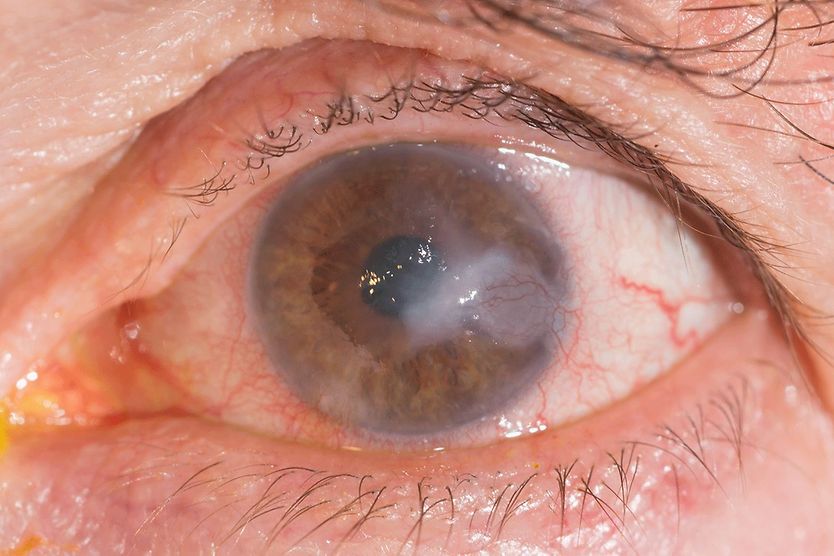
Crocodile shagreen: A guide to corneal health


What is crocodile shagreen?
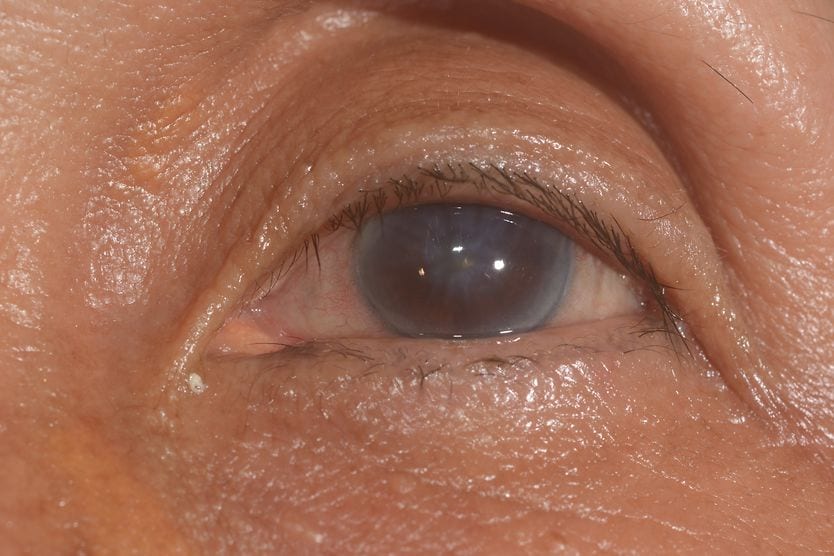
Crocodile shagreen is a hazy gray pattern of polygon shapes on the cornea (the clear dome at the front of the eye). To an eye doctor, it looks like a dim mosaic of triangles and trapezoid-like shapes with clear edges.
These markings resemble shagreen (textured leather) made from crocodile skin. It can also look like cracks in ice.
Crocodile shagreen mostly affects older adults and happens in both eyes. The condition typically:
- Does not affect your vision
- Does not get worse over time
- Does not need treatment
You can’t really see crocodile shagreen on your own. It shouldn’t make your eyes look any different in the mirror or when other people look at you. An eye doctor will use a special light microscope called a slit lamp to see it.
Crocodile shagreen was discovered in 1927 by Dr. Sprinza Weizenblatt and named in 1930 by Dr. Alfred Vogt.
How common is it?
Crocodile shagreen is common in older adults. But researchers don’t know exactly how common it is, partly because many people are never diagnosed.
Less commonly, crocodile shagreen and similar signs can happen with certain eye problems.
How is it classified?
Crocodile shagreen is a type of corneal degeneration.
While a degenerative disorder can sound troubling, there’s usually nothing to be concerned about. Crocodile shagreen typically won’t affect your vision or harm your eyes.
It’s not a type of corneal dystrophy, which is rarer and genetic. Crocodile shagreen is an acquired change. It develops over time rather than being present at birth.
There are two main forms of crocodile shagreen. Each affects one or two of the five layers of the cornea:
- Posterior crocodile shagreen – The common type almost always related to aging. It happens in the deep part of the corneal stroma, which is the third (middle) layer of the cornea. The stroma is much thicker than the other layers.
- Anterior crocodile shagreen (shagreen of Vogt) – This rarer form is more likely to be caused by eye disorders or injuries. It affects the top two layers of the cornea called the corneal epithelium and Bowman’s layer.
Causes and risk factors of crocodile shagreen
Crocodile shagreen is usually caused by harmless, age-related changes in your cornea.
Older age is the main thing that increases your risk of developing it. There’s no evidence that this type runs in families.
Other possible causes
In rarer cases, corneal crocodile shagreen has been seen in people with:
- Eye injuries – Physical damage, burns or other kinds of trauma that affect the cornea.
- Band keratopathy – A corneal degeneration that involves deposits of calcium in the cornea. It can be related to other eye problems, health conditions, medications or chemicals.
- Glaucoma – Damage to the optic nerve (how visual signals get from the eye to the brain) often related to high eye pressure. People with normal eye pressure can also have glaucoma.
- Pseudoxanthoma elasticum (PXE) – A rare genetic disorder that often affects the eyes.
Symptoms and diagnosis
Crocodile shagreen of the cornea typically doesn’t cause symptoms. It shouldn’t affect your vision or make your eyes feel any different.
For that reason, people usually don’t go to the eye doctor for crocodile shagreen alone. Eye doctors often see it by chance during an eye exam or a checkup for something else.
If you notice eye or vision changes, they’re probably caused by a separate problem. Schedule a comprehensive eye exam with an eye doctor so they can help you find out why you’re having symptoms.
Eye tests that can be used
A doctor of optometry (optometrist) or ophthalmology (ophthalmologist) can see crocodile shagreen in the cornea during a slit lamp examination.
Slit lamp tests are a common part of an eye exam. This is when the eye doctor looks through a brightly lit magnifying tool to examine your eye.
Newer imaging can add detail when the diagnosis isn’t clear. Anterior segment optical coherence tomography (AS-OCT) and in vivo confocal microscopy let eye doctors document the pattern precisely and tell it apart from conditions that do need treatment.
Less often, they may also use a fluorescein eye stain to look for anterior crocodile shagreen (the rarer type).
Fluorescein is a temporary orange dye placed on the eye to highlight changes on the surface. The eye doctor shines a blue light on it, which makes the crocodile-skin pattern glow green.
Differential diagnosis
Central cloudy dystrophy of François (CCDF) is a rare condition that looks the same as crocodile shagreen. However, it’s often found in younger people and only affects the center of the cornea.
CCDF often develops in the first 10 years of someone’s life. It doesn’t get worse and usually won’t affect vision, but it may make the cornea more sensitive or make the eyes more sensitive to light.
Unlike true crocodile shagreen, you can have a genetic predisposition to CCDF if someone in your family has it.
Other conditions can also cause similar markings on the cornea. They include:
- Hypotony – Very low eye pressure caused by injuries, eye surgeries, inflammation or medications.
- Megalocornea – An X-linked genetic disorder that causes a newborn baby’s corneas to be larger than normal.
- Keratoconus – The cornea bulges and thins over time. Some people with keratoconus wear "hard" contact lenses, which can temporarily flatten the cornea and cause shagreen-like markings.
Treatment and management options
Crocodile shagreen usually doesn’t need to be treated, managed or monitored. Your eye doctor may add it to their notes, but you generally won’t notice it at all.
However, you can still have rare or unrelated eye conditions that do need treatment. Regular eye exams can help catch these problems early on.
Prognosis and long-term outlook
The outlook for someone with typical crocodile shagreen is very good. It shouldn’t affect vision or get worse over time.
However, the risk for eye diseases generally goes up as you get older, so it’s still important to have routine eye exams.
Some vision changes are expected with age, but others aren’t. Your eye doctor can tell you if something isn’t normal and check for eye problems.
Preventive measures and eye health tips
Age-related crocodile shagreen is often considered a natural eye change that happens as some people get older. There’s no known way to prevent it, but the good news is that you usually don’t need to.
The condition isn’t harmful, won’t affect your vision and doesn’t change how your eyes look to other people. An eye doctor is usually the only person who will ever see it.
To protect your eyes from eye conditions sometimes associated with crocodile shagreen, you can:
- Protect your eyes from injuries by wearing ANSI-certified safety glasses during high-risk activities.
- Schedule regular eye exams so your eye doctor can monitor the inside of your eye and eye pressure. Glaucoma can permanently damage your vision before you know that anything is wrong.
- Tell your eye doctor about your personal and family medical history, along with any medications, supplements or eye drops you’re using. They may want to run certain tests or see you more often.
- Talk to an eye doctor anytime you notice changes in your eyes or eyesight.
Protecting your vision
Learning you have crocodile shagreen is usually nothing to worry about. You typically don’t need to treat it or change your daily routine because of it.
But you can still take steps to protect your eyes from problems that do need to be treated. Some of them can permanently harm your vision.
By understanding your personal risks, wearing protective eyewear and keeping up with comprehensive eye exams, you can help preserve your sight for the years to come.