Building bridges to eye care in remote and rural areas
Grace’s eyeglasses had been superglued back together a few times before they broke completely. With no insurance or money for new frames, the 21-year-old from Pennsylvania wasn’t sure what she’d do.
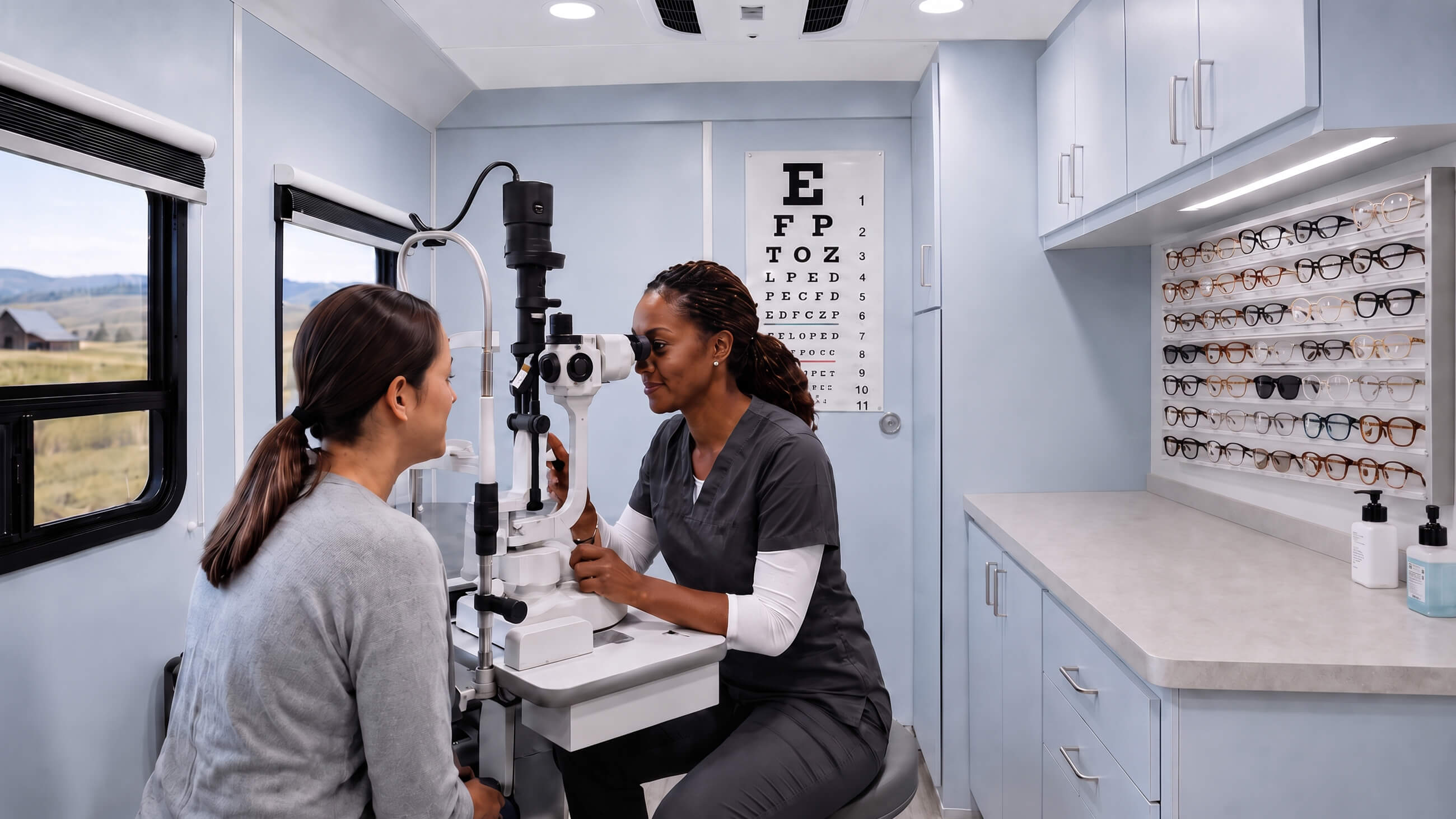
A few weeks later, however, the Remote Area Medical (RAM) mobile clinic came to her town. There, she received an eye exam and a new pair of glasses at no cost.
“It’s a weight off my shoulders,” she said.
Grace is just one of millions of Americans who live with vision impairment. While the exact number varies, over 7 million people live with vision loss.
Unfortunately, just under 20% of people who need help with correcting their vision are not getting the care they need to see at their best level. For many Americans, eye care is too costly or too far away. It may be hard to find an eye care professional in their area. Cost can be a hidden barrier even for people who have insurance. Original Medicare (Parts A and B), for instance, does not pay for routine eye exams for glasses or for the glasses themselves. This is a gap that can hit older adults in rural areas especially hard.
People in rural communities often experience these issues more than average. Their eye conditions may be diagnosed later, which could lead to less effective treatment and long-term consequences in terms of overall health.
That’s where non-profit organizations, like RAM and several others across the United States, are stepping in to help. Traveling clinics, telehealth programs and community events are creating more options for people to stay on top of their eye health.
Bringing eye care directly to hard-to-reach communities
There is a significant shortage of eye care professionals in rural and remote areas across the United States. Eye doctors, including both ophthalmologists and optometrists, can be more concentrated in larger cities and suburban communities, while many rural counties have few or no local providers.
By 2035, some researchers project ophthalmologists will only be able to meet about 29% of the demand in rural areas, compared with 77% in metropolitan areas. And while optometrists may be filling that gap, rural communities continue to experience challenges unique to their geography and demographics.
Even when eye care is available, getting to an appointment may be its own challenge. Rural patients often travel much farther for specialty care than people in urban areas. And limited transportation options can contribute to missed appointments or delayed treatment, particularly for older adults, disabled people and those managing chronic conditions.
This makes it even more important to bring mobile clinics, telehealth services, school-based screenings and other community outreach programs directly into communities that don’t have enough providers offering eye care all the time.
RAM is just one example of eye health providers that connect with communities to offer eye care services. Other organizations working to expand access to vision services in rural and underserved areas include:
- Lions International – Provides community-based vision screenings and referrals for adults and children as young as 6 months and runs an eyeglasses recycling program to offer recycled corrective lenses to people in underserved communities.
- Vision to Learn – Runs mobile clinics that visit schools to provide vision screenings, comprehensive eye exams and glasses to children in more than 860 cities across the U.S.
- All Children See – Connects children from low-income families with volunteer ophthalmologists in their area to diagnose and correct vision issues after the child has failed a vision screening.
National advocacy groups, such as Prevent Blindness, can also help people find and access resources for affordable eye care in their communities. Prevent Blindness offers a directory of local organizations that offer low-cost or no-cost services for eye exams, vision services and eye health treatment.
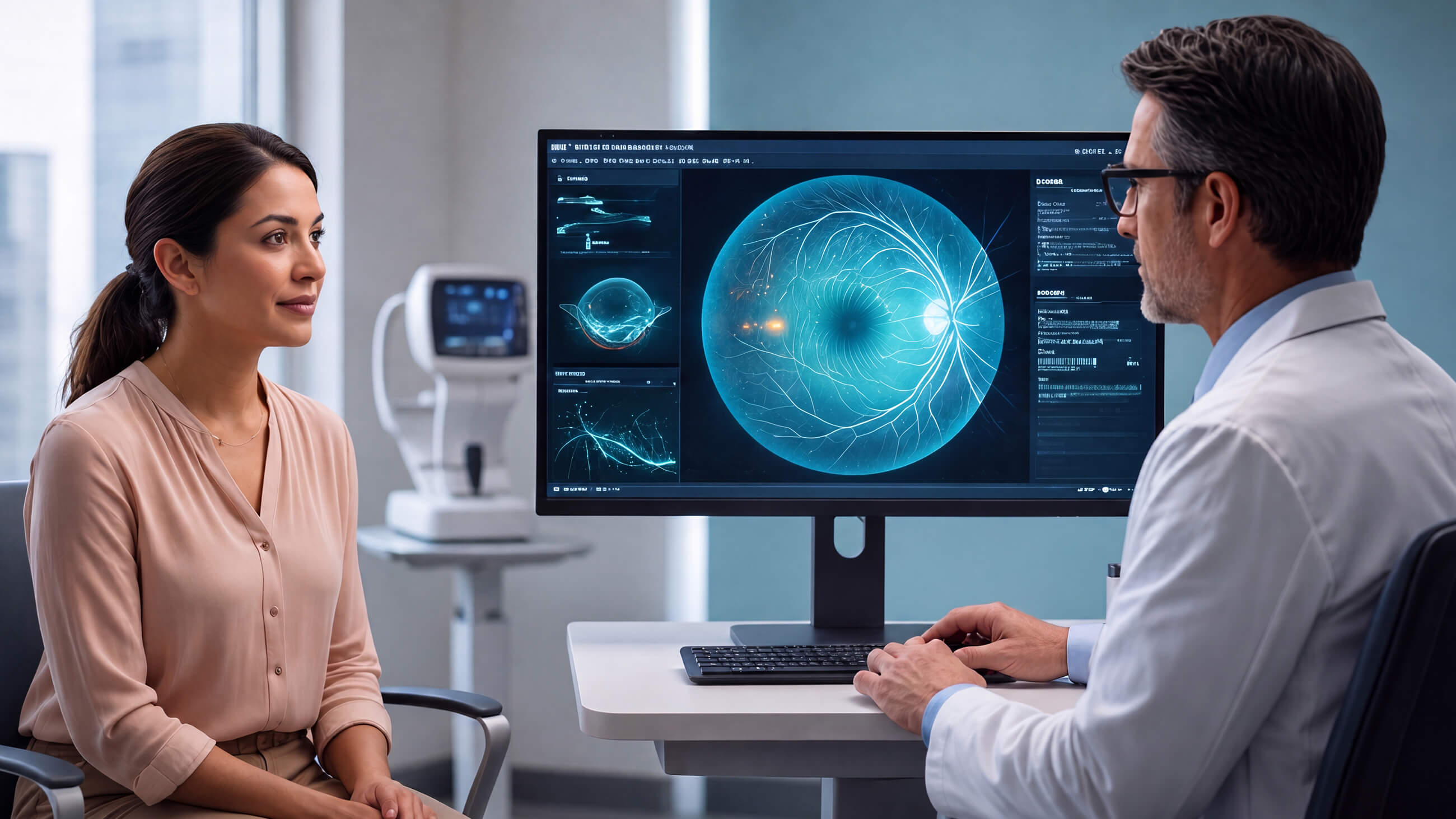
People who participate in one of these programs can get either a vision screening or a comprehensive eye exam. A vision screening is a quick check to identify potential problems. A comprehensive eye exam often includes dilation for a full assessment of a person’s vision and eye health and can be used to prescribe corrective lenses or diagnose eye and other health problems that may need follow-up or a specialist visit.
At a RAM mobile clinic, for example, participants can get a full comprehensive eye exam by a licensed provider, then pick out new frames, explains Chris Hall, CEO of RAM.
“The frames go to a mobile lab, where we manufacture single-vision lenses for them that day. They leave that evening with a brand-new set of eyewear,” he said.
Getting a comprehensive eye exam and further evaluation or correction of vision issues can lead to major improvements to a person’s quality of life, Hall adds.
“Access to vision care changes whole communities in ways you might never imagine,” he continued. “When someone puts on a new pair of eyewear, it changes how they can function. It changes how other people perceive them. It truly gives them a smile back and restores their hope, which is why it’s so important that these types of programs exist in the U.S. and around the world.”
Strengthening connections to build a local network of care
Mobile clinics are one way to bring eye care closer to patients. At the same time, many communities are building permanent local networks that help people find and access care.
Schools, churches, community centers and local health organizations can all play a role.
For example, 40 U.S. states already require school-aged children to have vision screenings. These screenings often take place while children are at school. In addition, teachers and school nurses may notice when a child is struggling to see or read. They can help connect families with eye care services.
Community health centers can also help patients receive eye care and vision services. Health centers already provide primary care, so they can identify patients who may need an eye exam, too. This can be especially important for people with chronic conditions, such as diabetes, which can increase the risk of vision loss.
According to Giselle Ricur, MD, co-chair of the Ocular Telehealth Special Interest Group at the American Telemedicine Association, local partnerships are essential for guiding people toward the services they need.
“Community health workers, school teachers and nurses work on the ground and within the community,” she said. “They help patients access care and connect them to the broader health care system because they understand the needs of the people they work with every day.”
Creating lasting connections that lead to comprehensive care
Dr. Ricur has worked in the United States, the Caribbean and South America to offer eye care and vision services, both in person and through telehealth. While access to screenings and eye exams is critical, many people will need additional care. Those patients must have a way to get it.
“I have portable cameras and measuring devices that I can put into a case and bring into any community,” she said. “I can have a provider looking at video images that are coming from hundreds of miles away. But that’s just the beginning.” One well-established use of this kind of teleophthalmology is screening for diabetic retinopathy. Images captured in a primary care office or clinic can be read remotely by a specialist, allowing many people to be checked for a leading cause of vision loss.
“Community-based outreach must be like the umbilical cord that connects the patient with the whole health care system,” Dr. Ricur stressed. “Otherwise, we’re just identifying problems without giving patients a way to get them treated.”
Chris Hall of RAM agrees that there needs to be strong partnerships between outreach groups and the traditional health system.
“We definitely want to link them into more comprehensive care. Once the clinic or health fair is finished, the patient should get referred to a place where they can take the next steps. We always offer referrals to follow-up care, especially for people who have needs that may require months or years of treatment.”
No matter how the first interaction happens, the goal is to help patients move from a one-time encounter into ongoing care if they need it. That can be the difference between treating a problem early or experiencing preventable vision loss.
Restoring hope to communities through eye care
The success of community outreach isn’t measured by the number of eye exams completed or the number of glasses made. It’s measured by the lives that get changed in the process.
“It’s very humbling to see someone smile when they realize their vision is restored,” said Hall.
“My dream is for everyone to share in that feeling,” he said. “It’s such an incredible thing that people can do for each other.”
Community outreach efforts don’t replace traditional eye care. Instead, they expand access for people who experience barriers of distance, cost and provider shortages. When community-based services and connections help people get connected to vision services, people all over the world can get the care they need before preventable vision loss occurs.