Contact lenses for athletes
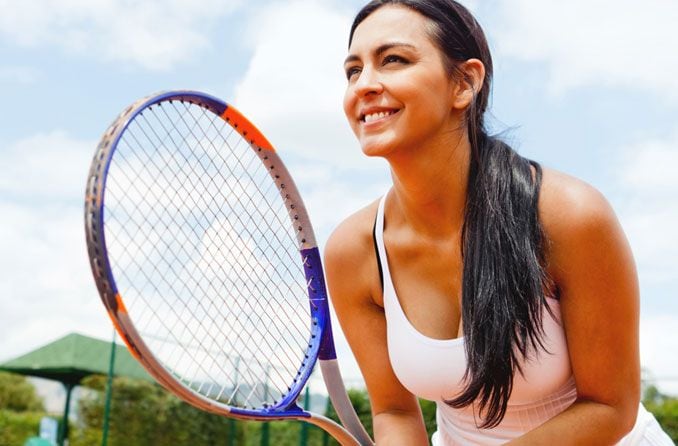

Contact lenses may help enhance sports performance by providing a wider field of view than eyeglasses.
More than half of American adults have vision problems such as nearsightedness, farsightedness or astigmatism and need corrective lenses. Many athletes who fall into this category choose contact lenses because of the competitive advantage they can provide.
Even if you've worn contact lenses in the past and found they weren't that comfortable after a long day at the office, you could try them part-time strictly for sports and recreation.
Advantages Of Contact Lenses For Sports
Compared with eyeglasses, contact lenses may offer a number of advantages for sports competition:
- Peripheral vision. Though sports eyeglasses can be made with large, wraparound-style lenses, most prescription eyeglasses have small, relatively flat lenses and small frames. This can limit peripheral vision essential for many sports.
- Unobstructed field of view. Contact lenses also provide a wide, unobstructed field of view, because no eyeglass frames block or distort what you see. You can view your surroundings and react to objects coming at you and to other players around you. You also can see and react to ground balls or other objects at your feet.
- Less likelihood of fogging up or getting splattered. Unlike eyeglasses, contacts usually remain clear regardless of environment or weather conditions such as rain.
- Less chance of eyewear-related injury. Eyeglasses may break and cause an eye injury if you take a hard hit, but contact lenses won't.
- Stable vision. When you wear eyeglasses, you can feel frames move slightly on your face with each stride. And you may have vision disturbances with eyeglasses when you run. With contact lenses, you also don't need to worry about eyeglasses sliding down your nose or falling off.
- Compatibility with safety equipment. For sports that require headgear or protective goggles, contact lenses don't interfere with the fit or comfort of these safety devices.
An added advantage of daily disposable contact lenses is that you don't have to worry about daily lens care and storage. Wear the lenses for your game or for a day of fun, and then simply throw them away.
GP And Hybrid Contacts For Sports
Though many athletes who need corrective lenses wear soft contacts, GP lenses also are an option. These contacts, also called rigid gas permeable or RGP lenses, are designed for full-time wear and have several advantages:
- Because GP lenses are rigid, they keep their shape on your eye. This allows better correction of astigmatism and other corneal abnormalities, often creating sharper vision.
- GP lenses let more oxygen reach your eyes.
- Because the surface of GP lenses is hard, debris generally doesn't accumulate as easily on these lenses. So they stay cleaner longer.
- Gas permeable lenses don't absorb tears from your eyes like soft lenses do, so you don't have to worry as much about dry eyes.
But GP lenses have some drawbacks, too. Because they are rigid, it takes longer to adapt to wearing the lenses, and it can be difficult to wear them on a part-time basis for sports. You must commit to adapting to and wearing gas-permeable lenses full-time for optimal results.
Also, GP lenses are significantly smaller in diameter than soft lenses, which increases the possibility that they could be dislodged from the eye during contact sports. If this becomes a problem, your eye doctor can fit you with a custom-made GP lens with a larger diameter to reduce the risk of the lenses getting dislodged.
One way to address the disadvantages of GPs is with hybrid contact lenses. Hybrids consist of a GP lens center surrounded by a "skirt" of soft lens material. The idea is to provide the crisp optics of a GP with the comfort of soft lenses. Hybrids are also larger, like soft lenses, so they won't pop out of your eye during sports.
Contact Lenses, Tints And UV Protection
To reduce glare and improve contrast when playing sports, you might want to consider custom-tinted soft contact lenses. These lenses selectively filter light rays to give you visual comfort and help you react to objects (such as a baseball or soccer ball) coming your way.
Popular tints for sports contacts include amber and gray-green. Amber lenses sometimes are preferred for baseball, tennis and soccer, whereas gray-green lenses often are recommended for golf, running and biking. But it's really a matter of personal preference.
To determine if custom-tinted contacts will enhance your sports experience, to visit a sports vision specialist for a trial fitting. Because these lenses are a specialty item, many optical stores and general eye care practices might not carry them.
Custom-tinted contact for sports are available with or without corrective lens power for nearsightedness, farsightedness or astigmatism. But even if you have perfect vision without glasses or contacts, a contact lens fitting and a valid contact lens prescription is needed to purchase custom-tinted contact lenses.
Many brands of soft contact lenses — whether custom-tinted or not — provide some level of protection against ultraviolet (UV) rays from the sun, which can harm your eyes and the skin on your face. However, this protection is limited to the area of your eye covered by the lenses. Wearing UV-blocking contacts still leaves portions of your eyes and the delicate skin of your eyelids vulnerable to the sun.
For this reason, even though it is an advantage if your contact lenses block UV, it remains important to wear sports eyewear that provides 100 percent UV protection for all outdoor sports. Hats help, too, because they cover the top opening between sunglasses and your face.
Convenience And Comfort Of Sports Contact Lenses
Many people wear contact lenses for sports, even if they prefer eyeglasses at work and for other daily activities. Contact lenses may offer more natural vision, with no unwanted changes in image sizes that eyeglasses sometimes produce.
If you want to avoid the bother cleaning and disinfecting your sports contacts, ask your eye doctor if you are a good candidate for daily disposable contact lenses.
After a single day of wear, you simply discard daily disposable lenses and put a fresh pair on the next day. No cleaning or contact lens solution is required.
Dry eyes are a problem for cold-weather athletes, such as skiers, and for players who keep their eyes open without blinking, such as hockey goalies and racquetball players.
For this problem, GP contact lenses may be ideal. Taking oral supplements such as omega-3 fatty acids found in fish oil or flaxseed oil may also may help alleviate dry eye for contact lens wearers.
But the ideal eyewear for dry eyes is generally eyeglasses, because they don't rest directly on the eye. They also reduce evaporation of tears by shielding your eyes from direct exposure to wind.
Many athletes don't enjoy wearing glasses, because they can fog up or slip down. However, for sports like basketball, prescription polycarbonate goggles with a wraparound strap may be ideal because they provide eye protection.
Orthokeratology: Another Sports Vision Correction Option
If you have been unsuccessful wearing contact lenses in the past or you prefer not to wear contacts during sports for some other reason, orthokeratology may be a good option.
Also called ortho-k or corneal refractive therapy, orthokeratology is the wearing of specially designed gas-permeable contact lenses at night while you sleep to reshape your eyes for good vision without glasses or contacts during the day.
Ortho-k may be an especially good option if you want to eliminate your need for corrective eyewear but you aren't a good candidate for LASIK or other vision correction surgery.
SEE RELATED: Orthokeratology for athletes
Which Option Is For You? Ask A Sports Vision Expert
Because of growing public awareness of the need for eye safety and the desire people of all ages have for optimum vision and comfort during leisure activities, there are more options in protective sports eyewear today than ever before.
But the choices don't have to be daunting. Visit a sports vision specialist to find eyewear solutions for your active lifestyle.