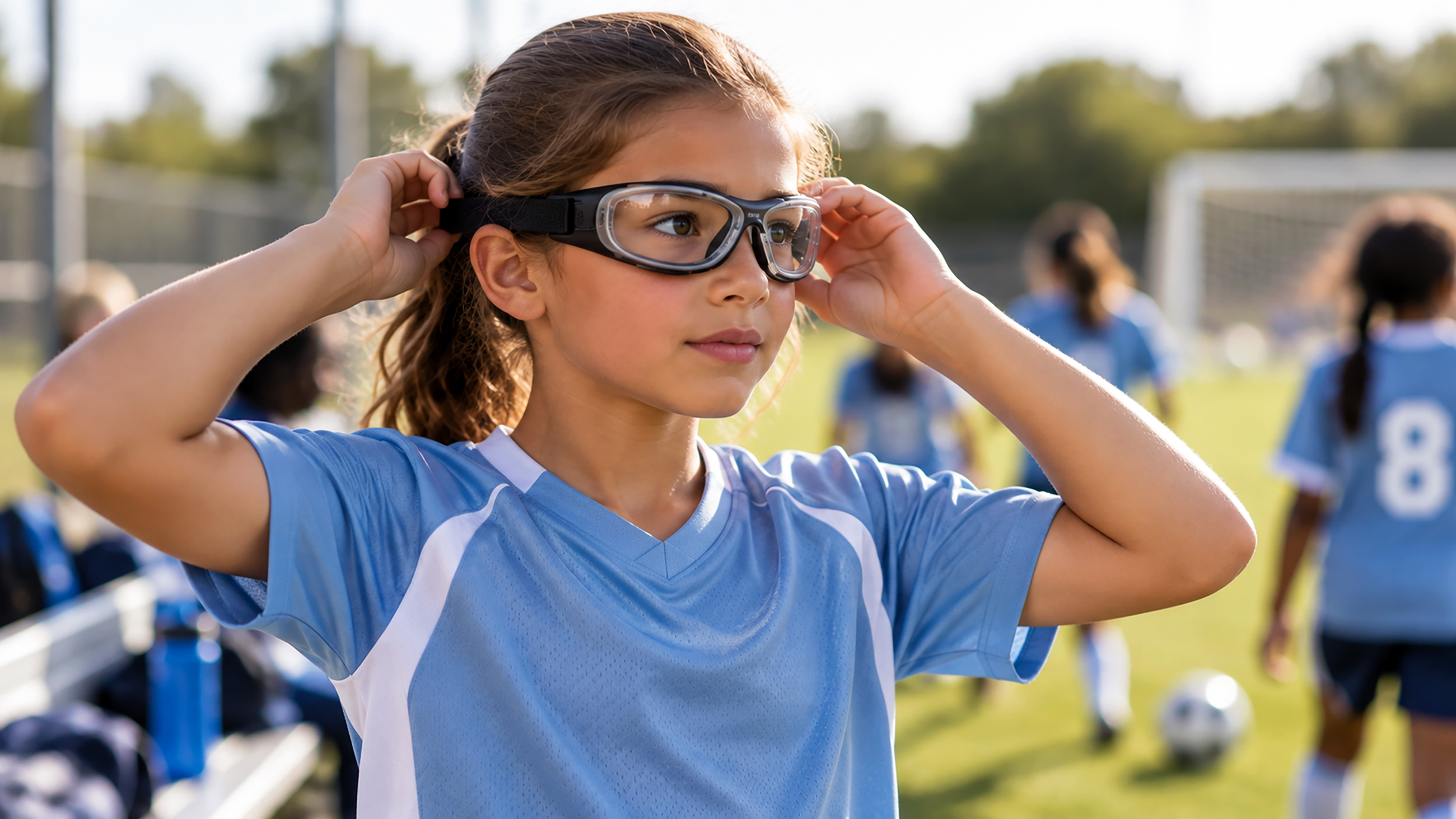
Orthokeratology for Athletes


In addition to eliminating nearsightedness, farsightedness and astigmatism, the type of vision correction you use as an athlete should also be safe so you don't run the risk of eye injuries during rough sports.
You might want to consider wearing corrective contact lenses only at night, in a method known as orthokeratology (ortho-k) or corneal refractive therapy. With these eye-shaping lenses, you typically don't need to wear contact lenses or eyeglasses at all while you are awake.
With orthokeratology, you can often have stable vision correction with unrestricted peripheral vision crucial for sports such as basketball and baseball. Depending on the kind of vision error you have, you could also have clear central vision with this option.
Ortho-k: The Best-Kept Secret of Sports Vision?
In its early stages of development, ortho-k was often not as popular an option because outcomes weren't as predictable.
But today's orthokeratology designs have significantly advanced, which provides a non-surgical way of correcting nearsightedness and astigmatism. Studies are underway to test the effectiveness of ortho-k for farsightedness as well.
This reshaping of the front of the eye corrects nearsightedness and astigmatism in a way that is similar to a LASIK procedure and other refractive surgery, except that effects are reversible.
Ortho-k contact lenses typically are worn at night during sleep and removed the next morning. Depending on the degree of your nearsightedness or astigmatism and other factors, you may notice a significant improvement in your uncorrected visual acuity even after the very first night of wearing the lenses.
For some people, it can take a few weeks of wearing the ortho-k lenses at night to reach and maintain stable 20/20 vision during the day. Many times, only one pair of ortho-k lenses is needed. For more complex cases, additional pairs with adjusted parameters may be needed.
Once your uncorrected vision reaches the desired level of clarity and stability, you still will need to wear the ortho-k lenses overnight to keep your corneas in the proper shape for good daytime vision.
But you may not need to wear ortho-k lenses every night. Every other night sometimes is sufficient. And some ortho-k patients need to wear the lenses only one or two nights a week to maintain excellent visual acuity during the day.
Why Ortho-k May Be Better Than Contact Lenses
Many professional and amateur athletes choose contact lenses as their preferred method of vision correction. They don't fog up or get splattered with rain, mud or perspiration. They can also provide more stable vision during quick head and body movements.
But contact lenses also have drawbacks:
- They can dry out, especially during periods of intense concentration when an athlete may not blink frequently enough to keep them moistened. If they become too dry, vision can fluctuate.
- Contact lenses can sometimes move off-center or become dislodged from the eye, especially during contact sports or if they become dry.
- Contact lenses sometimes don't correct astigmatism as well as eyeglasses do. Soft contact lenses for astigmatism can rotate on the eye during certain head movements and postures, causing unstable vision.
- Some athletes either cannot tolerate the sensation of contact lenses on their eyes or don't want to deal with the inconvenience of daily lens care and applying and removing the lenses.
- Eye allergies can be a problem for contact lens wear. Athletes who normally can wear contact lenses successfully may find their contacts become intolerable during allergy season, when pollen and other airborne irritants can stick to the lenses.
Ortho-k, on the other hand, can help reduce some of these contact lens-related vision problems. Like all contact lenses, ortho-k carries a risk of eye infection, particularly because the lenses are worn overnight. Following proper hygiene and care instructions can help minimize this risk.
Why Ortho-k May Be Better Than LASIK
While surgical vision correction can offer convenience and eliminate contact lens-related problems, it has its own set of drawbacks:
- Like any surgery, there is no guarantee of a perfect outcome with LASIK or other vision correction procedures.
- Like any surgery, there are risks of complications from LASIK and other vision correction procedures. Possible complications include glare and halos around lights, persistent dry eyes and reduced visual acuity or contrast sensitivity.
- You must be over 18 for most surgical vision correction procedures, eliminating LASIK and related surgeries as options for younger athletes.
Ortho-k, on the other hand, is safe and entirely reversible. In fact, ortho-k is so safe that many eye care practitioners are comfortable performing the procedure for children as young as 7 or 8 years old.
The reversibility of ortho-k makes it ideal for athletes who are too young for LASIK. Ortho-k can give them good, uncorrected vision for sports in grade school and high school.
Then, when they reach age 18, young athletes have the option of discontinuing ortho-k for awhile (allowing their nearsightedness or astigmatism to return and stabilize) and having LASIK surgery if they no longer want to wear the reshaping lenses overnight.
Ortho-k and Myopia Control
In addition to its other benefits, ortho-k can potentially reduce the progression of myopia (nearsightedness) in children and teenagers. So if you try ortho-k in your teens and then decide to discontinue wearing the reshaping lenses later in life, you may be less nearsighted as an adult than you would be if you had worn eyeglasses or conventional soft contact lenses during your teen years.
Factors That Might Eliminate You as an Ortho-k Candidate
Ortho-k is not for everyone. An evaluation of your corneas and your eyeglasses prescription or contact lens prescription is required to determine if you are eligible for the procedure.
Currently, ortho-k is approved for the correction of mild to moderate amounts of nearsightedness and mild astigmatism. It is most effective for correcting up to -4.00 diopters (D) of myopia and up to -1.50 D of astigmatism. So if you have higher degrees of myopia and/or astigmatism, you might be eliminated as a candidate.
To find out if you're a good candidate for ortho-k, look for an eye care practitioner who specializes in the procedure.
Why Ortho-k Might Be Ideal for Certain Athletes
Many athletes who have undergone the ortho-k process report positive feedback such as:
- Greater confidence in their vision.
- Less worry about eye problems and fluctuating vision.
- No concerns about glasses or contact lenses getting knocked off or out during competition.
- No need to bring spare contacts and contact lens solutions to practice and game days.
- No worry about potential complications of refractive surgery, which could adversely affect athletic performance for a lifetime.
What Does Ortho-k Cost?
Because ortho-k requires specialized equipment, special fitting expertise, specially designed gas permeable lenses and a longer follow-up period, the fee for ortho-k can be higher than fees for fitting conventional soft or GP contact lenses.
READ NEXT: Is playing sports safe for kids with myopia?
Burt Dubow, OD, also contributed to this article.