It’s time to rethink how important eye exams are


Are eye exams as important as other checkups?
What do healthy bodies and clear vision have in common? They require routine checkups. A well-maintained body supports healthy eyes, and well-maintained eyes support a healthy body. Routine eye and medical exams share a similar goal: detecting issues early, while they're more treatable.
Most Americans recognize the importance of comprehensive eye exams, but that doesn't always translate into routine care. All About Vision’s Comprehensive Eye Exam Survey, conducted by The Harris Poll in September 2026, found that more than 4 in 5 Americans consider comprehensive eye exams at least as important as routine physicals, yet fewer than half say they get one annually.
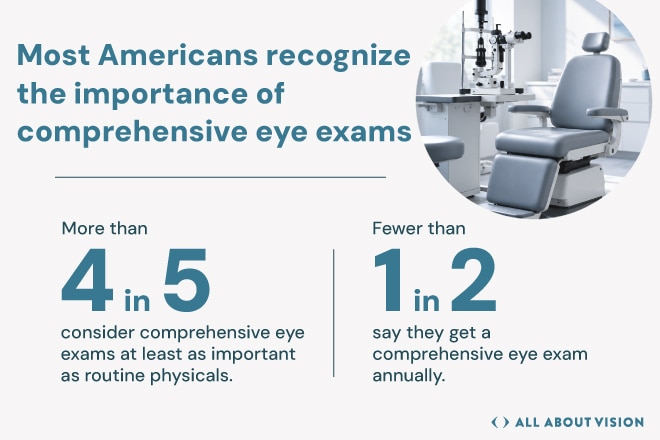
You wouldn't skip your annual physical or dental checkup, even when you feel healthy. Your eyes deserve the same attention. During a comprehensive dilated eye exam, your eye doctor checks how well you see and how well your eyes work together. Critically, they also evaluate the health of your eyes themselves. Eye diseases like glaucoma can be caught before vision loss occurs. Underlying medical conditions like diabetes and high blood pressure often show signs in the eyes first.
In one year, optometrists discovered more than 400,000 cases of diabetic retinopathy (a type of diabetic eye disease) in patients who hadn't yet been diagnosed with diabetes. Eye doctors can also detect plaque deposits that may indicate clogged arteries, a risk factor for heart attack and stroke.
Beyond vision: How eye exams supplement routine physical exams
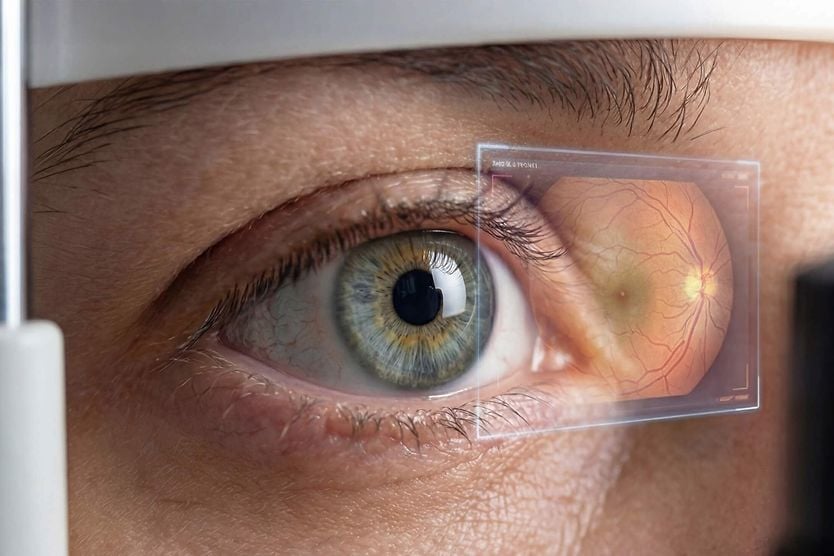
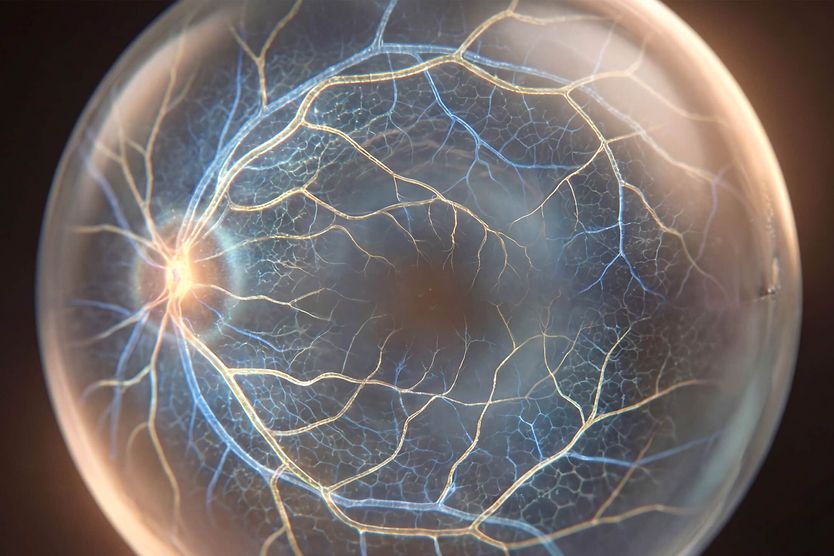
During a dilated exam, your eye doctor can see blood vessels and nerves in the retina. This provides a direct view into your cardiovascular and nervous system. No blood tests or invasive procedures are needed. Changes in these blood vessels, nerves and other areas of the eye can be associated with many types of health conditions, such as:
- Cardiovascular (heart disease, high blood pressure)
- Neurological (stroke, aneurysm, neurodegenerative conditions like Parkinson’s disease, tumors, multiple sclerosis, giant cell arteritis)
- Metabolic (diabetes, high cholesterol, thyroid disease)
- Autoimmune (systemic lupus erythematosus, rheumatoid arthritis, Sjögren's disease, myasthenia gravis)
- Infectious (Lyme disease, tickborne diseases, herpesviruses)
- Blood disorders (sickle cell disease)
- Cancers (skin, blood, tissue)
- Sexually transmitted infections
- Medication toxicities
- Vitamin A deficiency
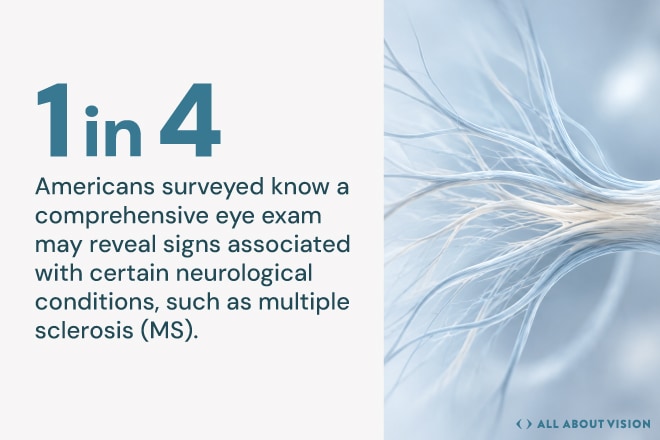
Yet many people may not realize how much an eye exam can reveal about health beyond the eyes. According to the survey, only 1 in 4 Americans know a comprehensive eye exam may reveal signs associated with some neurological conditions, such as multiple sclerosis (MS).
Detecting these changes early can support earlier diagnosis and treatment, which may help lower the risk of serious complications affecting the heart, brain, kidneys and eyes.
Researchers are also investigating whether retinal images might help predict cardiovascular risk, though this approach is not yet part of routine clinical eye care. Reviews of retinal findings suggest that certain patterns, such as changes in vessel width or signs of retinal vascular disease, are associated with a higher risk of heart attack and stroke.
How eye exams protect adult vision
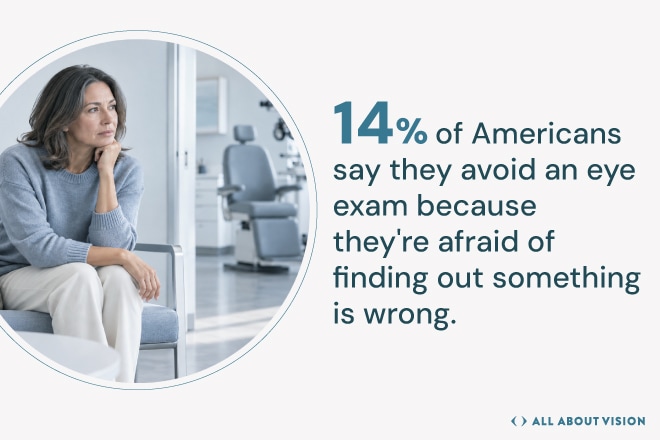
Your eyes and vision continue to change from the minute you're born through old age. Many eye diseases can go unnoticed for a long time because busy schedules make it easy to ignore subtle symptoms or put off appointments. Fear can be another reason people delay care. The survey found that 14% of Americans say they avoid an eye exam because they're afraid of finding out something is wrong.
Cataracts
A cataract is a clouding of the normally clear lens inside the eye. Most cataracts happen in older people as a natural part of aging. As cataracts develop, proteins in the lens clump together, making the lens cloudy and causing blurred or dimmed vision.
Early detection through regular eye exams helps monitor cataracts effectively. Simple lifestyle recommendations, such as brighter lighting, can provide improved vision. When cataracts begin to interfere with daily activities, surgery to remove the cloudy lens and replace it with a clear artificial lens called an intraocular lens (IOL) can restore vision.
Glaucoma
Glaucoma is another key example. This disease can damage the optic nerve, which connects the eye to the brain. It can cause permanent vision loss without early warning signs. About half of people who have glaucoma don't know they have it.
Once vision is lost from glaucoma, it typically cannot be restored with current treatments. A regular eye exam can detect glaucoma and if treatment is started early, it may help prevent irreversible damage.
Diabetic eye diseases
Diabetic retinopathy (DR) is the leading cause of vision loss in working-age adults. Yet it often develops without symptoms in its early stages.
Diabetic retinopathy occurs when high blood sugar damages the tiny blood vessels in the retina. This is the light-sensitive tissue at the back of the eye. Over time, DR can damage the retina and cause vision impairment. Regular eye exams can help slow the progression of the disease.
People with diabetes have nearly double the risk of developing open-angle glaucoma, the most common form. They are also two to five times more likely to develop cataracts and tend to get them at a younger age.
Age-related macular degeneration
Age-related macular degeneration (AMD) is another leading cause of vision loss in older adults. AMD affects the macula, the central part of the retina. This is what provides sharp, detailed vision needed for tasks like reading and recognizing faces.
In dry AMD, the most common form of AMD, parts of the macula thin with age and tiny yellowish deposits called drusen build up under the retina. This can result in reduced central vision over time. In wet AMD, abnormal blood vessels grow within and under the retina, which may cause blood and fluid to leak, leading to rapid vision loss.
In its early stages, AMD may not cause noticeable vision changes. But comprehensive exams can detect subtle retinal changes that signal the onset of the disease. This allows for earlier treatments that may slow AMD's progression, preserving central vision for longer.
Vision screenings at the DMV are not eye exams
A vision test at the Department of Motor Vehicles (DMV) in the United States is not the same as a comprehensive eye exam. DMV vision tests are quick screenings that usually measure visual acuity, or how clearly a person can see letters on a chart, to make sure their vision meets the minimum standard for driving (this varies by U.S. state).
A comprehensive eye exam is a full evaluation of both vision and eye health performed by an optometrist or ophthalmologist. It includes:
- Visual acuity and visual field measurement
- Refraction
- Eye focusing, teaming and movement assessment
- A detailed look at the inside and outside of the eyes
The American Optometric Association notes that vision screenings, including those done at the DMV, cannot replace regular comprehensive eye exams. People who pass a simple screening can still have vision or eye health problems that need attention.
How eye exams protect children’s vision
Eye exams for children can help identify problems that screenings may miss. The American Optometric Association recommends that children receive comprehensive eye exams regularly, beginning in infancy and continuing through the school years.
A comprehensive children’s exam includes checking the child’s:
- Vision prescription
- Eye alignment
- Color vision
- Eyes’ ability to work together
- Eye health
Myopia and other refractive errors
Myopia (nearsightedness) is when distant objects appear blurry while near objects remain clear. Studies have shown that myopia rates have doubled in the last three decades. Children who develop myopia at younger ages are more likely to progress to high myopia, which increases the risk of sight-threatening complications.
Several myopia control options may slow progression in many children, including:
- Specially designed glasses
- Specially designed contact lenses
- Low-dose atropine eye drops
Note: While many studies have looked at and eye doctors have used atropine eye drops over the years, the U.S. Food & Drug Administration (FDA) has not approved it for the indication of myopia control. It is considered off-label use.
Regular eye exams let doctors monitor prescription changes and recommend myopia control strategies when appropriate. These exams also detect farsightedness and astigmatism, refractive errors that can affect vision if left uncorrected. Early detection ensures timely treatment during critical developmental years.
Eye teaming issues
Children with undiagnosed binocular vision (eye teaming) issues can experience symptoms such as:
- Difficulty with detailed near work, such as reading and writing.
- Losing their place while reading.
- Being unable to recall the content they read because the visual task of reading consumes their concentration.
Sometimes vision issues can appear to be, or occur with, attention issues. For example, convergence insufficiency is a condition in which the eyes have difficulty working together at close range, causing:
- Eye strain
- Headaches
- Reading problems
A study found that convergence insufficiency occurs about three times more often in children with ADHD than in children without ADHD, suggesting some children may have both conditions. Because symptoms overlap, experts recommend that children being evaluated for ADHD also have a comprehensive eye exam to check for underlying vision problems.
Eye strain
The demands on kids' eyes are also much greater than in the past, including:
- Increased computer use at school
- More time spent on tablets completing assignments and playing games
- Frequent phone scrolling and messaging
Many children experience headaches as a result, without realizing they're experiencing eye strain. Undetected refractive error or binocular vision issues can worsen the strain. An eye exam can detect these issues, leading to updates in glasses, recommendations for screen time breaks or, in some cases, a referral for vision therapy.
Amblyopia
Amblyopia develops when the brain learns to favor one eye over the other during early childhood. This happens when certain conditions interfere with normal vision development, including:
- Misalignment of the eyes (strabismus)
- Unequal prescription between eyes (anisometropia)
- Visual obstructions (such as cataracts)
As the brain increasingly ignores signals from the weaker eye, vision in that eye is reduced, even with glasses or contacts. Without treatment, this vision loss becomes permanent.
Amblyopia is the most common cause of vision loss in children. It affects 2 to 3 out of every 100 children. Treatment with patching or eye drops is most effective when children are younger, so eye exams between the ages of 3 and 5 are critical.
School vision screenings are not eye exams
Even if your child had a recent vision screening at school and no problems were found, vision issues could still exist. School vision screenings, while helpful, are not comprehensive eye exams. Some experts note that these screenings may miss up to 75% of children who have vision problems.
What happens during a comprehensive eye exam?
A comprehensive eye exam includes several tests that assess both vision and eye health. The exam typically includes:
- A review of medical and eye history
- A visual acuity test (reading letters or naming symbols on a chart)
- A color vision test
- Refraction (using different lenses to determine the prescription that provides the clearest vision)
- Tests of how the eyes move and work together
- An eye health evaluation using a special microscope to examine the front of the eye
- A dilated exam to see the retina, optic nerve and blood vessels at the back of the eye
A comprehensive eye exam can take from half an hour to an hour, depending on which tests are needed to fully check vision and eye health.
How often should I get a routine eye exam?
How often someone needs an eye exam depends on their:
- Age
- History of eye and health conditions
- Risk factors for eye disease
The American Optometric Association (AOA) and the American Academy of Ophthalmology (AAO) both provide guidance to help people determine an appropriate exam schedule with their eye doctors.
Children and teens
The AOA recommends that:
- Infants have their first comprehensive eye exam between 6 and 12 months of age.
- Children have at least one exam between the ages of 3 and 5 and another before starting first grade.
- School-aged children have an exam every year, especially if they wear glasses or have risk factors.
Adults without known risk factors
Adults without underlying health or eye conditions should also get routine eye exams.
Adults age 18 to 64
For adults aged 18 to 64 years without symptoms or risk factors, the AOA recommends a comprehensive eye exam every year.
Adults age 65 and older
As people get older, the risk of eye diseases such as cataracts, glaucoma and age-related macular degeneration increases. The AOA recommends that adults age 65 and older have a comprehensive eye exam every year, even if they do not notice vision changes.
People at higher risk
Some people benefit from more frequent eye exams due to their or their family's health history.
The National Eye Institute notes that it’s important to get routine eye exams for:
- Adults over 60
- African American adults over 40
- Hispanic/Latino adults (especially those at risk for glaucoma)
- Anyone with a family history of glaucoma
Eye doctors also recommend that people with diabetes or high blood pressure have a dilated eye exam at least once a year because these conditions can damage blood vessels in the eye.
More frequent exams are also recommended for people who:
- Have other eye-related health conditions or diseases
- Wear contact lenses
- Take medicines with eye-related side effects
- Have had eye surgery or injury
- Work in jobs that pose a higher risk for eye injury
- Have family history of eye diseases
- Have functional vision in only one eye
Schedule your routine eye exam
Comprehensive eye exams belong in your annual health care routine, alongside physicals and dental checkups. Just as you monitor blood pressure and prevent cavities before pain starts, eye exams detect vision-threatening conditions before symptoms appear, when treatment works best. Dilated eye exams may also detect signs of serious health conditions before they cause noticeable symptoms elsewhere in the body.
Don't wait for vision changes. Make eye exams a regular health priority, not an afterthought.
Methodology Statement
The Harris Poll conducted the online survey in the United States on behalf of All About Vision, supported by EssilorLuxottica, from June 25-29, 2026, among 704 parents of children under age 18. The sampling precision of Harris online polls was measured by using a Bayesian credible interval. For this study, the sample data is accurate to within +/- 4.1 percentage points using a 95% confidence level. This credible interval will be wider among subsets of the surveyed population of interest.