Types of contact lenses: What to know before you choose

What are the different types of contact and specialty lenses?
There are a few ways to talk about the different types of lenses. They can be grouped by their intended uses, by kinds of contact and specialty lens material, and even by wear or replacement schedules. The optimal contacts for each person will be a specific combination of all these factors.
The most common reason to use contacts and specialty lenses is to correct a refractive error. These are the conventional contact lenses most people are familiar with. They're a popular option for people who have myopia, hyperopia or astigmatism. Other kinds of contact and specialty lenses have therapeutic or medical uses, and some are purely cosmetic.
Most conventional contacts are available in different kinds of materials. An important factor in these materials is gas permeability. The cornea requires oxygen, so contact lenses have to allow oxygen to pass through.
Older types of "hard" contacts were made from materials that did not transmit oxygen. But soft and newer rigid gas permeable (RGP, now referred to as “GP”) contacts both let plenty of oxygen reach the eye. Many people choose soft contacts as they can be both more comfortable and convenient option, but that is wearer dependent. However, lenses have other benefits that may appeal to some people.
Soft contact lenses (SCLs)
Conventional soft contacts can correct most prescriptions with the exception of more severe or irregular refractive errors. They are usually made with silicone hydrogel, which is a thin, soft, pliable plastic. It allows SCLs to drape very closely over the shape of the cornea.
This can make them easy to get used to and comfortable to wear. It also helps to keep them from being dislodged or accidentally coming out.
SCLs need to stay hydrated to keep their corrective shape and to be so soft and comfortable. Therefore, they're designed to absorb a lot of moisture. Even so, they can still become too dry throughout the day, which can lead to blurry vision and dry, irritated eyes.
Being absorptive can also make soft contacts more vulnerable to bacteria and more prone to buildup. They may be more fragile and may tear easily depending on the design, especially if they are worn too long or become too dry.
However, SCLs are safe and comfortable as long as they are worn and cared for correctly. They're also available in disposable, daily and monthly options. This allows people to choose the type of contacts that is most convenient for their needs.
Rigid gas permeable (RGP) lenses
Most RGP lenses are a special type of plastic made with silicone and fluoropolymers. The fluoropolymers keep them rigid, while the silicone allows oxygen to pass through. These lenses are sometimes called "semi-soft" contacts.
GP lenses generally offer greater visual acuity potential than soft contact lenses, especially for patients with astigmatism or irregular corneas. One reason is that GP lens fittings and design can be more precise. And, since they are rigid, they can hold their precise, corrective shape with minimal to no distortion. This also means they can correct certain refractive errors that conventional SCLs can't.
For example, GP lenses are sometimes optimal for people with:
- Higher amounts of myopia, hyperopia or astigmatism
- Irregular astigmatism
- Keratoconus
- Hard-to-fit eyes
GP lenses are generally more breathable than soft contact lenses. Their rigid materials and typically thinner profile allow more oxygen to reach the cornea. Modern silicone hydrogel soft lenses have narrowed this gap considerably, but GPs still tend to offer an oxygen advantage, particularly for higher prescriptions.
And because GP lenses don't fit as closely to the cornea (clear (or transparent), dome-shaped outer layer on the front of the eye), they don't need to absorb as much moisture. This reduces buildup as well as vulnerability to bacteria. It can also make them comfortable for people with dry eyes.
LEARN MORE about types of contact lens materials
Specialty contact lenses
Conventional contact lenses can correct most refractive errors. However, sometimes people need more specialized contacts.
Some kinds of specialty contact lenses correct more difficult or complex refractive errors. Others can work well when standard contacts aren't an option due to corneal conditions. There are even special types of contacts that can help treat or manage certain eye diseases.
Many specialty contacts are GP lenses, but some are soft, and some are even hybrid. There are different types of contacts available for nearly any need. However, they tend to cost more than standard contacts. Many types of specialty lenses require more detailed, complex fittings.
Toric lenses
Toric lenses are soft or GP contacts designed to correct astigmatism. Most astigmatism is caused by the curvature of the cornea. Instead of being curved like the side of a baseball, the cornea is curved more like the side of a football.
Toric contacts have a special shape that can correct for these curves. Some toric lenses also have built-in stabilizers that help keep them from rotating. This helps the customized shape stay aligned correctly on the cornea.
Soft toric contacts can correct most regular astigmatism (when the cornea's curves are symmetric). For irregular astigmatism (when the curves are asymmetric), GP lenses or other kinds of specialty contacts tend to have success.
Hybrid contact lenses
Hybrid contacts are a combination of soft and GP lenses. They have a rigid center surrounded by a soft contact lens skirt, so they tend to be more comfortable than typical GP lenses. This type of contact can work well for people who have severe astigmatism or irregular corneas but can't tolerate RGP lenses.
Custom soft lenses
Custom soft contacts are often prescribed for those who have unique vision or fit needs. They can be made with a much wider range of specifications than standard SCLs.
Specialty SCLs may be a good option for people whose eyes are harder to fit due to:
- Unique corneal diameter
- Surface irregularities or growths (like pterygia)
- Mild or moderate corneal thinning
- Irregular astigmatism
- Previous LASIK or PRK surgery
- Previous corneal transplant
Custom soft lenses can also correct many higher and more complex refractive errors than standard SCLs, though that gap is narrowing as standard parameter ranges expand.
Multifocal lenses
This type of contact lens corrects presbyopia in addition to other refractive errors. Presbyopia is the normal loss of near vision that begins around age 40. For people who already wear corrective lenses, multifocal contacts are an alternative to bifocal- or progressive-lens glasses.
Multifocal contacts can correct presbyopia in combination with:
- Myopia (nearsightedness)
- Astigmatism
- Myopia and astigmatism
- Hyperopia and astigmatism
Multifocals can be soft contact or GP lenses. Other types of custom lenses, such as hybrid, scleral and toric, can also have a multifocal design.
Presbyopes can also opt for monovision contacts (also called blended vision). This means they wear a single-vision lens for near vision in one eye and for distance vision in the other.
Scleral lenses
Scleral lenses are larger versions of GP contacts. They cover the whole cornea without touching it, and their edges rest on the white of the eye (the sclera).
Since they span the whole cornea, scleral lenses are ideal for refractive errors caused by an irregular corneal surface. They can also help to treat or manage certain eye conditions. The space between the eye and the lens can hold saline or medication, and the extra coverage can protect the whole cornea.
Scleral lenses often work well for people who have:
- Advanced keratoconus
- Corneal scarring or injuries
- Severe dry eye syndrome
- Post surgery corneal transplant
- Certain other types of eye surface disease
Orthokeratology lenses
Also known as ortho-k, orthokeratology is a type of therapy used to manage myopia or mild astigmatism. It involves wearing special GP contacts overnight to temporarily reshape the cornea.
Ortho-k is most commonly prescribed to correct myopia. In people who have myopia (nearsightedness), the cornea is overly curved, or what is called “steep”. These lenses would be worn nightly to flatten the cornea during sleep, with the goal over the course of the treatment to have sharp vision when they are removed in the morning. The clear vision would last throughout the day for most people.
The effects of orthokeratology aren't permanent. The lenses have to be worn consistently, or the shape of the cornea will return to normal.
Colored contact lenses
Some types of colored contacts provide vision correction just like standard lenses. Other types are cosmetic or decorative only. They can enhance or alter the color or appearance of the eyes for a fun change.
There are also more specialized purposes for adding color to contact lenses. For example, certain tints can improve color perception. This can be helpful for those who have color vision deficiency (CVD) or who want to boost athletic performance. Custom tinted contacts can also help filter light for people who have photophobia.
In other cases, color can be added to create prosthetic lenses. These lenses may be hand-painted, or the color can be computer generated to look more like real irises. Prosthetic colored contacts can mask corneal and iris defects and help manage some of their symptoms.
It's important to note that cosmetic-only contact lenses are still considered medical devices that require a valid prescription in the United States. You should avoid buying or wearing non-prescription contacts. They are illegal due to the high risk of damage they pose to your eyes.
Disposable, daily and extended-wear contacts
Contact lenses come in a variety of wear and replacement schedules. Wear schedule refers to how long the lenses can be worn per use. Replacement schedule refers to how many times lenses can be used before they have to be replaced.
Conventional SCLs have a wide range of options, both for wear and replacement. The most common options include:
Daily wear – Worn during the day only; must be removed each night but can be reused
Extended wear – Can be worn overnight for one, six or up to 30 nights, depending on the lenses and wearer
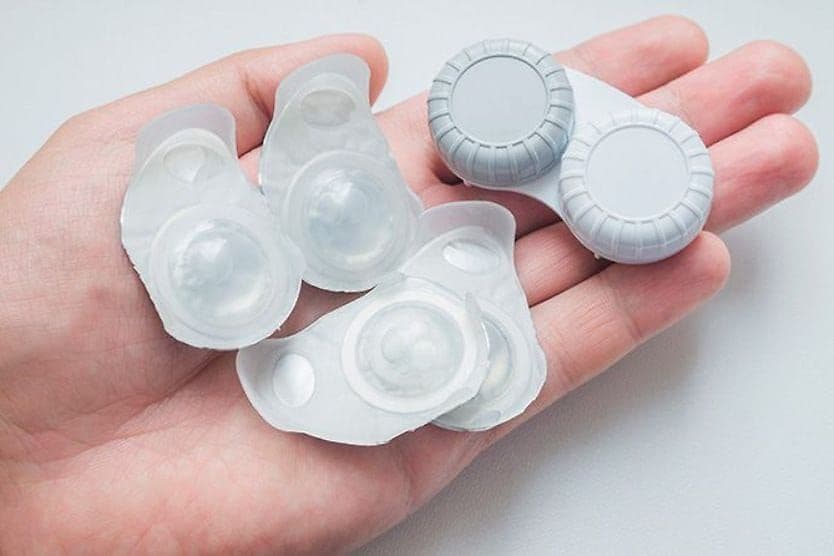
Daily disposable – Worn for one day only; must be removed and thrown away each night
Planned replacement (biweekly or monthly disposables) – Can be reused for up to four weeks; must be cleaned, disinfected and replaced on schedule
GP contacts have fewer options, but that's because they last longer. The majority of GP lenses are daily wear only but can be reused for one to three years. Specialty SCLs and hybrid contacts are also a little different. Many custom SCLs are designed for monthly or quarterly replacement. Hybrid lenses typically have semi-yearly replacement schedules.
How to choose the right contact lenses
Different kinds of contact lenses work for different people. The ideal kind of contacts for each person depends on a balance of vision correction, comfort and the ability to take proper care of them.
The first step in choosing the right contacts is always to make an appointment with an eye doctor. Before prescribing contact lenses, eye doctors weigh many different factors, including:
- Type and amount of refractive error
- Corneal size and shape
- Patient age, lifestyle and work environment
- Eye conditions and general health
Contact and specialty lenses are a common part of life that it's easy to forget they are medical devices. There is a "right" contact for almost everyone, but finding it requires guidance from an eye doctor.
READ MORE: What contacts are right for me?