Why does it feel like something is in my eye?

What is foreign body sensation?
The feeling that something is in your eye is a common experience. It can be irritating or painful and may cause excess tear production (watery eyes). This feeling, known as foreign body sensation (FBS), can be caused by an eyelash, dirt or other debris. But often, there is nothing in the eye at all.
Common causes of foreign body sensation
General causes of the sensation that something is in your eye(s) include dry eye; an inflammation of the eyelids called blepharitis; conjunctivitis and other eye infections; overwear of contact lenses; and an injury to the eye’s cornea.
Dry eyes can feel scratchy
Even when there’s nothing in your eyes, they can feel scratchy and as if there is sand or grit on the surface. This can be caused by dry eye syndrome (also called dry eye disease), which is caused by a faulty tear film on the surface of the eye. Your eyes need a consistent layer of tears to remain moist and healthy.
Sometimes your eyes do not produce enough tears or make the right type of lubricating tear film. Then the tears can evaporate too quickly. When that happens, the result may be dry eye syndrome.
Symptoms of dry eye include:
Excess tearing followed by times of dryness
A feeling of scratchiness or grit in the eye
Contact lenses that are uncomfortable or painful to wear
Dry eye is common and affects millions of Americans each year and is more likely if you:
Are fifty years of age or older
Are female, especially if you have gone through menopause
Wear contact lenses
Have a diet low in vitamin A (found in carrots, liver and other foods) or healthy Omega-3 fatty acids (found in fish, walnuts and other foods)
Have an autoimmune condition
Work on a computer for extended hours, which can contribute to digital eye strain
Live in a hot, dry or windy climate
Live or work in an area with direct heating or air conditioning blowing on you
Talk to your eye doctor about using over-the-counter eye drops, such as artificial tears, for at home use to help with discomfort and alleviate the gritty, sandy sensation. Lifestyle changes, such as using a humidifier and taking breaks from the computer, can also help some people. You might also ask your eye doctor about prescription medications or in-office procedures for dry eye.
For chronic dry eye symptoms, a specialist may recommend therapies such as:
In-office thermal eyelid massage
Punctal plugs (to temporarily block the tear ducts to help the eyes retain moisture)
A chalazion or stye
There are two kinds of bumps that commonly form on the eyelids. One is a chalazion, which is a painless, cyst-like bump caused by inflammation. They are typically found on the upper or lower eyelid.
A chalazion can be either internal or external. It forms around an oil gland in the eyelid and can lead to a red, swollen lid.
The other is a stye. A stye, also called a hordeolum, is an infection that causes a tender, red bump near the edge of the lid. It can occur at the base of an eyelash (where it is called an external stye). Or it can occur in one of the tiny oil glands in the eyelid (called an internal stye).
A chalazion is usually painless, while a stye can feel like a painful, tender pimple. You may notice either one and feel like a foreign body is in your eye.
The stye, in particular, may make your eye feel sore and scratchy. Your eye doctor can diagnose either one easily and give you advice on treating them.
Note: Always keep in mind that you should never squeeze a stye or chalazion, even when it comes to a head.
Blepharitis
Blepharitis is a common eye condition caused by inflammation of the eyelids. It tends to develop when the lubricating oil glands at the base of your eyelashes become clogged and infected. These lubricating oil glands are called meibomian glands.
Once the meibomian glands are clogged, bacteria can build up. Your eyelids may be red, crusty or slightly swollen, and your eyes may feel irritated and itchy. There may also be debris caught in the lashes.
According to estimates, between 37% and 47% of all patients seen by eye doctors have blepharitis.
Along with the feeling that there is something in your eye, some typical symptoms of blepharitis are:
A gritty sensation
A burning or stinging feeling
Redness and irritation
Itchy eyes
Watery eyes
Crusts on the eyelids, especially in the morning when you wake up
A greasy appearance of the eyelids
Possible eyelash loss (more common with long-term blepharitis)
Your doctor will be able to determine a treatment plan to help clear up your blepharitis.
SEE RELATED: Meibomian gland dysfunction
Conjunctivitis or pink eye
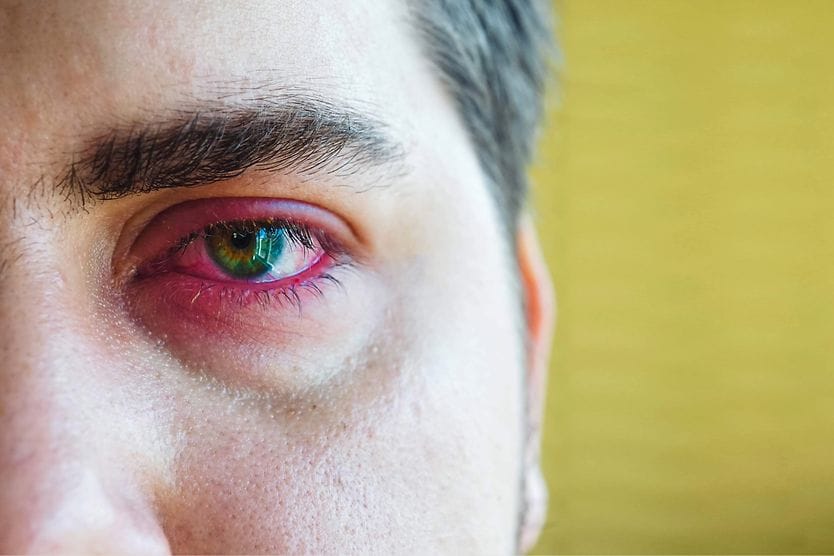
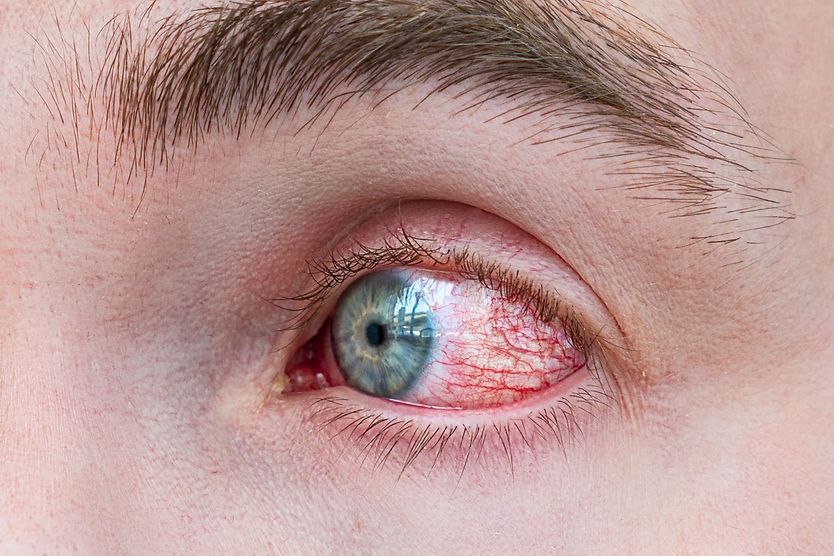
Conjunctivitis, also known as pink eye, is an inflammation or infection of your conjunctiva. The conjunctiva is a thin, clear membrane that covers the white part of your eye (sclera) and the inner surface of your eyelid.
The inflammation caused by pink eye can cause you to feel like there’s something in your eye. Conjunctivitis can be due to a virus, bacteria or allergy. Less common are fungal and parasitic infections.
Other pink eye symptoms include:
A gritty sensation
Red eyes
Itching and a feeling of something in your eye
Burning and stinging
Watery, puffy eyes
Eye discharge
Your eye doctor will determine the cause of your conjunctivitis and give you a treatment plan to clear it up.
A scratched or cut cornea
The cornea is the dome-shaped, clear tissue that covers your eye’s iris and pupil. Sometimes your cornea can get scratched or cut. This is called a corneal abrasion (scratch).
Your cornea can be scratched by accident with your fingernails, contact lens overwear, makeup or mascara brushes, pet animals and even a tree branch. You may also end up with a corneal abrasion if you have dry eye syndrome and rub your eyes.
This kind of injury can make you feel that there’s actually something stuck in or scratching your eye.
Some other common symptoms of corneal abrasion include:
Red and painful eyes with excess tears
Blurry vision
Sensitivity to light
Corneal abrasions can be very painful because the cornea contains many nerve cells. There are many more pain receptors in the cornea compared to the skin.
RELATED READING: Understanding eye anatomy and how vision works
Other causes of foreign body sensation
There are also less common causes of feeling like there’s something in your eye. These include eye infections with the herpes simplex virus (HSV). This type of eye infection is called herpes keratitis.
Foreign body sensation in the eye can also be caused by issues like fungal infections (such as fungal keratitis) or growths on your eye. These may be serious, requiring immediate care, and can sometimes lead to a corneal ulcer.
Sometimes, something is in your eye
Everyone gets something in their eye from time to time. Common foreign bodies that can end up in the eye include:
Eyelashes
Dust or sand, especially on windy days
Dirt
Makeup, such as mascara or eyeshadow
Soaps and other household products, such as cleaners
Eyelashes and other types of debris can often be removed by flushing the eye with cool water or saline solution. The duration of your symptoms from having something in your eye can vary depending on what the foreign body was and how much entered your eye.
If you feel like something is in your eye and it is uncomfortable, make an appointment with an optometrist or ophthalmologist. They can determine the cause and help treat the problem. Visit urgent care or see an eye doctor right away if you get metal or chemicals in your eye or are unable to remove other small debris.