Floppy eyelid syndrome (FES): Causes, symptoms and treatment

What is floppy eyelid syndrome?
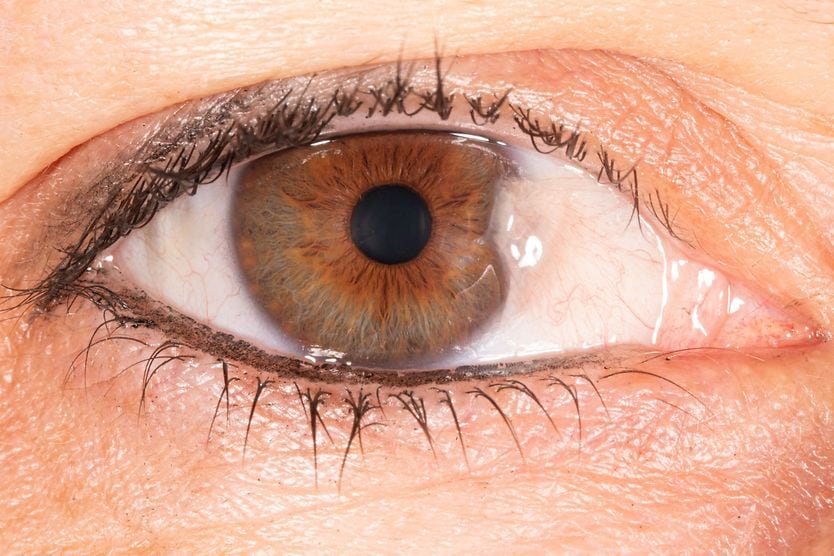
Floppy eyelid syndrome (FES) is a condition where the upper eyelid is unusually loose and "floppy." Many people’s eyelids have elasticity that keeps them from sagging. If that elasticity is not present in the upper eyelid, it could be due to FES. The defining feature is not droopiness but looseness. The upper lid is noticeably lax that it turns inside out with only light sideways pulling or even on its own during sleep. A drooping lid can occur alongside FES, but it is an associated finding rather than the condition itself. Other symptoms, such as irritation or redness, may be present too.
Floppy eyelid syndrome is uncommon. Researchers estimate somewhere between 2.3% and 3.8% of adults have this condition. It's hard to know exactly how many people have FES because it is underdiagnosed.
FES tends to be diagnosed in middle-aged men who are overweight or obese. One study found that of 511 patients, more than three-quarters were men, with an average age of about 55. This profile is not a rule, however, it is a trend. Roughly 30% of cases occur in women, and the condition has been reported in children too.
Signs and symptoms of floppy eyelid syndrome
The primary sign of floppy eyelid syndrome is eyelid laxity. This is when the eyelid becomes saggy or “floppy.” Eyelid laxity from FES usually affects the upper eyelid. Less often, the lower eyelid can be involved with lid looseness and outward turning (ectropion). However, it is typically associated with a separate condition called lax eyelid condition (LAC), not FES.
Another key feature of this condition is giant papillary conjunctivitis of the upper lid. It’s sometimes referred to as chronic papillary conjunctivitis. Regardless of the name used, this is when the insides of the eyelids become irritated. They may become red and swollen too.
Symptoms related to these two main features may include:
- Dry eyes
- Disrupted tear production
- Loose or stretchy eyelids
- Eyelids that turn outward with minimal effort
- Soreness or swelling of the eyelid
- The sensation that something is stuck in your eye
- Irritation
- Eye discharge
- Sensitivity to light
- Eyelash drooping and misalignment
For many people, FES symptoms worsen during sleep or right after waking up. This is especially true for people with FES who sleep on their side or stomach. When sleeping in either position, there’s ongoing pressure on the eyelid. The pressure combined with laxity may cause the eyelid to turn outward or inward when you are asleep.
When the eyelid turns inward or outward, the symptoms above are more likely to occur. You may also experience symptoms because your eyelids don't close all the way. This is called lagophthalmos, or specifically nocturnal lagophthalmos when your eyes don't fully close during sleep.
If the eye can’t self-moisturize, the risk increases for other eye health conditions. These include scarring on the cornea and keratitis (inflammation in the cornea). People with FES are also more likely to develop a condition called keratoconus where the cornea thins and bulges into a cone shape. Keratoconus and FES share a common trigger in eye rubbing, which is why it is recommended to keep your hands away from your eyes.
When appropriately diagnosed and managed, FES is not particularly dangerous. If unmanaged, it could lead to serious effects like vision impairment or loss.
Causes and risk factors
Researchers are unsure about the exact cause of FES. The current picture combines several factors:
- The tarsal plate – The firm strip of tissue that gives the eyelid its shape which loses elastin fibers along with enzymes that break elastin down are found at elevated levels in exactly the areas where those fibers have disappeared.
- Nightly pressure on the lid – Usually from side or stomach sleeping is thought to set this off by repeatedly squeezing the tissue, cutting blood flow on and off which can cause inflammation and tissue breakdown. This can be an important piece of information to tell your doctor.
- Eyelid structure variation – Some people may be more susceptible than others.
Most FES cases appear in adulthood, but it is not always acquired. Infants have been known to be born with eyelid laxity severe enough to require surgery to protect visual and general eye health development, sometimes as part of a broader genetic syndrome. Congenital cases are managed differently than the adult form and require proper management with a pediatric eye specialist.
The genetic component is not as predictable in people diagnosed with FES. Eyelid laxity turns up alongside inherited connective tissue disorders such as Ehlers-Danlos syndrome, where the mutations affect collagen. Separately, the strong male predominance has led researchers to propose a hormonal or X-linked influence.
Additionally, FES may co-occur alongside a few other conditions. It’s unclear if these conditions cause this syndrome or are risk factors.
The link between FES and sleep apnea
Obstructive sleep apnea (OSA) is the most common co-occurring condition in people who have FES. Studies estimate that somewhere between 25% and 60% of people with OSA have this syndrome.
OSA is a condition where the airways are partially or fully blocked. This leads to short periods where someone can’t breathe. During these periods, they wake up from sleep.
There is no causal link established between FES and OSA. Instead, they often co-occur or are associated with one another.
It’s important to diagnose both conditions, as they can impact overall health. Additionally, OSA can improve floppy eyelid syndrome and, in some people, reverse it — but it is one route among several treatment options.
Other risk factors
Other conditions may increase the risk of floppy eye syndrome too. These may include:
- Obesity – Defined by a body mass index (BMI) of over 30
- Down syndrome – A genetic condition where someone has an extra chromosome at birth
- Congenital cataracts – A condition where someone is born with cataracts
- Congenital hyperglycinemia – A rare condition where a baby cannot process glycine, an amino acid that supports cognitive health
- Some thyroid conditions – Especially Hashimoto’s thyroiditis
- Asthma – A chronic respiratory condition
- Atopy – A genetic predisposition toward adverse responses to allergens
- Chronic kidney failure – When the kidneys stop functioning as intended
- Diabetes – A condition where blood glucose levels are too high
- Gastroesophageal reflux disease (GERD) – A condition where someone often experiences acid reflux (heartburn)
- Hypercholesterolemia – A condition where someone has high cholesterol
- Ischemic heart disease – Heart damage due to narrowing arteries
- Osteoarthritis – A condition that leads to stiff, painful joints
Diagnosis of floppy eyelid syndrome
If you experience any symptoms that suggest floppy eyelid syndrome, see an eye doctor. An eye doctor specializes in optometry or ophthalmology and can diagnose FES. To diagnose this condition, they will ask about symptoms. Then, the eye doctor will examine the eyes and eyelids.
They may perform a few tests as well:
- Snap back test – The eye doctor gently pulls the eyelid away from the eye and lets go. If the lid takes more than about two seconds to settle back, or if you have to blink to reset it, that counts as laxity.
- Fluorescein staining – An eye test using a yellow-green-colored drop on the eye’s surface to assess foreign objects or damage to the cornea.
- Schirmer test – Measures tear production.
From there, they can determine if FES is the appropriate diagnosis. If so, they will grade symptom severity on a scale. No gold standard exists for ranking severity, but several grading systems are in use including McNab, Liu and others. Most work the same way: The doctor lifts the upper lid and judges how much of the inner lid surface becomes visible, with more exposure indicating more severe disease. Symptom severity informs what treatment may be most suitable.
An eye doctor may also recommend tests for commonly co-occurring conditions, such as a sleep study for OSA.
FES is associated with a higher risk of glaucoma largely through its overlap with sleep apnea. An eye doctor will check eye pressure and examine the optic nerve. While this is evaluating for a separate condition, it is not a sign that FES is turning into glaucoma.
Treatment options for floppy eyelid syndrome
There are a few ways to effectively treat floppy eyelid syndrome. Many are considered conservative treatments. A few are surgical interventions.
Conservative treatments
Conservative treatments refer to non-surgical methods to manage FES. This category may include:
- Taping eyelids shut for sleeping
- Wearing an eye shield to bed
- Using dry eye treatment such as artificial tears, ointments or gels before sleeping
If someone has OSA, treating the sleep apnea may reduce inflammation and improve ocular symptoms over time. A common OSA treatment is continuous positive airway pressure (CPAP) therapy. An alternative is bilevel positive airway pressure (BPAP) therapy. Both therapy types may help with respiration when sleeping.
Note: It is not recommended to use numbing (anesthetic) eye drops for ongoing eye discomfort. They mask symptoms while significantly raising the risk of vision loss from the cornea breaking down.
Surgical interventions
If other treatment options don’t work, an eye doctor may recommend eyelid surgery. The goal of every option is the same, to shorten and tighten the lid to avoid it turning inside out. A common procedure is eyelid tightening surgery.
Another surgical option is a lateral tarsal strip procedure. Historically, this was used to tighten the lower eyelids. Now, it’s sometimes recommended for FES too. It is the most common operation for FES and is widely treated as the reference procedure, with success rates above 90%. Other established treatment options include removing a full-thickness wedge of the eyelid, tightening the tendon at the inner or outer corner of the eye called medial canthoplasty, and suspending the lid from the eye’s bony orbital rim.
For people whose FES is associated with obesity and sleep apnea, weight loss, including after bariatric surgery, and other treatment options such as GLP-1s have been associated with improvement in eye symptoms as the apnea improves.
Managing floppy eyelid syndrome and preventing complications
People diagnosed with FES should follow any lifestyle adjustments recommended by their eye doctor. This may include protecting your eyes when you sleep or using ointment before bed.
It is also recommended to avoid rubbing the eyes. This may make eyelids less elastic and, over time, contribute to the corneal thinning of keratoconus.
If someone has FES, they may also want to sleep on their back, not their side or stomach.
Prognosis and long-term outlook
The prognosis for FES is promising when the syndrome is treated. When FES is managed, the risk of complications decreases. Many people experience fewer or less severe symptoms after treatment.
For optimal outcomes, it is recommended to schedule a comprehensive eye examination if you notice any FES-related symptoms. An eye doctor can diagnoseand start treatment as early as possible. Early detection also can reduce the risk of serious complications, such as glaucoma.
Taking control of your eye health
FES is an underdiagnosed condition. It’s marked by loose upper eyelids and red, irritated or swollen eyelids. If you experience symptoms that may be due to floppy eyelid syndrome, contact an eye doctor. They can assess symptoms and determine an appropriate treatment plan.