Dominant eye test: How to find your dominant eye


Dominant eye: What is it?
Have you heard the terms dominant eye and ocular dominance but aren’t sure what they mean or how you perform a dominant eye test? Here are the basics.
Your dominant eye is the eye that the visual part of your brain tends to prioritize for certain tasks. It provides a little more input and is a little more accurate about the location of objects.
The term dominant eye is often used to describe a very common part of normal vision. Normal eye dominance doesn't mean that one eye has better vision or is healthier than the other. The two eyes function well as a team, and both have similar visual acuity. One eye is simply the “leading” or preferred eye.
But sometimes, dominant eye can mean the eye with stronger vision or function in cases of amblyopia and strabismus.
Eye dominance test
Here’s a simple dominant eye test to determine which eye is your preferred eye:
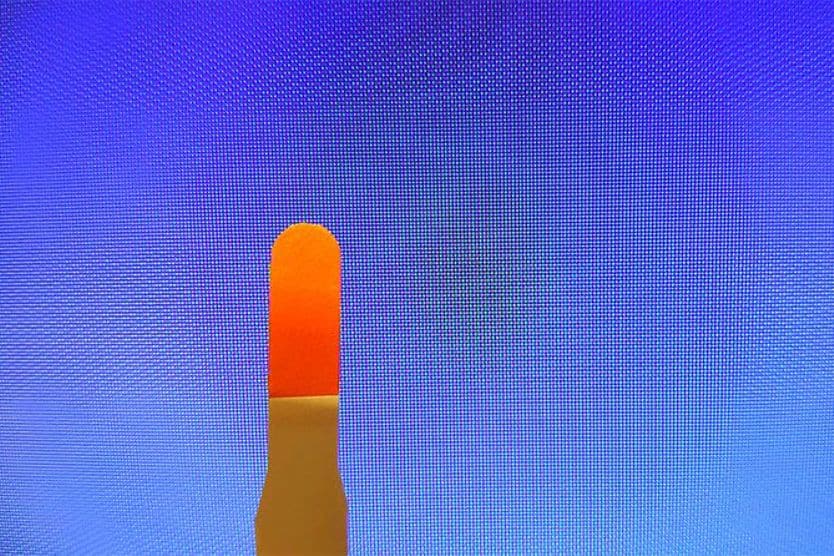
- Extend your arms out in front of you. Create a triangular opening between your thumbs and forefingers by placing your hands together at a 45-degree angle. (See animation at the top of the article.)
- With both eyes open, center this triangular opening on a distant object, such as a wall clock or door knob.
- Close your left eye.
- If the object stays centered, your right eye (the one that’s open) is your dominant eye. If the object is no longer framed by your hands, your left eye is your dominant eye.
Here’s another easy way to find your dominant eye:
- Extend one arm out, holding the thumb of that hand in an upright position. (Or you could use your index finger instead of your thumb.)
- Keeping both eyes open and focused on a distant object, superimpose your thumb on that object. (Don’t worry; it’s normal if it looks like your thumb partially disappears.)
- Alternately close one eye at a time.
- The eye that keeps your thumb directly in front of the object while the other eye is closed is your dominant eye.
Both of these dominant eye tests are categorized as “sighting” tests. This is because they involve aligning a visual target with a makeshift sighting device (mimicking the “sight” on the barrel of a rifle). Your sighting dominant eye is the one your brain tends to rely on for tasks that only use one eye.
Sighting dominant eye tests are simple to perform, and experts tend to agree they are generally accurate. However, there isn't a single eye dominance test that researchers consider the most reliable. This is partly because results can be affected by handedness and other factors.
For example, studies suggest that motor habit and which hand is used can skew the results. Self-testing and just being aware of being tested may bias results, as well. There is also evidence that your sighting eye may vary based on viewing angle.
Plus, sighting eye dominance isn’t the only kind of eye dominance. Another type is called sensory eye dominance. Your sensory dominant eye is the one your brain might prefer during tasks that use both eyes.
It’s possible for your sighting eye to be different from your sensory eye. And it’s possible that your sensory eye may vary for near and distance vision.
So, some researchers argue that non-sighting dominant eye tests may be more accurate, depending on why you’re being tested.
In these tests, the subject keeps both eyes open, and visual stimuli are presented to each eye separately with the use of special optical devices.
One type of sensory test is called blur suppression or the blur method. In this test, the images shown to each eye are blurred one at a time. The eye that’s less able to ignore the blur is your sensory dominant eye.
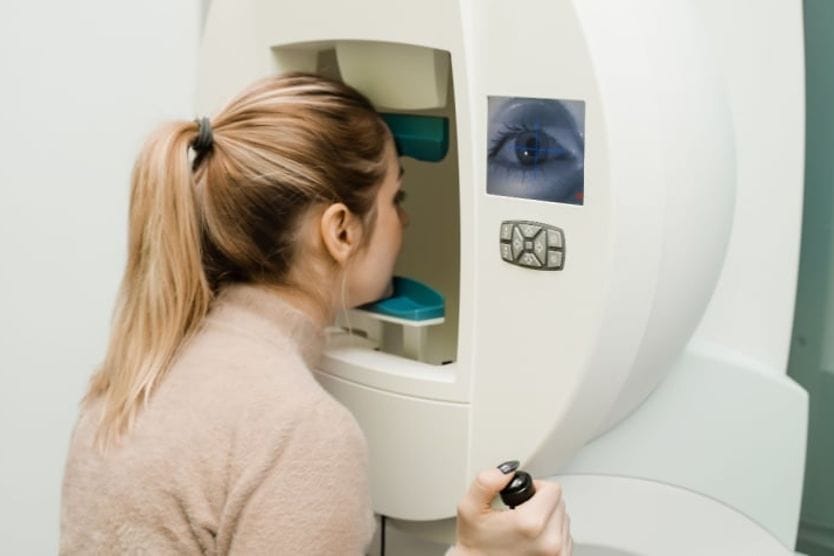
But this is the limitation of non-sighting dominant eye tests. The equipment and expertise required to perform them are typically found only in specialized vision clinics or research facilities.
Eye dominance and handedness
Eye dominance and handedness (being right-handed or left-handed) are not directly related. But these traits are significantly associated. Population studies show that about 90% of people are right-handed and about 72% are right-eye dominant.
Research has shown that the odds of a person who is right-handed being right-eye dominant are high. In fact, odds are approximately 2.5 times greater than the odds of that person being left-eye dominant.
Still, it’s impossible to accurately predict eye dominance based on handedness.
No dominant eye: Is it possible?
Is it possible to not have a dominant eye? Yes, but it’s a lot less common.
If a strong degree of dominance is not clear in a dominant eye test, it’s more likely that a person has mixed ocular dominance. This is also called alternating ocular dominance. In this case, one eye is dominant for certain functions or tasks, and the other eye is dominant at different times.
Mixed dominance affects your vision differently than cross dominance. While people with mixed dominance don't have a consistently dominant eye, those with cross dominance do — but it's on the opposite side as their dominant hand.
Some people may perform a sighting dominant eye test and find that the visual target is not perfectly aligned with either eye. This may be true with the triangular opening between their hands or with their thumb (depending on which type of sighting test they perform).
There is a spectrum of degree of eye dominance among individuals. (The same is true for handedness.) In other words, some people may have one eye that is very dominant. Others may have less of a difference in the dominance of their two eyes.
To some degree, however, eye dominance is hardwired in your brain.
Within the visual cortex (the part of the brain that processes visual information) are stripes of nerve cells (neurons) called dominant eye columns. These bands of neurons seem to respond more to input from one eye or the other. They are also important to the development of binocular vision.
But researchers also believe there is some overlap and plasticity in these dominant eye columns. This may explain how eye dominance can be variable, alternating and even incomplete in some individuals.
It may also explain why dominance can shift in cases of vision loss in one eye.
Fortunately, the “good” eye can often take over for the other eye. But that also means it can suppress defects in images from the other eye. In other words, it could hide blind spots and other visual symptoms of eye disease until they are too large to hide.
Dominant eye in eye care
So what’s the practical importance of performing a dominant eye test?
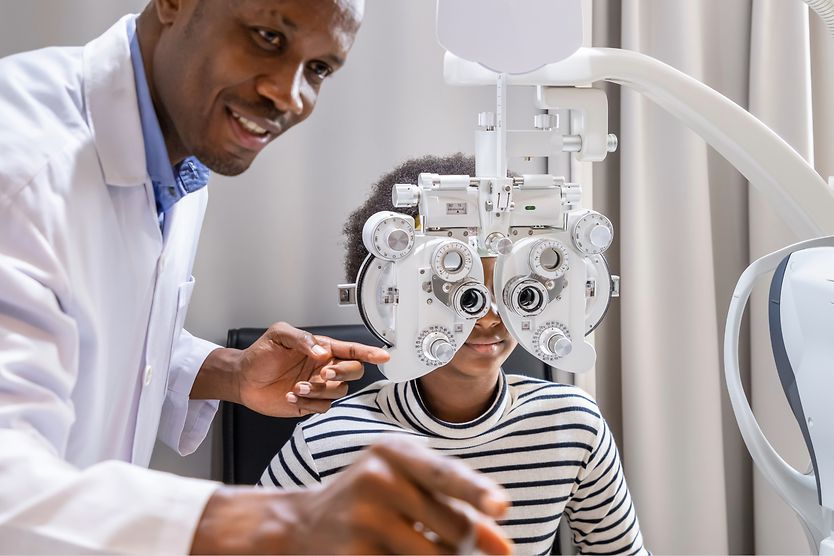
Ocular dominance testing is important in many areas of eye care. A few examples of when an eye doctor needs to know your dominant eye include:
- Contact lens fittings for presbyopia – Eye dominance is a key factor in getting the proper fit in monovision and multifocal contact lenses.
- Preparing for cataract surgery – It’s critical in choosing the ideal intraocular lens for each eye.
- Low-vision therapy – It’s key in both fitting and learning how to use certain low-vision aids, such as bioptic telescopes.
Dominant eye in shooting, photography and sports
Knowing which eye is your dominant eye can also help you perform better in a variety of activities. Here are a few common examples:
Dominant eye in shooting
Having trouble hitting moving targets with your rifle? It could be that you have crossed dominance. This means your dominant eye and dominant hand are on opposite sides of your body.
For example, if you are a right-handed (and therefore right-shouldered) shooter but have a dominant left eye, you may find yourself shooting behind a left-to-right moving target and in front of a right-to-left moving target. Being aware of this can help you make the correct adjustments to improve your shooting accuracy.

Another option to compensate for cross-dominance is to keep both eyes open until just before you take your shot. Keeping both eyes open enables you to use 100% of your peripheral vision and depth perception to get ready for the shot. Closing your cross-dominant left eye just before the shot lets you make the last-second adjustment to better align the barrel of your rifle with the moving target.
These concepts can also apply to archery and other activities that require precise aim.
Dominant eye in photography
Knowing which eye is your dominant eye is important when composing a photograph by looking through the viewfinder of a digital single lens reflex (DSLR) camera or similar film camera.
Using your dominant eye can give you an accurate preview of the actual shot. Using your non-dominant eye can cause certain details to be slightly displaced laterally or off-frame.
Dominant eye in sports
If (like many people) you’re right-handed and have a dominant right eye, certain sports may require you to position your head properly. This can enable you to take full advantage of your dominant eye.
For example, in baseball or softball, you need to turn your head enough when batting so your dominant right eye can see the rotation, speed and position of the approaching pitch. The same is true for cricket.
Another example is golf. Proper alignment of putts (and even fairway shots and drives) requires adequate head turns. This is vital to fully use your dominant right eye to visualize the shot you’re about to take. It’s also important to accurately position your body and club head to achieve it.
If you are serious about sports and are looking for guidance on how to use your eyes to enhance sports performance, consider visiting an eye doctor who specializes in sports vision.