Types of eyeglass lenses: What to know before you choose


Why are there so many different types of eyeglass lenses?
Eyeglass lenses are designed to fit real life, not a one-size-fits-all standard. The way you read, drive, work and move through your day all can place different demands on your eyes, which is why lens options vary so widely.
Some types of eyeglass lenses focus on correcting specific vision needs, while others differ in materials that affect thickness, weight or durability. Coatings can also change how lenses perform by helping to reduce glare or making them more resistant to damage.
Because these details matter, choosing lenses is not just a cosmetic decision. An eye care professional can help match the right lens options to how you actually use your vision.
Types of lenses for vision correction
Eyeglass lenses correct vision in different ways, depending on the focusing needs of your eyes. Some lens designs are intended to correct vision at a single distance, while others are designed to provide clear vision across multiple distances.
Single-vision lenses
Single-vision lenses have one consistent corrective power across the entire lens. They are usually suggested for vision correction at one distance, not for both near and far.
Eye doctors commonly recommend single-vision lenses for:
- Nearsightedness – You may see well up close, yet struggle to focus on objects that are farther away.
- Farsightedness – Objects in the distance are easier to see, while close-up details may look blurry.
- Astigmatism – An uneven eye shape causes blurred or stretched vision at multiple distances.
- Presbyopia – Near vision gradually loses sharpness as your eyes age, even if distance vision remains clear.
Progressive lenses
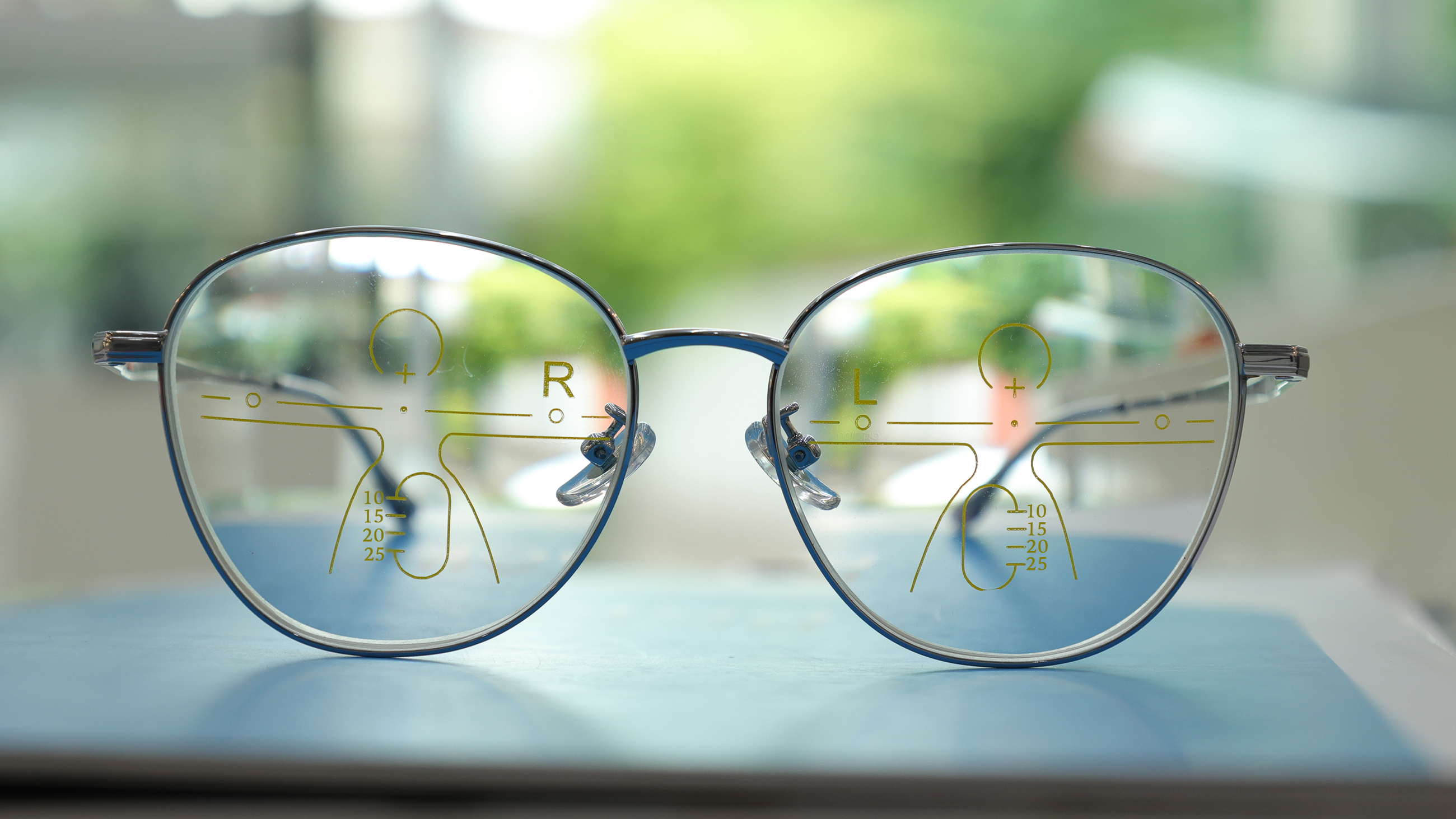
Progressive lenses, or progressive addition lenses (PALs), are also referred to as multifocal lenses, and let you see clearly at multiple distances using one pair of glasses. The lens power changes smoothly from top to bottom, so there are no visible lines on the lens.
These lenses are commonly prescribed as vision needs change with age. They allow you to move between daily tasks without switching glasses.
Progressive lenses help with daily vision needs, like:
- Seeing far away for activities, like driving
- Seeing at arm’s length for screens or household tasks
- Seeing up close for reading or phone use
There is usually an adjustment period with progressive lenses. Since there are no lines to guide your eyes, you have to learn where to look through the lens for each task. At first, stairs or uneven ground may look off if you glance through the lower part of the lens.
Most people adjust within one to two weeks, but it can take up to a couple of months for some wearers. Wearing your glasses often and getting a good fit can make the change easier.
Bifocal and trifocal lenses
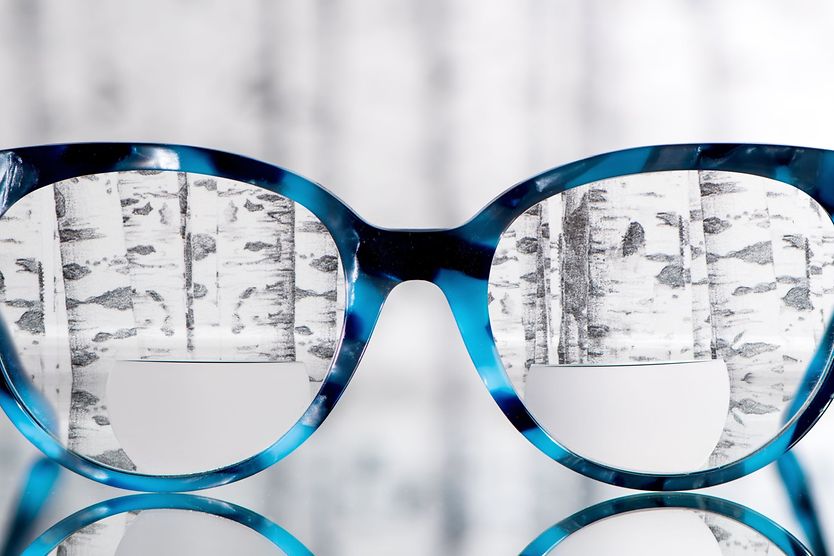
Like progressive lenses, bifocal and trifocal lenses are designed to help you see clearly at more than one distance. However, instead of a smoother transition, there are distinct lines in the lenses where they change power.
Bifocal lenses have two areas of vision correction. Wearers can use the top half of the lenses for seeing far away and the bottom half for nearby tasks. This is a great option for individuals who don’t want to have to switch between two pairs of glasses, depending on the activity.
Similarly, trifocal lenses provide three zones of vision correction. This can make it easier to move between close-up tasks, intermediate activities and distance viewing throughout the day.
No-line bifocals are available which correct vision only at distance and near. They are not to be confused with progressive lenses that can manage multiple ranges of vision.
Prism lenses
Prism lenses help manage double vision (diplopia). They change how light enters the eye, reducing or removing overlapping images.
Rather than forcing your eyes to strain or shift position, the prism moves the image so it reaches the correct area of each retina. When both eyes receive images that are properly lined up, the brain has an easier time combining them into a single image.
Prism lenses can help reduce or manage double vision that comes from the eyes not working together as they should. This may include issues related to:
- Muscle issues with the eye – Problems that affect how the eye muscles move or coordinate, causing the eyes to point in slightly different directions.
- Brain-related concerns – Changes in how the brain aligns or interprets visual information, sometimes following injury or other neurological events.
- Nerve conditions – Disruptions in the nerves that control eye movement or visual signaling, which can interfere with proper alignment.
Prism lenses are not effective for every type of double vision. Identifying the cause is a crucial step before using prism correction as part of a treatment plan.
Types of materials used in eyeglass lenses
The ideal material for your lenses varies, depending on several factors, including your prescription strength and daily activities. The right material can affect how your glasses feel, look and perform throughout the day.
Standard plastic lenses (CR-39)
Plastic lenses are a popular eyeglass lens type. They are often the go-to option for various prescriptions.
They work well for single-vision and multifocal lenses. You can also add coatings or tints to match your visual needs and preferences.
Common features of plastic eyeglass lenses include:
- Reduced weight compared with glass lenses
- Lower risk of shattering
- UV protection that may be built in or added as a coating
Polycarbonate lenses
Polycarbonate lenses are known for being light and relatively thin, even in stronger prescriptions. These lenses are also impact-resistant. That is why they are commonly used in children’s glasses, safety eyewear and sports glasses.
These lenses block UV radiation naturally, so no extra treatment is needed. However, because the surface is softer than many other lens materials, a scratch-resistant coating is usually recommended.
Specialized polyurethane-based lenses
Lenses made with polyurethane-based materials are very thin and lightweight. Though delicate, the lens material is strong, which increases its impact resistance.
The lenses also block 100% of UVA and UVB rays. Be advised that the features of polyurethane-based lenses are reflected in their price and are generally more costly than polycarbonate lenses.
High-index lenses
High-index lenses are designed to keep glasses slimmer and easier to wear than standard lenses. This is because the materials improve how light travels through the lens. They can reduce lens thickness and help minimize the bulky look often seen with high-power prescriptions.
High-index lenses may provide cosmetic and comfort benefits. However, they might have lower optical clarity than some other materials. They can also be more prone to damage, depending on the type used.
When deciding on high-index lenses, it may help to consider:
- Whether your prescription strength justifies a higher-index material
- How important visual clarity is compared with lens thickness
- Your typical, preferred frame style
- Willingness to pay more for specialty lens materials
Glass lenses
Glass lenses were once a common choice for eyeglasses. They are known for providing clear vision and were long valued for their optical reliability.
These lenses work best for lower prescriptions. As the prescription strength goes up, glass lenses get thicker and heavier. This can make glasses less comfortable to wear and limit frame options.
Glass is also more likely to break if dropped. Because of this, lenses often need special treatments to meet current safety standards. Even with treatment, the risk of breakage is higher than with newer materials.
Another limitation is UV protection. Glass lenses do not block ultraviolet light on their own and usually require an added coating. Due to these factors, glass lenses are now rarely used in everyday eyewear in the U.S.
Types of eyeglass lens coatings
In addition to determining the material of your lenses, you should also consider any lens coatings that can help provide the best possible visual acuity. Many options can allow for added comfort and durability, helping to protect the longevity of your eyewear.
Anti-reflective
Anti-reflective coatings are thin layers on eyeglass lenses. They reduce glare and let more light in. This allows for clearer and more comfortable vision. It can be especially helpful for night driving or screen use.
Some lens materials are more likely to cause reflections. Polycarbonate and high-index lenses, in particular, often benefit the most from an anti-reflective coating.
There are many options for anti-reflective coatings, so ask your optician what you’re paying for. It’s usually worth it to pay extra for the better coatings as they offer longer warranties, some up to two years.
Scratch-resistant
Scratch-resistant coatings add an extra layer of durability to lenses that are more easily scratched during daily use, such as plastic lenses. This added protection can help lenses hold up better over time. It can also help preserve the clarity of the lens by limiting surface wear.
UV protection
UV protection coatings help block ultraviolet light from reaching your eyes. Some lens materials already provide this protection, but others need this additional coating to reduce UV exposure, which is linked to long-term eye damage.
Wearing lenses that filter UV light can lower the risk of cataracts and eye surface issues.
Specialty coatings
Some lens coatings are designed for specific situations. These can include:
- Photochromic lenses – These lenses automatically darken in bright light and return to clear indoors, which can be helpful if you want one pair of glasses for both indoor and outdoor use.
- Blue-violet light* filtering – These coatings filter some short-wavelength visible light and ultraviolet light. While they are often chosen for comfort or preference, they are not required for eye health and do not prevent eye disease.
- Polarized lenses – Polarization cuts glare reflected off flat surfaces, like water, snow or pavement, which can optimize visual comfort and lens clarity during outdoor activities.
- Anti-fog coatings – These coatings are made to cut down on moisture on lenses. They can help you see clearly when moving from cold to warm environments.
How to choose the best types of lenses for your glasses
For most people, choosing lenses is about what works best day to day. Comfort, durability and visual clarity matter in different ways, depending on how you use your glasses. Thinking about your routine can help narrow your lens type options without overcomplicating the decision.
Safety elements also play a factor. Kids benefit from wearing impact-resistant lenses, such as polycarbonate. Also, athletes and some workers may require lenses that can endure more wear and tear.
With so many choices, discussing your options with an eye care professional can help. They can guide you to lenses that fit your daily life, making the decision easier.
*Blue-violet light is between 400 and 455 nm as stated by ISO TR20772-2018. (ISO: International Standards Organization – “Ophthalmic optics – Spectacles lenses – Short Wavelength visible solar radiation and the eye, FD ISO/TR 20772”)