Refractive errors

What is a refractive error?
A refractive error is a common eye problem that affects the way light focuses inside your eye. There are four main types that can affect your vision in different ways. Refractive errors can make things look blurry up close, far away or both.
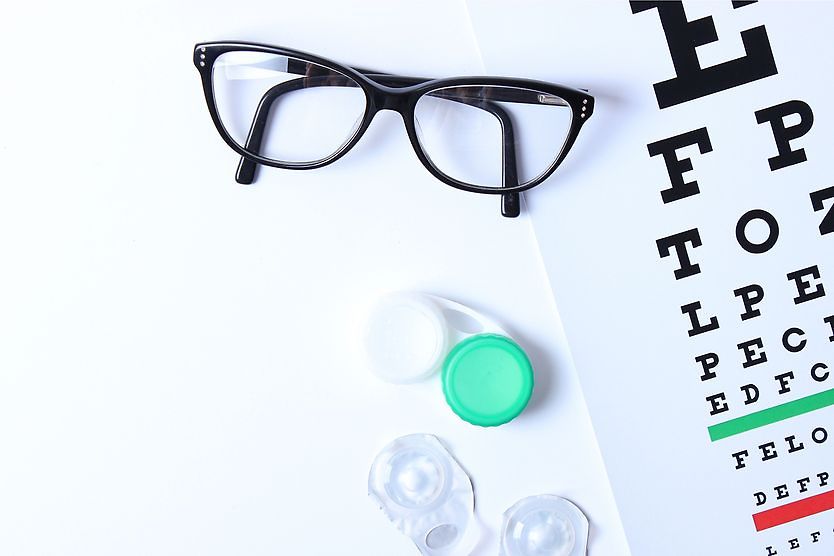
An eye doctor can correct this blurry vision with glasses or contact lenses. They can give you a new or updated vision prescription after an eye exam.
Are refractive errors eye diseases?
Refractive errors are optical conditions caused by the way the eye focuses light. While they are sometimes distinguished from other eye diseases, they can have a significant impact on vision and quality of life — particularly myopia (nearsightedness), which is increasingly recognized as a disease that can progress and lead to serious complications if left unmanaged.
How common are refractive errors?
Refractive errors are extremely common. Studies have found that over 150 million Americans have at least one refractive error.
Types of refractive errors
The four common types of refractive errors are:
- Nearsightedness (myopia) – Distant objects look blurry.
- Farsightedness (hyperopia) – Close objects look blurry.
- Astigmatism – Things can look blurry or distorted at all distances.
- Presbyopia – It gets harder to focus on near objects as you get older (usually after age 40).
Many people have more than one refractive error. For example, a nearsighted person can also have astigmatism (and presbyopia if they're middle-aged or older).
What causes refractive errors?
Light needs to focus correctly inside the eye for you to see clearly, but uncorrected refractive errors change this process and cause blurry vision. To understand why this happens, it helps to know how light normally focuses inside the eye.
How the eye uses refraction to see clearly
When light enters the eye, it needs to bend the right way for you to see clearly. This bending of light is called refraction. It works like this:
- Light enters your eye through the clear front surface (the cornea) and bends.
- It passes through the pupil, and then a round, flexible object (the crystalline lens) that bends the light a little more.
- The light travels to the back of your eye, where the light-sensitive layer of cells (the retina) "captures" the light and sends the signal to the optic nerve — the cable that connects the eye to the brain.
- Your brain reads and processes the information signals from the retina so you can see the image.
While the cornea and lens both play important parts in refracting light inside your eye, the cornea does the majority of the work. As much as three-quarters of all light refraction involved in your vision happens through the cornea.
How refractive errors change your vision
Light is supposed to refract (bend) so it focuses directly on the retina. When you have an uncorrected refractive error, the light doesn't hit the right spot.
When light isn't refracting the right way, the focus point can be:
- In front of the retina (nearsightedness)
- Behind the retina (farsightedness or presbyopia)
- Uneven across the retina (astigmatism)
These conditions make your vision blurry at certain distances.
The majority of refractive errors happen because:
- The eyeball is too long (nearsightedness) or too short (farsightedness)
- The cornea has an uneven curve (astigmatism)
- The cornea is too steep (nearsightedness) or too flat (farsightedness)
- The lens gets less flexible with age (presbyopia)
What are the symptoms of a refractive error?
Refractive errors make it harder to focus on things in some way. The main symptom is blurry vision at near, far or all distances. They can also cause:
- Squinting
- Eye strain
- Headaches
- Double vision
- Glare or halos around lights
For many people, the refractive error is about the same in both eyes. But some people have a much more severe error in one eye than the other, which is called anisometropia.
How are refractive errors detected?
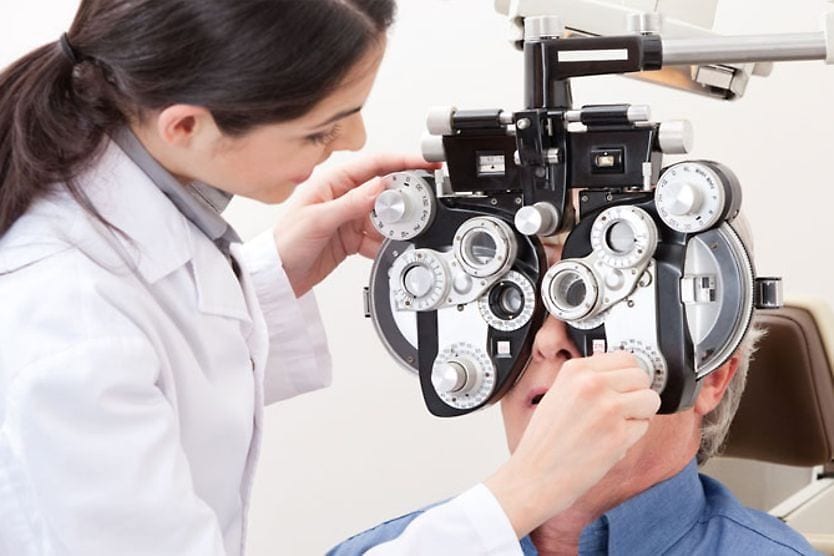
An eye doctor can tell you if you have a refractive error during an eye exam. This part of the exam typically involves:
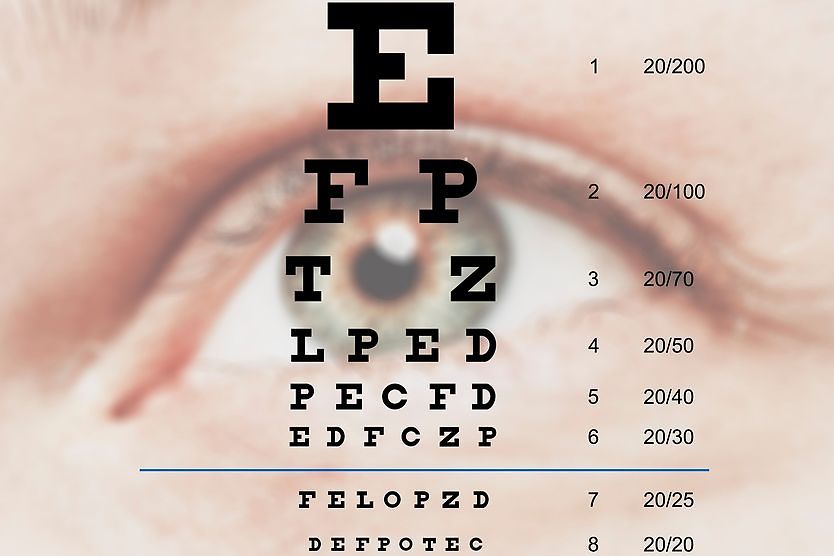
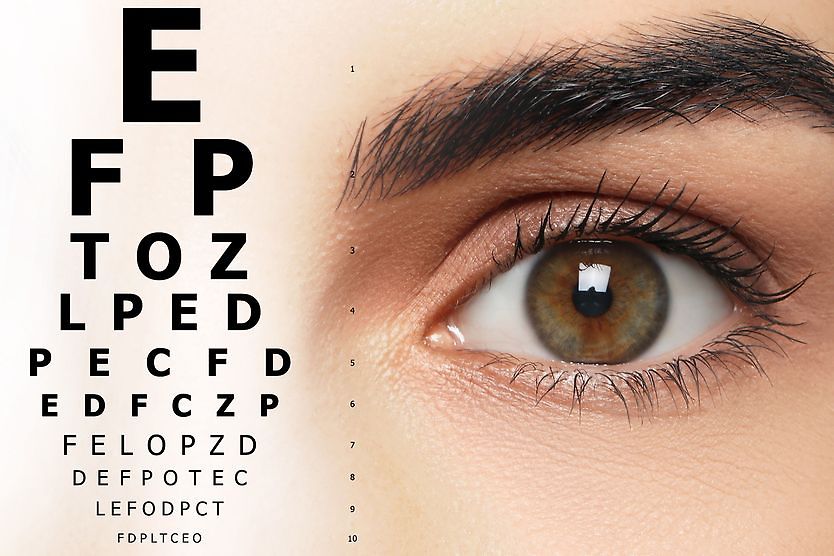
- Visual acuity test – You read rows of letters on an eye chart to see how clearly you can see at different distances.
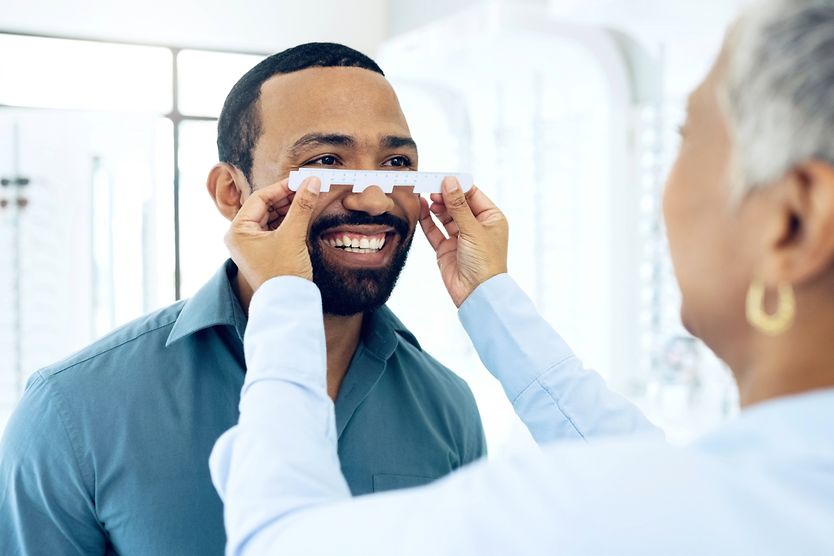
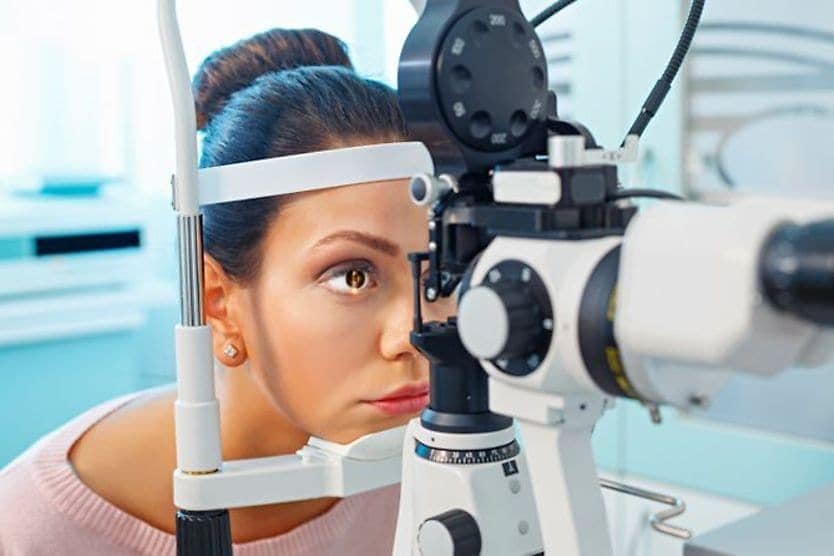
- Refraction test – You look into a device that helps measure the way your eyes focus light. A refraction test can include an automatic reading (with an autorefractor machine), a manual reading (with a phoropter device) or both. The manual refraction is when the doctor switches between different lenses and asks you which ones make the letters on the eye chart look sharper.
The eye doctor uses these results to tell you whether you have refractive errors and if so, write you a prescription for glasses. The prescription includes all the measurements you need to buy eyeglasses or sunglasses that correct your vision.
If you want reading glasses, the eye doctor can also tell you which focusing power to buy. If you want contacts, you'll also need a contact lens fitting to make sure the lenses are comfortable and correct your vision well.
LEARN MORE about the other common tests in an eye exam
Treatment options for refractive errors
The majority of refractive errors are simple to correct with one or more of the following options:
- Prescription eyeglasses – The lenses bend light so it focuses correctly on your retina. They're generally safe and easy to update as your vision changes.
- Prescription contact lenses – The lenses sit directly on your eyes to correct vision. Proper contact hygiene is important to avoid irritation and infection.
- Reading glasses – Reading lenses help with near tasks like reading or using a smartphone. You can buy these with or without a prescription.
- Refractive surgery – A laser or small instrument reshapes your cornea to correct your vision. Some people choose refractive surgeries like LASIK when they want to wear glasses or contacts less, but not everyone is a good candidate.
Your eye doctor can help you decide which corrective option is ideal for you based on your specific refractive error, how severe it is and your personal preferences.
When should you see an eye doctor?
Schedule an eye exam any time you notice changes in your vision. These changes could be symptoms of a new or changing refractive error, and your eye doctor can help you see clearly.
Even if your vision seems fine, eye exams every one to two years let your eye doctor:
- Diagnose new refractive errors and/or monitor the ones you already have.
- Keep your glasses or contact lens prescription up to date.
- Check for other eye health issues.
Keeping up with regular eye exams helps ensure your vision stays sharp and your eyes stay healthy.
READ NEXT: How often should you get your eyes checked