How to become an optometrist

What is an optometrist?
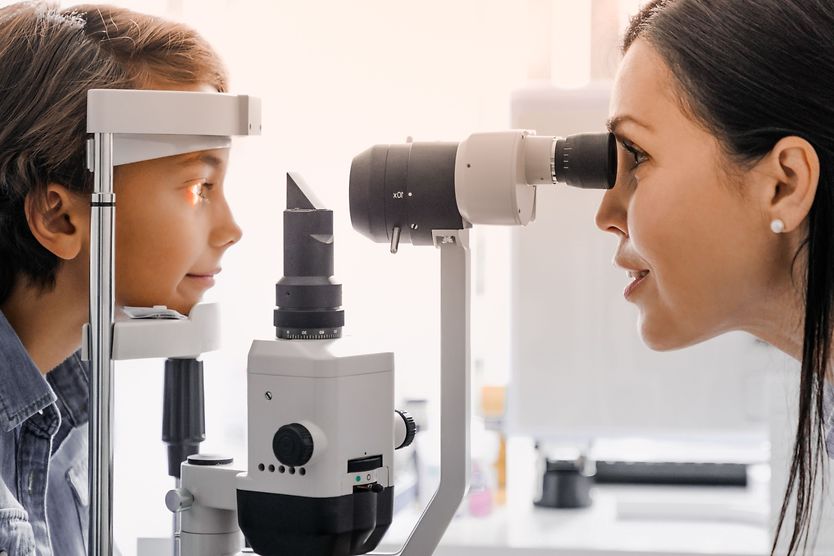
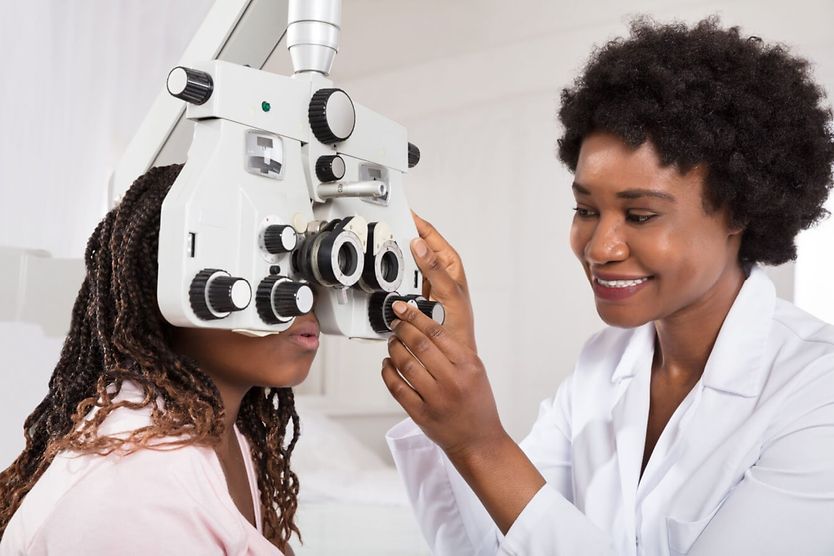
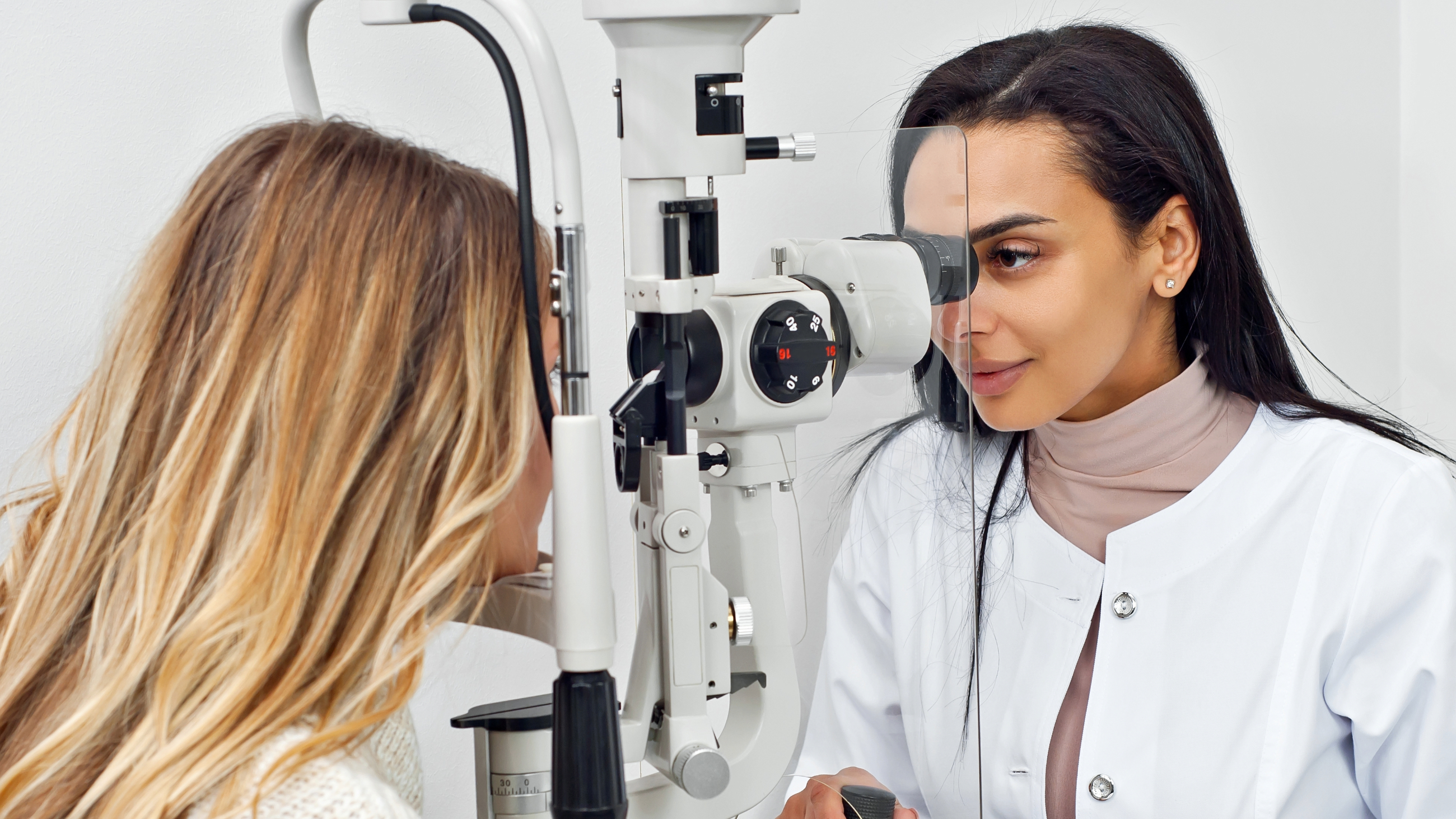
An optometrist is an eye doctor who cares for vision and eye health. These professionals diagnose and treat common conditions and diseases affecting the eyes. They also prescribe treatments to help improve vision. In some states, optometrists are authorized to perform minor in-office procedures.
Optometrists are not the same as ophthalmologists or opticians. Optometrists serve as primary eye care providers, perform eye health and vision exams along with treating a variety of eye conditions.
Opticians take measurements for eyeglass frames and guide patients in selecting lens materials. They also help patients with issues, such as learning to put in and take out contact lenses.
Optometrists refer patients to ophthalmologists for surgery or complex eye conditions. Eye care professionals often work together to provide comprehensive eye care.
SEE RELATED: Optometrist vs. ophthalmologist: How to choose an eye doctor
What does an optometrist do?
Optometrists are primary eye care providers. They assess eye health and detect vision problems. The responsibilities of optometrists generally include:
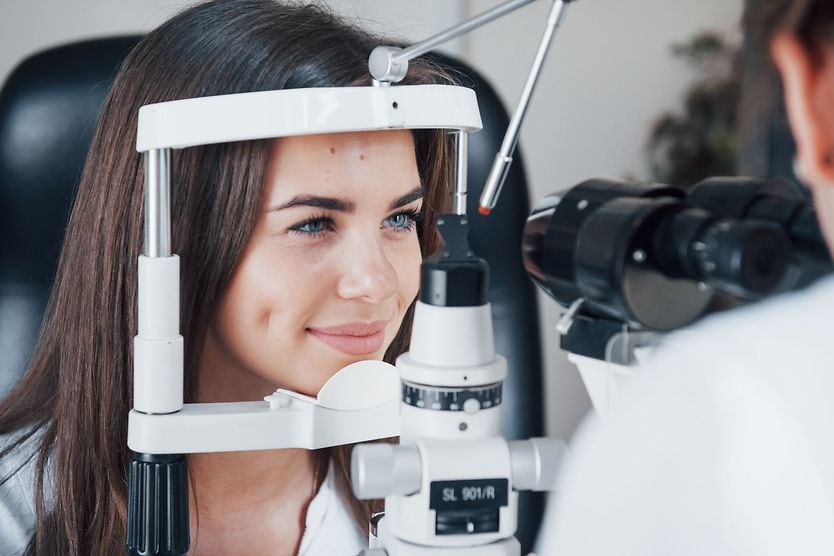
- Performing eye exams
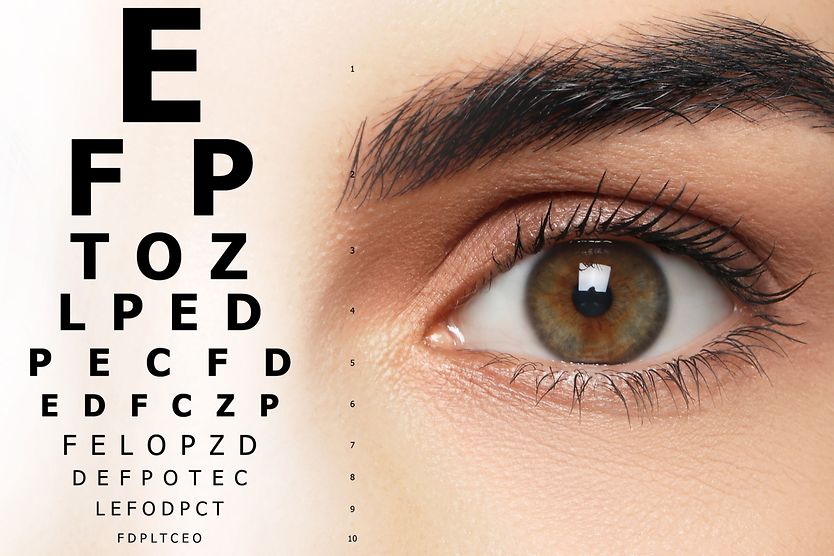
- Performing vision tests
- Diagnosing refractive errors and other eye conditions
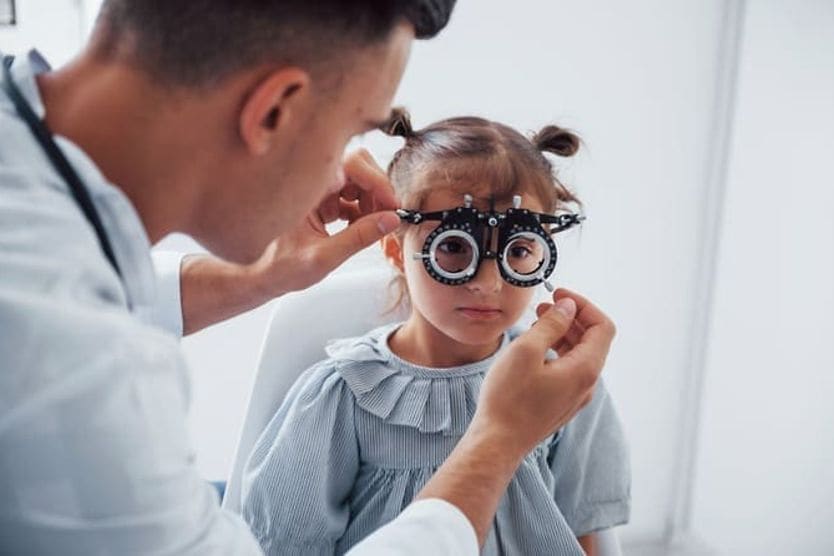
- Prescribing corrective lenses (eyeglasses and contact lenses)
- Diagnosing and treating common eye conditions
- Performing minimally invasive in-office procedures
- Providing care before and after eye surgery
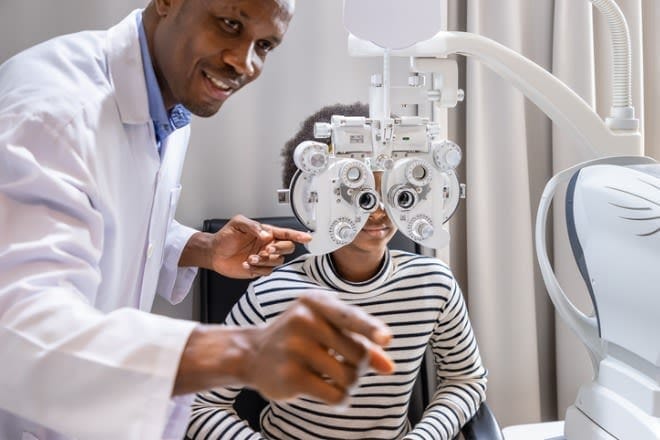
They may also prescribe medications for eye conditions. This can vary by state and the scope of licensure.
What schooling is needed to be an optometrist?
Becoming an optometrist begins with a four-year undergraduate (bachelor’s) degree. A four-year accredited optometry doctorate program must also be completed.
Undergraduate degree
An undergraduate degree must first be attained. This degree is typically in science-related studies, like biology or health sciences. Pre-optometry science course requirements, similar to pre-med requirements, must be completed. Specific coursework that must be completed to apply to optometry school typically includes:
- Inorganic chemistry
- Organic chemistry
- Biochemistry
- Physics
- Calculus
- Biology
- Physiology
- Microbiology
Admission into optometry schools and universities is considered competitive. Earning above-average grades as an undergraduate is necessary for getting into an optometry program.
Students may apply to a Doctor of Optometry program after earning a bachelor’s degree, or completing a dual-degree program.
Optometry Admissions Test (OAT)
Students are required to take an entrance exam before applying to an optometry program. It is called the Optometry Admissions Test (OAT). The OAT measures academic aptitude and the ability to understand scientific information. It includes four tests on the following subjects:
- Survey of the natural sciences
- Reading comprehension
- Physics
- Quantitative reasoning
Optometry doctorate program
Optometrists do not go to medical school, rather they attend optometry school — a doctoral program — to become doctors of optometry. In this four-year post-graduate program, they study body systems, physiology, neurosciences, optics, pharmacology, eye physiology and anatomy, vision conditions and additional related subjects. The fourth year, especially, focuses on clinical training. Such training may occur at the school’s clinic, in a private practice, at an academic center, VA or hospital setting. Completing the program earns them a Doctor of Optometry (OD) degree.
Eye doctors with an OD degree are not medical doctors (MD) or doctors of osteopathy (DO). They carry the “doctor” title, having earned a doctoral degree.
Cost of schooling for an optometry degree
The cost of getting an optometry degree varies by school. It is also affected by whether in-state or out-of-state tuition applies. In 2026, yearly tuition for this program ranged approximately as follows:
- In-state students: $38,817 – $50,244
- Out-of-state students: $51,225 – $54,424
These costs do not include other educational or living expenses.
Residency programs
Optometrists may choose to specialize in a specific area of eye health or primary eye care. This may involve attending a one-year residency after completing an optometry program. A residency may also help increase their candidacy for certain jobs.
How long does it take to become an optometrist?
To become an optometrist, you need a Doctor of Optometry (OD) degree. To receive your degree, you must enroll in an OD degree program, which usually takes about four years to complete. But before you begin an OD program, you also need a bachelor’s degree, along with some testing prerequisites (unless you’re in a dual-degree program). Together, these can take about three to four years to complete.
In total, receiving your college and OD degree takes about eight years. But the exact timing also depends on the program(s).
Keep in mind that you also need to become licensed before you begin work as an optometrist. And some may need an additional year of clinical experience in their preferred field of optometry.
What is the licensing process for optometrists?
Optometrists must be licensed to provide care. To practice in a given state, they must hold an active license issued or recognized by that state. Each state has its own licensing process and standards.
Licensure for optometry includes passing the National Board of Examiners in Optometry (NBEO) exam. Candidates must pass all three parts to receive a license.
Some state licensing boards require further exams. These may involve written, oral or legal (state law) assessments. Certain states may also require a clinical exam.
Does an optometry license last forever?
An optometry license must be renewed on a recurring basis. Each state licensing board determines the time frame for renewal. The renewal period ranges between one and three years, depending on the state. Renewal requirements may also vary according to the issuing state.
Requirements must be met for a license to be renewed. If requirements are not met, the license may be revoked. This would result in disqualification from practicing optometry.
Renewing an optometry license includes completing continuing education (CE) courses. Each state licensing board decides how many continuing education hours, called Council on Optometric Practitioner Education (COPE) credits, are needed to renew a license.
Certain states regulate the type of COPE courses that can be taken for licensure renewal. They also determine whether courses must be completed in person or online. In some states, optometrists must maintain current CPR certification, a Drug Enforcement Agency (DEA) license and possibly training to identify human trafficking.
Can an optometry license be used anywhere?
Optometry licenses do not automatically transfer to other states or countries. Certain rules and regulations apply to where an optometry license can be used. These rules may differ, depending on the location and governing board.
Transfer to another state
When a licensed optometrist wants to work in a different state, they must get a license from that new state. Many states offer “license by reciprocity.” This means that if an optometrist has a license in one state, they might not have to take another exam to get a license in the new state.
License by reciprocity requirements vary by state. This may include factors like:
- Amount of time in practice
- History of disciplinary action
- History of complaints
- Licensure requirements in the issuing state
In states without reciprocity, applicants might have to take a state board exam.
Transfer to another country
Some optometrists may want to work in another country. Different countries have their own laws and rules for licensing. It is important to know the rules of the desired country before moving. Optometrists should contact the licensing authority for this information.
Are there other certifications for optometrists?
Optometrists may choose to gain certifications beyond the minimal requirements. These can include:
- Board certification – A voluntary process of credentialing by an accredited medical board. Optometrists may become certified through the American Board of Optometry.
- Medical optometry – Focuses on medical-based eye care. Further training and licensing are required for this specialization. Optometrists may be certified through the American Board of Certification in Medical Optometry.
- Pediatric optometry – Focuses on treating children and teenagers. Further training may be required for this specialization. This could include a residency program.

The list above is not conclusive. There are other paths optometrists might take to increase their education and training.
What is the job outlook for optometry?
The job outlook for optometry is forecasted to increase by 8% between 2024 – 2034. This growth rate is the same as the average for health care professions. It is also higher than the average of overall job growth.
Several factors may spur the growth of the optometry profession. These include:
- Eye doctors leaving the field to retire or move to other occupations
- Aging populations that need care for age-related vision conditions
- Increase in refractive errors in the general population
- Increase in diabetes and diabetes-related vision concerns
- Increased use of electronics, which could lead to eye strain
Employment options
Eye doctors have many options when it comes to employment.
A typical career path for optometrists often involves providing eye care in a clinical setting. These optometrists see patients in places like:
- Private practices
- Group practices or partnerships
- Independent offices at corporate or retail locations
- Hospitals
- Military or government settings
Optometrists can also have jobs outside traditional clinical practice. Some alternative career paths include positions at:
- Colleges and universities
- Research organizations
- Pharmaceutical, surgical device or diagnostic equipment companies
Some of these optometrists also see patients in a clinical setting.
Optometry can be a rewarding career, whether in clinical practice or alternative career paths. This profession provides the opportunity to improve the vision and eye health of the community. Eye doctors are uniquely positioned to serve others and enhance their quality of life.