What is a refractive error?
A refractive error is a common eye problem that affects the way light focuses inside your eye. There are four main types that can affect your vision in different ways. Refractive errors can make things look blurry up close, far away or both.
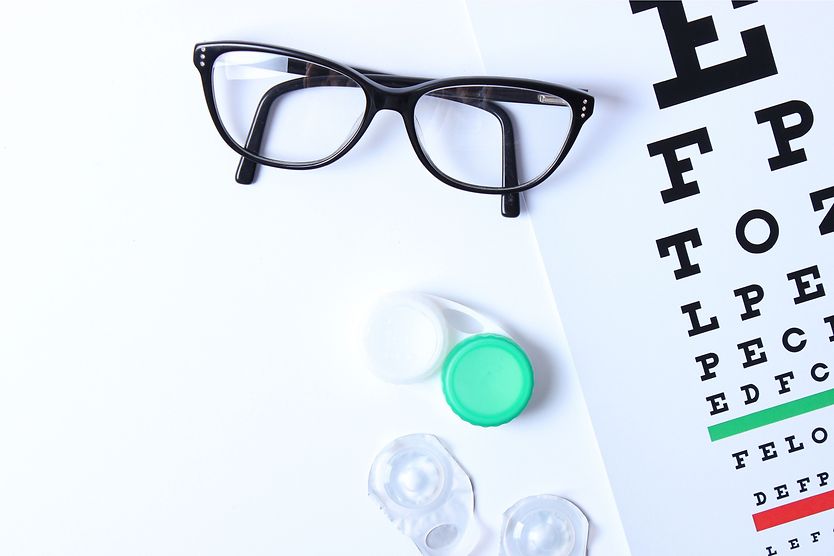
An eye doctor can correct this blurry vision with glasses or contact lenses. They can give you a new or updated vision prescription after an eye exam.
Are refractive errors eye diseases?
Refractive errors are optical conditions caused by the way the eye focuses light. While they are sometimes distinguished from other eye diseases, they can have a significant impact on vision and quality of life — particularly myopia (nearsightedness), which is increasingly recognized as a disease that can progress and lead to serious complications if left unmanaged.
How common are refractive errors?
Refractive errors are extremely common. Studies have found that over 150 million Americans have at least one refractive error.
Types of refractive errors
The four common types of refractive errors are:
- Nearsightedness (myopia) – Distant objects look blurry.
- Farsightedness (hyperopia) – Close objects look blurry.
- Astigmatism – Things can look blurry or distorted at all distances.
- Presbyopia – It gets harder to focus on near objects as you get older (usually after age 40).
Many people have more than one refractive error. For example, a nearsighted person can also have astigmatism (and presbyopia if they're middle-aged or older).
What causes refractive errors?
Light needs to focus correctly inside the eye for you to see clearly, but uncorrected refractive errors change this process and cause blurry vision. To understand why this happens, it helps to know how light normally focuses inside the eye.
How the eye uses refraction to see clearly
When light enters the eye, it needs to bend the right way for you to see clearly. This bending of light is called refraction. It works like this:
- Light enters your eye through the clear front surface (the cornea) and bends.
- It passes through the pupil, and then a round, flexible object (the crystalline lens) that bends the light a little more.
- The light travels to the back of your eye, where the light-sensitive layer of cells (the retina) "captures" the light and sends the signal to the optic nerve — the cable that connects the eye to the brain.
- Your brain reads and processes the information signals from the retina so you can see the image.
While the cornea and lens both play important parts in refracting light inside your eye, the cornea does the majority of the work. As much as three-quarters of all light refraction involved in your vision happens through the cornea.